17 Renter-Friendly Checkerboard Peel-and-Stick Bathroom Floor Ideas Under $100
Executive Summary
A dated bathroom floor can make the whole room feel tired. Checkerboard peel-and-stick tile changes that in a weekend, without grout or demolition. Done carefully, a small bathroom usually fits under $100 as of 2026, and the tiles come back up when you move.
The catch is honesty: bathrooms are wet, and peel-and-stick is not magic. This guide covers renter-safe prep, cutting around the toilet and tub, where the pattern works, where it struggles with moisture, and how to remove it cleanly — so you get the look now without gambling your deposit.
In short: For most small rental bathrooms, classic or softened checkerboard peel-and-stick tiles over a clean, smooth floor — with no extra adhesive, edges protected from standing water, and a thick bath mat in the wet zone — deliver the biggest change for under $100 as of 2026, and lift cleanly at move-out if you test removal first.
Start Smart: Prep, Measuring, and Deposit-Safe Rules
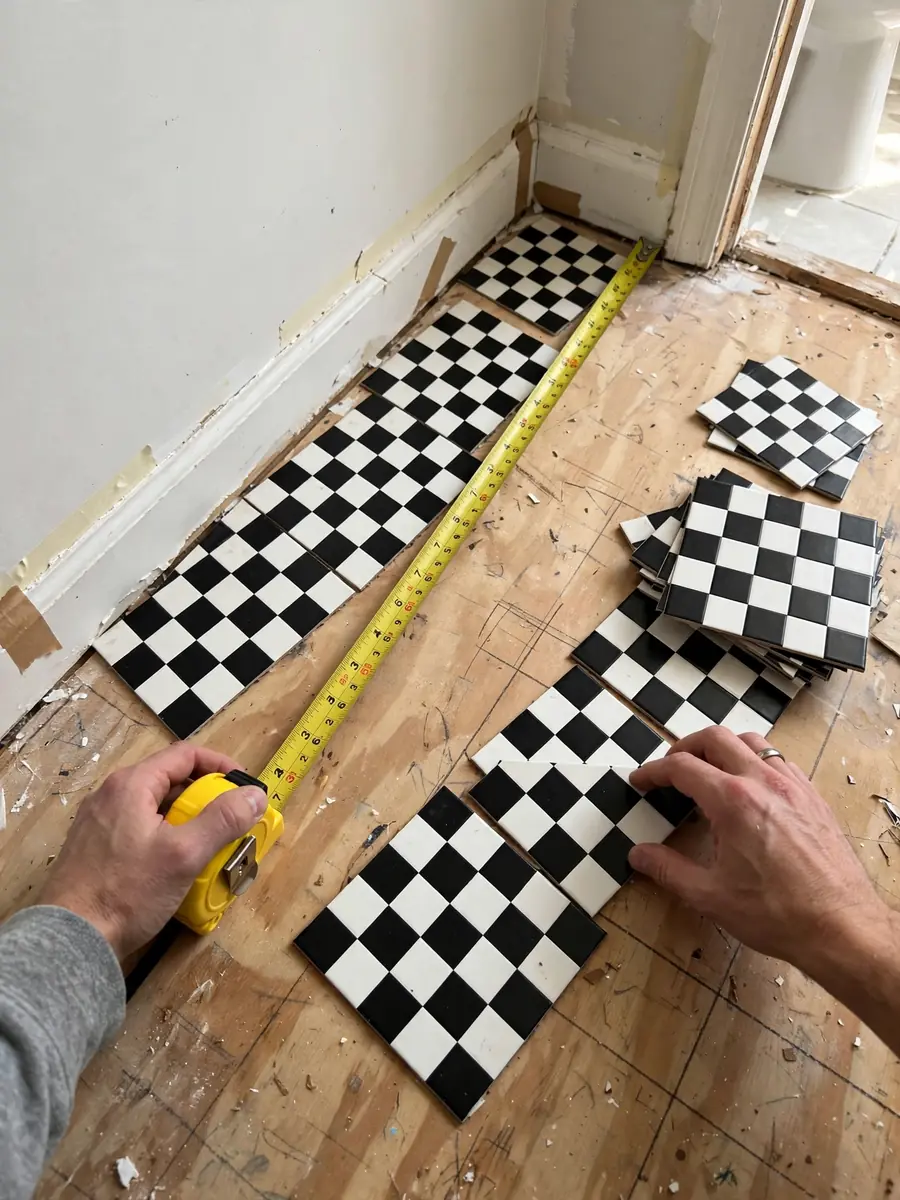
1. Get permission in writing, and test one tile first. Message your landlord or property manager describing removable peel-and-stick tiles, with no glue and no damage to the floor underneath, and keep the reply. Then stick one tile in a hidden corner for a few days and peel it back up. If it lifts paint or finish, or leaves stubborn residue, stop. Safer alternative: a washable checkerboard-pattern rug. Cost: $0 if you use the first tile from your pack.
2. Measure twice, then add 10–15 percent extra. Multiply the room’s length by its width for a rough area, and do not subtract for the tub — the extra covers cuts, mistakes, and the toilet curve. Sketch where fixtures sit before ordering. Most small rental bathrooms need only one or two packs for the visible floor. Cost: extra tiles typically add about $10–$20 as of 2026, and spares double as replacements.
3. Clean, dry, and smooth — in that order. Peel-and-stick only holds as well as the surface underneath. Sweep, mop with a mild cleaner, rinse away residue, and let the floor dry completely, ideally overnight. Do not sand or fill a rental floor without permission; choose thicker, more forgiving tiles if the old floor has slight texture. Never use extra construction adhesive, spray glue, or grout to make tiles hold better — those products turn a removable update into a deposit dispute. Cost: usually $0–$8 as of 2026 for a basic cleaner.
Timeless Checkerboard Styles for Small Bathrooms
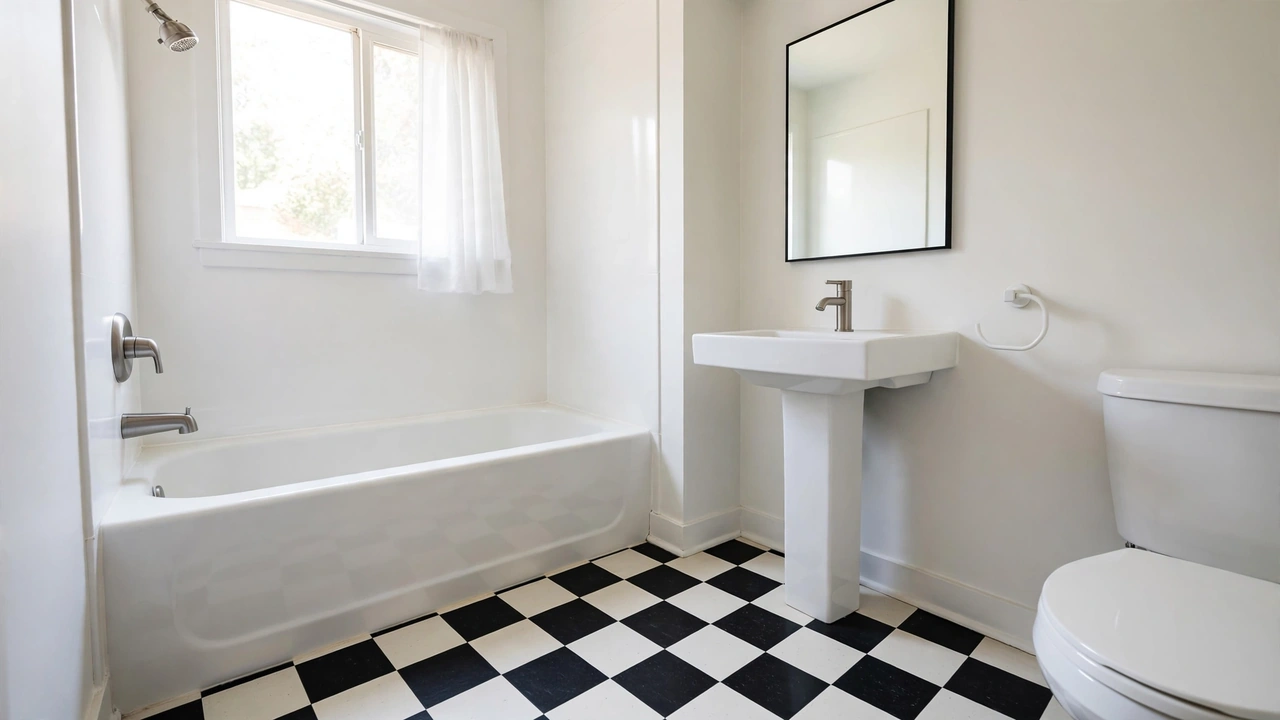
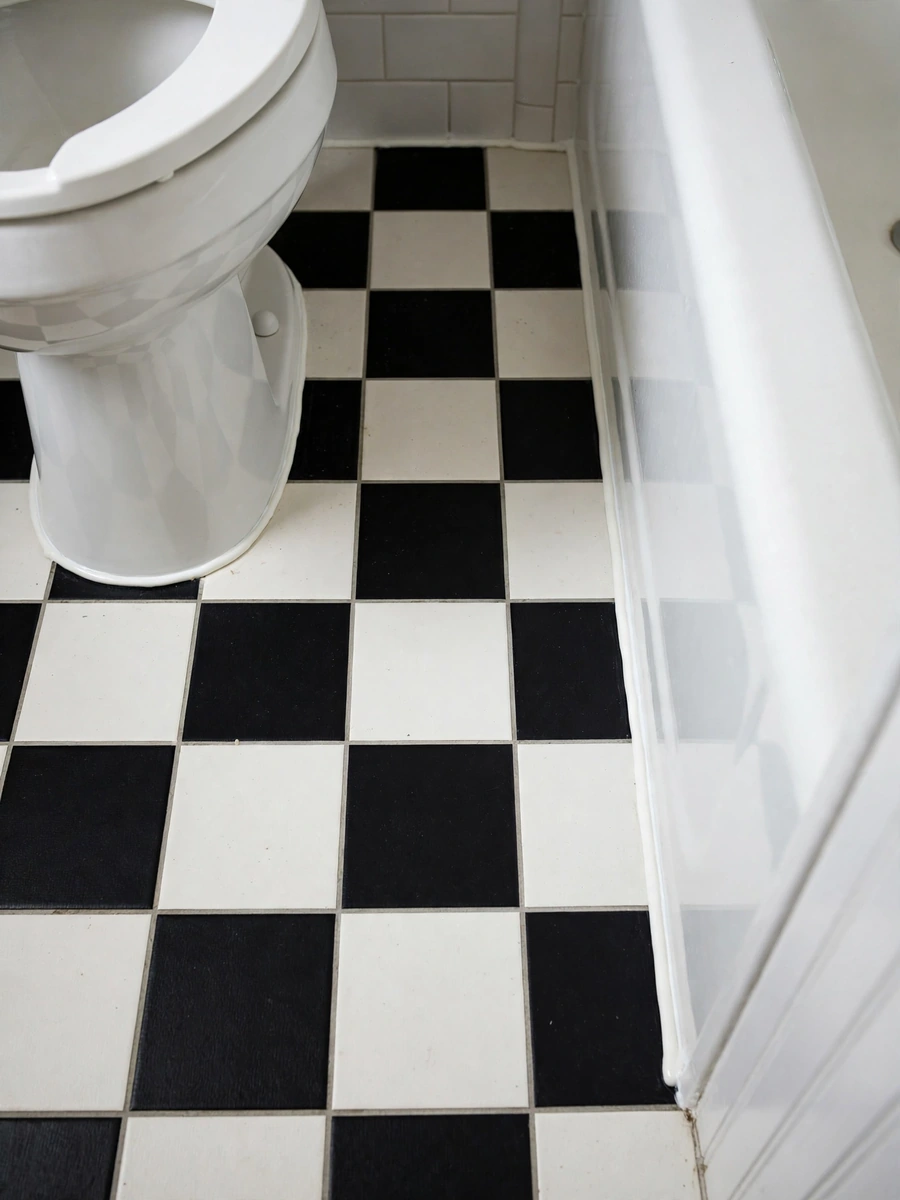
4. Go classic black and white. This is the pattern most people picture, and it needs no colour matching. Start from the centre of the room or the doorway sightline so the pattern looks balanced where you see it. Standard squares keep the rhythm clear without feeling busy. Cost: typically $40–$90 as of 2026 for a small floor.
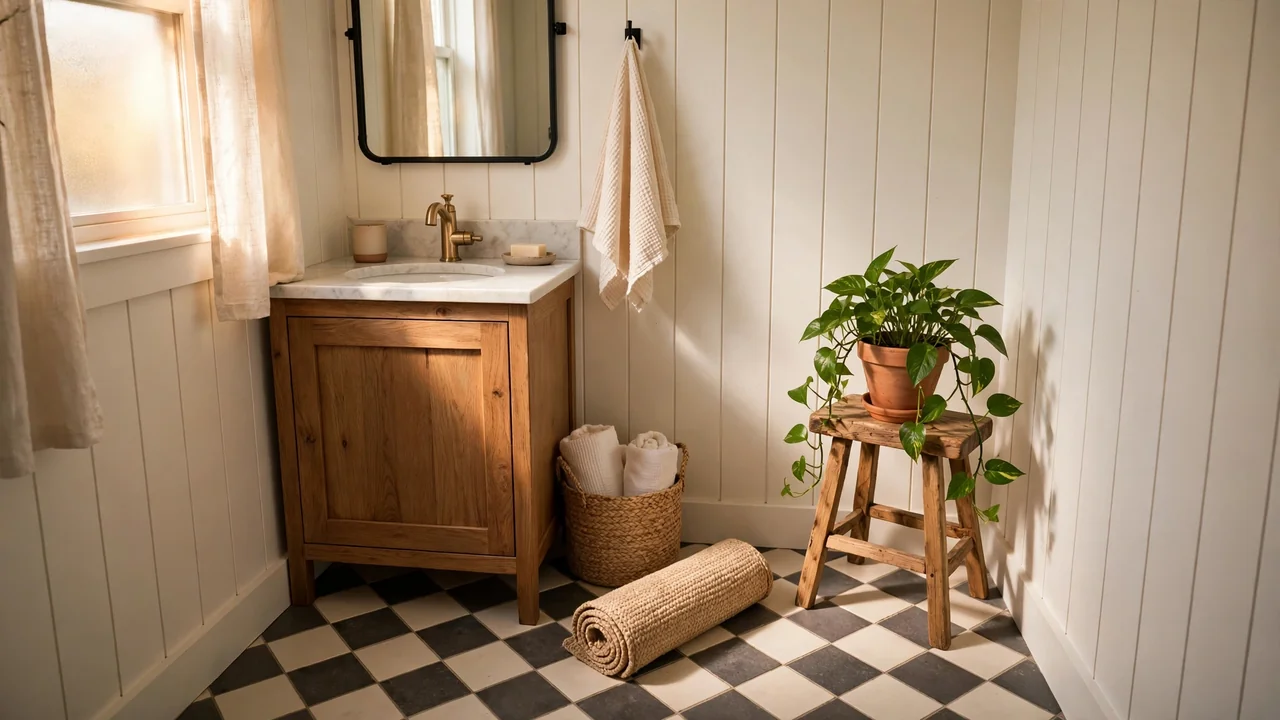
5. Soften it with cream and charcoal. If black and white feels stark under harsh lighting, warm off-white with charcoal gives the same graphic effect with gentler contrast — and hides everyday dust a little more kindly between cleans. Add warm white towels and wood or rattan accessories so the room does not feel cold. Cost: usually $40–$90 as of 2026.
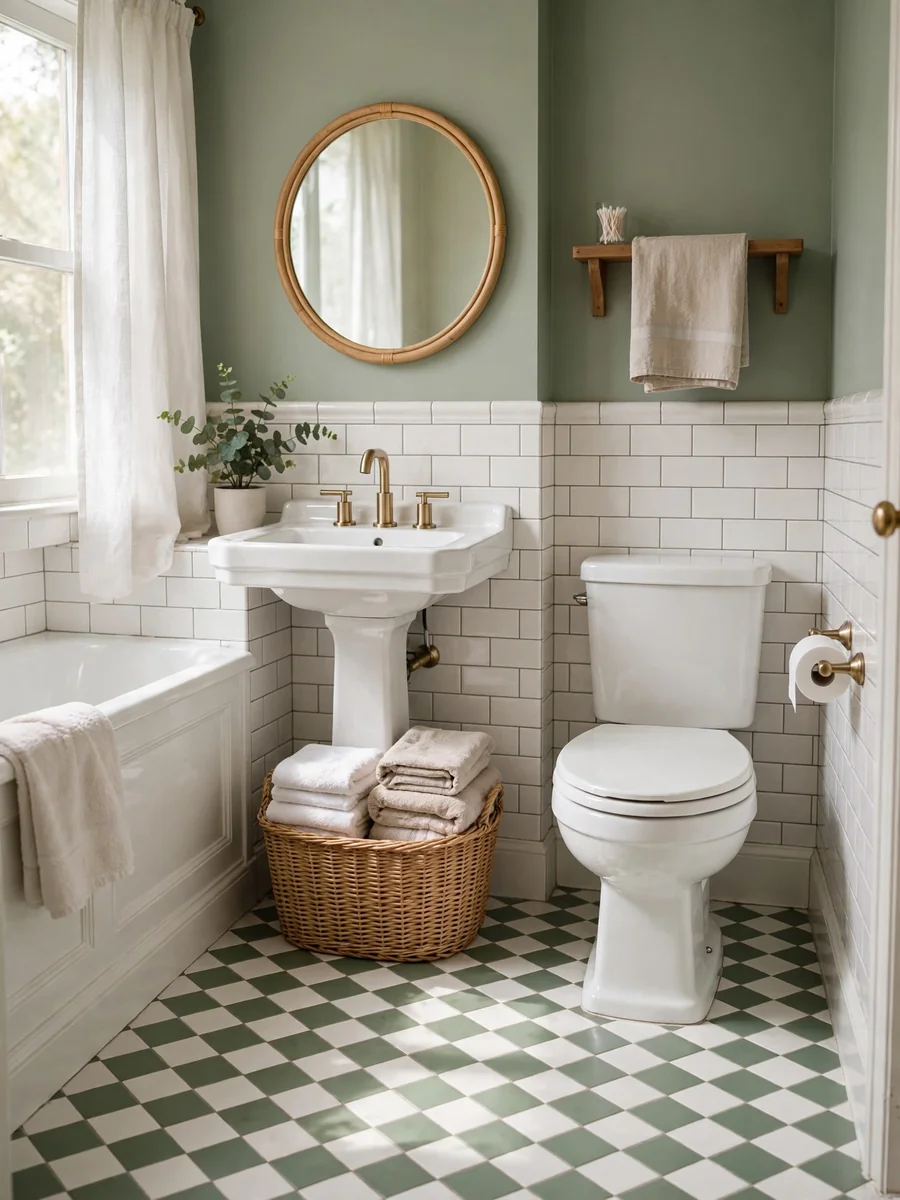
6. Try sage, slate, or dusty blue as the “black.” Checkerboard does not have to be monochrome. A muted dark square keeps the vintage shape but ties the floor to towels and a shower curtain you already own. Keep the light square consistent, and order all tiles at once so colour batches match. For how forgiving this shade family is in small rooms, see our sage green bedroom ideas. Cost: usually $45–$95 as of 2026.
7. Turn the pattern on the diagonal. Laying the squares at a 45-degree angle can make a narrow bathroom feel a touch wider, and it hides the fact that rental walls are rarely straight. The trade-off is more cutting at every edge, so order the higher end of your extra allowance and dry-lay first. Cost: plan on the full $70–$100 as of 2026, mostly in extra tiles.
8. Use a border to fake a finished edge. Run a single row of plain tiles, or a removable trim strip, around the perimeter to cover small gaps and imperfect cuts. This gives the pattern a clean ending instead of thin slivers at the wall. Keep the border removable — no nailed or glued trim in a rental. Cost: about $8–$18 as of 2026.
Smart Ways to Handle the Toilet, Tub, and Tight Corners
9. Dry-lay the whole floor before peeling anything. Lay every tile with its backing still on, and live with the layout for an hour. You will spot pattern mistakes and awkward doorway slivers while changing them is still free. Start sticking only once the full picture works. Cost: $0.
10. Make a paper template for the toilet base. Press plain paper or thin card around the base, crease it to the shape, and cut the paper — not the tile — until it fits. Trace the template onto the tile, then cut the tile. Do not remove the toilet; that is plumbing work and a leak risk never worth taking for a cosmetic update. Tiles sit neatly against the base, not under it. Cost: $0–$3 as of 2026 for paper and a utility knife.
11. Cut tiles on a board, never on the floor. Use a utility knife, a straight edge, and a scrap cutting board or thick cardboard underneath. You will get cleaner cuts without scoring the landlord’s floor — a scratch made while installing is still damage. Score firmly, then bend the tile to finish the cut, and swap blades often; dull blades tear vinyl. Cost: about $5–$10 as of 2026 if you need a knife and straight edge.
12. Leave a hairline gap at the tub and walls. Tiles expand, contract, and meet water at the edges. A tiny gap, covered by your border or a removable seal strip (idea 14), looks neater than tiles forced tight and later curling. Do not use permanent grout or hard sealant that bonds to the tub or old floor without written permission — removing it can pull finishes. Safer alternative: a peelable seal strip you can lift by hand at move-out. Cost: about $6–$12 as of 2026.
Making It Last in a Wet Room — and Knowing Where It Won’t
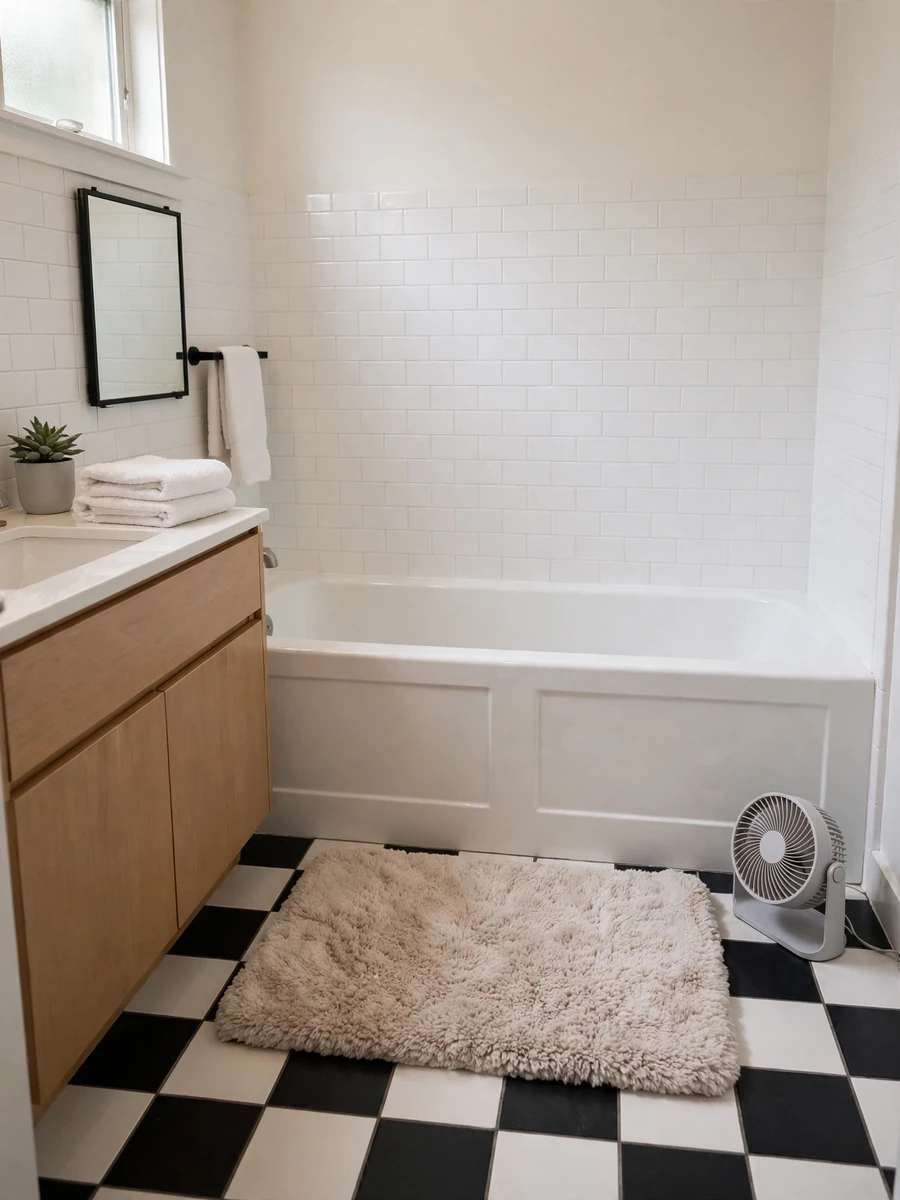
13. Protect the wettest zone instead of tiling through it. Be honest: peel-and-stick struggles where water pools daily, especially in front of a tub, and it never belongs inside a shower or on a floor that stays damp. Lay a thick, washable bath mat over the splash zone, hang it to dry regularly, and wipe up standing water instead of letting it sit on seams. The checkerboard still shows everywhere else. Cost: about $12–$25 as of 2026 for a good washable mat.
14. Seal the edges, not the whole floor. Water usually gets in through seams and edges, not the tile surface. Press every seam down firmly with a rolling pin or seam roller as you install, focus on the perimeter and tub line with a removable seal, and re-press any corner that lifts in the first week. Skip floor-wide sealers or coatings in a rental — they can bond tiles together and to the floor below, making clean removal much harder. Cost: about $5–$12 as of 2026 for a basic seam roller.
15. Ventilate like it matters — because it does. Run the fan or crack a window after showers, and leave the door open when you can. Less trapped humidity usually means happier adhesive, fewer lifted corners, and less mildew along edges. This is an upkeep choice, not a fix for existing damp — if you see mould or smell persistent damp, report it to your landlord instead of covering it up. Cost: $0.
Removal Day: Getting Your Deposit Back

16. Warm, lift slowly, and roll residue away. At move-out, warm a tile gently with a hairdryer on a low setting, lift one corner with a plastic scraper — never a metal blade on the old floor — and peel slowly at a low angle. Sticky residue usually rolls off with your thumb or lifts with a damp cloth and mild cleaner; test any cleaner in a hidden spot first. Budget a couple of unhurried hours, not a rushed final morning. Cost: $0–$6 as of 2026.
17. Know when the rug is the smarter project. If your test tile failed, your landlord said no, the floor is damaged or damp, or your lease is very short, do not force this project. A large washable checkerboard rug gives you most of the look, zero adhesive risk, and something you take with you — no cutting and no removal day. For more low-risk ways to stretch a small budget, see our interior design hacks that save money. Cost: typically $25–$60 as of 2026.
FAQ
Will peel-and-stick tiles really stay under $100?
For most small rental bathrooms, yes — as of 2026, tiles plus basic cutting tools and a seal strip usually total $50–$100. Large bathrooms, diagonal layouts, and premium finishes cost more, so measure first.
Will the tiles damage the floor underneath?
Usually not, if the floor is smooth and sound, you use no extra adhesive, and you test one tile first. Risk rises on old, cracked, painted, or delicate floors.
Can I install them over existing tile or vinyl?
Typically yes, if the surface is flat, clean, dry, and firmly attached. Deep grout lines or heavy texture can show through and weaken the bond, so thicker tiles — or the rug — usually work better.
How long does a small bathroom take?
Most people finish a small floor in one weekend: a few hours of prep and layout, a few hours of sticking and trimming, plus overnight drying after cleaning.
What if a corner lifts after a few weeks?
Dry the area fully, press the corner down firmly, and check whether water is reaching that seam. A bath mat in splash zones and better ventilation usually prevent repeat lifts; replace the single tile if it will not re-stick.
Do I need to tell my landlord?
Yes — get written permission first, even for products sold as removable. A short, clear message protects you far better than hoping no one notices at inspection.
Conclusion
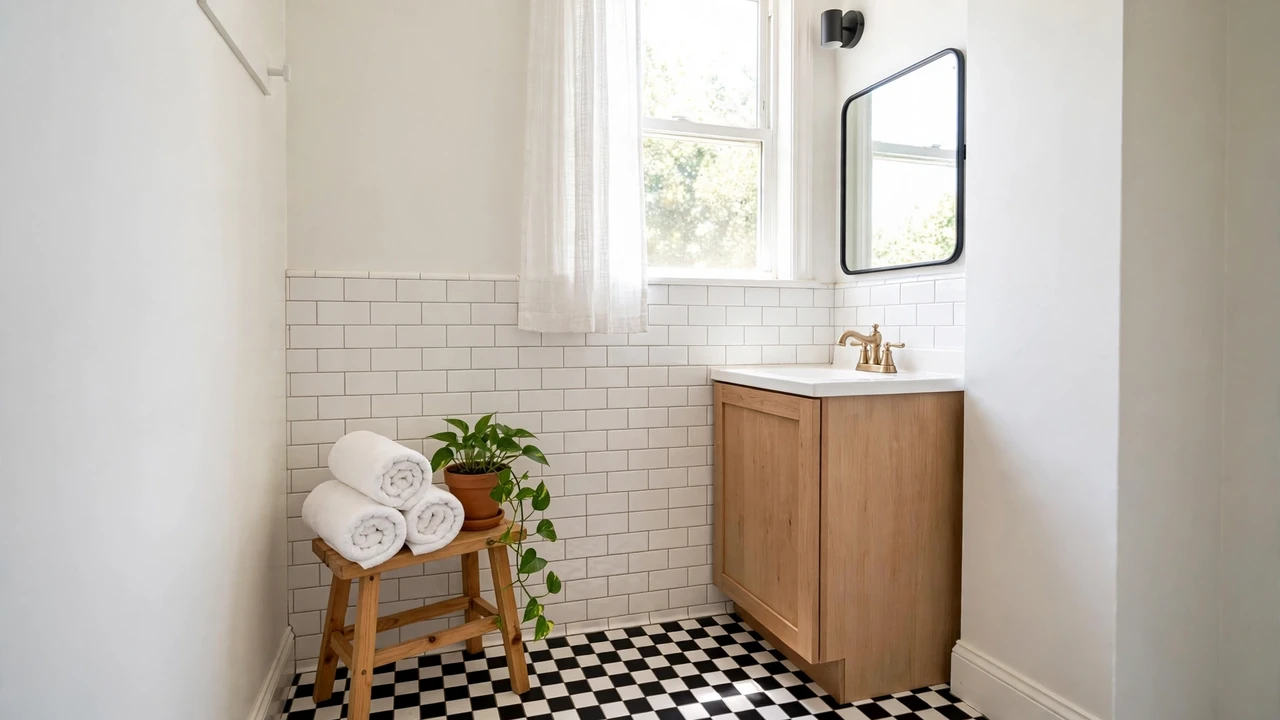
Checkerboard peel-and-stick is a clear deal: a weekend of careful prep, honest limits around water, and no shortcuts with glue, for a bathroom that feels like yours for under $100 as of 2026. Test first, template the tricky cuts, protect the seams, and keep your landlord’s “yes” saved — and this floor can go back to ordinary on moving day, deposit intact.

Thiago Alexander is the Chief Editor at Nested Charm. With a deep passion for interior design and cozy living spaces, he leads the editorial team in crafting stories that make every house feel like a home.