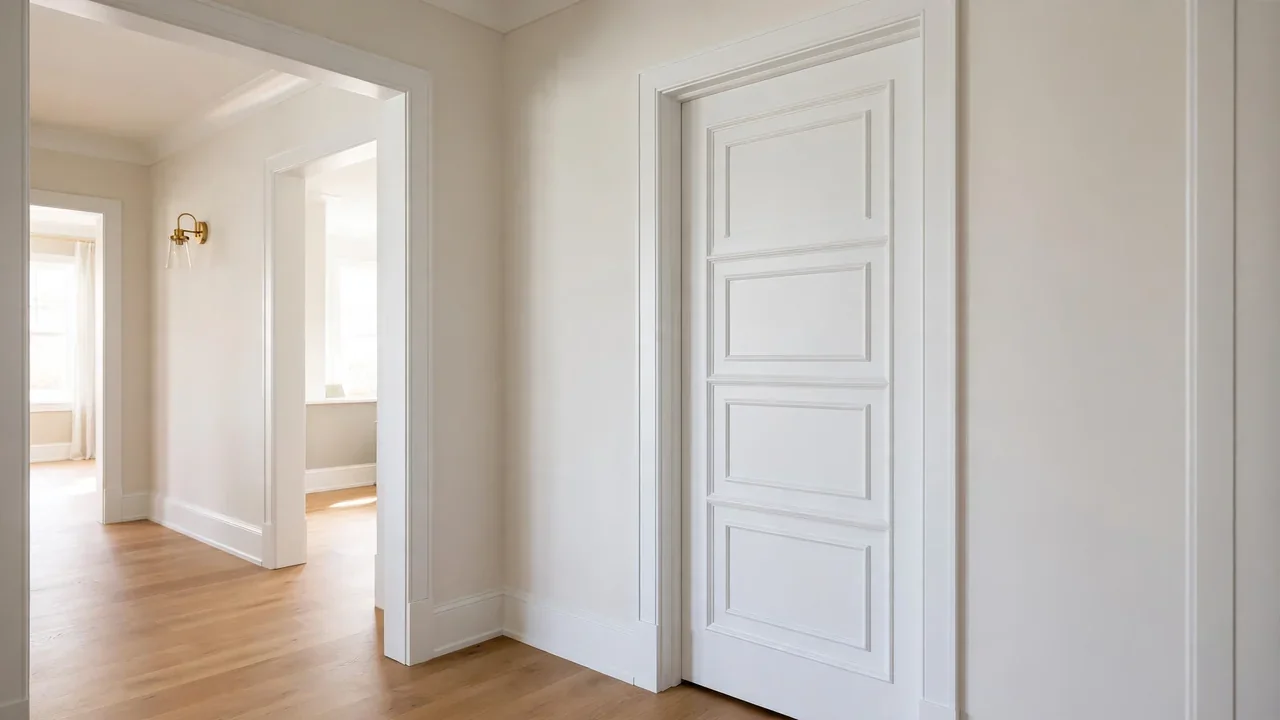
Flat Doors to Panelled Doors: 14 Hollow-Core Door Makeovers From $60 a Door
Executive Summary
A flat hollow-core door is the blankest surface in most homes, and one of the cheapest to transform. A few lengths of lightweight trim, adhesive and paint can turn a plain slab into a panelled door for around $60 to $120 per door in materials as of 2026.
The trick is respecting what a hollow-core door actually is: a thin veneer skin over a hollow frame, usually about 1-3/8 inches thick. Long screws and nails can punch straight through, and glued-on trim can be hard to remove in a rental. The ideas below run from the simplest picture-frame layout to fuller statement looks.
In short: Applied trim turns a flat hollow-core door into a panelled door for roughly $60 to $120 per door as of 2026, as long as you use short fasteners or adhesive, keep the trim lightweight, and check your lease before modifying a rental door.

Start Simple: Classic Trim Layouts That Always Work
1. Single Picture-Frame Moulding
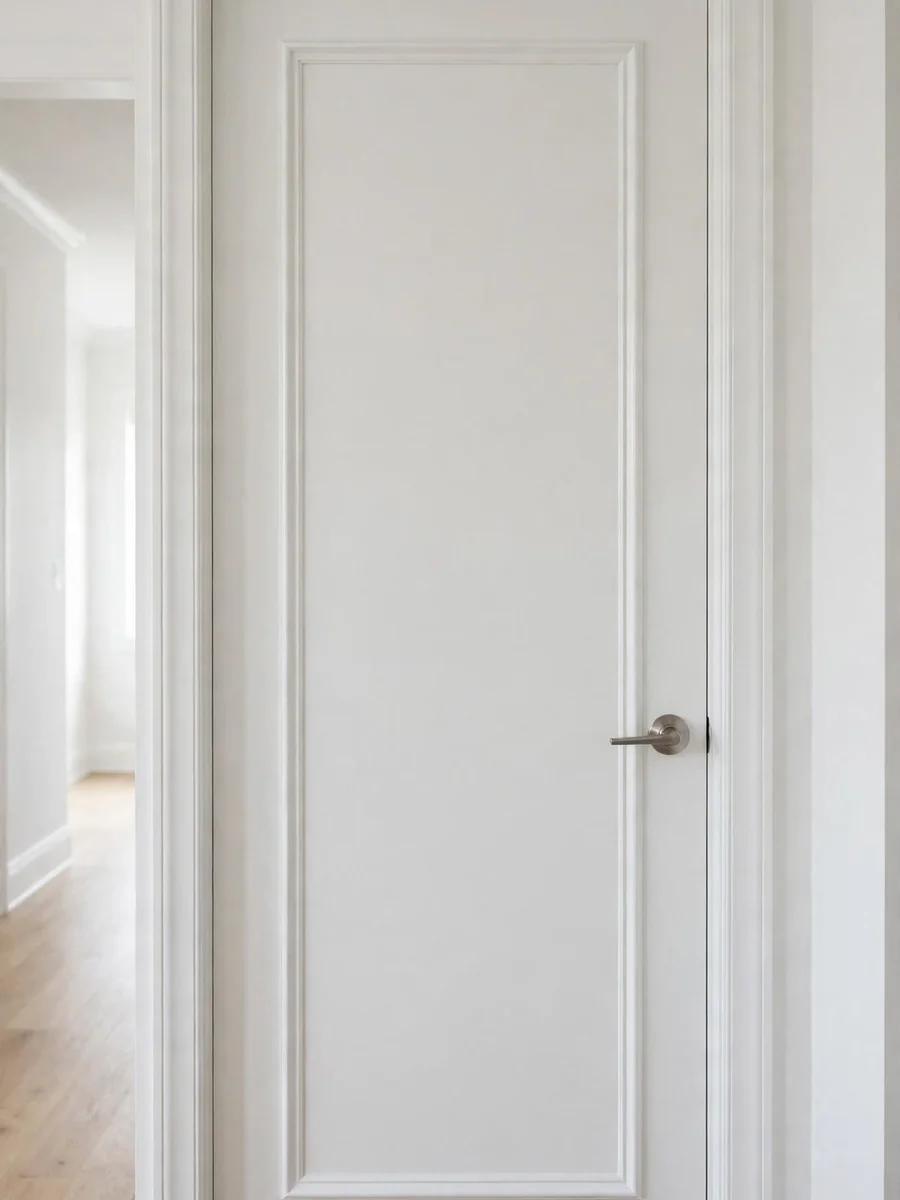
One rectangle of slim trim per door is the fastest makeover here and the best first try if you have never cut moulding. Leave a border of about 4 to 5 inches on all sides, cut four lengths of lightweight pine or PVC trim with 45-degree mitred corners, and attach them with construction adhesive and a few short brads. Fill the corners, then paint everything one colour. Expect around $60 to $80 per door as of 2026, including paint, and about two hours plus drying time.
2. Double Stacked Rectangles

Two stacked rectangles give a plain door the proportions of a traditional two-panel door without any new joinery. Mark a large rectangle for the top two-thirds and a smaller one for the bottom third, keeping the gap between them roughly the same width as your side borders. Dry-fit both frames first, then glue and pin them in place. Painting everything one colour hides small gaps and makes the panels read as one piece. Budget around $70 to $90 per door as of 2026.
3. Shaker-Style Four-Panel Grid

A four-panel grid, two rectangles over two rectangles, is the closest a flat door can get to a classic Shaker door. Small panels make slight differences in cut length far less noticeable than one big frame does. Use narrow flat trim, about 2 to 2-1/2 inches wide, and keep every border and gap even, using a small offcut as a spacing block as you work down the door. Materials run around $80 to $110 per door as of 2026, and the job takes an afternoon. Use short 5/8-inch brads and adhesive; longer screws can break through.
4. Arched Top Panel Accent

An arched panel softens a boxy hallway and costs little more than a rectangular one. Flexible PVC trim or a thin bendable moulding strip forms the arch, with straight trim completing the lower sides and bottom of the frame. Trace a paper template onto the door so both sides curve evenly, then bend the trim slowly and tape it while the adhesive sets. Plan on around $75 to $100 per door as of 2026.
Lightweight and Reversible: Renter-Friendly Options
5. Peel-and-Stick Trim Kits
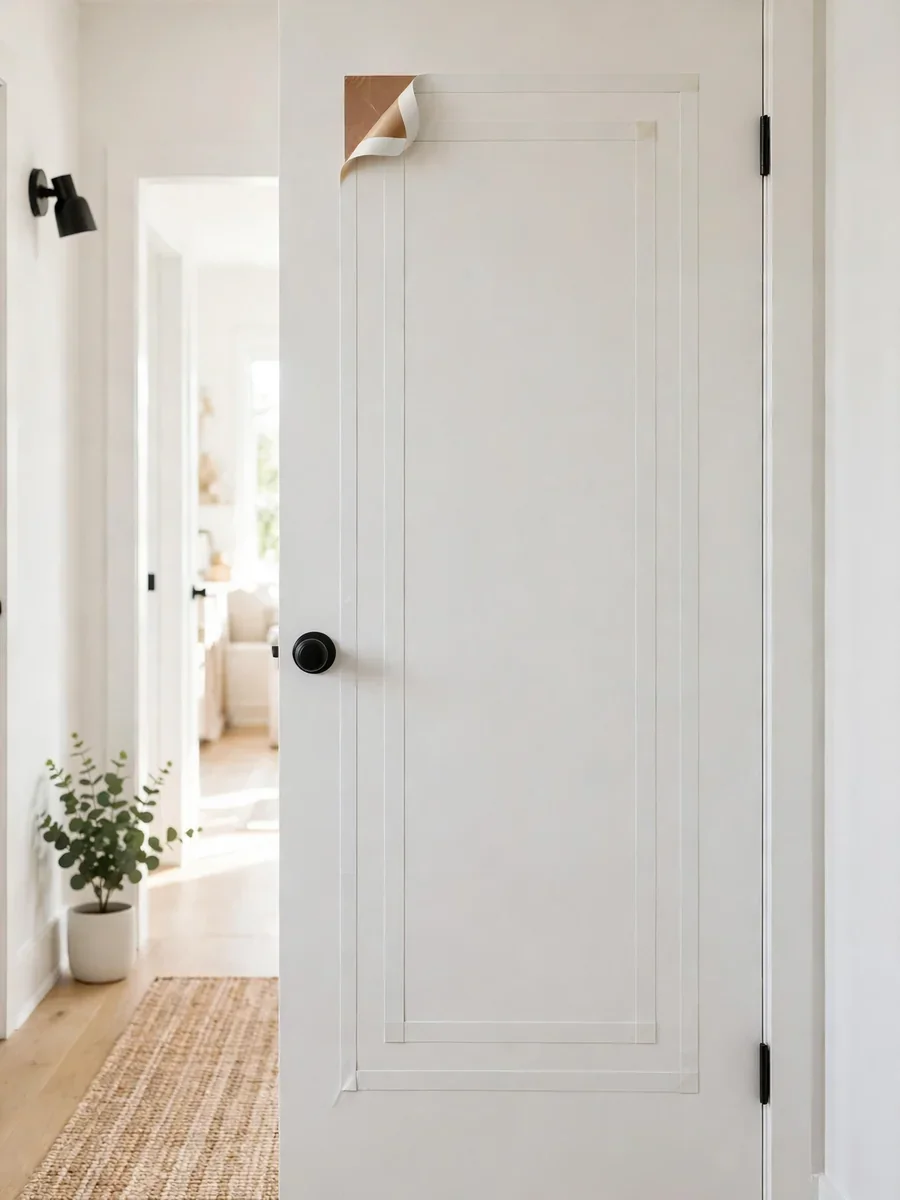
Peel-and-stick trim kits are made for renters and for anyone who wants a panelled look without glue guns or nail holes. The strips arrive pre-cut with adhesive backing; press them onto a clean, dry door in a rectangle layout. Cost is typically $40 to $70 per door as of 2026. Check your lease before you start, and test one strip in a hidden spot first, since some adhesives can pull paint off a fresh or poorly primed door when removed.
6. Foam Moulding Panels
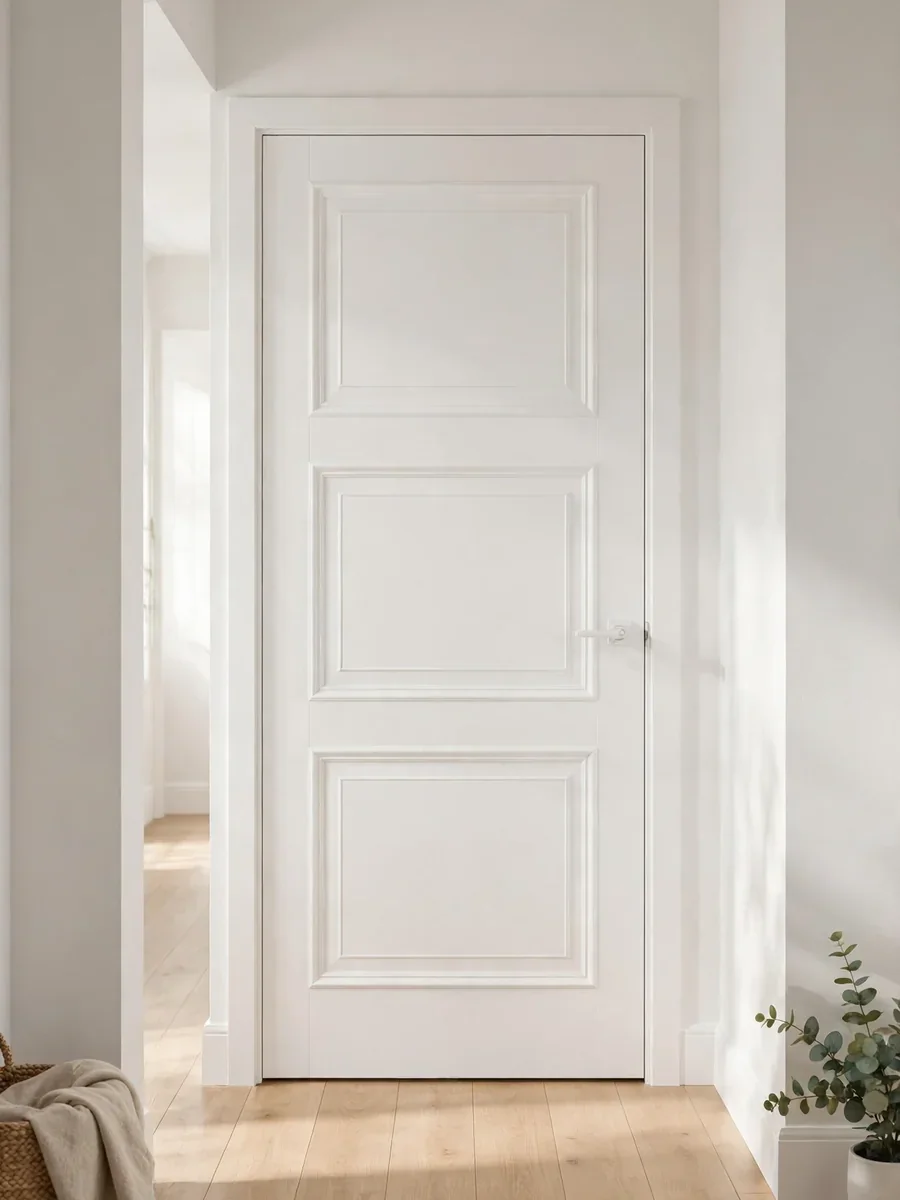
Lightweight foam or polystyrene moulding looks like wood once painted and weighs almost nothing, which makes it ideal for a hollow door that cannot hold heavy trim. Cut the strips with a craft knife, attach them with light-duty adhesive or mounting tape, and paint them the same colour as the door. The whole door usually costs $50 to $80 as of 2026. Foam dents easily, so keep it off doors that get kicked or bumped, and use water-based paint, since solvent-based paint can melt the surface.
7. Painted Faux-Panel Borders
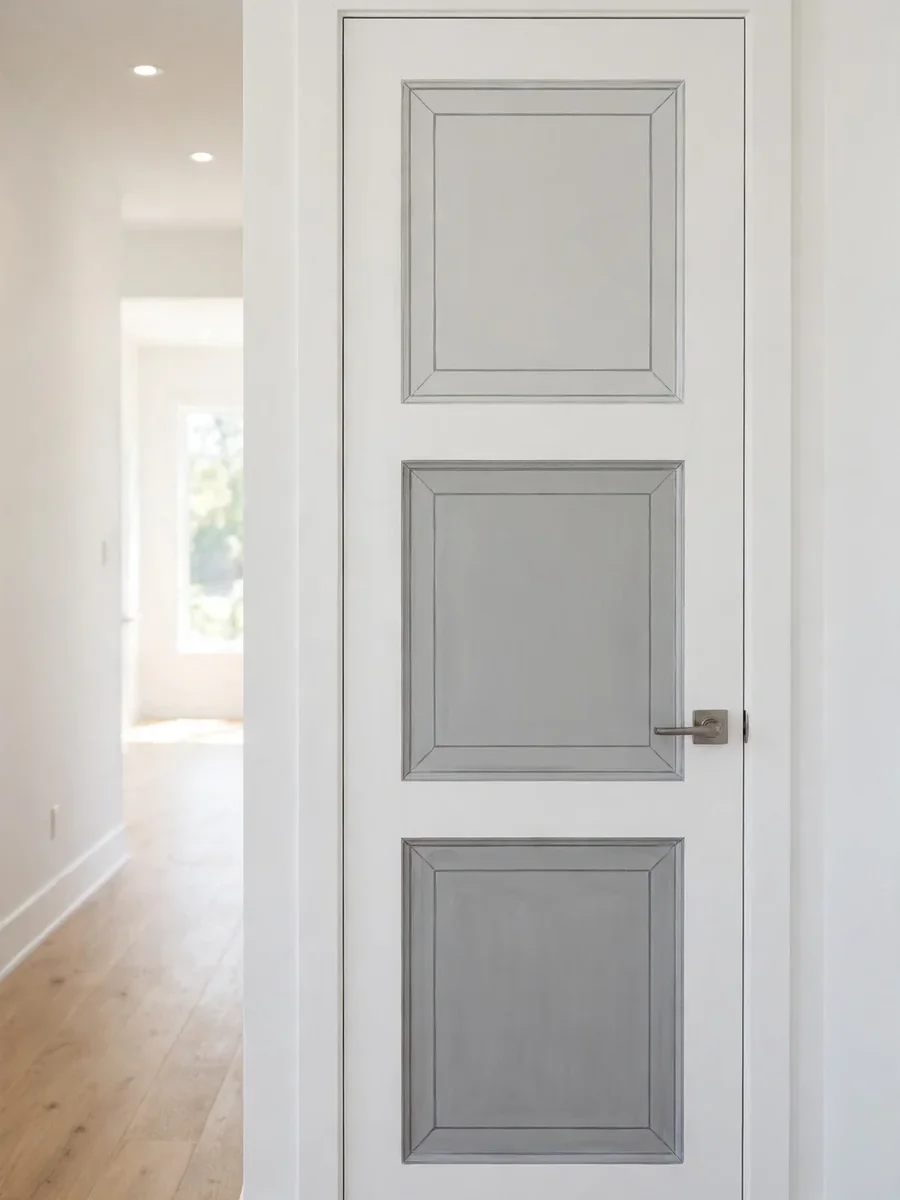
If your lease forbids anything stuck or nailed to the door, paint alone can still suggest panelling. Tape off rectangles with painter’s tape, paint the inner panels a shade lighter or darker than the door, then add a thin painted line where trim would sit. The effect reads best from across the room, and it costs little more than a sample pot of paint, usually $20 to $40 per door as of 2026. It is fully reversible with a fresh coat of the original colour, which makes it the lowest-risk option in this list.
Statement Looks on a Budget
8. Board-and-Batten Full Door

Board-and-batten covers the whole door in vertical battens, giving a flat slab the texture of a cottage or farmhouse door. Space thin vertical strips evenly across the door, add a horizontal rail near the top and bottom, and paint everything one colour so the door reads as a single panelled piece. Lightweight MDF or PVC strips keep the weight down, and adhesive plus short brads hold them securely. Expect around $90 to $120 per door as of 2026.
9. Vertical Slat Panels

Narrow vertical slats bring a calm, modern rhythm to a flat door and suit bedrooms and home offices well. Cut slim wood or PVC slats to the same length, space them with a small block for even gaps, and glue them across the middle band of the door or from top to bottom. Leaving a plain border around the edges keeps the look tidy and stops the slats from catching on the door frame. Materials usually run $80 to $110 per door as of 2026.
10. Herringbone Trim Inlay
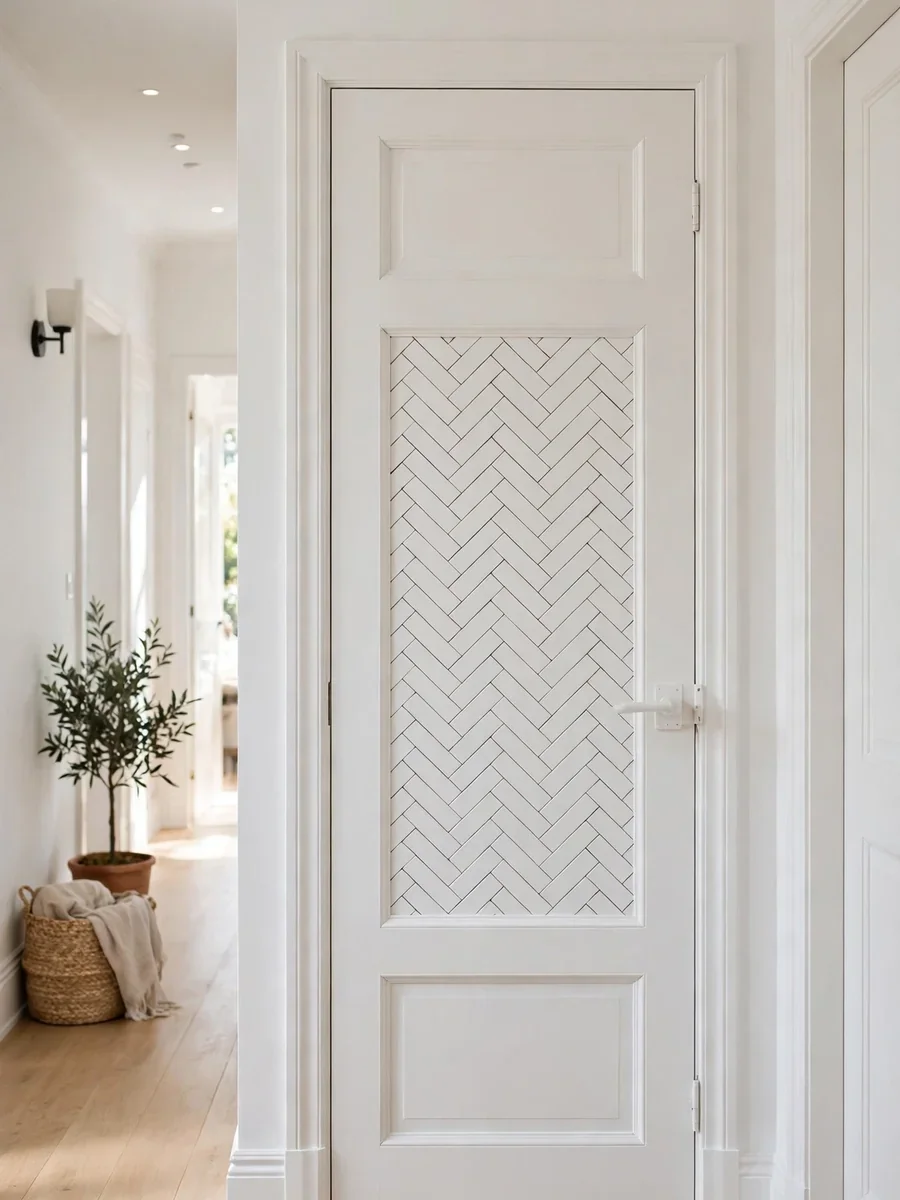
A herringbone or chevron pattern made from short trim pieces turns a plain door into a talking point for about the same cost as a simple panel layout. Cut the trim into equal short lengths, lay the pattern out on the floor first, and transfer it to the door one row at a time, working from the centre outward. Dry-fit the whole design before gluing to save rework. Budget around $90 to $120 per door as of 2026.
11. Two-Tone Trim and Panel Colour Blocking

Painting the trim one colour and the recessed panels another makes even a simple rectangle layout look deliberate and designed. A classic pairing is white or cream trim against a soft sage, navy or warm grey panel, while a single bold colour on the panels can anchor a small hallway. Paint the panels first, then tape them off and paint the trim, or paint the trim before it goes on the door. Cost stays close to a standard panel job, around $70 to $100 per door as of 2026.
Finishing Touches That Sell the Look
12. New Hardware: Handles, Hinges and Knobs
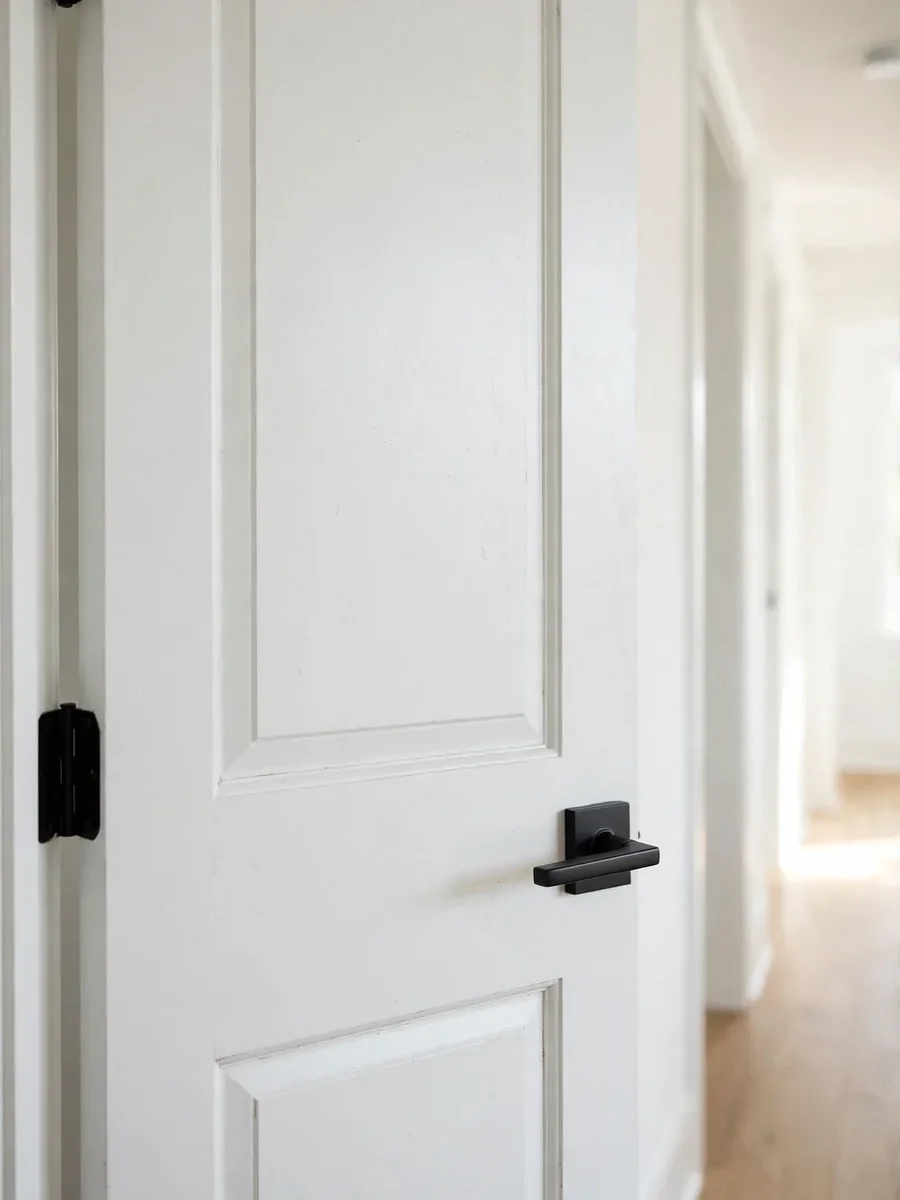
Fresh hardware is the cheapest way to make new trim look intentional rather than added on. A matte black lever, a brass knob or a simple modern pull changes the whole door for roughly $15 to $40 per set as of 2026, and swapping it takes minutes with a screwdriver. Keep the old hardware in a labelled bag for a rental, and check the new latch lines up before tightening.
13. Trimmed Mirror or Corkboard Panel Insert
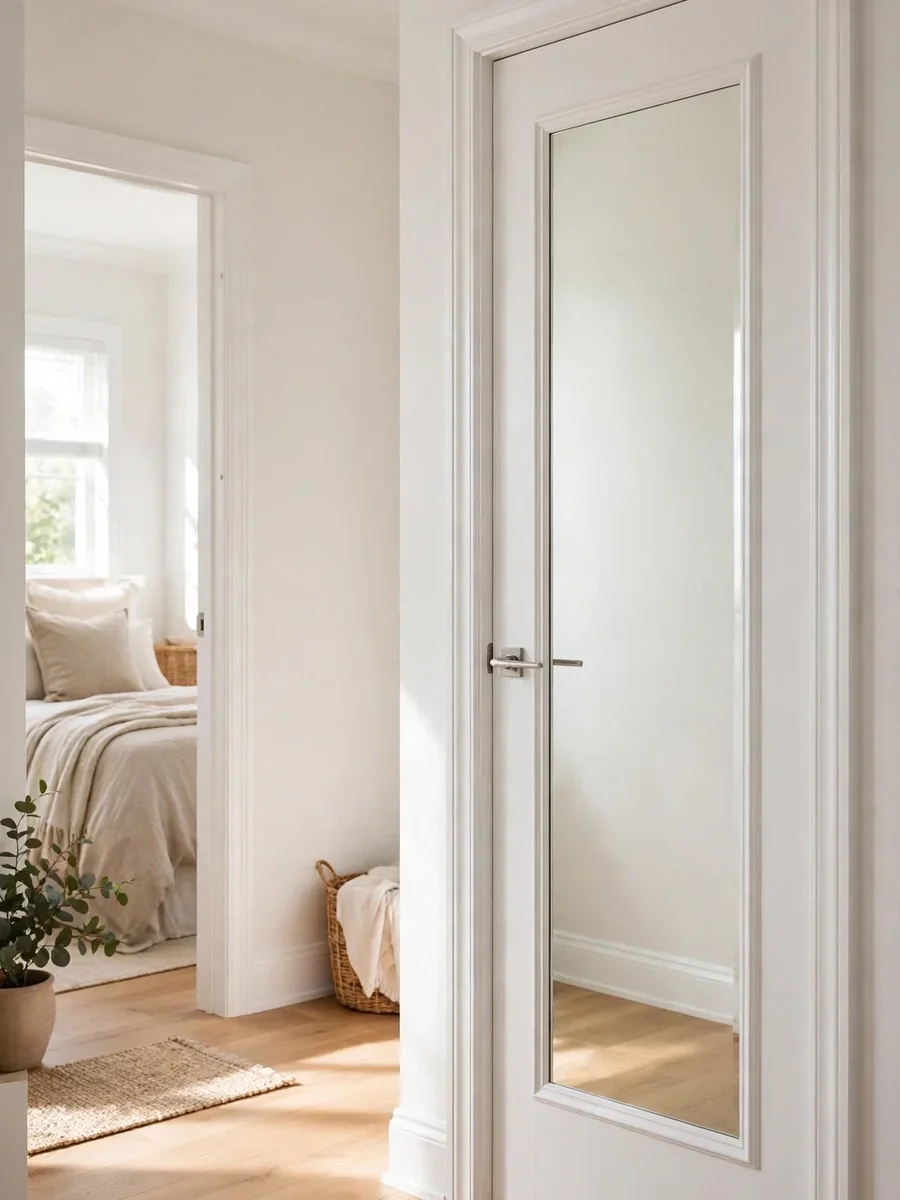
Framing a mirror or corkboard inside a trim panel turns a flat door into something useful. A lightweight acrylic mirror or a thin corkboard cut to fit inside a rectangle of trim works well on a bedroom or entry door, and the trim frame hides the cut edges neatly. Use a mirror-safe adhesive and keep the panel light: heavy glass can strain a hollow door and pull its hinges out of square. Cost is typically $60 to $100 per door as of 2026.
14. Door Casing and Baseboard Tie-In
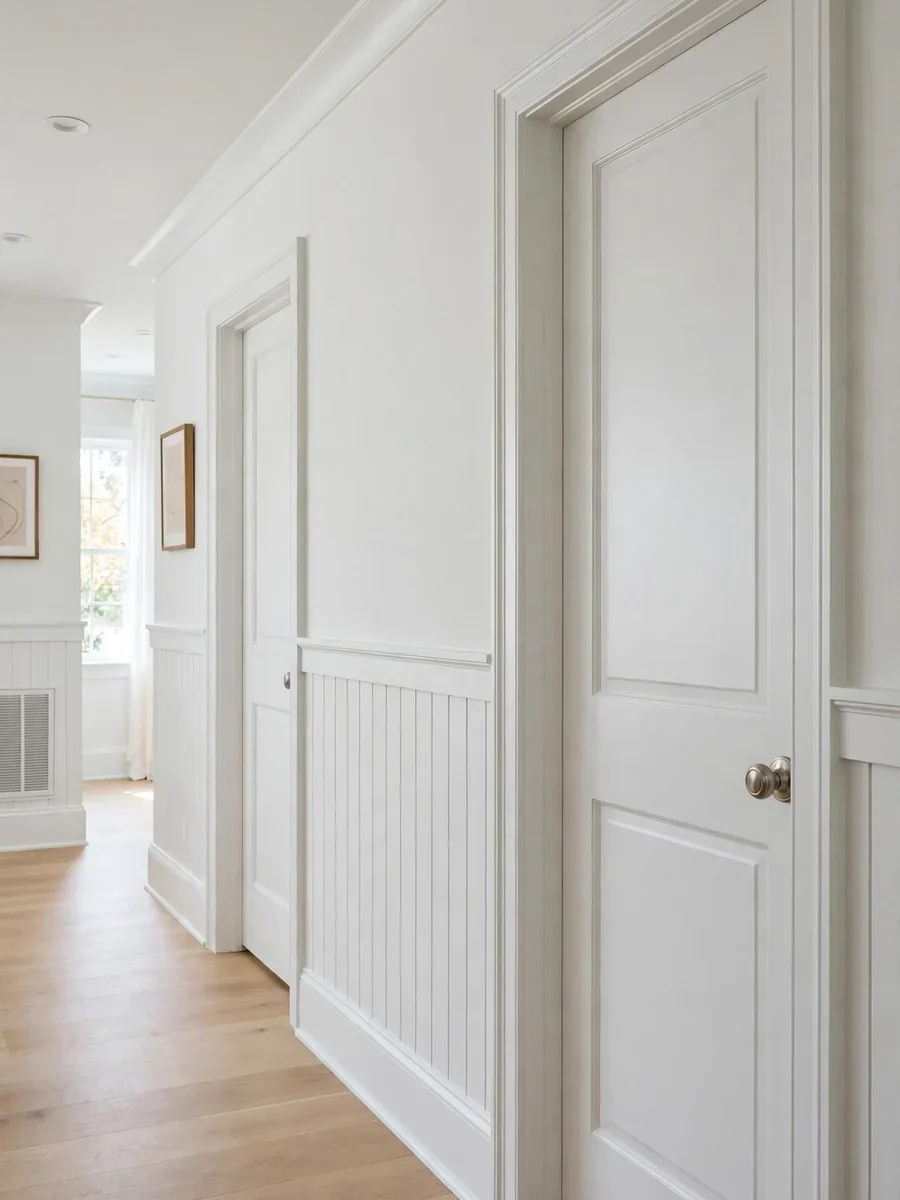
The final step that makes a panelled door look original to the house is matching the trim to the door casing and nearby baseboards. Carry the same trim profile onto the casing, or paint casing and baseboards the same colour as the door. Even adding a simple back band to plain casing, for around $20 to $40 in materials as of 2026, lifts the door and the wall around it. Renters should stick to paint-matched casing and skip anything that changes the existing trim.
What to Know Before You Start
A hollow-core door is mostly air behind a thin skin, so treat it gently. Short brads and adhesive hold lightweight trim well, but long screws and nails can break through the other face, and heavy panels can strain the hinges. Dry-fit every layout before you glue anything, and check the door still swings freely and latches afterwards. In a rental, read your lease and ask the landlord in writing before you modify a door. If you want more background on painting the door itself, our guide to painting your interior doors covers prep and finishes, and our roundup of budget DIY projects for first-time homeowners has more low-cost ideas in the same spirit.
FAQ
Can you put trim on a hollow-core door?
Yes, as long as the trim is lightweight and you fasten it correctly. Use construction adhesive plus short brads, and avoid screws longer than the door is thick, since they can punch through the hollow core. Foam, PVC and thin pine trim all work well.
How much does it cost to make a flat door look panelled?
Most doors in this list cost around $60 to $120 in materials as of 2026, depending on the trim you choose and whether you need new paint or hardware. Peel-and-stick kits and painted faux panels are cheapest; board-and-batten and herringbone sit at the higher end.
Will glued trim damage a rental door?
It can, so renters should check the lease first and choose a reversible option. Peel-and-stick trim, foam moulding on low-tack tape, or painted faux panels are the safest choices, and testing the adhesive in a hidden spot first shows whether it will lift paint when removed.
What kind of trim works best on a hollow-core door?
Lightweight trim works best: thin pine, PVC, foam or polystyrene moulding. Heavy hardwood trim adds weight the hollow core and hinges were not designed for, and it needs longer fasteners that risk breaking through the door face.
Do I need to remove the door to add trim?
No, you can work with the door on its hinges, which is easier for measuring and levelling. Taking the door down and laying it flat on sawhorses makes gluing and painting tidier, so remove it if you can manage the weight and have space to work.
Should I paint the trim the same colour as the door?
Painting trim and door the same colour gives the most convincing built-in look and hides small gaps, so it is the safest choice for a first project. A contrasting trim colour draws attention to every cut and corner, so save it for a second project once you are happy with the layout.
Conclusion

A flat hollow-core door does not need replacing to look good. One rectangle of trim, a set of peel-and-stick panels or a full board-and-batten layout can each give a plain slab the character of a panelled door, for roughly $60 to $120 per door as of 2026, and most of these projects fit into a single afternoon. Start with the simplest layout on a door you see every day, and check your lease before you modify a rental. Once the first door is done, the rest of the hallway usually follows on its own.

Thiago Alexander is the Chief Editor at Nested Charm. With a deep passion for interior design and cozy living spaces, he leads the editorial team in crafting stories that make every house feel like a home.