18 Shared Living Room Ideas Roommates Can Actually Agree On
Executive Summary
Sharing a living room with roommates is a design challenge and a diplomacy challenge at the same time. One person wants bold color, another wants calm neutrals, and everyone has a different idea of what the shared sofa should cost. The rooms that work best are rarely the most stylish ones. They are the ones where nobody feels steamrolled and every choice has a clear, fair reason behind it.
The ideas below follow a compromise-first approach: agree on a few ground rules, build on a neutral base, divide the space and the costs fairly, and let each person add a small touch of their own. Costs below are approximate planning figures as of 2026.
In short: Agree on a few ground rules first, build the room on a neutral base, split the space and the costs fairly, and give each roommate one small corner to make their own. A shared living room works when the compromises are visible and nobody’s taste runs the whole room.
Agree on the Ground Rules First
1. Write a Short Decor Agreement Before Buying Anything
Sit down together and write a short note, even just a page, covering a spending cap per item, who owns what, and what happens to shared pieces when someone moves out. It sounds formal, but it prevents the most common roommate arguments, which usually start with one person buying something expensive without checking first.

Agree on a maximum spend for any single shared item, for example around 100 to 200 dollars as of 2026 for furniture and under 50 dollars for smaller pieces. Anything above the cap needs a group yes. This stops impulse buys and keeps anyone from feeling pressured into paying for something they never wanted.

3. Agree on a Renter-Safe Rule Before Anyone Picks Up a Drill
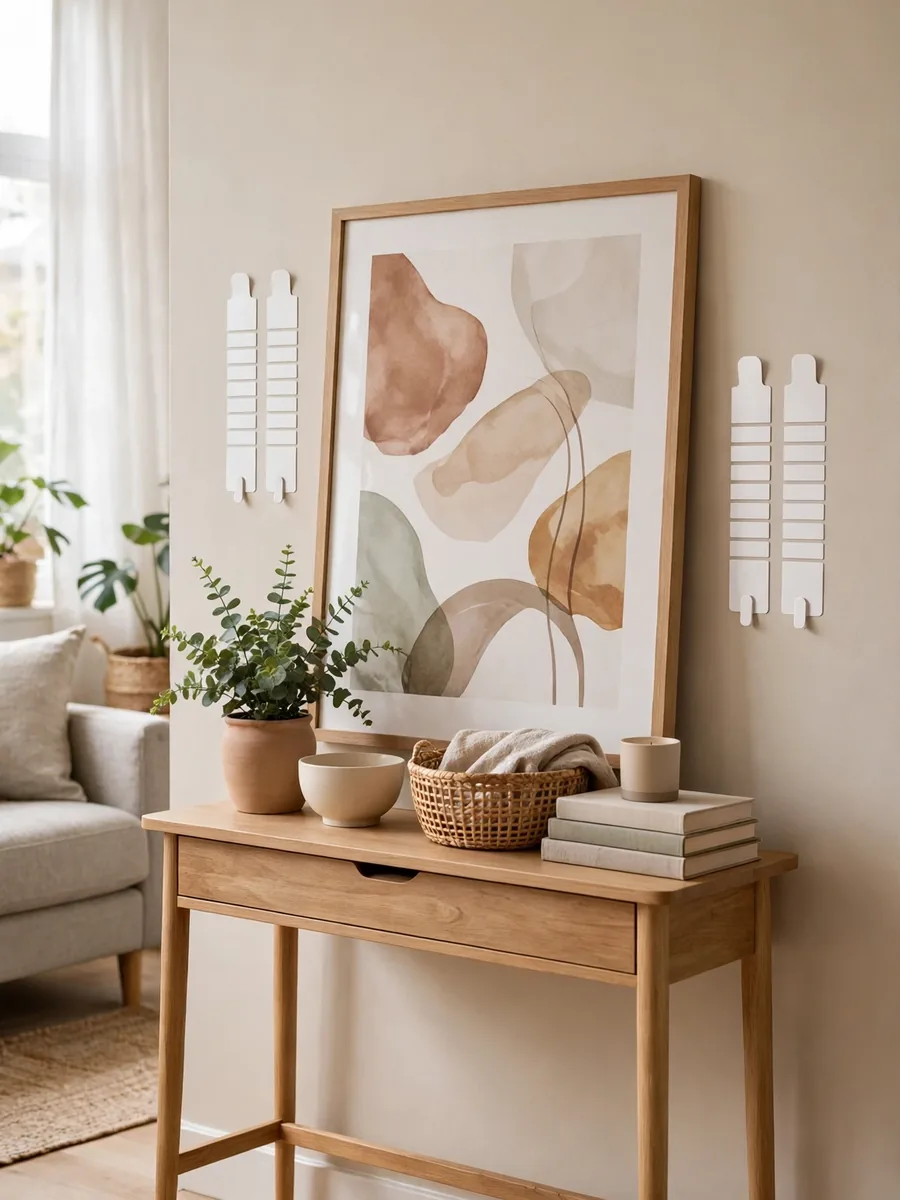
Most shared living rooms are in rentals, so decide up front whether drilling, painting, or sticking anything permanent to the walls is allowed. Many leases forbid it without written permission, and repairs can come out of the deposit. The safer default is removable hooks, leaning frames, freestanding shelves, and tension rods instead of screws and nails.
4. Give Each Roommate a Decision Zone
Instead of voting on every cushion, divide the room into zones and let one person lead each one. One roommate chooses the lighting, another the rug and textiles, another the wall decor. Everyone still gets a veto on anything shared and expensive, but day-to-day choices stop needing a committee meeting.
Choose a Neutral Base Everyone Can Live With
5. Start With a Neutral Sofa Color
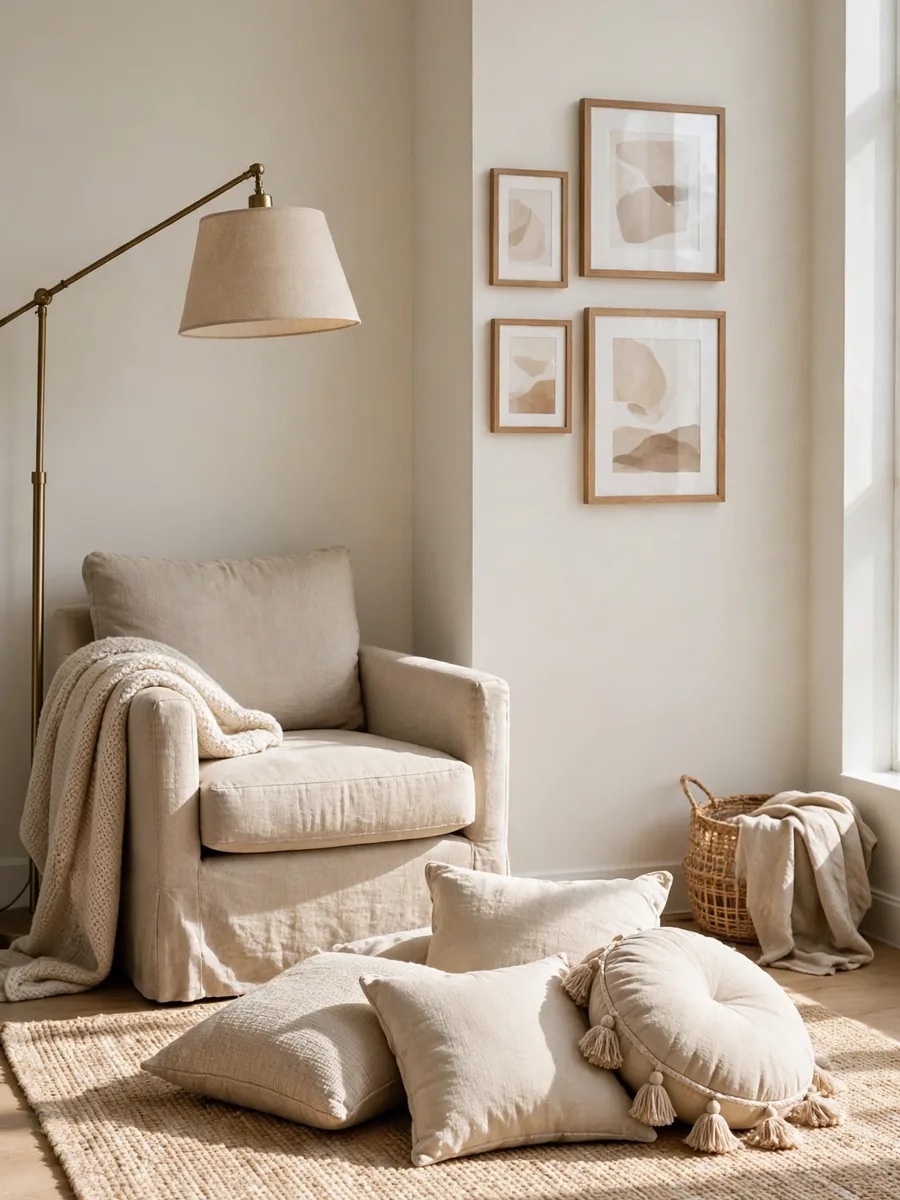
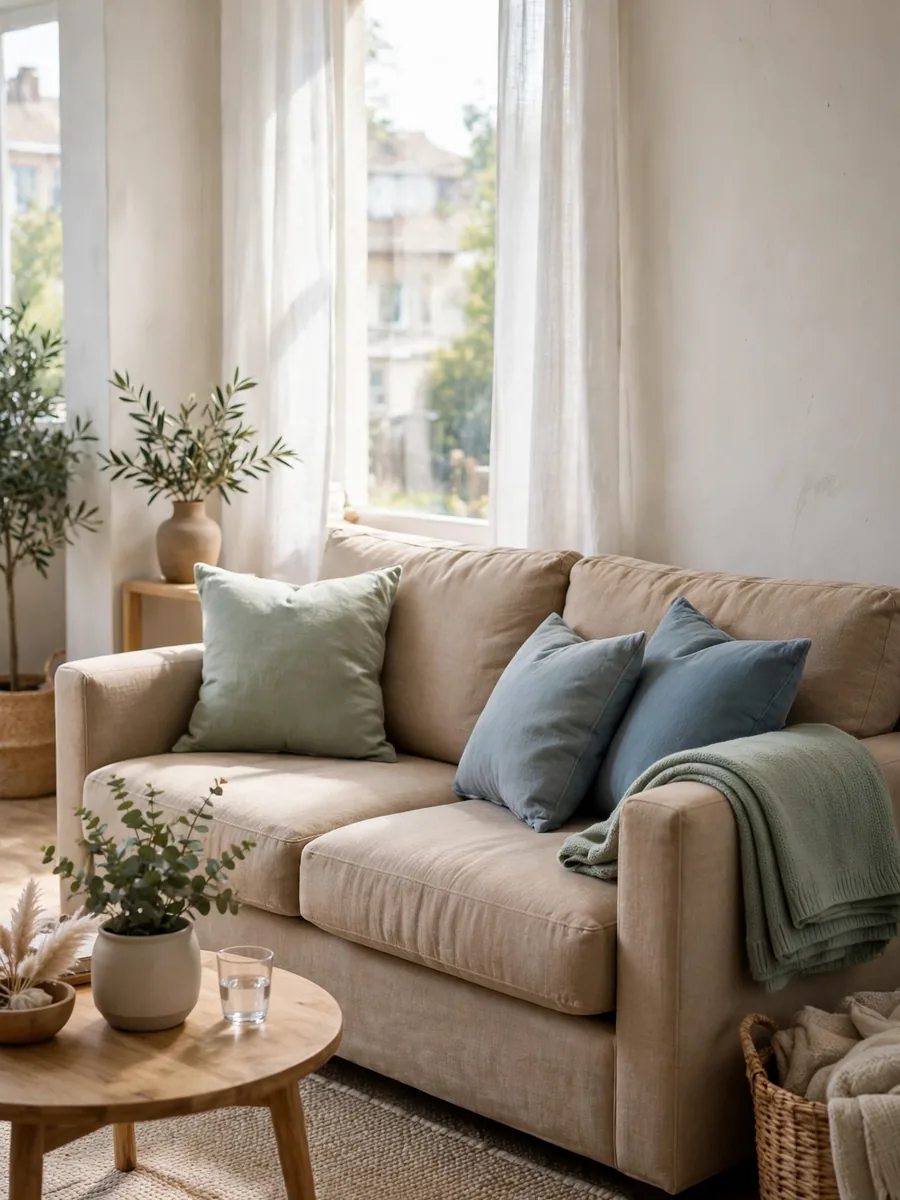
The sofa is usually the biggest and most expensive piece in a shared living room, so it is the worst place for a bold personal statement. A warm gray, beige, or soft charcoal sofa suits most styles and lets each roommate add their own color through cushions and throws that can be swapped or removed. A basic three-seater typically costs around 400 to 900 dollars as of 2026,
6. Pick One Warm Neutral Palette for the Whole Room
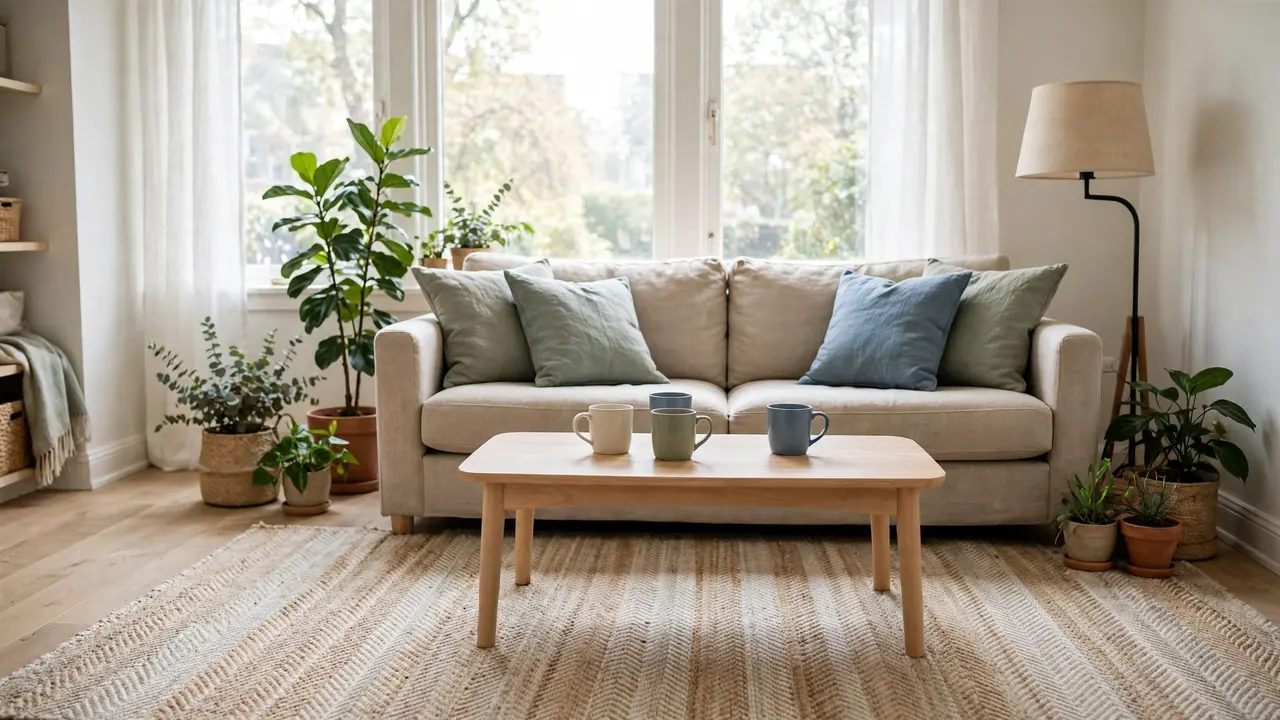
Choose three colors together: a main neutral, a second neutral, and one shared accent that everyone likes. Warm whites, soft greige, sage, and muted blue are usually easy to agree on because they sit calmly beside most furniture and do not fight with each other. Use the accent sparingly, on cushions, a throw, or a small piece of art. If you need a starting point, these living room inspo ideas show neutral rooms that feel finished without feeling fussy.

A rug defines where the living room actually is, especially in an open-plan apartment, and it makes mismatched furniture look intentional. Choose a low-pile, easy-to-clean rug in a neutral pattern. A rug big enough to sit under the front legs of the sofa typically costs around 80 to 250 dollars as of 2026, so measure together before buying.

8. Layer Lighting Everyone Can Adjust
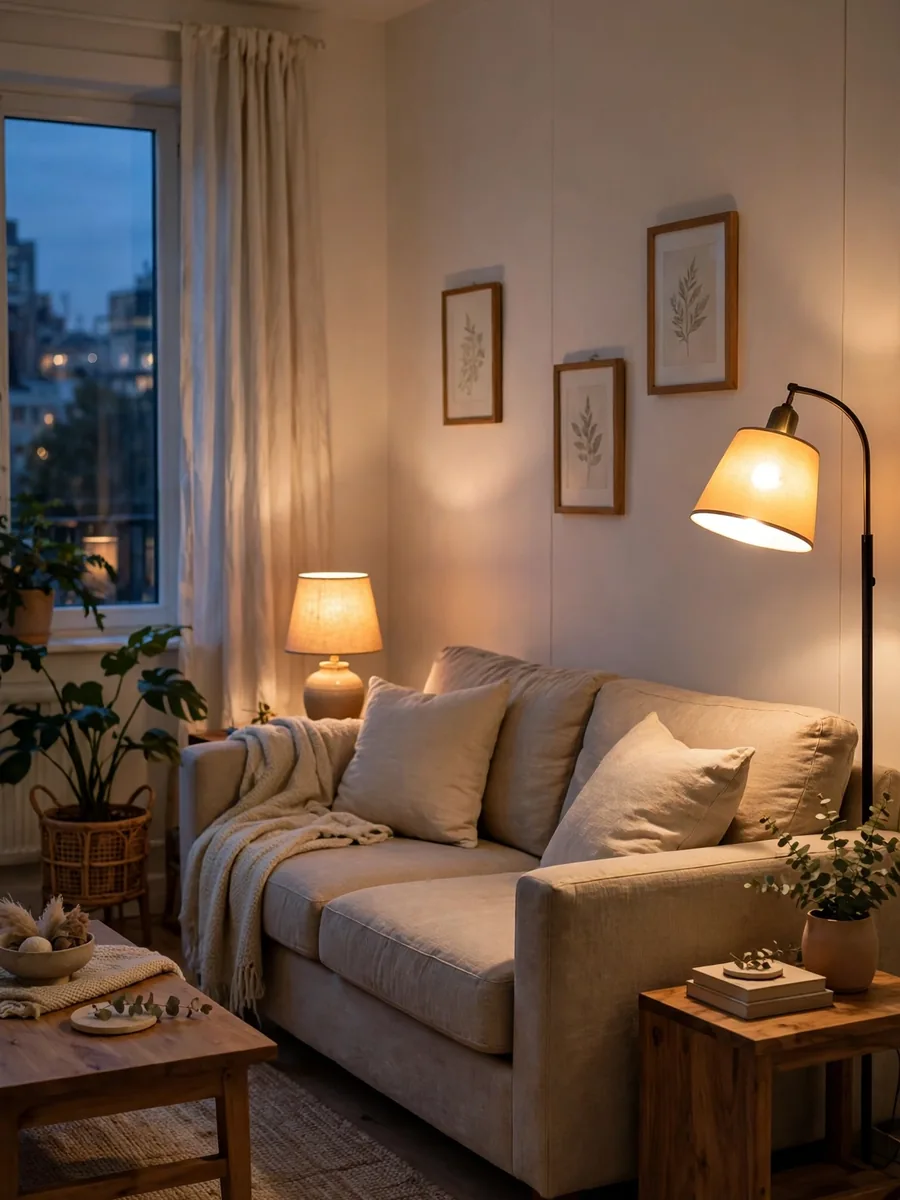
One harsh ceiling light rarely suits everyone, so layer the lighting instead. Keep the overhead light for cleaning and bright tasks, then add a floor lamp near the sofa and a small table lamp on a side table or shelf, so each person can turn on the light that suits what they are doing. Floor lamps typically cost around 30 to 80 dollars as of 2026, and table lamps around 20 to 50 dollars.
Split the Space Fairly
9. Give Each Roommate a Zone of Their Own
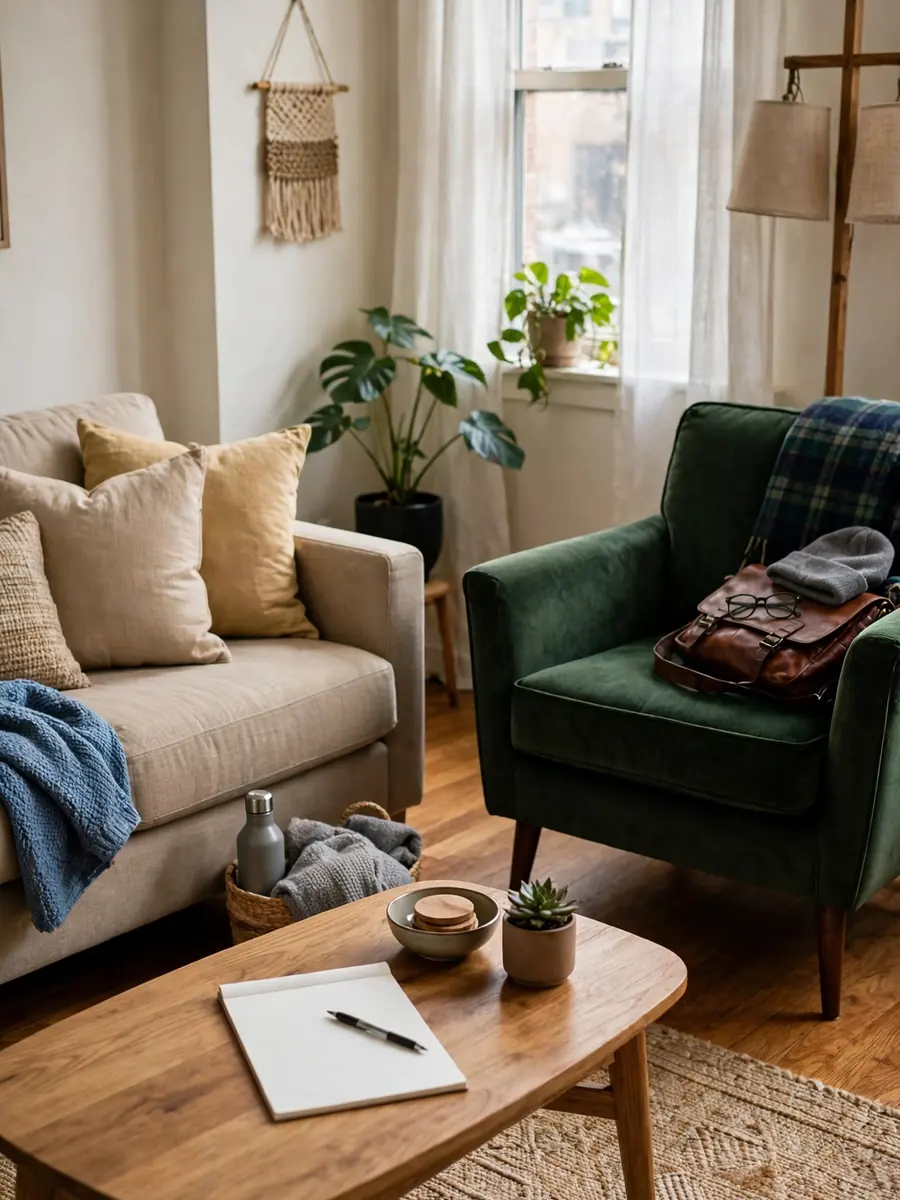
Even in a small living room, each person should have a spot that feels partly theirs: a favorite chair, a side table, or a shelf. Mark these zones lightly, with a chair, a lamp, or a small table, rather than with tape on the floor or a hard dividing line. When everyone has somewhere comfortable to sit and somewhere to put a book or a drink, the room feels shared rather than borrowed. If the shape of the room fights you, these awkward living room layout fixes can help you find an arrangement that works for everyone.

10. Build a Fair TV and Media Corner
The television usually dominates a shared living room, so set it up so everyone can see it comfortably. Place the sofa and any extra seating at a similar distance and angle from the screen. A simple low media unit typically costs around 60 to 150 dollars as of 2026. Avoid drilling to mount the television unless the lease allows it; a sturdy stand is the safer, renter-friendly option.

11. Add a Second Seat So Nobody Ends Up on the Floor
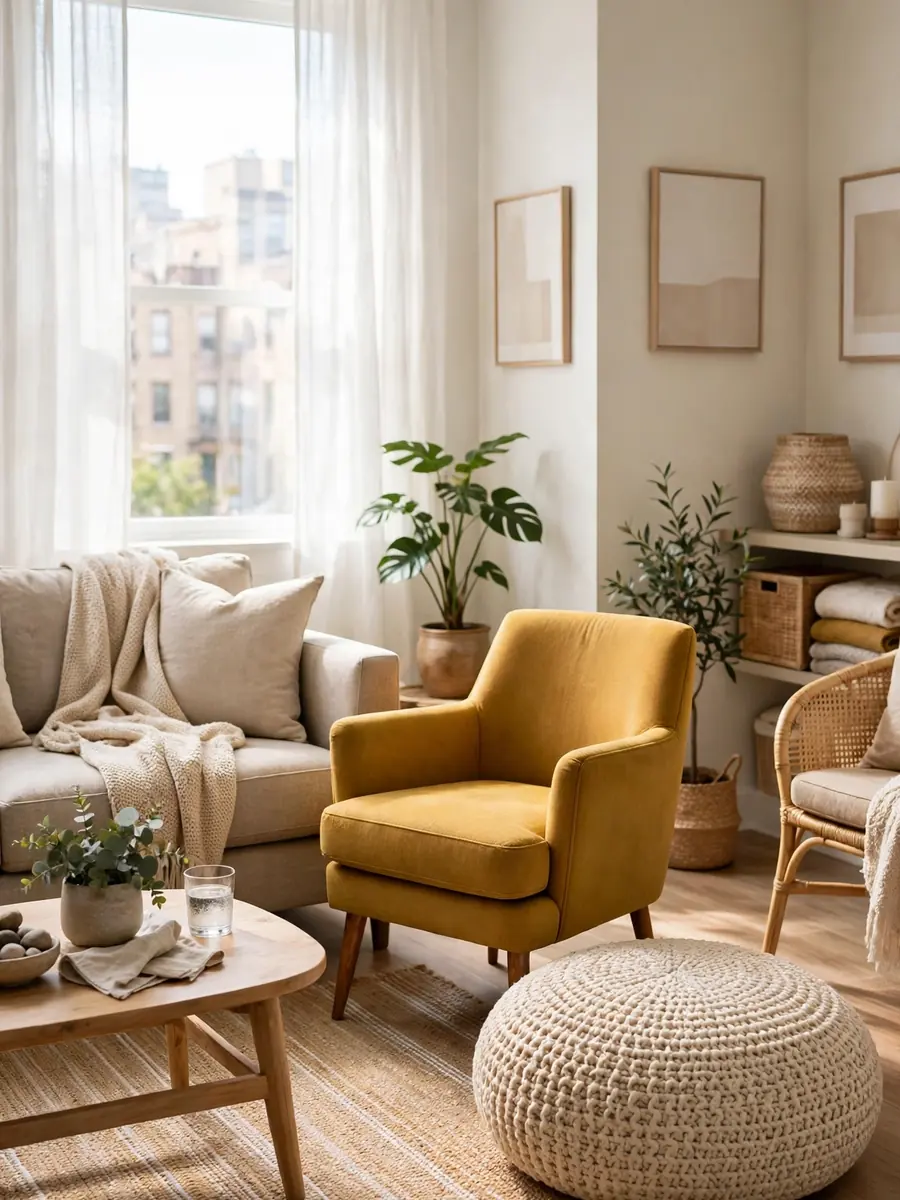
A shared living room needs seating for everyone who lives there, plus one spare for a guest. If the sofa only fits two of three roommates, add an armchair, a pouf, or a floor cushion so nobody is always the person sitting on the floor. A decent secondhand armchair often costs around 50 to 150 dollars as of 2026, and a large floor cushion around 30 to 60 dollars.
12. Use Open Shelving to Define Space Without Building Walls
A low open bookshelf placed at right angles to a wall can separate a reading nook or a work corner from the main seating area without blocking light or making the room feel smaller. It also gives everyone extra storage, which shared living rooms almost always need. A basic open shelf unit typically costs around 40 to 100 dollars as of 2026.

13. Split Big Purchases by Ownership, Not Just by Cost
When roommates split a sofa or a television evenly, someone eventually moves out and the question of who keeps it causes friction. A cleaner approach is for one person to own each big piece while the others pay a smaller share toward its use, or for the group to agree in writing who keeps it and whether the others get bought out.
Shared furniture takes a beating, so buying secondhand for the big shared pieces often makes more sense than buying new. A used sofa, coffee table, or media unit costs a fraction of the new price, typically 50 to 70 percent less as of 2026, and nobody feels guilty when it gets its first scratch. Check secondhand pieces in person where possible, look for solid frames and clean, dry upholstery.

Set up a shared pot, even just 10 to 20 dollars per person per month, for the things that wear out: light bulbs, a broken lamp shade, a stained cushion cover, or a rug that needs cleaning. When something breaks, the money is already there, and nobody has to chase the others for a small contribution. Keep the fund transparent with a shared note showing what went in and what went out.

Add Personality Without One Taste Taking Over
16. Let Each Person Style One Shelf or Corner
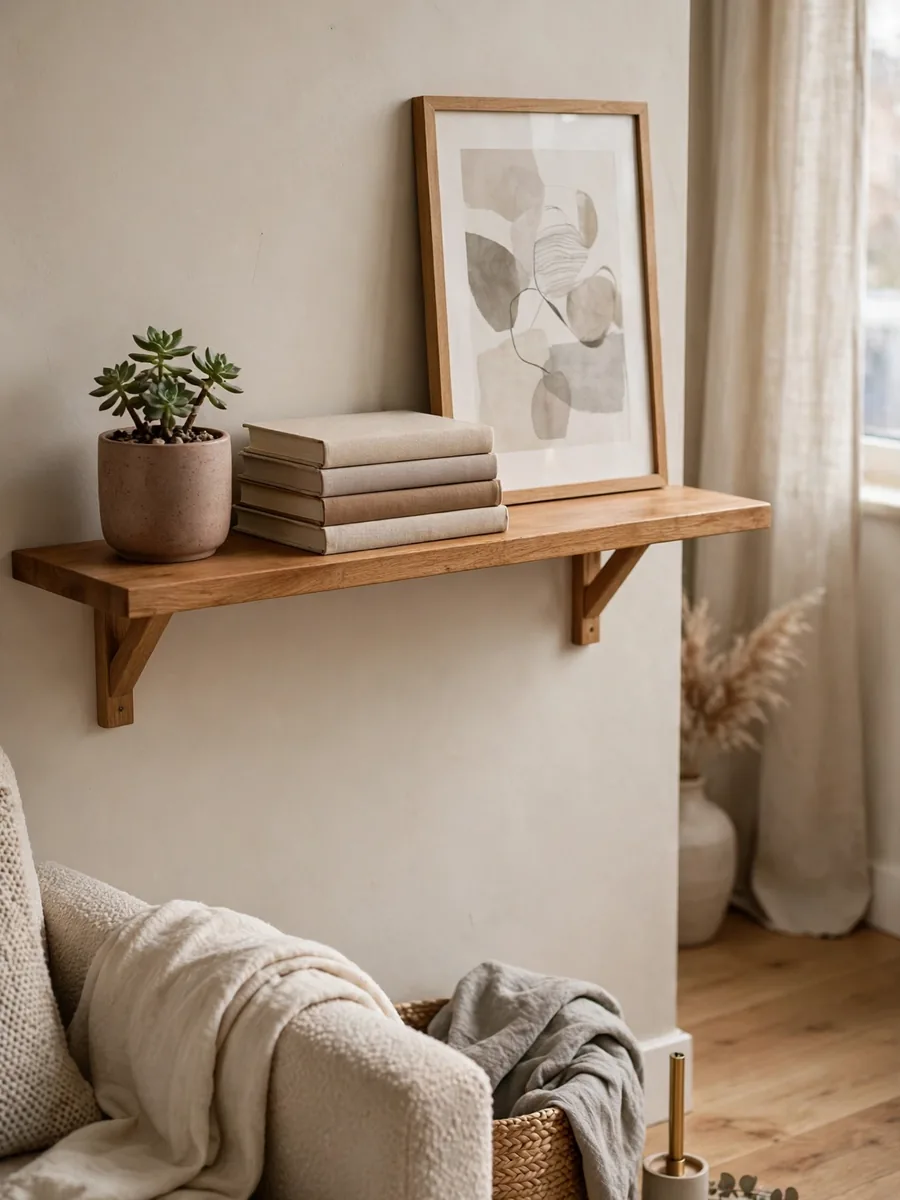
Give each roommate one shelf, one corner, or one side table to style however they like, within a couple of shared limits such as no open flames and nothing that damages the wall. One person might display books and a plant, another photos and a favorite mug collection, and both belong in the room. The room stays calm overall, while each person has a spot that is theirs.
17. Rotate Personal Decor Fairly Through the Year
If everyone wants their favorite poster, print, or seasonal decoration on the wall, set up a rotation. Each person gets the main wall spot for a month or a season, then it passes to the next person. Use removable hanging strips or picture ledges rather than nails where the lease requires it, and test any adhesive on a hidden spot first, since some adhesives can pull paint off the wall.

18. Agree on a Tidy-Up Routine That Protects the Decor
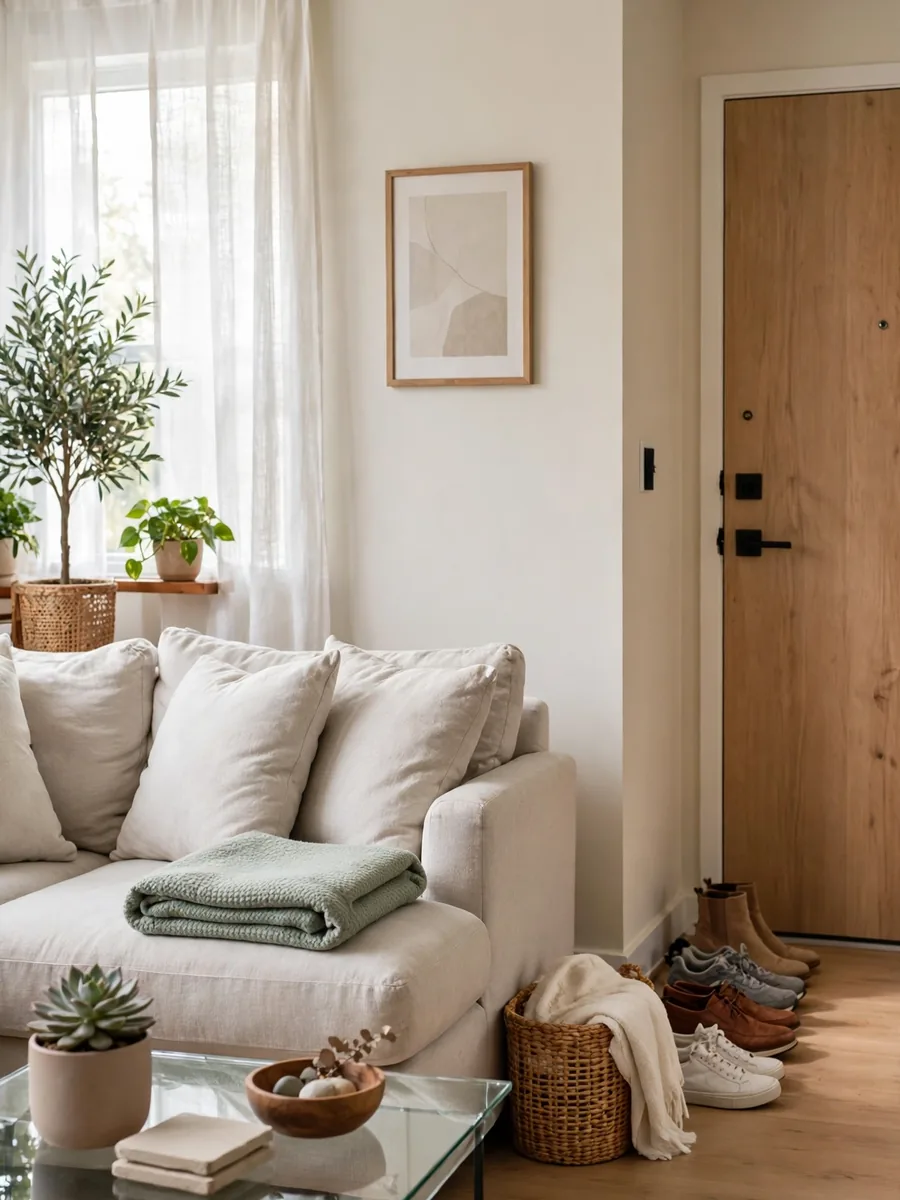
A shared living room only looks good if it stays reasonably tidy, so agree on a short daily routine: cushions straightened, throws folded, cups and plates cleared, and shoes by the door. Ten minutes each evening is usually enough, and rotating the job weekly keeps it fair. Cushions last longer plumped, rugs stay cleaner with shoes off, and plants survive on a shared watering rota.
Frequently Asked Questions
How do roommates agree on a living room style?
Start with what everyone dislikes rather than what each person loves, and remove those options first. Then pick a neutral base together and let each person add their own touches in a small personal zone.
Most roommates find it fairest to split shared pieces evenly or by use, and to record who paid what. For big items, consider one person owning the piece while the others contribute a smaller share, with a written note about who keeps it when someone moves out.
A warm neutral palette usually works best, since it suits most furniture and most tastes. Choose one main neutral, a second neutral, and one shared accent color that everyone likes, and use the accent sparingly on cushions, throws, or small art.
How can roommates decorate a rental living room without losing the deposit?
Use renter-friendly methods: removable hooks and hanging strips, leaning frames, freestanding shelves, tension rods, and rugs. Check the lease before drilling, painting, or sticking anything to a wall, and get written permission for any change.
Give each roommate a defined zone, such as a favorite chair or a shelf, and arrange seating so everyone has a comfortable view of the television and a place to put a drink. A low open shelf can separate a reading or work corner without blocking light.
What should roommates do when one person hates the other's decor?
Treat it as a placement question rather than a taste judgement. Move the contested piece to that person’s zone or bedroom, or give it a trial month in a less prominent spot. If it still bothers everyone, agree together whether it stays, moves, or goes.
Conclusion
A shared living room does not need a single vision or a big budget to feel like home. It needs a few honest conversations, a neutral base that nobody hates, a fair split of space and money, and a small corner where each person can be themselves. Start with the ground rules and agree on the budget before anyone shops. Then add the personal touches one at a time and let the room grow into something all of you chose together. That shared effort is what turns a room you happen to live in into a living room you actually enjoy coming home to.

Thiago Alexander is the Chief Editor at Nested Charm. With a deep passion for interior design and cozy living spaces, he leads the editorial team in crafting stories that make every house feel like a home.