

15 Living Room Layout Ideas for a TV and Fireplace That Actually Work Together
Executive Summary
A living room with both a TV and a fireplace has two focal points competing for the same wall — and the same sofa. Put the TV above the fireplace and you may crane your neck; put it on the opposite wall and the room can feel split in two. The fix is a layout that gives each focal point a clear job and lets your seating serve both.
The fifteen ideas below cover the three layouts that work most often: TV above the fireplace, TV beside it, and seating arranged so nobody has to choose. Most cost little or nothing to try — moving a sofa beats buying furniture for a layout you have not tested.
In short: Pick one focal point to lead, place the TV at seated eye level whenever you can, and angle or zone your seating so the fireplace stays usable even on TV nights. Renters can get the same result with a freestanding stand and no drilling at all.

Start With the Room, Not the TV
Before moving anything heavy, spend ten minutes measuring — a layout that looks right in a photo can feel wrong when the viewing distance or walkways were never checked.
1. Measure Your Viewing Distance First

Sit where you actually watch TV and measure to the screen wall. As a rough guide, a 55-inch TV feels comfortable at about 7 to 9 feet, and a 65-inch TV at about 8 to 10 feet. Too close and you turn your head to follow the action; too far and a smaller screen gets lost next to a big fireplace. Mark the spot with painter's tape and check the sofa can sit there without blocking a doorway. Cost: free, plus tape at around $5 as of 2026.
2. Pick One Focal Point to Lead
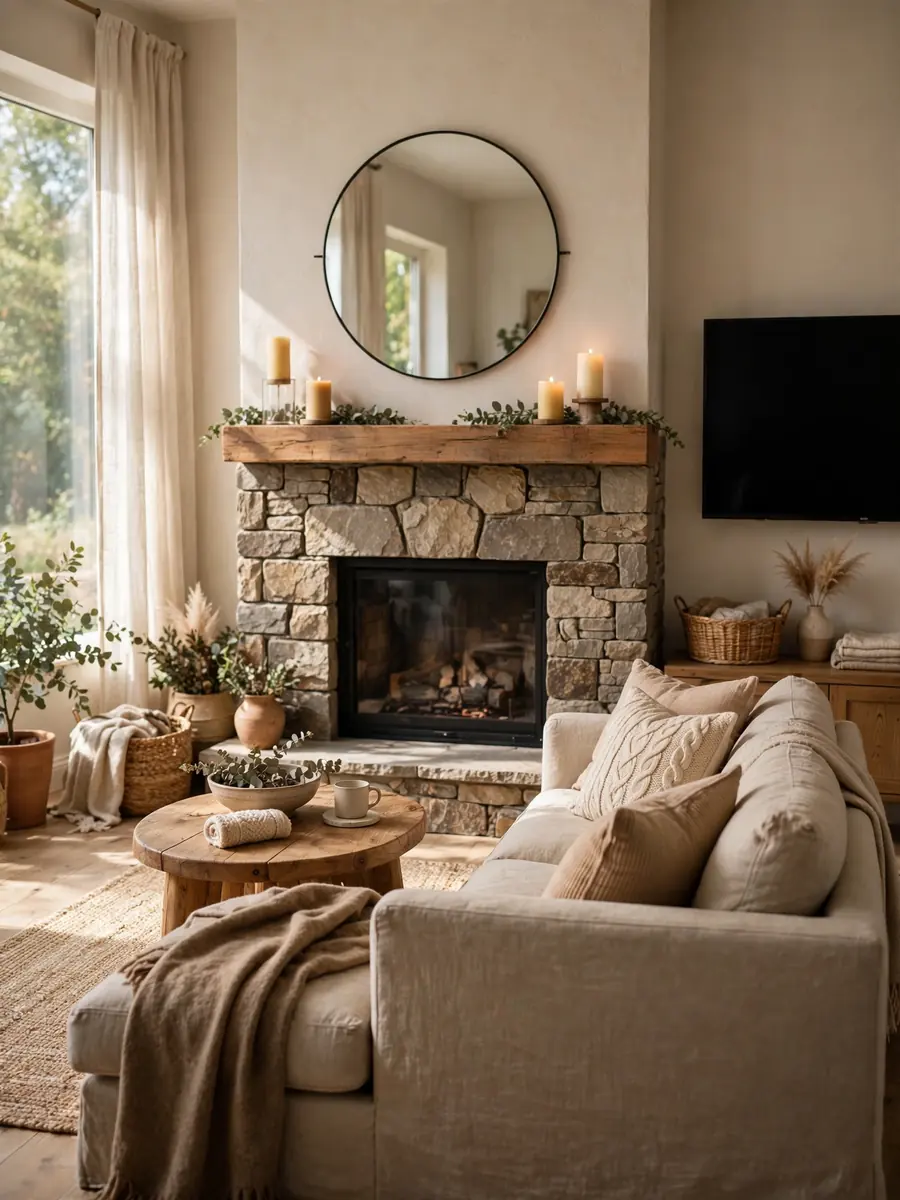
Every room needs a boss. If the fireplace is the prettier feature, let it lead: face the main sofa toward it and put the TV on a side wall where it is easy to see but not the first thing you notice. If your household watches TV most evenings, let the TV lead and treat the fireplace as a cozy backdrop. Giving both equal billing usually leaves the room feeling crowded. Cost: free.
3. Map the Traffic Flow Before You Place Furniture
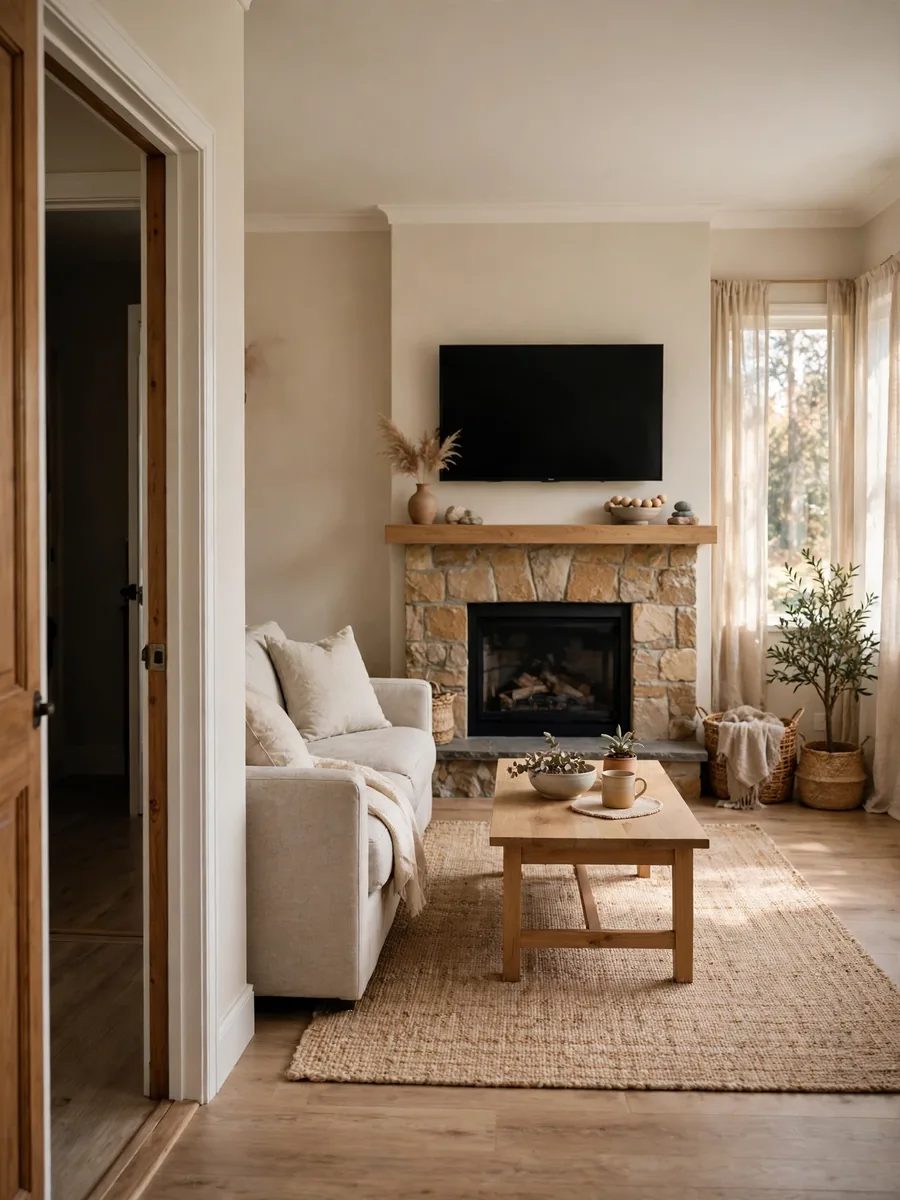
Walk the routes people actually use — front door to kitchen, sofa to hallway — and keep those paths at least 30 inches wide. A sofa facing both focal points is no good if everyone has to climb over the coffee table to get past it. Place the rug and sofa so the walkway runs behind or beside the seating, not through it. Cost: free.
TV Above the Fireplace — Done Right
Mounting the TV over the mantel is the most popular answer to this problem, and the most complained about. It works when the fireplace is low; if your mantel sits high, skip to the next section.
4. Keep the TV as Low as the Mantel Allows
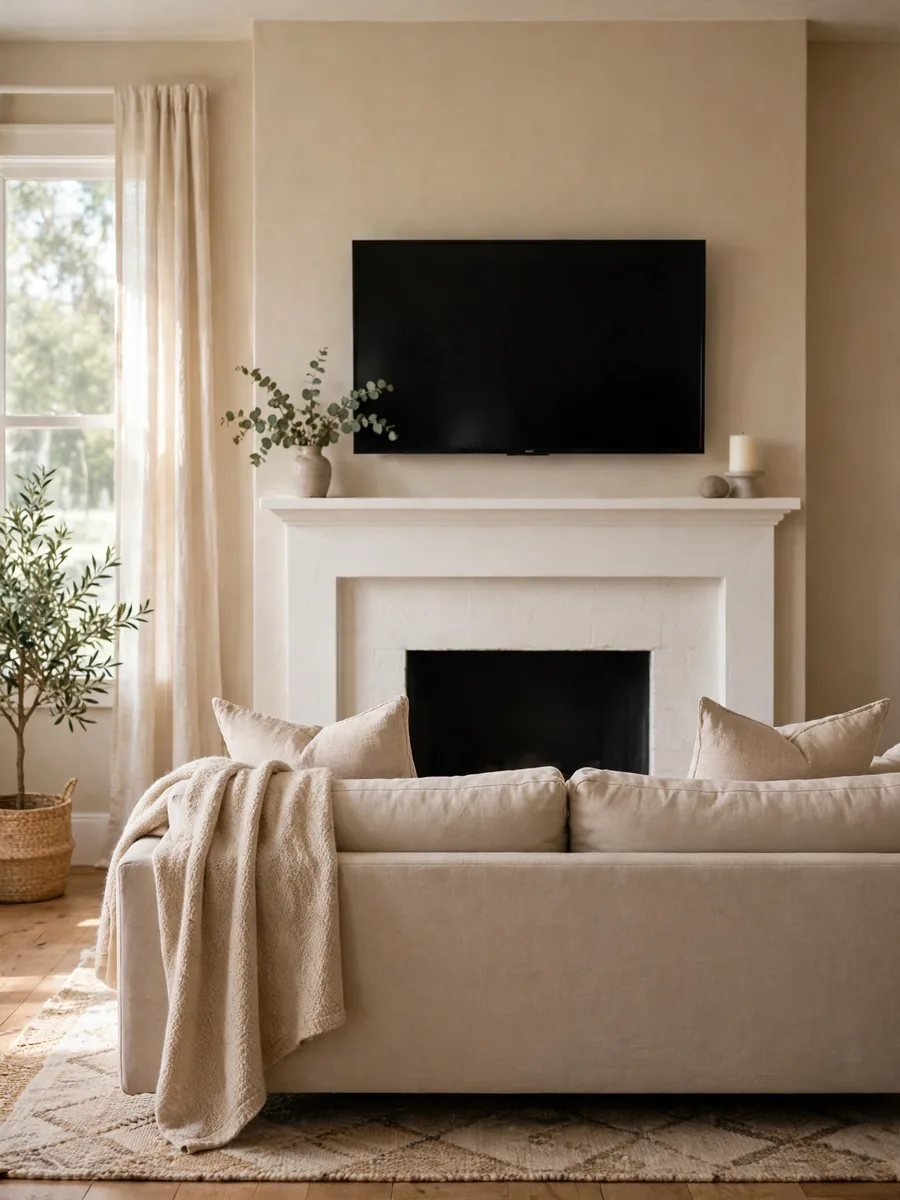
The classic complaint about a TV over the fireplace is neck strain, and it comes from mounting the screen too high. Aim for the center of the screen as close to seated eye level — roughly 42 inches from the floor — as your mantel allows. If your chin lifts noticeably from the sofa, the TV is too high. A basic fixed mount costs around $30–$60 as of 2026.
5. Use a Tilt or Pull-Down Mount
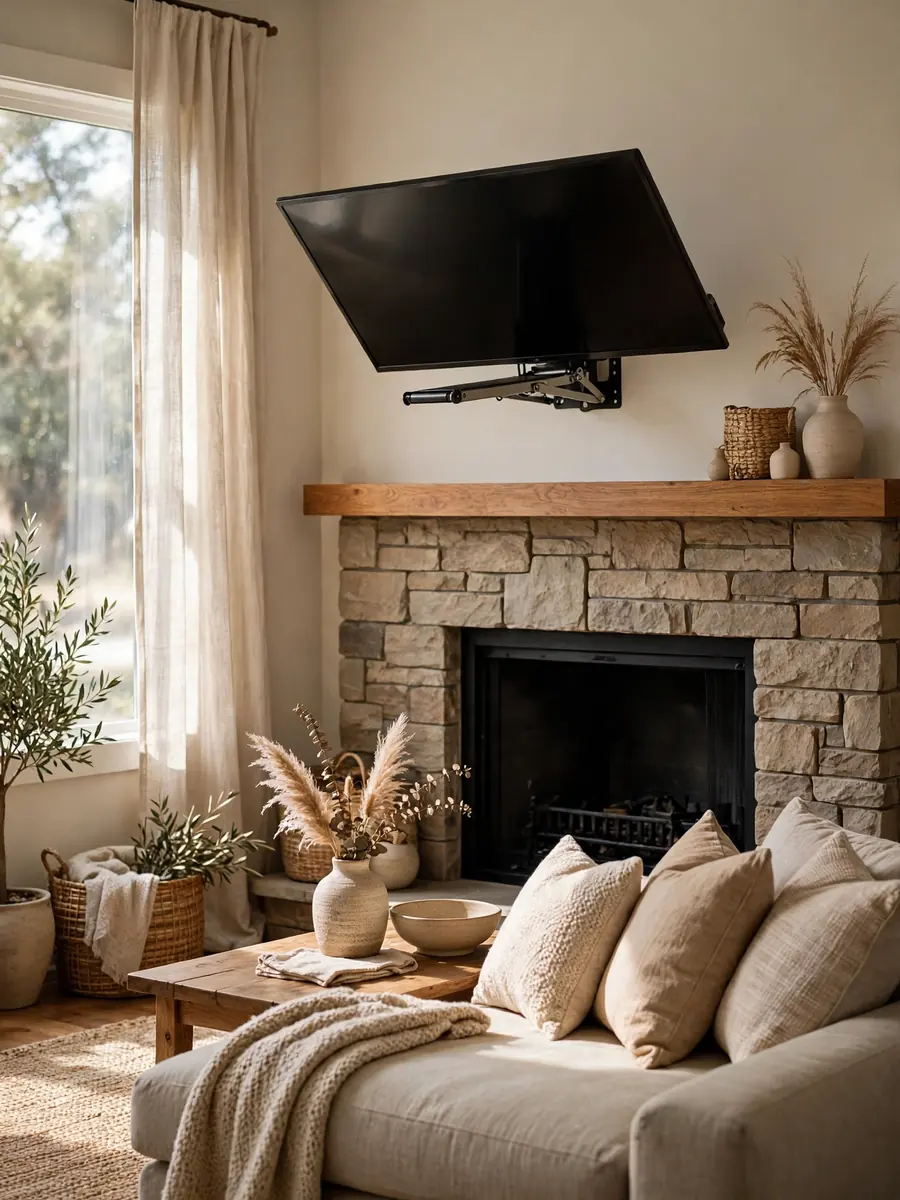
If the TV must go above the fireplace, a tilting mount angles the screen down toward the sofa and cuts window glare at the same time. A pull-down mount goes further, dropping the TV to eye level when you watch and pushing it back up when the fire is lit. Pull-down mounts cost around $150–$300 as of 2026, so try the tilt version first if your budget is tight. Check the mount's weight rating against your TV first.
6. Style the Mantel So It Does Not Fight the Screen
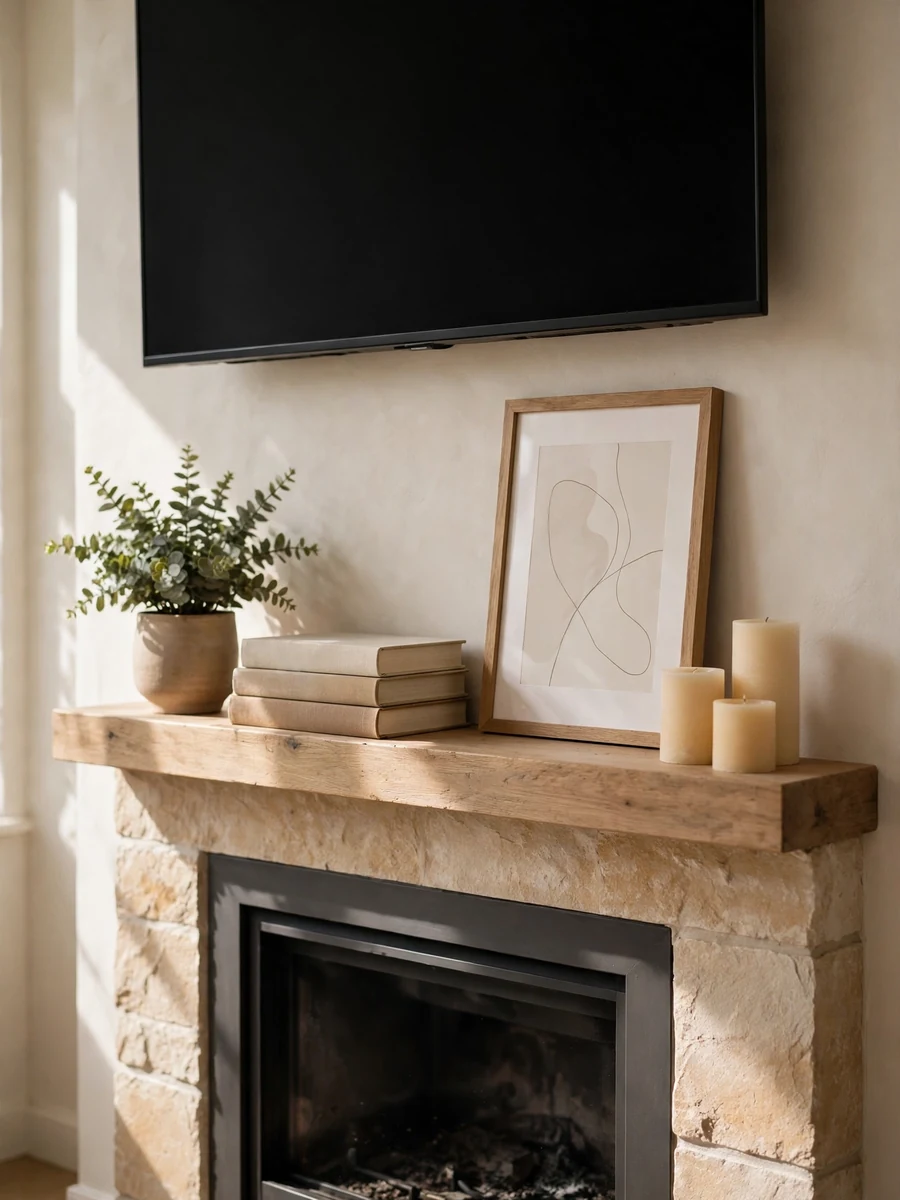
A bare black rectangle above a busy mantel looks top-heavy, so keep mantel decor low, simple, and wide rather than tall. A low stack of books, a small plant, and candlesticks spread across the mantel frame the TV without competing with it. Avoid tall vases directly under the screen — they push the eye upward and make the TV feel even higher. Cost: free if you shop your own home.
TV Beside the Fireplace
When the mantel is high or the fireplace is the star of the room, the TV usually belongs on a neighboring wall, where both get proper viewing height.
7. Put the TV on the Perpendicular Wall
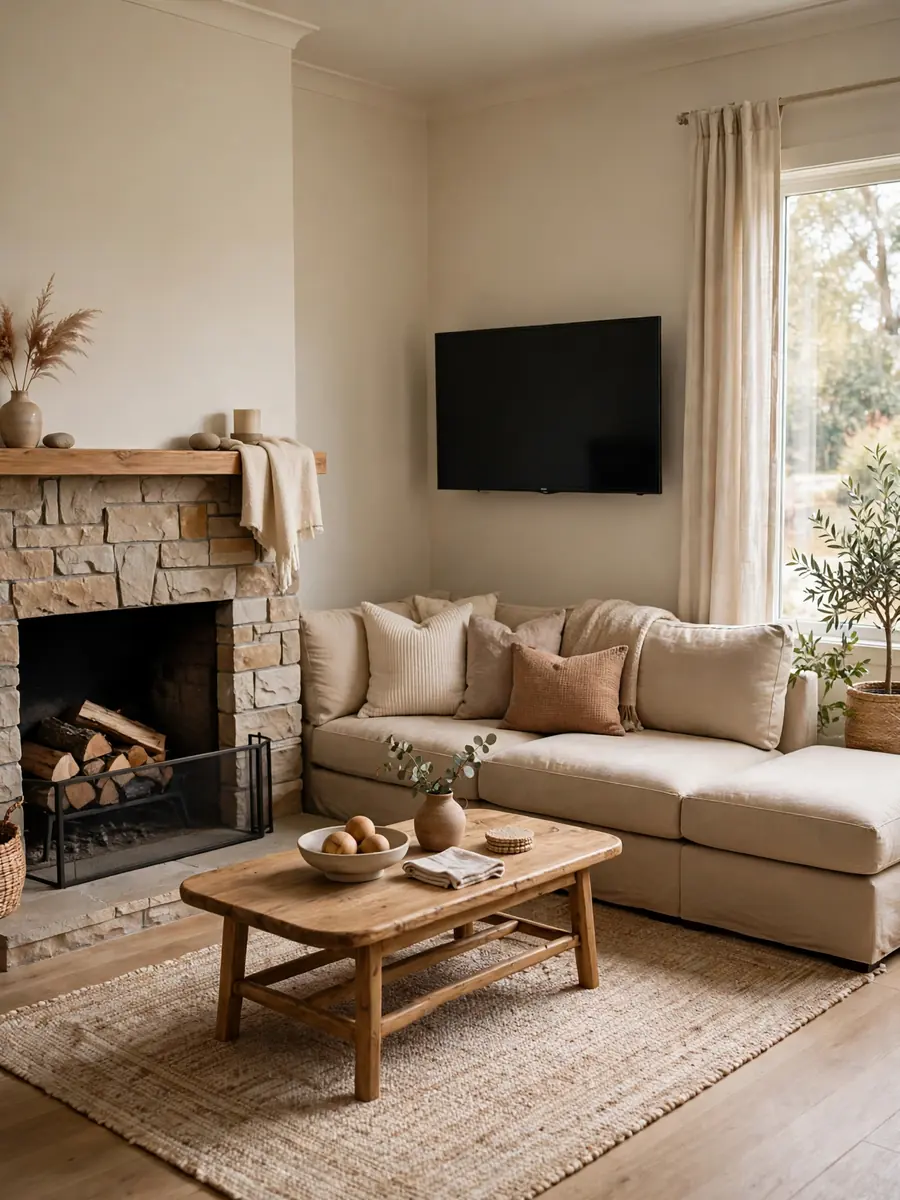
Mounting or standing the TV on the wall next to the fireplace — at a right angle to it — lets the sofa sit between the two and see both with a small turn of the head. It suits most rectangular rooms. Keep the TV at seated eye level on its own wall. A wall mount costs around $30–$60 as of 2026.
8. Tuck the TV Into the Corner

In a smaller room, a corner TV stand next to the fireplace can save the only full wall for the sofa. Angle the screen toward the seating and keep the stand low so the TV does not tower over the fireplace. The trade-off is a narrower sweet spot, so this works best where two or three people watch together. A corner stand costs around $80–$200 as of 2026, and needs no holes in the wall at all.
9. Use an L-Shaped Layout to Face Both
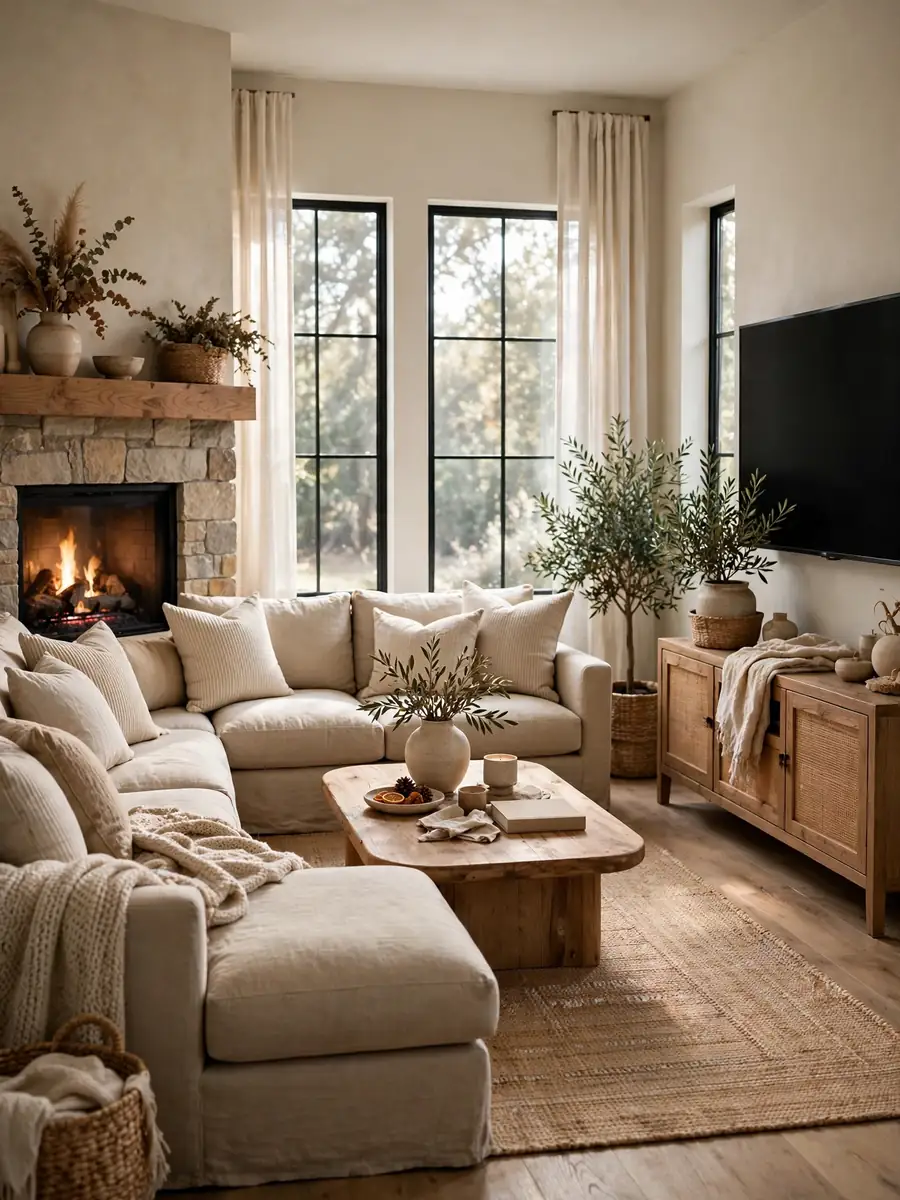
An L-shaped sectional serves two focal points at once: one side faces the TV, the other faces the fireplace, and the corner seat gets both. Place it so its back does not block a walkway, with a coffee table both sides can reach. Two sofas or a sofa and loveseat in an L-shape do the same job. For more sectional-specific arrangements, see our 18 sectional sofa living room layout ideas. Sectionals start at around $600 as of 2026.
Seating That Serves Both Focal Points
The TV and fireplace do not have to share a wall if the seating compromises. Angled chairs, swivel seats, and two small zones can make a room feel generous even when the focal points sit on opposite walls.
10. Angle the Sofa Between the Two
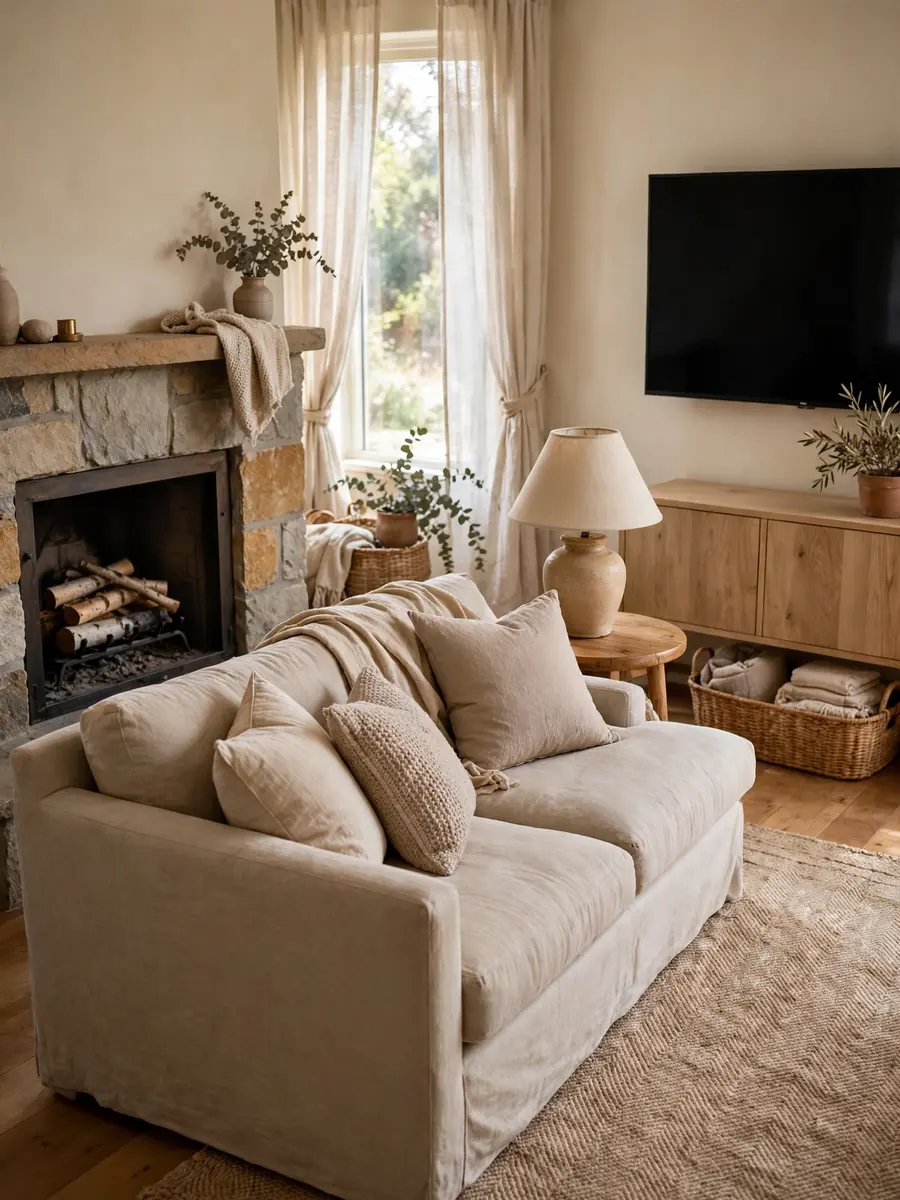
Instead of facing the sofa squarely at one wall, angle it about 30 to 45 degrees so it sits between the TV and the fireplace. Both focal points stay in view, and the empty corner behind the sofa becomes a natural spot for a floor lamp or a large plant. Use a rug large enough to anchor it, with the sofa's front legs on the rug. Cost: free to try; a new rug runs around $100–$300 as of 2026.
11. Add Swivel Armchairs for Flexible Viewing

A pair of swivel armchairs is the lowest-effort fix for a split-focus room: turn toward the TV for a movie, turn toward the fire for conversation, and nobody drags furniture around. Place them opposite the sofa to complete the seating circle, leaving room behind them to swivel. Swivel chairs cost around $200–$500 each as of 2026, so try one first if you are unsure.
12. Create Two Small Seating Zones
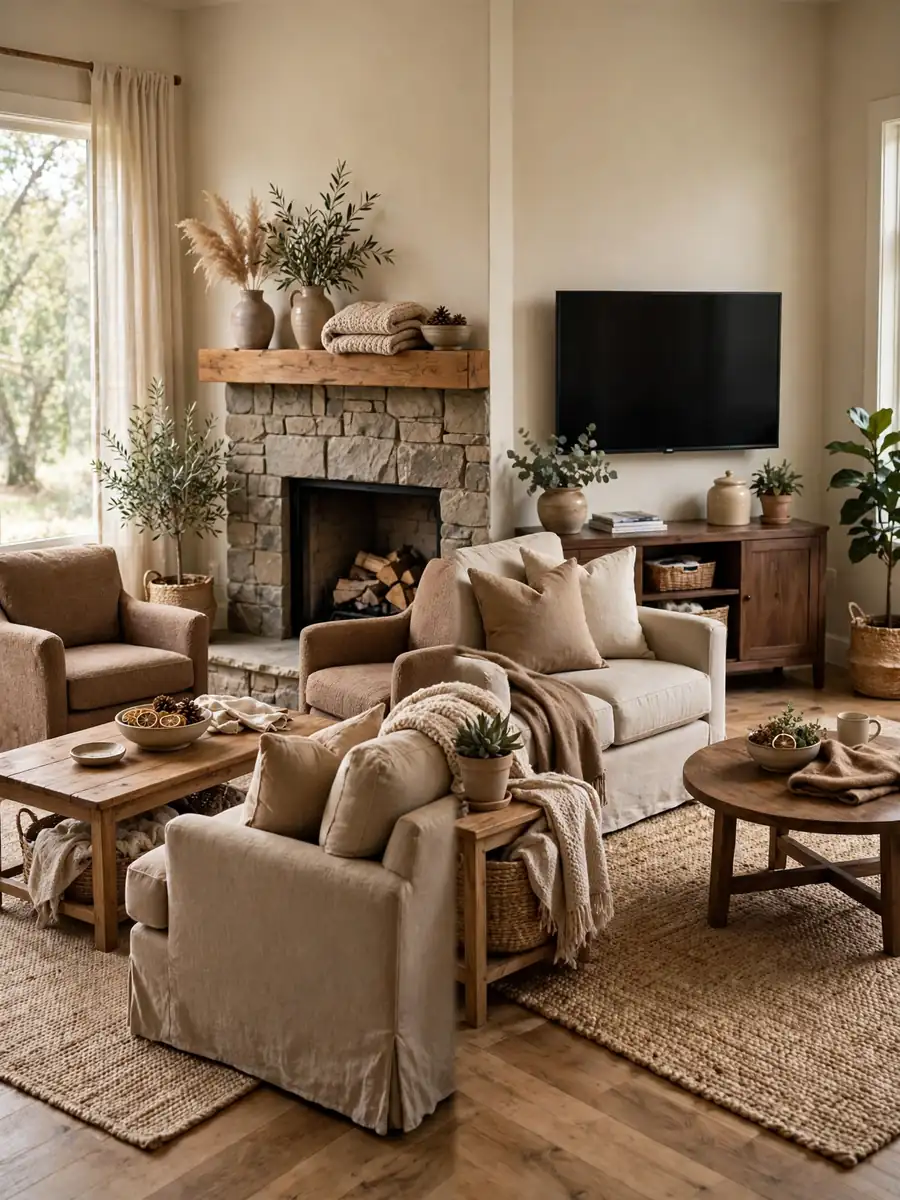
In a larger room, stop trying to make one sofa do everything. Put the main sofa facing the TV and a pair of chairs facing the fireplace, with a rug under each zone. The room instantly feels like it has two purposes instead of one unresolved argument. Cost: free if you already own the chairs; a second small rug runs around $60–$150 as of 2026.
Small Rooms, Awkward Corners, and Renter Fixes
Small rooms punish rigid layouts, and renters cannot always drill. These three ideas work without a remodel, a wall mount, or a lost deposit.
13. Use a Low Media Console Beside the Fireplace

A low media console keeps the TV at eye level beside the fireplace without a wall mount, and its slim profile suits small rooms. Choose a console a few inches wider than the TV so the setup looks grounded. Low consoles cost around $100–$300 as of 2026. If you are renting, a freestanding console is the safest option of all: no holes, no landlord call needed.
14. Balance the Wall With Simple Decor
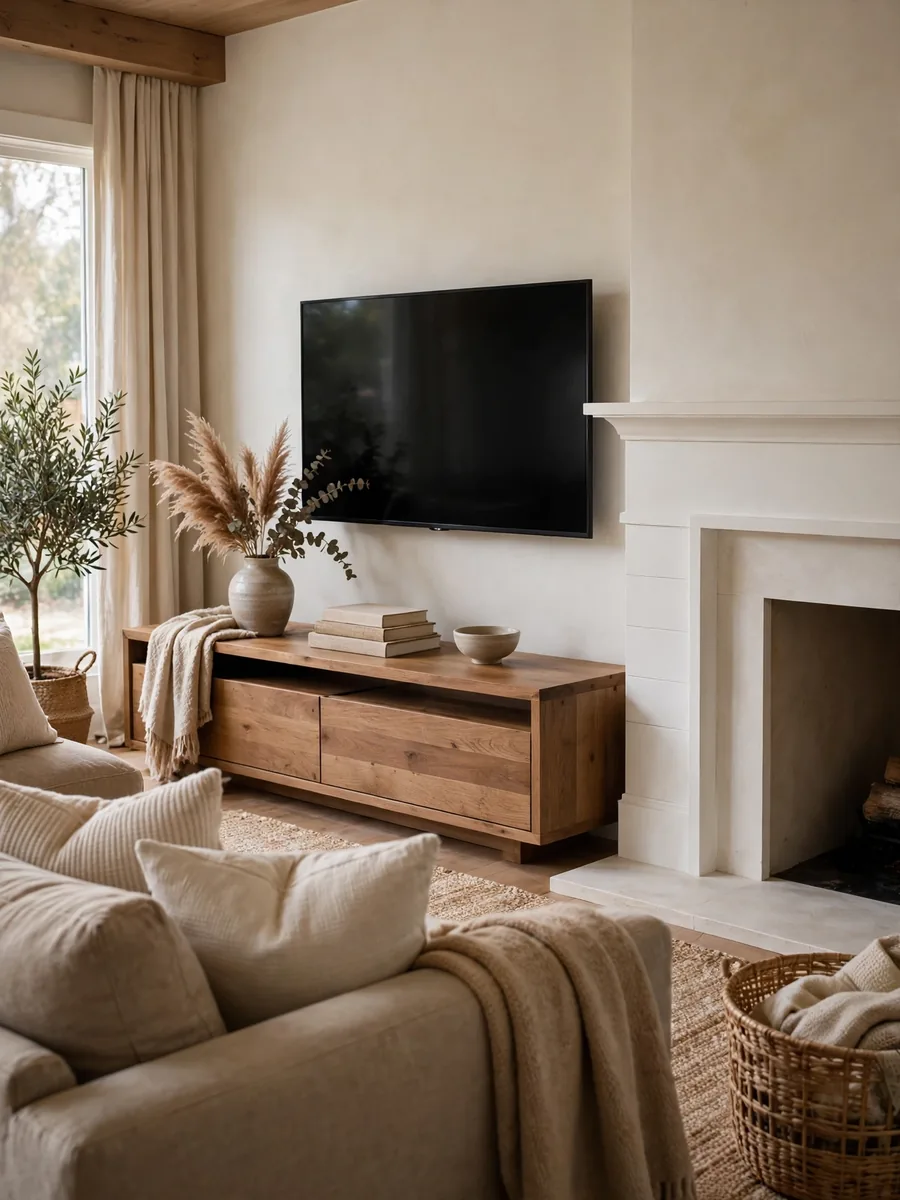
When the TV sits beside the fireplace, the wall can look lopsided — a big black screen on one side, an empty stretch on the other. Balance it by keeping the console low and wide, adding one medium-sized object like a vase or a stack of books, and leaving the rest of the wall calm. Avoid filling every inch: the fireplace already provides the visual weight. If your room still feels unbalanced, our 21 living room furniture layout ideas for small spaces covers the same balancing tricks in more detail. Cost: free to $30 as of 2026.
15. Go Fully Renter-Friendly With a Freestanding Stand

Renters can have the whole look with zero drilling: a freestanding TV stand holds the screen at the right height, cord covers hide the cables, and leaning art on the mantel replaces anything that would need a nail. Before wall-mounting in a rental, check your lease and ask your landlord — a lost deposit costs far more than a stand. A sturdy freestanding stand costs around $60–$150 as of 2026, and cord covers run about $10–$20.
Frequently Asked Questions
Should the TV go above or beside the fireplace?
Beside the fireplace is usually better, because the screen can sit at seated eye level. Above the fireplace works when the mantel is low and you use a tilt or pull-down mount — but a high mantel rarely justifies the neck strain.
How high should a TV be over a fireplace?
As low as possible. Aim for the center of the screen near seated eye level, about 42 inches from the floor. If your mantel puts the center much above 60 inches, consider the wall beside the fireplace instead.
Can you put a TV next to a fireplace safely?
Yes, with distance and common sense. Keep the TV a few feet from the firebox opening, never block the fireplace vents, and check the wall beside the fireplace does not get hot when a fire is burning. Electric fireplaces produce little side heat, which makes this much simpler.
What is the best layout for a small living room with a TV and fireplace?
Angle the sofa between the two focal points, or use a corner TV stand beside the fireplace with a loveseat instead of a full sofa. Keep the furniture low and the walkways clear.
How do I arrange furniture if the fireplace and TV are on opposite walls?
Create two zones: a sofa facing the TV and a pair of chairs facing the fireplace. Swivel chairs are the flexible alternative — one chair can serve both walls without moving the sofa.
Can renters mount a TV near a fireplace?
Only with your landlord's permission, and many leases forbid drilling into fireplace surrounds or masonry altogether. A freestanding TV stand gives you the same layout with no holes, no repair bill, and no deposit risk.
Conclusion
A living room with a TV and a fireplace does not need a perfect wall — it needs a clear decision about which focal point leads, a TV at a height your neck can live with, and seating that does not force anyone to choose. Try the free moves first: angle the sofa, pick a lead focal point, and live with it for a week before you buy anything.

The best layout is the one your household actually uses — the sofa that faces the fire on quiet evenings and the screen on movie nights, in the same room, without a renovation. Pick one idea, try it this weekend, and let the room tell you what to change next.

Thiago Alexander is the Chief Editor at Nested Charm. With a deep passion for interior design and cozy living spaces, he leads the editorial team in crafting stories that make every house feel like a home.



One Comment