
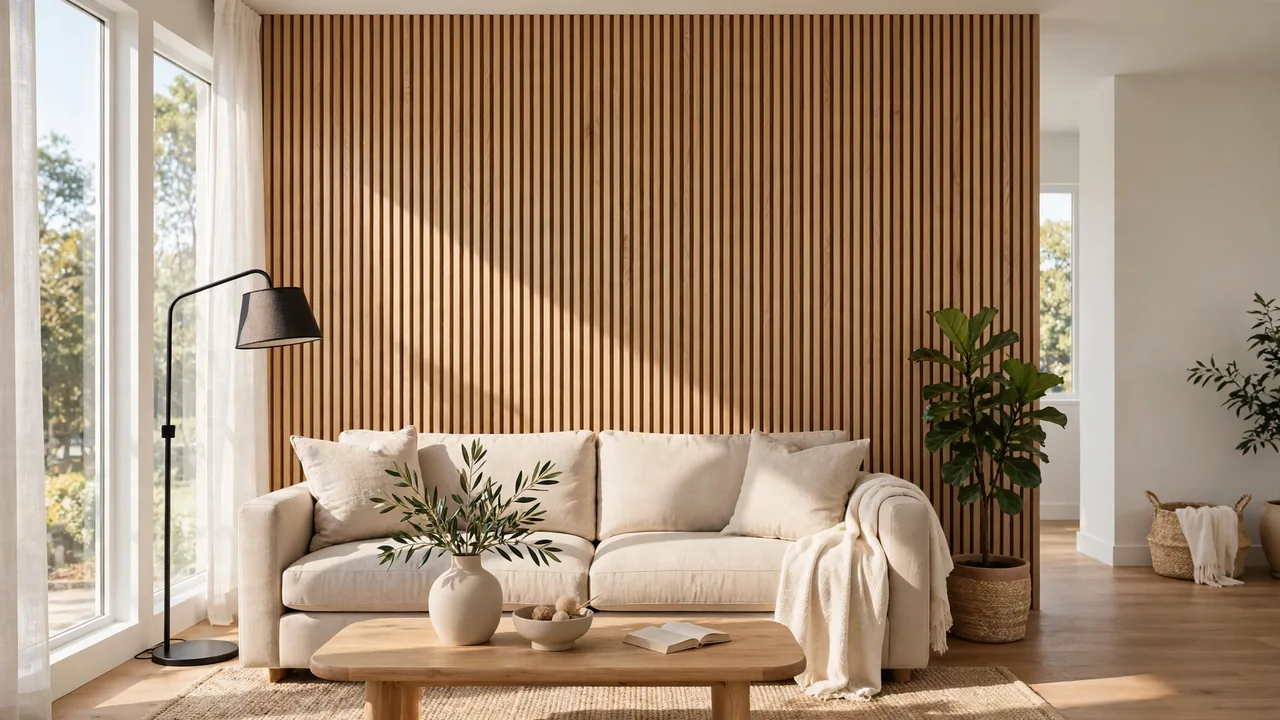
15 Wood Slat Wall Panel Ideas for a Warm, Modern Home on a Budget
Executive Summary
Wood slat wall panels — the vertical strips of wood you see in countless living rooms, bedrooms, and home offices — are one of the simplest ways to give a plain wall warmth and texture. They suit almost any style, from Scandinavian and modern to rustic and mid-century, and range from ready-made acoustic boards to a weekend DIY project built from pine battens. You can cover a whole wall, frame a television, or add just a narrow strip in a hallway.
The good news is that you do not need a big budget or a contractor to get the look. Pre-made fluted and acoustic slat panels are widely available as of 2026, and a simple DIY version can cost far less than a full remodel. The ideas below cover classic looks, focal-point walls, room-by-room placements, color and finish choices, and smart ways to install them — including renter-friendly options.
**In short:** Wood slat wall panels add warmth, texture, and a modern feel to almost any room. Start with one accent wall, choose a finish that matches your furniture, and pick an install method that suits your home — glued or nailed for owners, removable for renters.
Start Simple: Classic Slat Looks That Work Anywhere
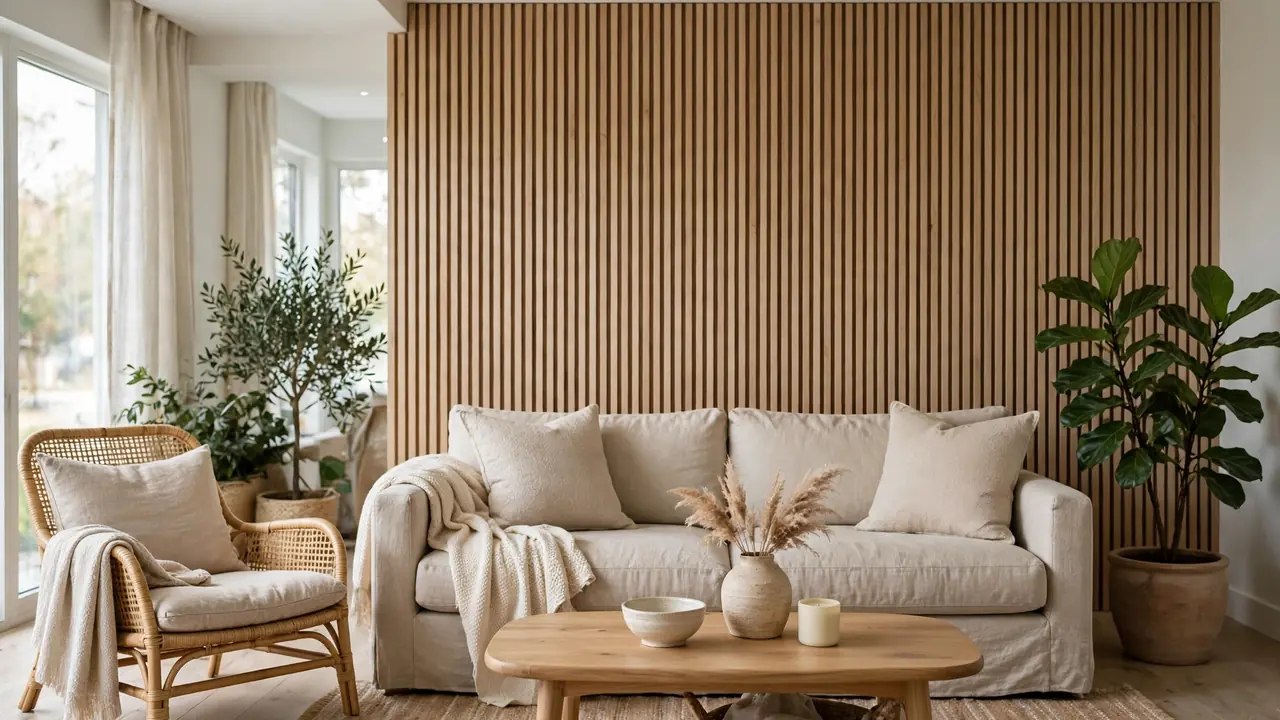
1. Go Full-Height in the Living Room
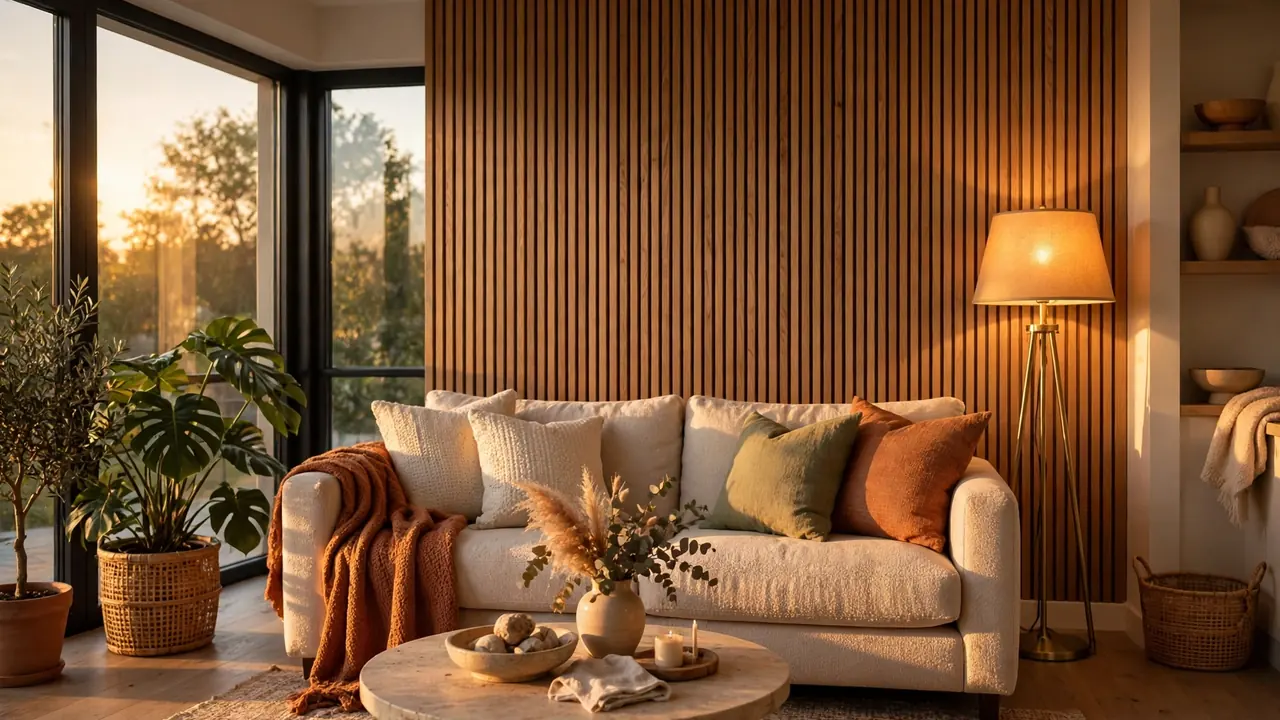
A floor-to-ceiling slat wall behind the sofa turns the biggest wall in the room into a feature without adding clutter. Light oak slats keep a small living room bright, while the vertical lines make the ceiling feel a little taller. Leave a small gap at the floor for the baseboard, or remove the baseboard for a cleaner edge. Approximate cost as of 2026: roughly $300–$800 for a standard 8-by-10-foot wall using pre-made panels, less with DIY battens.
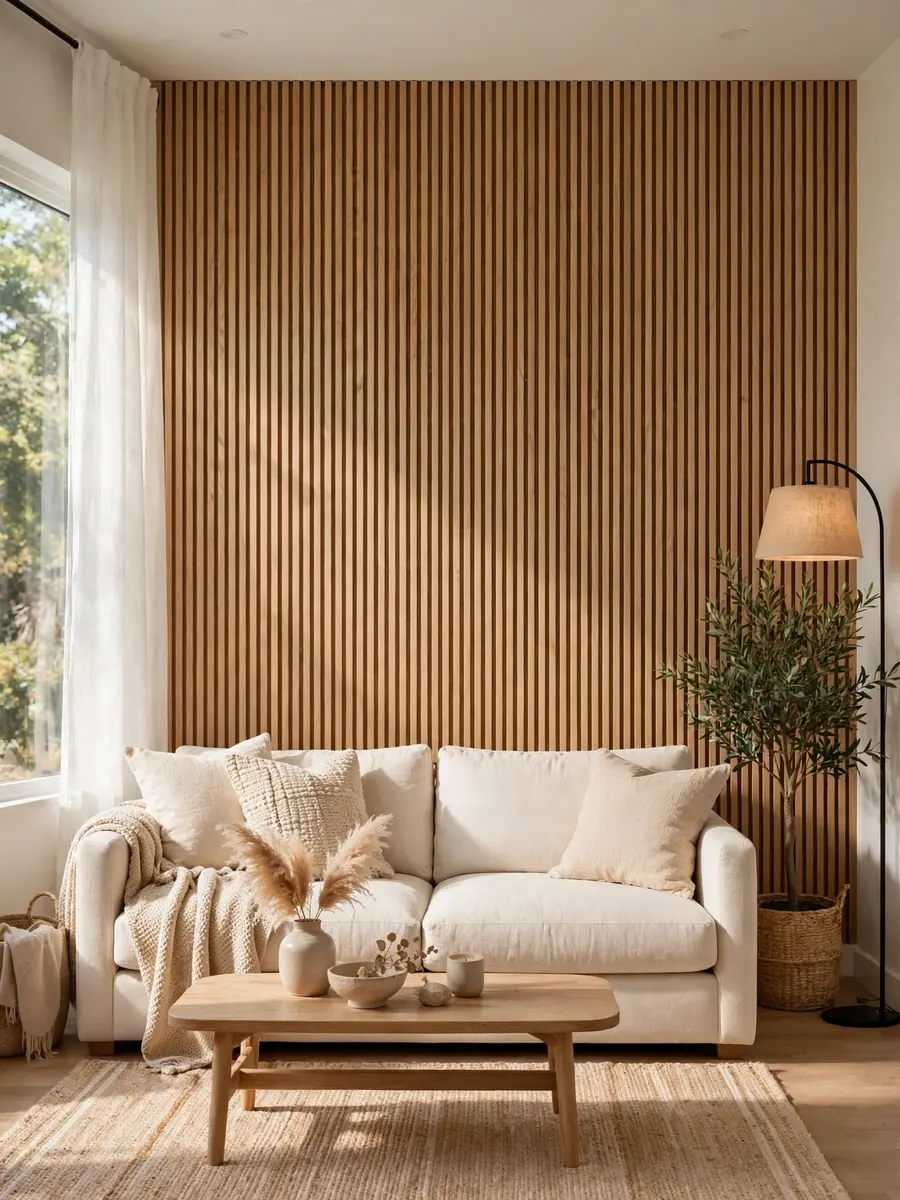
2. Try a Half-Wall Behind the Sofa
If a full wall feels like too much, stop the slats at sofa-back height — about 30 to 36 inches from the floor. The look reads like modern wainscoting: structured and warm, but the plain painted wall above keeps the room feeling open. This is a good first project because it uses fewer materials and a single afternoon of work. Approximate cost as of 2026: roughly $100–$300.
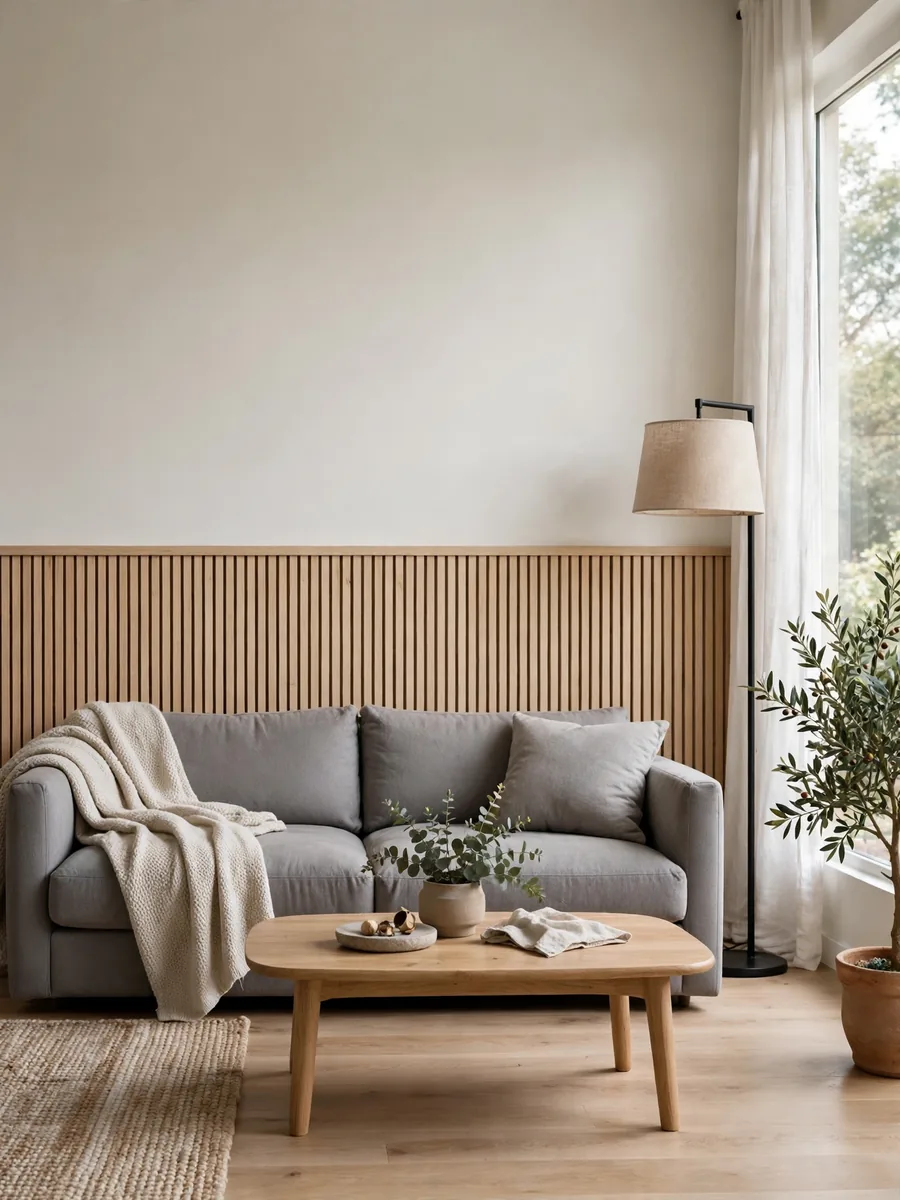
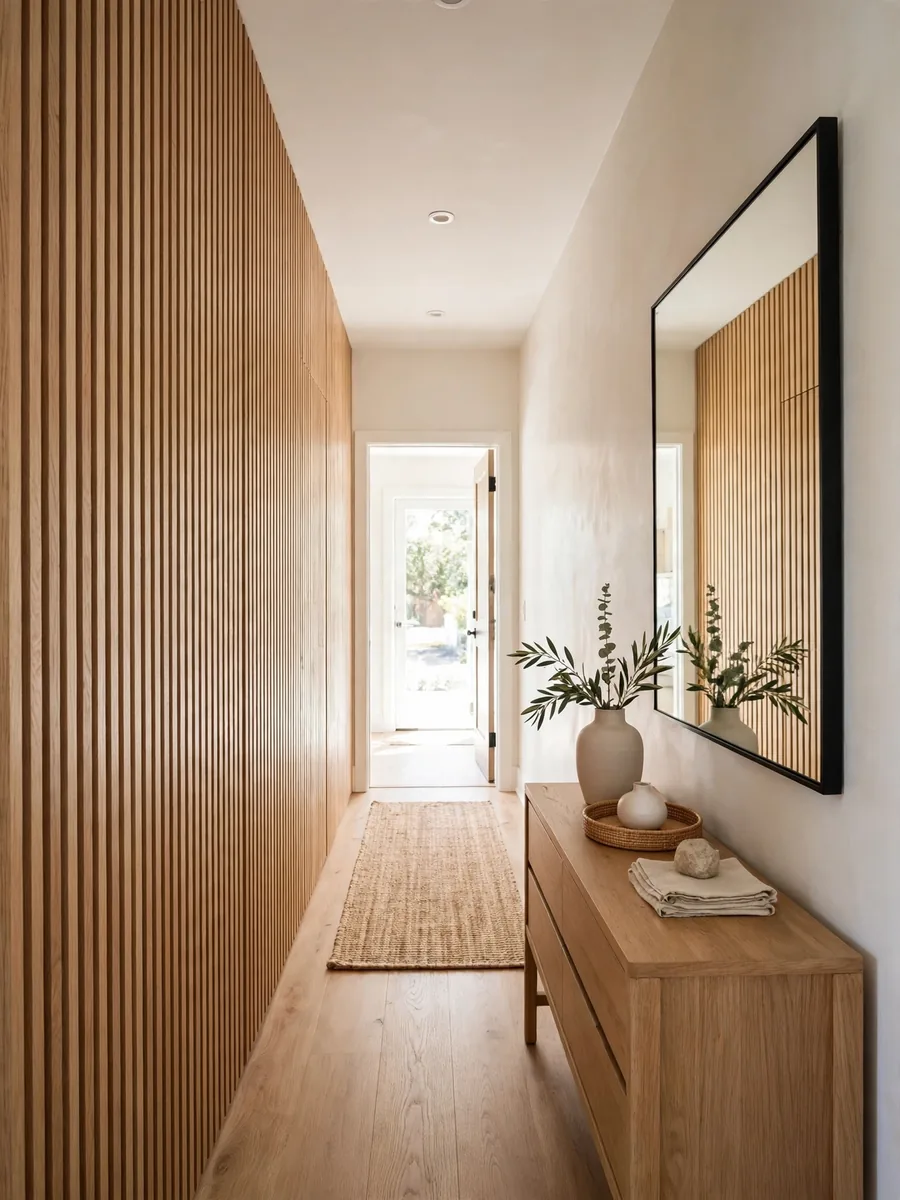
3. Dress Up a Narrow Hallway
Hallways are often the most boring walls in a home, and slats are a natural fix. A single slatted wall adds texture where furniture cannot, and the vertical lines make a tight hallway feel taller rather than narrower. Keep the wood tone light and the slats slim so the space stays bright. Approximate cost as of 2026: roughly $150–$400 for one hallway wall.
Make It a Focal Point
4. Build a TV Wall That Hides the Clutter
Mounting a television on a slat wall turns a black screen into part of the design. Dark walnut slats work especially well here because the TV blends in. Run cables behind the panels or through a slim channel, and add a low media console underneath for boxes and game consoles. Approximate cost as of 2026: roughly $400–$900, plus the wall mount.

5. Frame the Fireplace in Walnut Slats
A fireplace is already a natural focal point, so dressing it in warm walnut slats makes it feel intentional rather than dated. Run the slats up the chimney breast, or keep them to a flat panel above the mantel if the surround itself is stone or tile. Check the clearance your fireplace manufacturer recommends for combustible materials, and keep slats a safe distance from the firebox opening. Approximate cost as of 2026: roughly $300–$700.

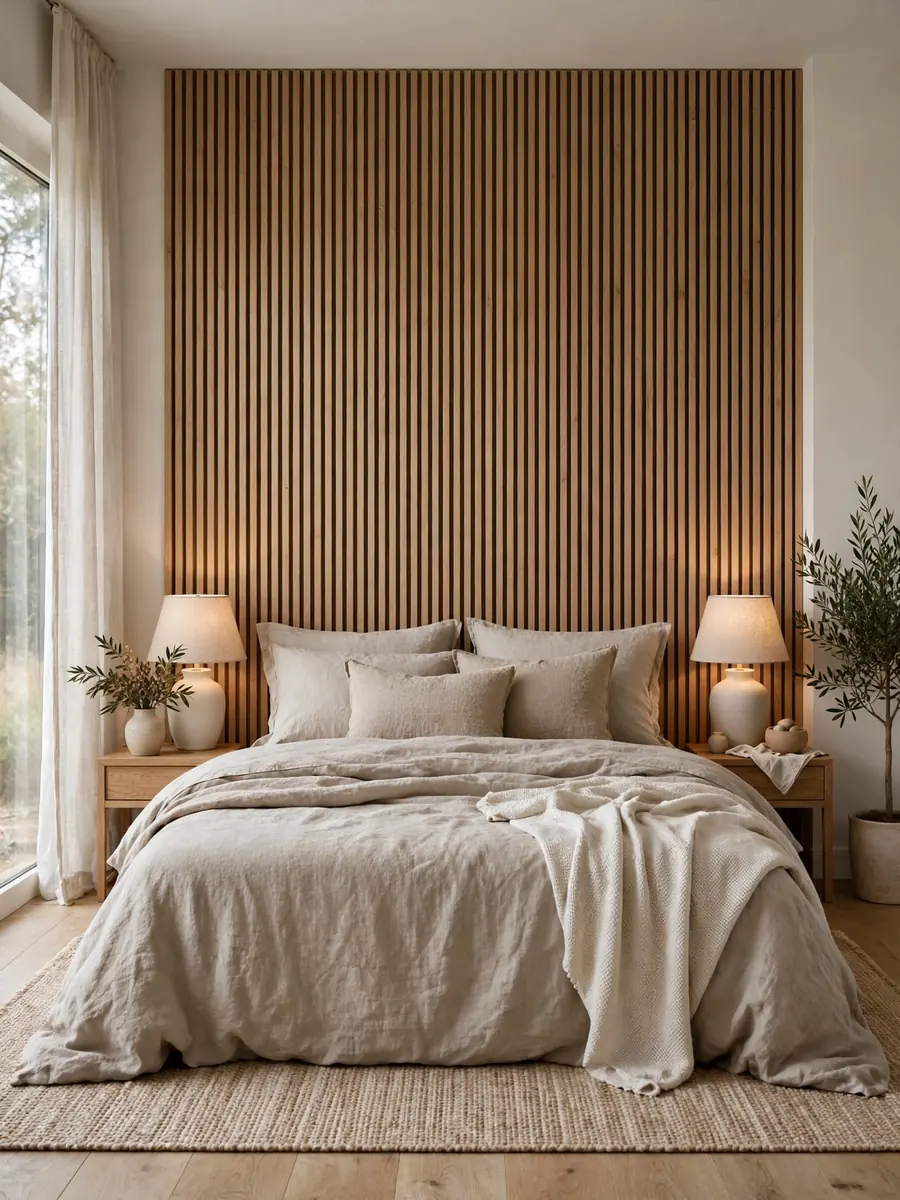
6. Make a Slatted Headboard Wall in the Bedroom
Slats running the full width of the bed create a soft, hotel-like backdrop that works with any bedding you already own. Light wood tones keep the room calm, and the vertical rhythm suits both modern and Scandinavian bedrooms. Leave space for bedside lamps or sconces on either side. Approximate cost as of 2026: roughly $200–$600.
Slat Walls Room by Room
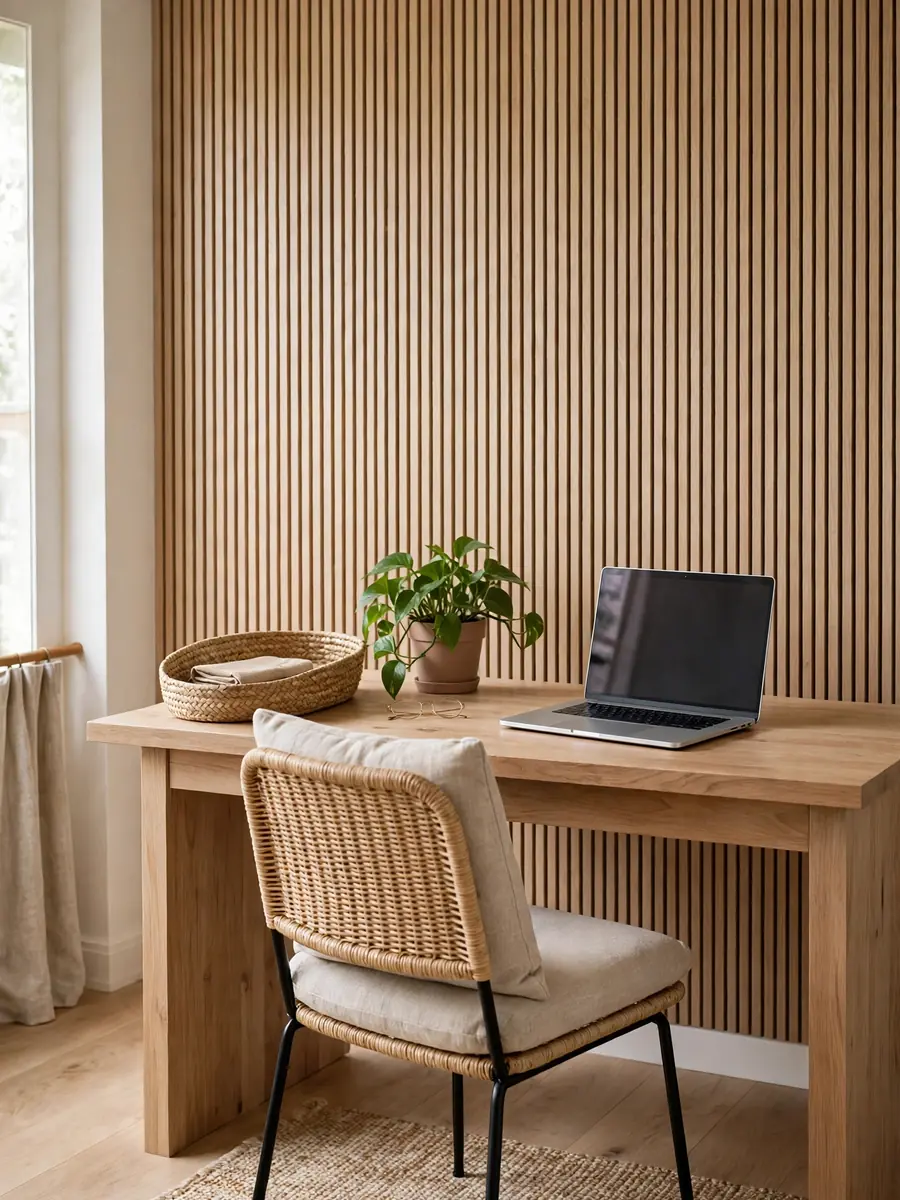
7. Give Your Home Office a Video-Call Backdrop
A slat wall behind your desk is one of the easiest upgrades for a home office: it looks polished on video calls and adds warmth to the room. Light or medium wood tones read best on camera, and a single accent wall is enough — there is no need to cover the whole room. Approximate cost as of 2026: roughly $200–$500.
8. Add an Entryway Wall With Hooks and a Bench
An entryway slat wall earns its keep: the slats look good, and they give you somewhere to mount hooks for coats and bags. Pair a slatted section with a low bench and a shoe tray, and the entryway suddenly has a purpose instead of being a pile of shoes by the door. Approximate cost as of 2026: roughly $150–$400, plus hooks and a bench.

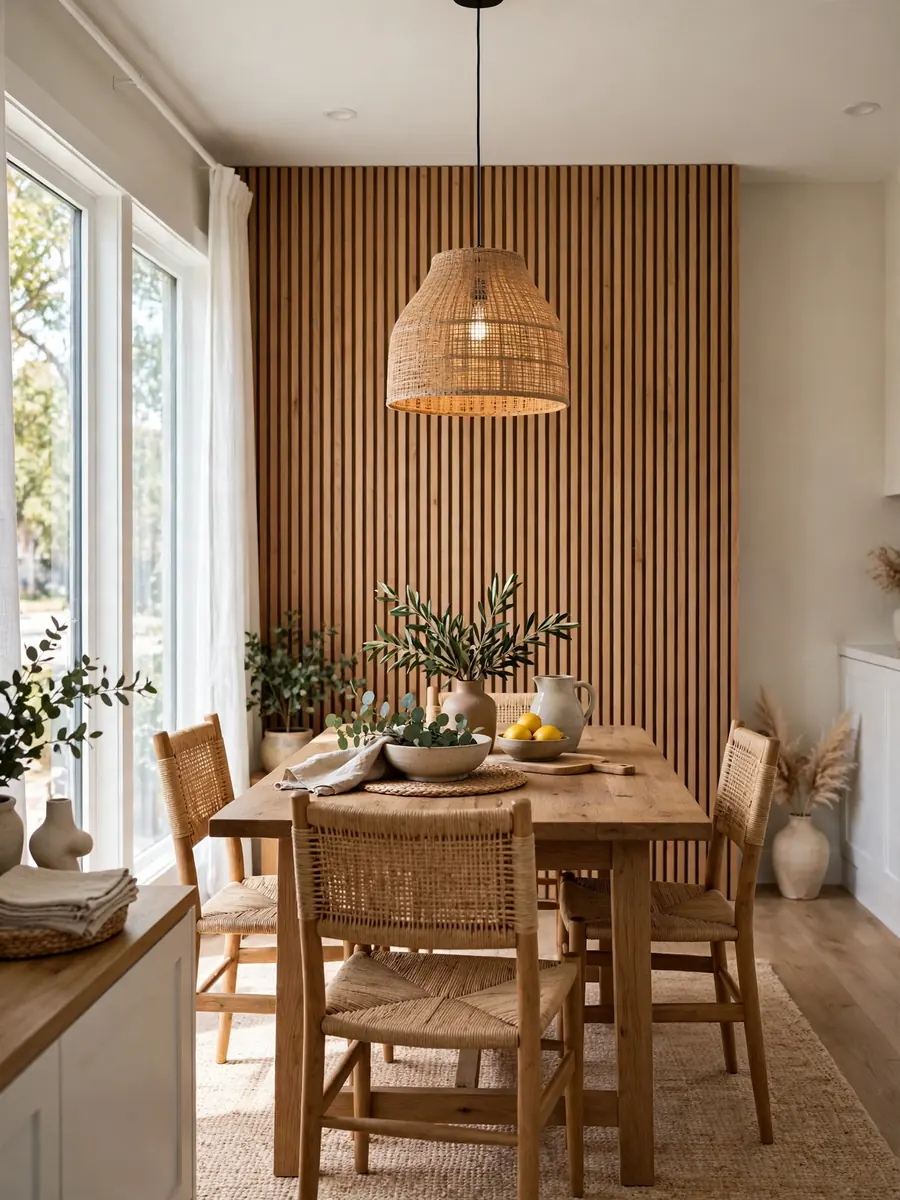
9. Warm Up the Dining Room
One slatted wall behind the table adds texture and warmth without competing with a pendant light or artwork. Medium wood tones pair well with most dining tables, and the look suits everything from weeknight dinners to holiday gatherings. Approximate cost as of 2026: roughly $250–$600.
Warm It Up: Color, Finish, and Texture
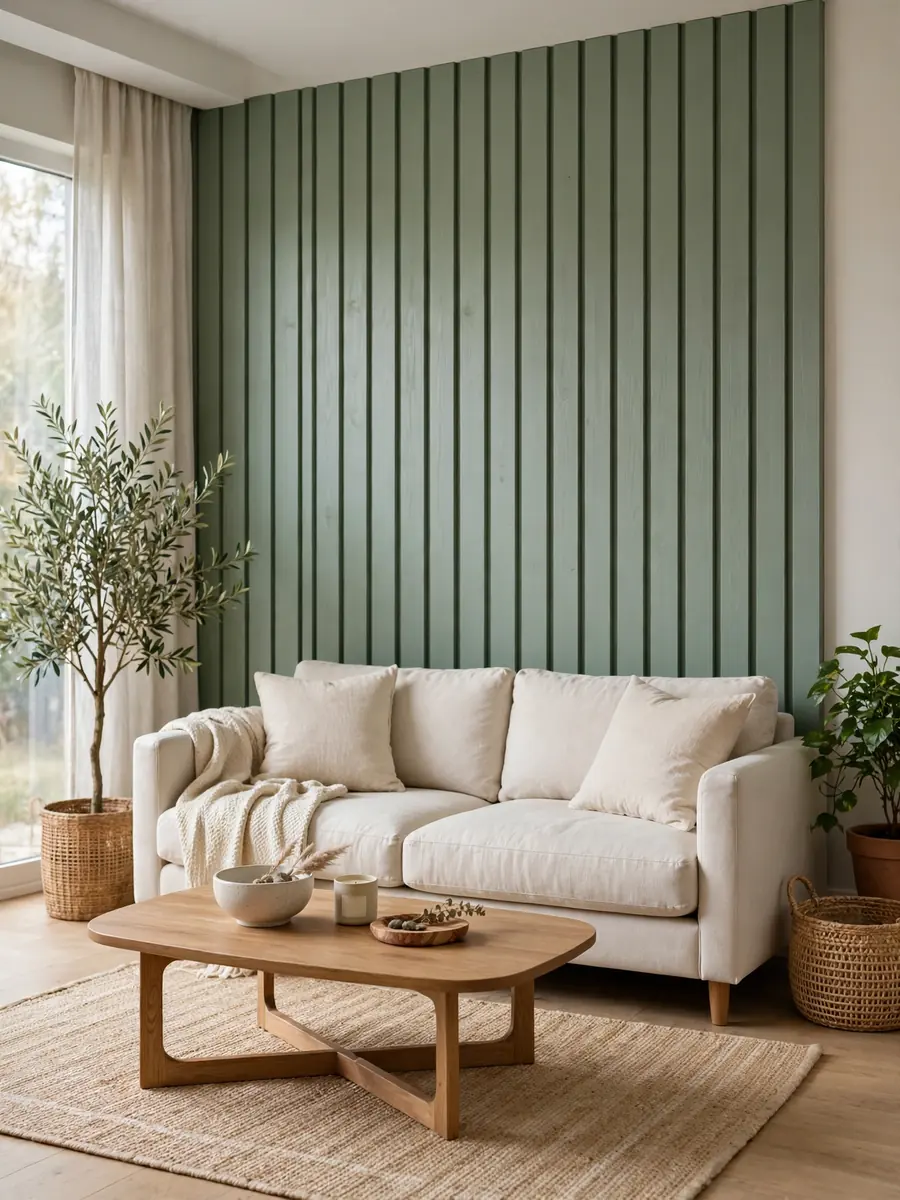
10. Paint the Slats Sage, Charcoal, or White
Natural wood is not the only option. Sage green brings a calm, earthy feel; charcoal makes a moody, modern statement; and white-painted slats add texture without changing your color scheme. Paint before installation if you can — it is much easier than painting between narrow slats on the wall. Approximate cost as of 2026: roughly $150–$400, including paint and primer.
11. Mix Stained Wood Tones
Mixing two or three stain tones — say, a light oak beside a medium walnut — gives a slat wall more depth than a single flat color, and it helps the wall pick up tones from different pieces of furniture. The trick is to stay in the same warm or cool family so the mix looks intentional, and repeat each tone at least twice across the wall so no single strip looks like a mistake. Approximate cost as of 2026: roughly $200–$500, including stain and sealant.

12. Choose Fluted Acoustic Panels to Soften Sound
Fluted panels — slats mounted on a felt backing — do more than look good: the felt and grooves help soften echo in hard-surfaced rooms. Many people find they make a living room or home office feel quieter and calmer, though they are a decor choice, not a soundproofing solution. The felt backing also makes installation faster, since each panel covers a wide section at once. Approximate cost as of 2026: roughly $400–$1,000 for one accent wall.

Install Smart and Spend Less
13. DIY It With Pine Battens
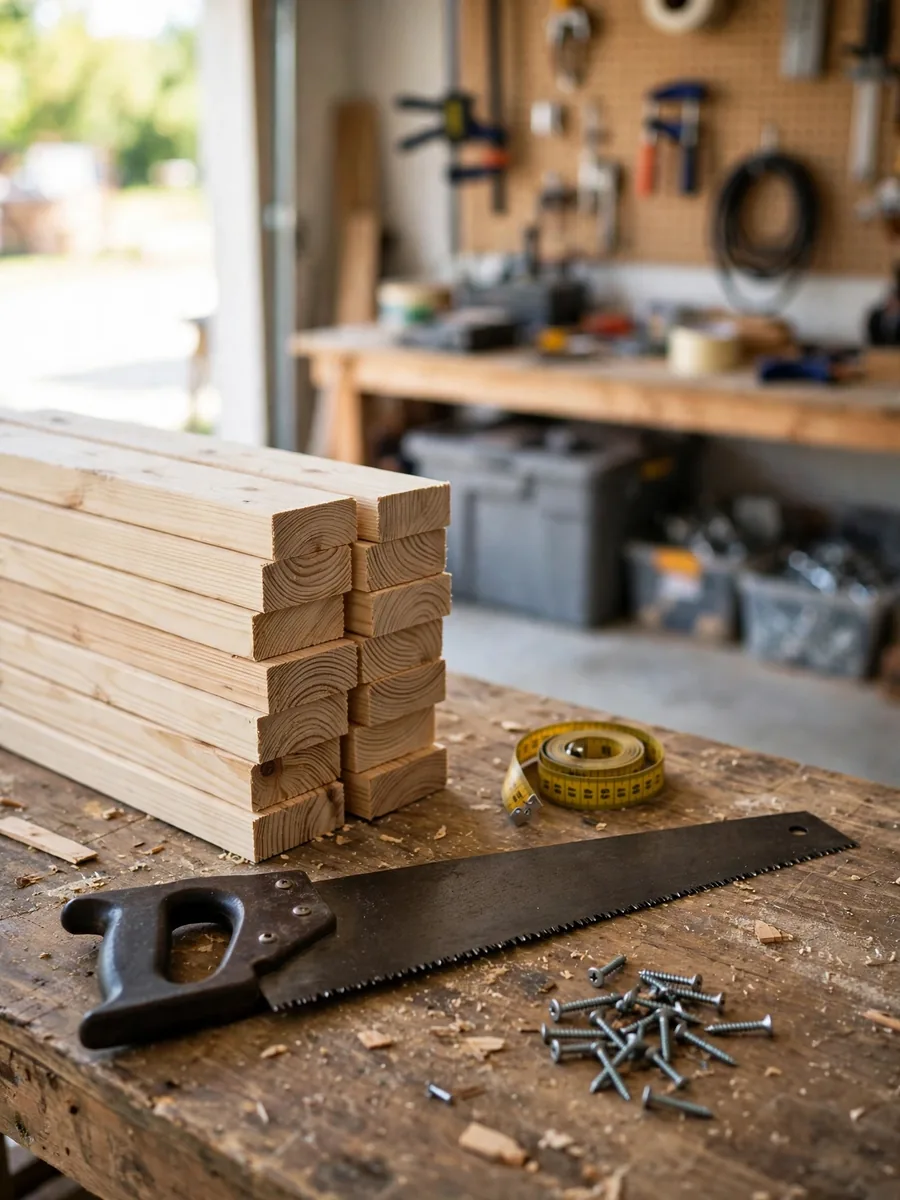
The budget route is to build your own slat wall from pine battens — thin strips of wood cut to length, spaced evenly, and fixed to the wall. It takes more measuring than buying pre-made panels, but the materials cost a fraction of the price. Use a spacer block to keep gaps even, a level to keep the first batten straight, and construction adhesive plus a few brad nails for a secure hold. Approximate cost as of 2026: roughly $80–$250 for one wall.
14. Go Removable for a Rental
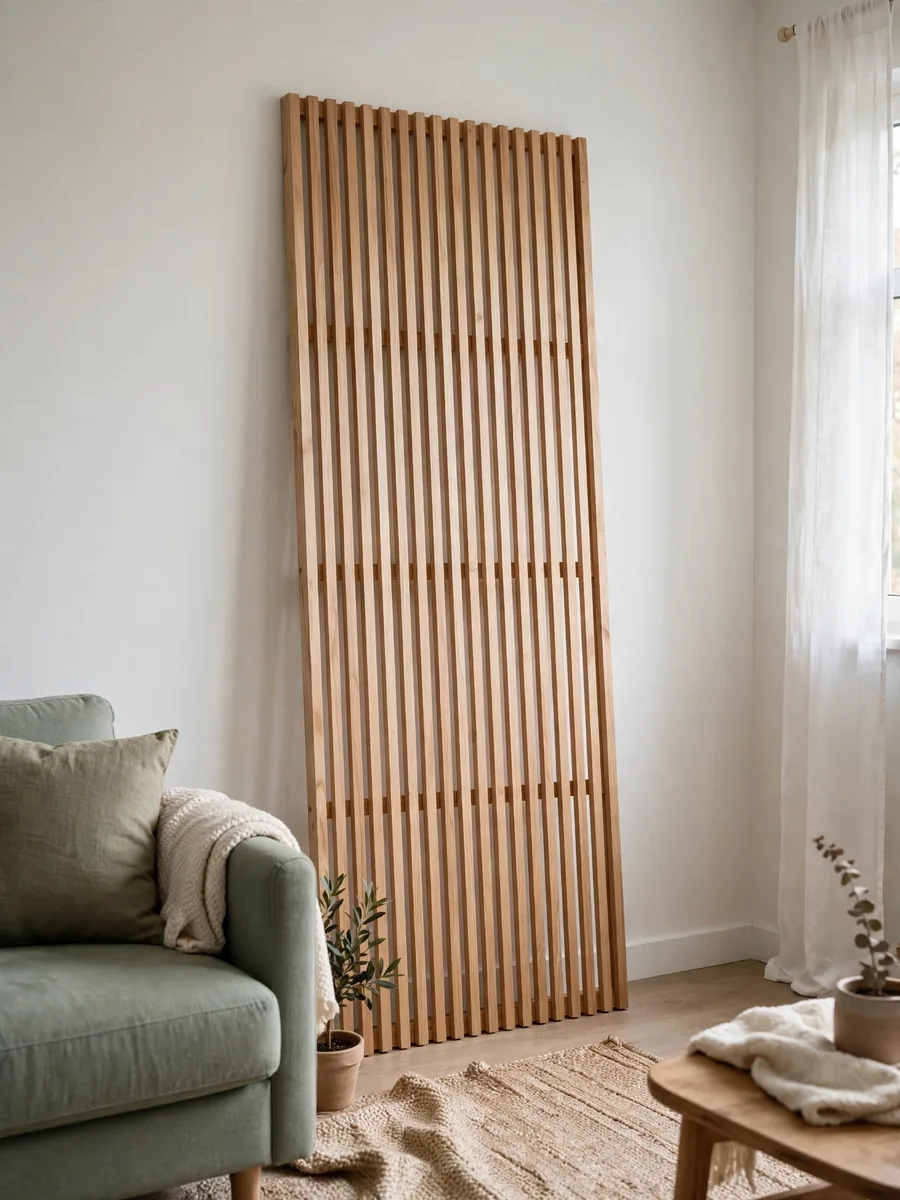
Renters can still get the slat look — but check your lease and ask your landlord before attaching anything to a wall, since adhesive and nails can risk your deposit. The safest options are freestanding slat panels that lean against the wall, or lightweight panels hung on removable adhesive strips rated for their weight. Freestanding panels also move with you, which makes them a smart buy for a first apartment. For more no-damage ideas, see our guide to no-drill wall decor for renters. Approximate cost as of 2026: roughly $150–$500.
15. Use Slats as a Room Divider or on the Ceiling
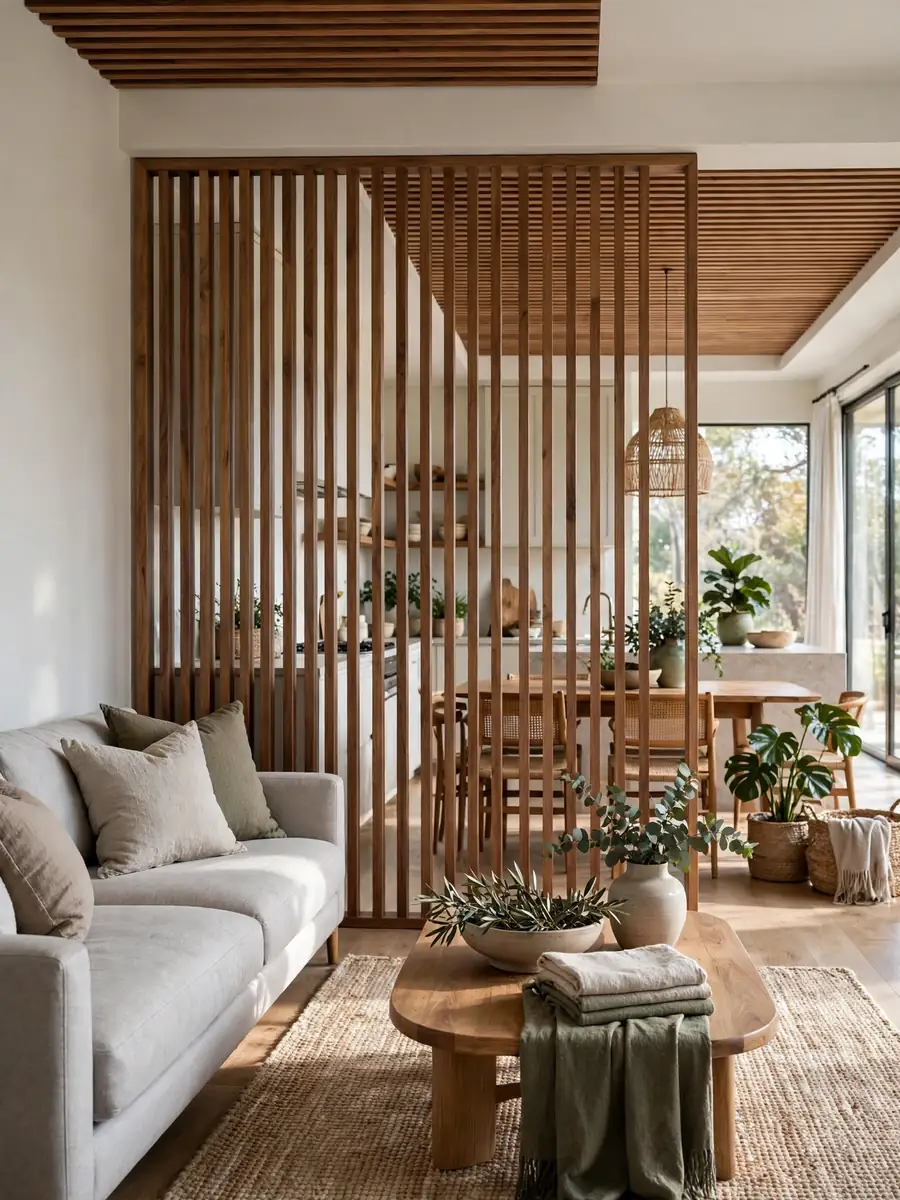
Slats do not have to stay on the wall. A freestanding slat screen divides an open-plan living room from a dining area without blocking light, and slats on a section of ceiling add warmth overhead in a way paint never will. Both uses need a sturdy frame — a divider should be weighted or anchored so it cannot tip, and ceiling slats must be fixed to joists or solid blocking, not just drywall. Approximate cost as of 2026: roughly $250–$800.
Frequently Asked Questions
Are wood slat wall panels expensive?
They do not have to be. Pre-made acoustic slat panels typically run a few hundred dollars per accent wall as of 2026, while a DIY wall built from pine battens can cost under $250 in materials.
Can I install wood slat panels myself?
Yes, most slat walls are a beginner-friendly weekend project. Pre-made panels usually glue or screw to the wall, and DIY battens need only a level, a saw, adhesive, and a spacer block.
Do slat wall panels work in small rooms?
Yes — vertical slats draw the eye upward and can make a low ceiling feel taller. Choose slim slats in a light wood tone for small rooms, and keep them to one wall.
Are acoustic slat panels actually soundproof?
No. Acoustic slat panels can soften echo and make a room feel calmer, but they do not block sound from travelling between rooms. Think of them as a decor choice that improves how a room sounds, not as soundproofing.
Can renters use wood slat wall panels?
Yes, with the right method. Freestanding panels that lean against the wall and lightweight panels on removable adhesive strips are the safest options. Always check your lease and get your landlord’s permission before fixing anything to a wall.
How do I clean wood slat wall panels?
Dust them with a microfiber cloth or a vacuum brush attachment, working from top to bottom. For a deeper clean, wipe with a slightly damp cloth and dry right away, and avoid soaking the wood or the felt backing.
Conclusion
Wood slat wall panels are one of those rare decor ideas that look high-end, suit almost every style, and still work on a real budget. Whether you go full-height in the living room, paint them sage green, or build your own version from pine battens, the key is the same: start with one wall, pick a wood tone that already lives in your home, and choose an install method you can live with — or remove — later.
If you want more ways to change a room without a full renovation, our DIY wall panel ideas roundup covers the wider world of panels, from beadboard to peel-and-stick. Pick your favorite idea, measure your wall, and give one plain wall the warmth it has been missing.

Thiago Alexander is the Chief Editor at Nested Charm. With a deep passion for interior design and cozy living spaces, he leads the editorial team in crafting stories that make every house feel like a home.




2 Comments