
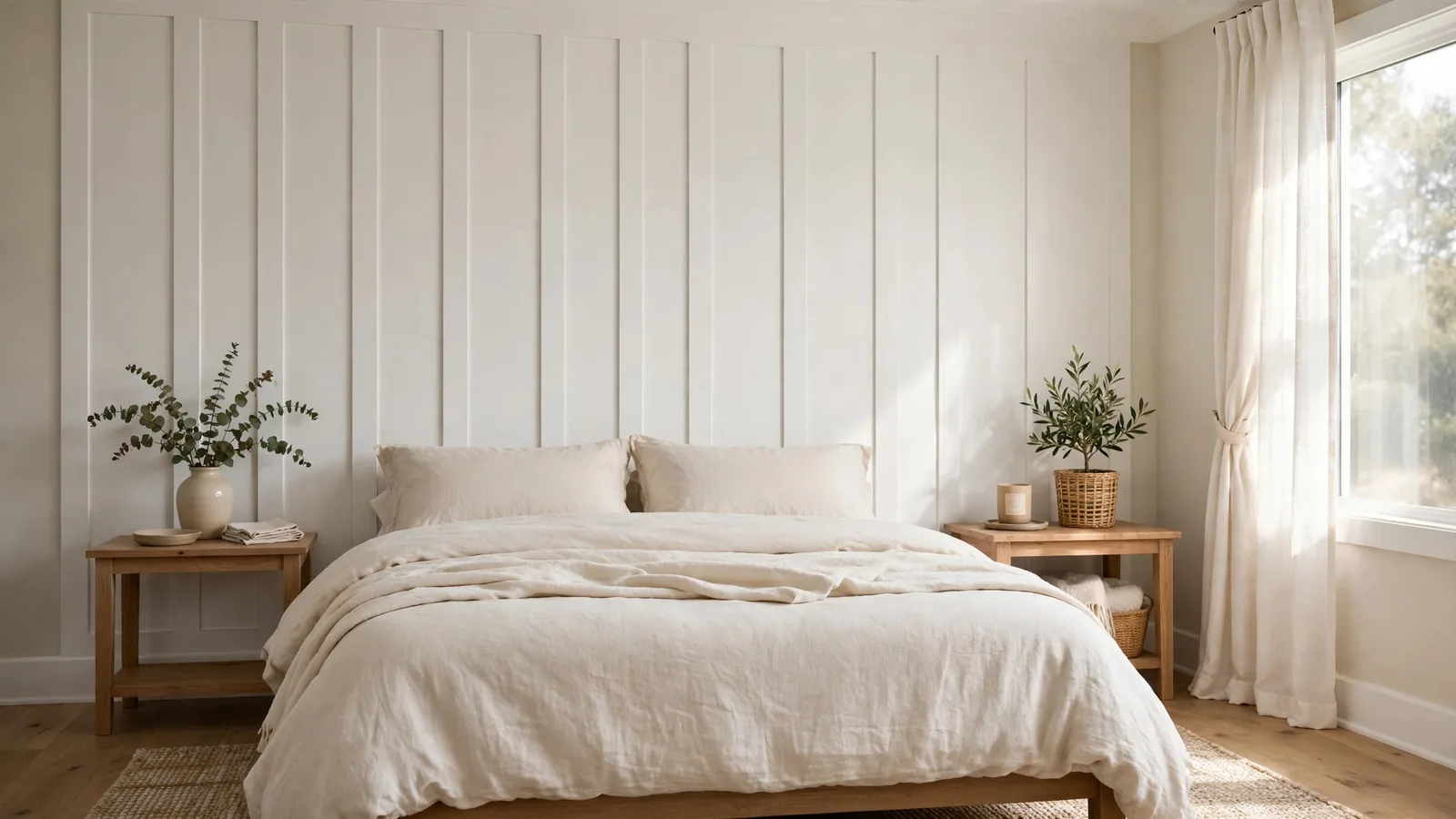
15 Bedroom Accent Wall Panel Ideas That Make the Bed Wall the Star
Executive Summary
A panelled accent wall gives a bedroom a clear focal point, adds texture you can see from the doorway, and makes even a plain bed frame look finished. The bed wall is the natural place for it: it is the wall you face when you walk in, and the wall behind the pillows every morning.
They range from a weekend of painted trim for well under $150 to padded or wood-slat walls that cost several hundred dollars, and there are removable versions that come off cleanly when a lease ends.
In short: Start with the wall behind the bed, choose a panel style that matches how formal or relaxed you want the room to feel, and keep the other walls plain. Most bedroom panel walls cost roughly $100 to $600 in materials as of 2026.
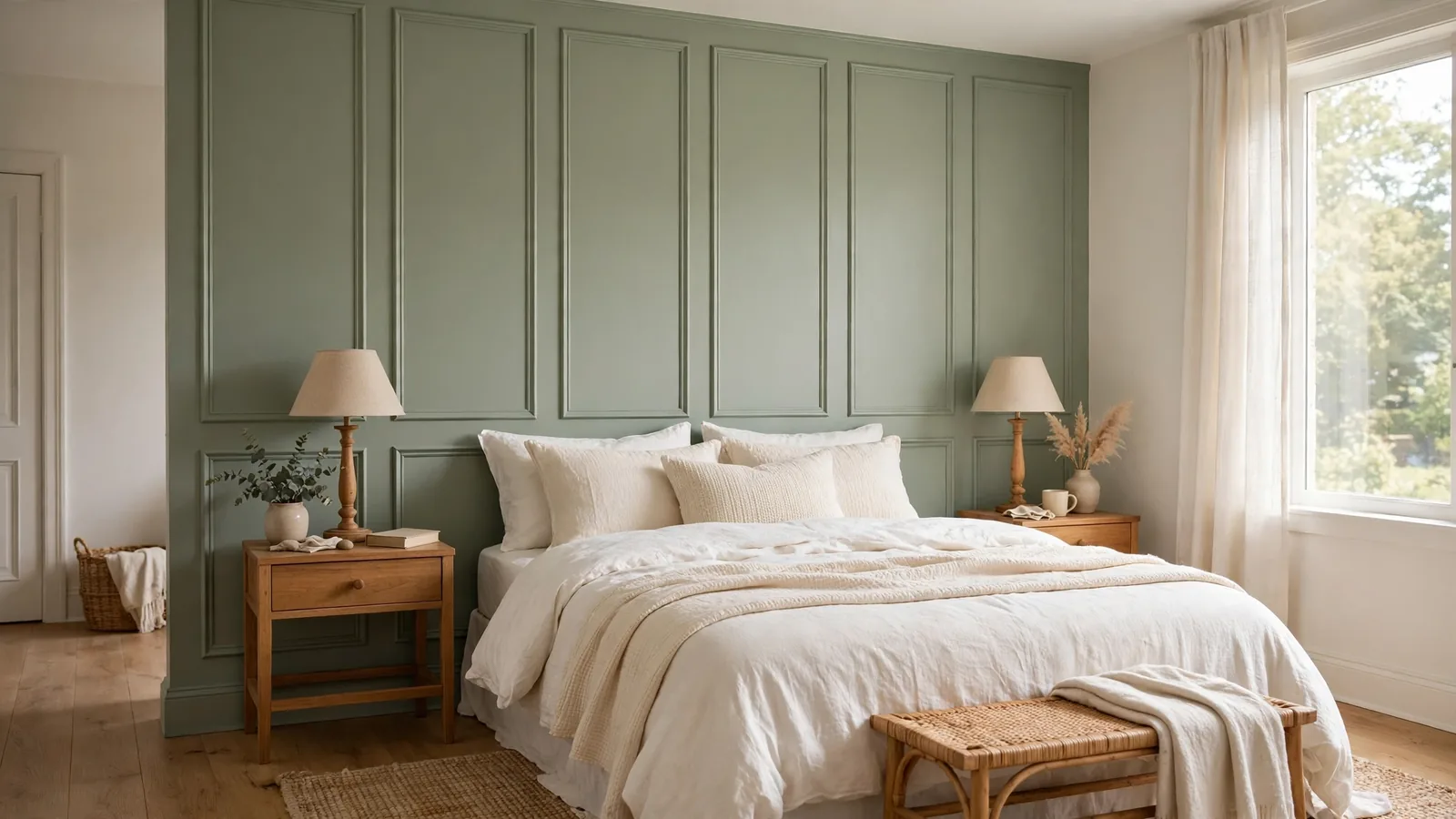
Timeless Painted Panels That Frame the Bed
1. Board-and-Batten Behind the Bed
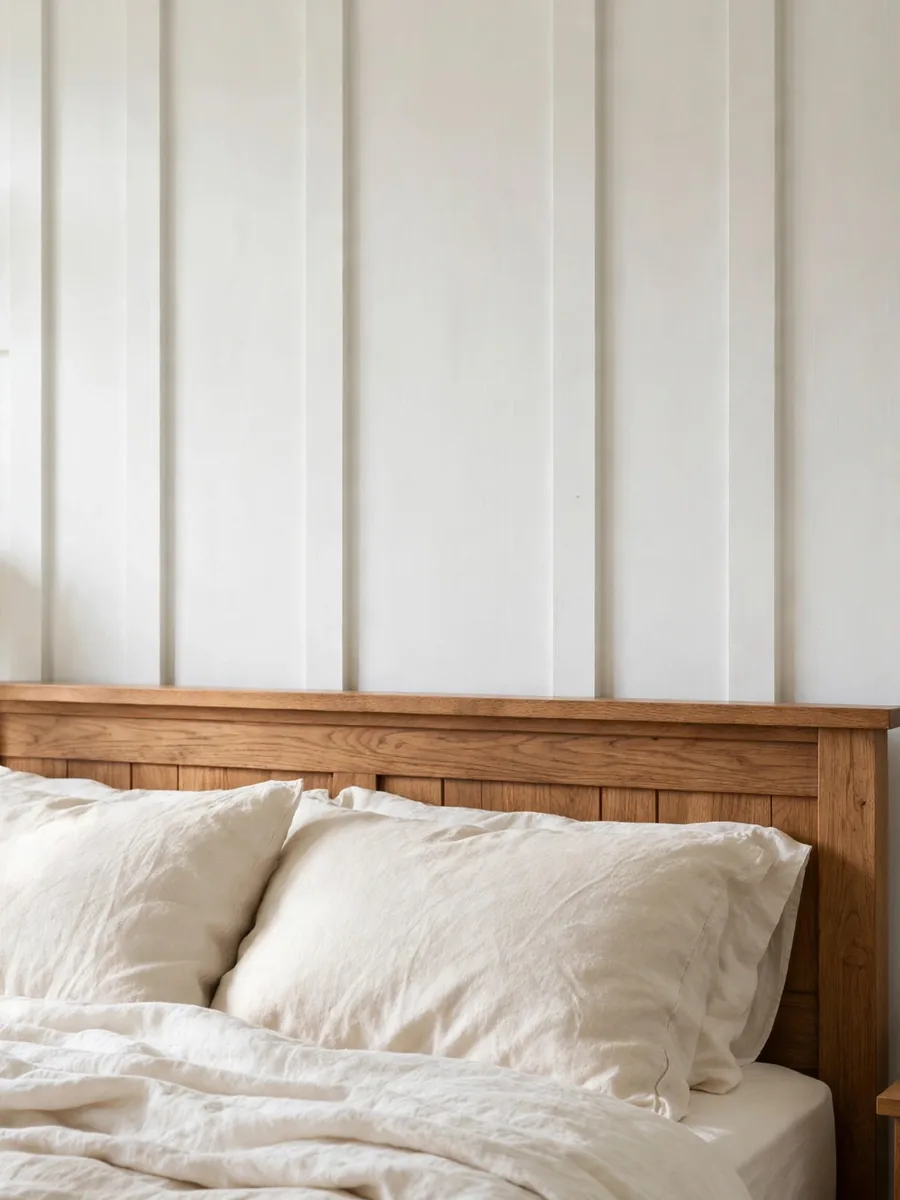
Board-and-batten — flat boards with vertical battens in a simple grid — gives the bed wall a tailored, classic look. Fix primed MDF or pine battens, spaced 12 to 18 inches apart, with construction adhesive and a few brad nails, filling the holes before painting. Approximate cost as of 2026: roughly $120 to $300 in materials for a queen-size bed wall. Renters: nailed trim usually needs landlord permission first.
2. Picture-Frame Moulding Panels
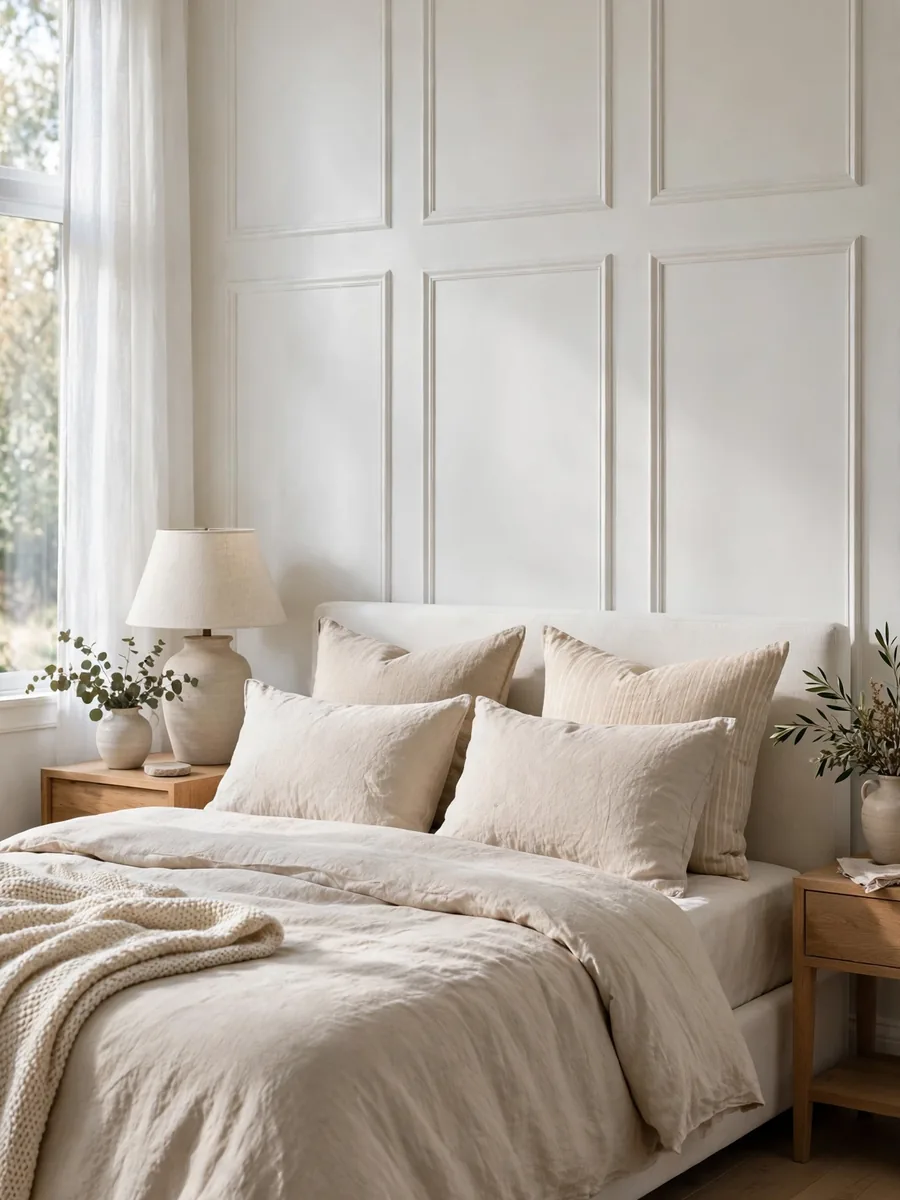
Picture-frame moulding is a set of thin trim rectangles applied directly to the wall, like empty frames. Plan two or three rectangles across the bed wall, aligned with the bed’s width, mitre the corners neatly, and paint the moulding and the wall inside each frame the same colour. Approximate cost as of 2026: roughly $80 to $200 in materials.
3. A Colour-Drenched Panel Wall
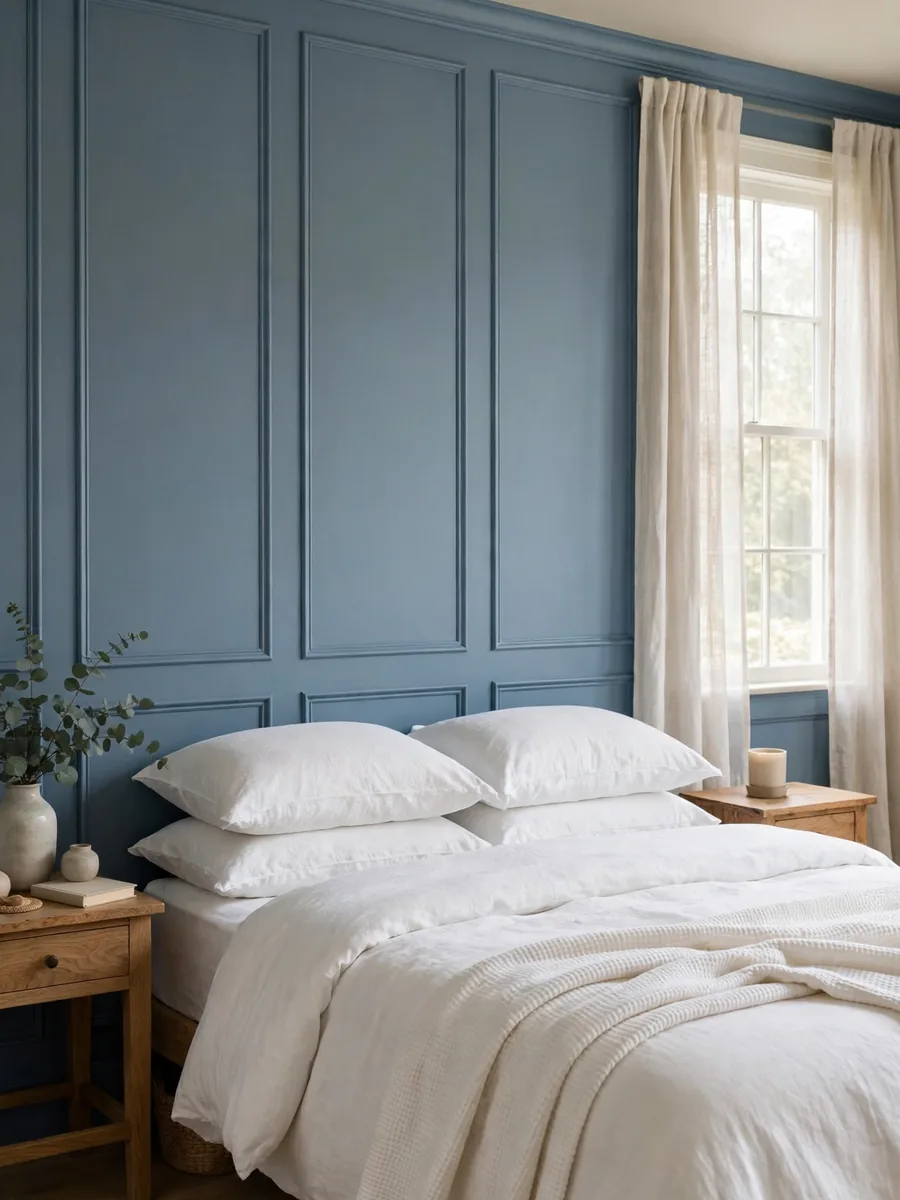
Colour drenching means painting the panels, the wall between them, and the trim in one colour, so the whole bed wall reads as a single calm block. Paint all three in the same soft, muted tone — a dusty blue, warm sage, or soft clay — using a matte or eggshell finish, which hides small flaws better than gloss. Approximate cost as of 2026: roughly $100 to $250, including trim and two coats of paint for one wall.
Soft Panels for a Calmer, Quieter Bedroom
4. Upholstered Padded Panels
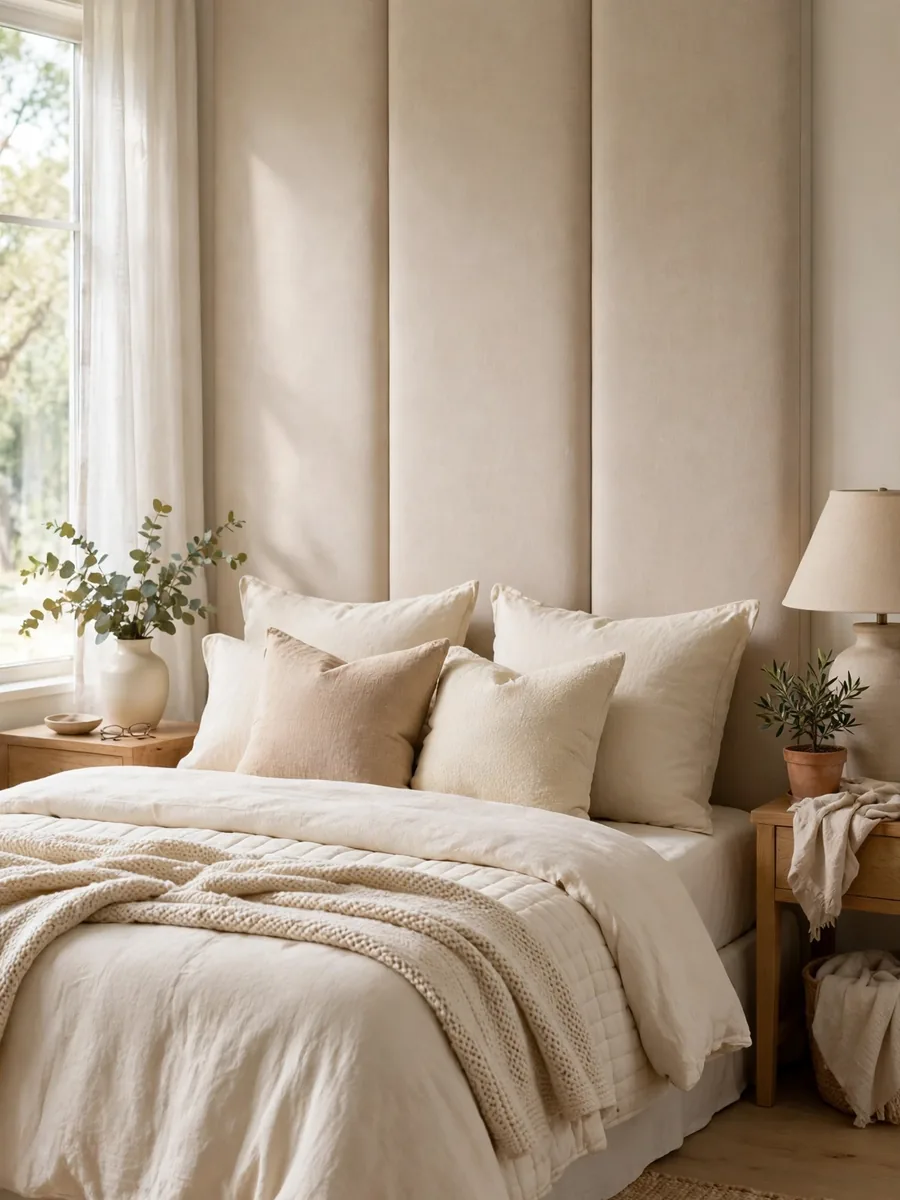
Upholstered panels are fabric-covered boards mounted in a row behind the bed, acting like a built-in headboard that runs the full width of the wall. Wrap plywood or MDF panels in foam and a washable, tightly woven fabric, then mount them with French cleats or heavy-duty picture-hanging hardware so they sit flat and level. Approximate cost as of 2026: roughly $250 to $600 for a queen-size wall. Always anchor them into studs — adhesive alone is not enough for their weight.
5. Fluted and Reeded Panels
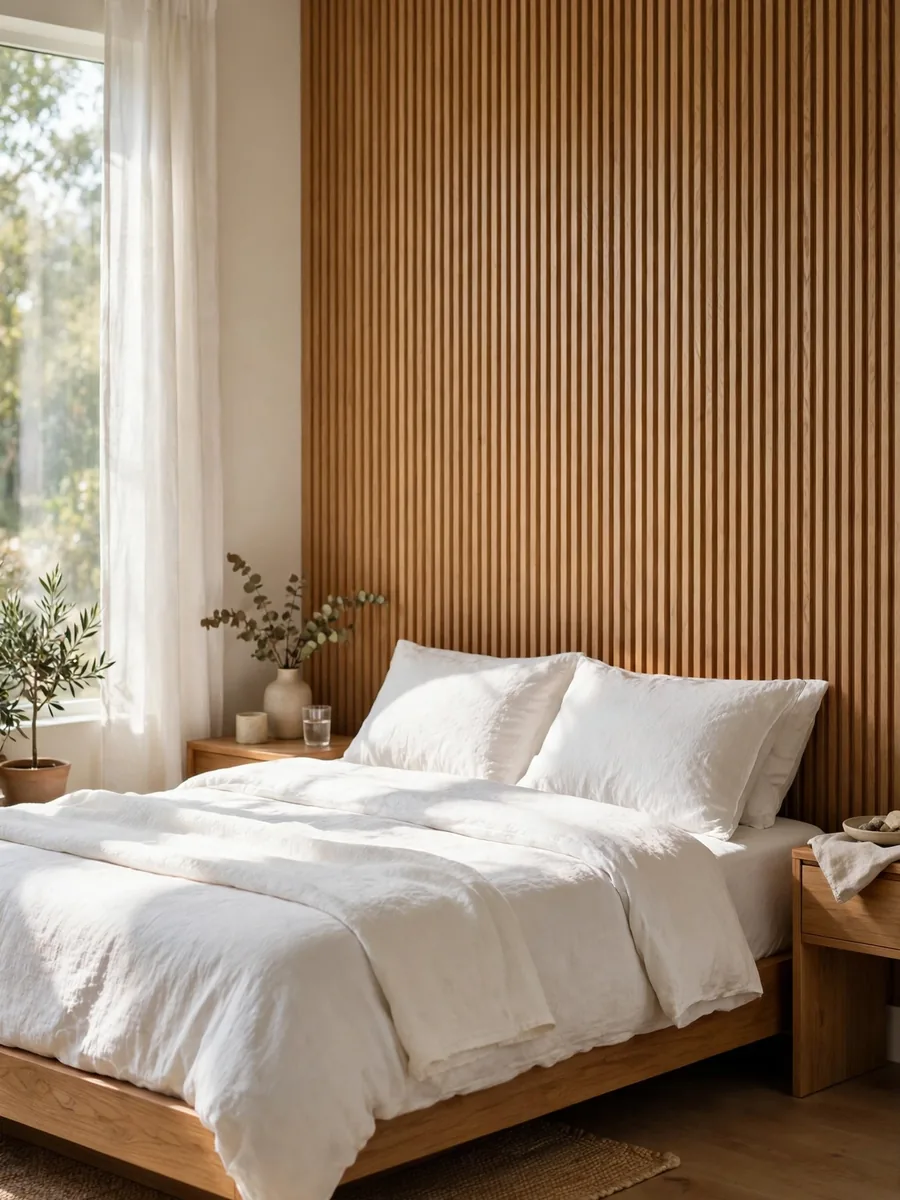
Fluted panels are narrow, vertical ridges that catch the light and add gentle movement to a flat wall. Fix ready-made fluted panels, or individual half-round dowels on a backing board, behind the bed, running the flutes vertically to make the ceiling feel taller. Approximate cost as of 2026: roughly $200 to $500 for a bed wall.
6. Acoustic Felt Panels in a Soft Grid
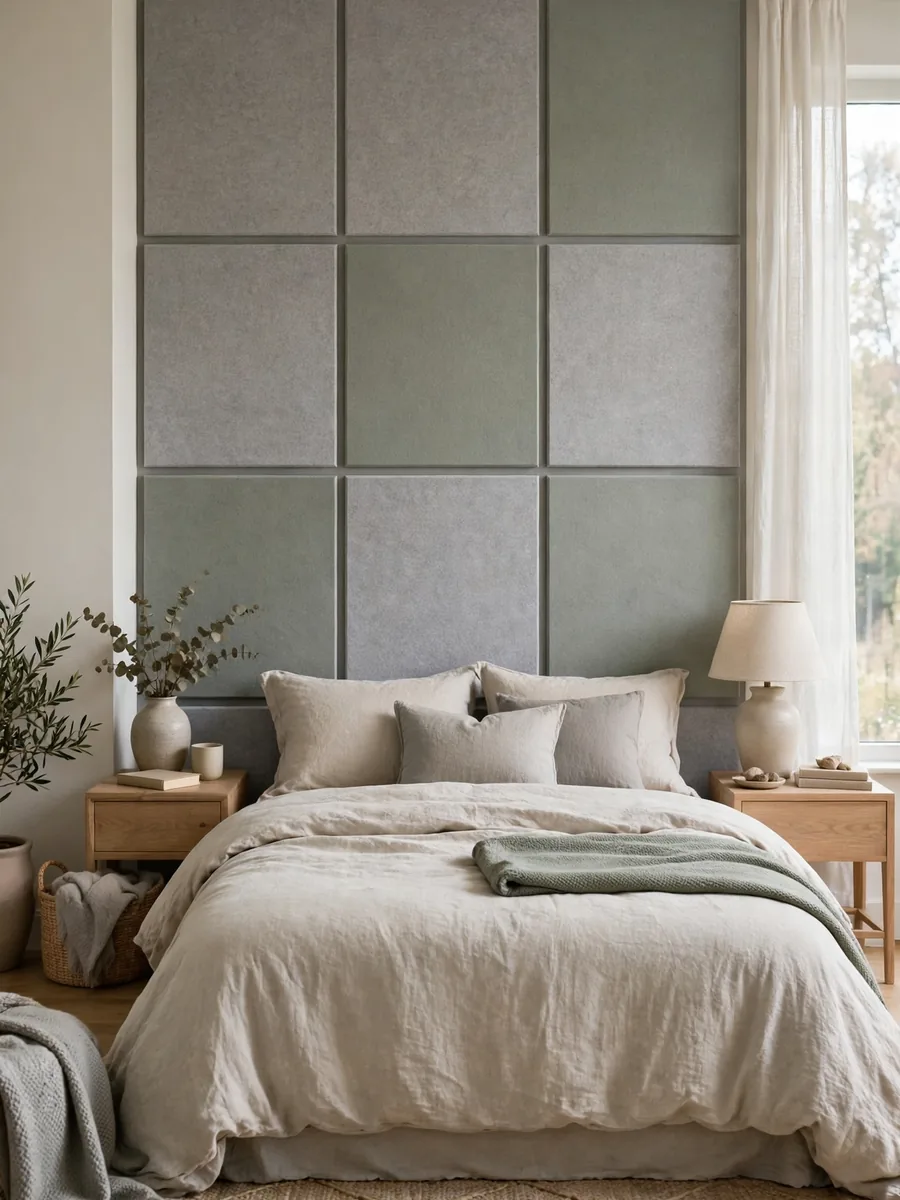
Felt panels are lightweight, sound-softening squares or rectangles in muted colours, and they are one of the easiest ways to make a bedroom feel quieter. Arrange felt tiles in a simple grid or staggered pattern behind the bed, fixing them with the adhesive strips or pins supplied with the tiles, starting with a grid the width of the bed and about three feet tall. Approximate cost as of 2026: roughly $120 to $350 for a bed-width arrangement.
Modern Wood, Slats, and Geometry
7. A Wood Slat Headboard Wall
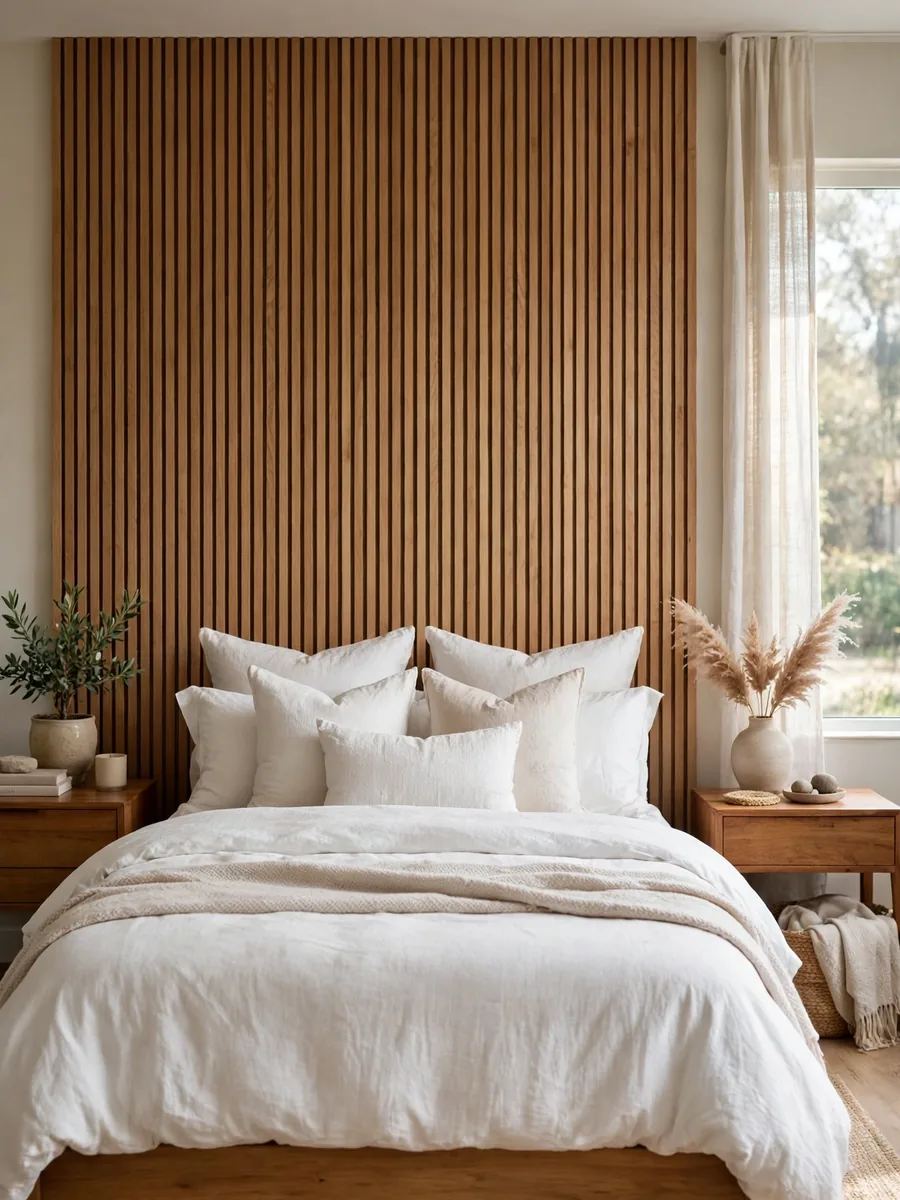
A wood slat wall runs narrow vertical slats across the bed wall, with small gaps between them, and it instantly makes a bedroom feel warm and modern. Mount slats on a backing board or directly to the wall with even spacing, using a spacer block so every gap matches, and keep the slats behind the bed only. Approximate cost as of 2026: roughly $250 to $600 for a bed wall. For more wood-slat ideas beyond the bedroom, see 15 Wood Slat Wall Panel Ideas for a Warm, Modern Home on a Budget.
8. Geometric 3D Panels

Geometric panels — diamonds, hexagons, chevrons, or raised squares — add a sculptural pattern to the bed wall and catch light and shadow through the day. Lay the panels out on the floor first to check the pattern, then fix them with adhesive and a few pins, working from the centre outward so the pattern stays symmetrical behind the bed. Approximate cost as of 2026: roughly $150 to $400 for a bed wall.
9. An Arched Panel Feature
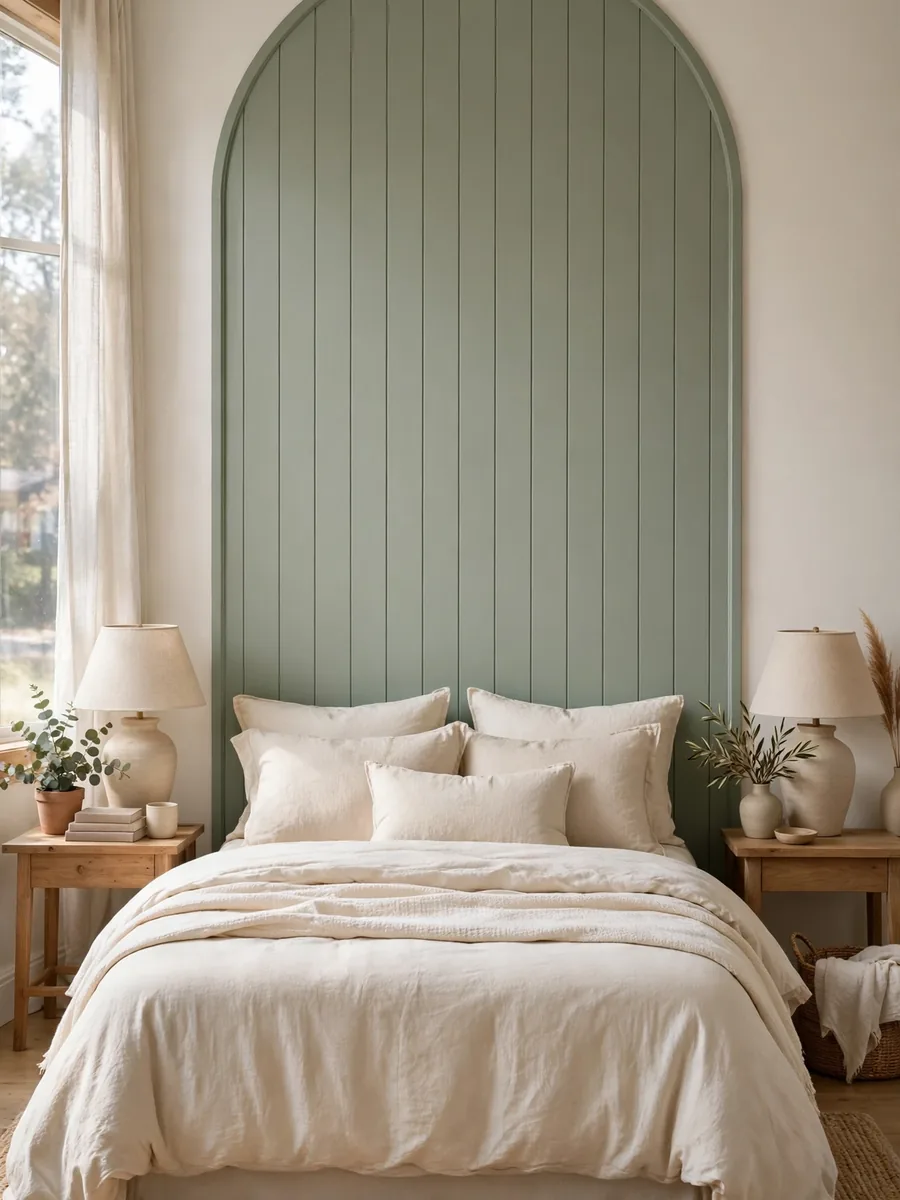
An arched panel — a tall, rounded-top shape centred behind the bed — softens a boxy bedroom and gives the bed a gentle, almost headboard-like frame. It suits romantic, vintage-inspired, and soft-modern bedrooms, and it is a good way to add interest without covering the whole wall. Mark the arch with a string and pencil, then build it from thin plywood, MDF, or painted trim following the curve, or use a ready-made arch panel kit. Approximate cost as of 2026: roughly $150 to $400, depending on size and materials.
Renter-Friendly and Budget Panel Looks
10. Peel-and-Stick Panels for Renters

Peel-and-stick panels are lightweight panels with a removable adhesive backing, and they are the simplest way for a renter to get a real panelled bed wall. Clean the wall, plan the layout so seams fall behind the bed frame where possible, and press each panel firmly from the centre outward to avoid air bubbles. Approximate cost as of 2026: roughly $100 to $300 for a bed wall. For a full renter-focused guide, see 15 Peel-and-Stick Wall Panels for Renters That Come Off Clean.
11. Painted Faux Panels
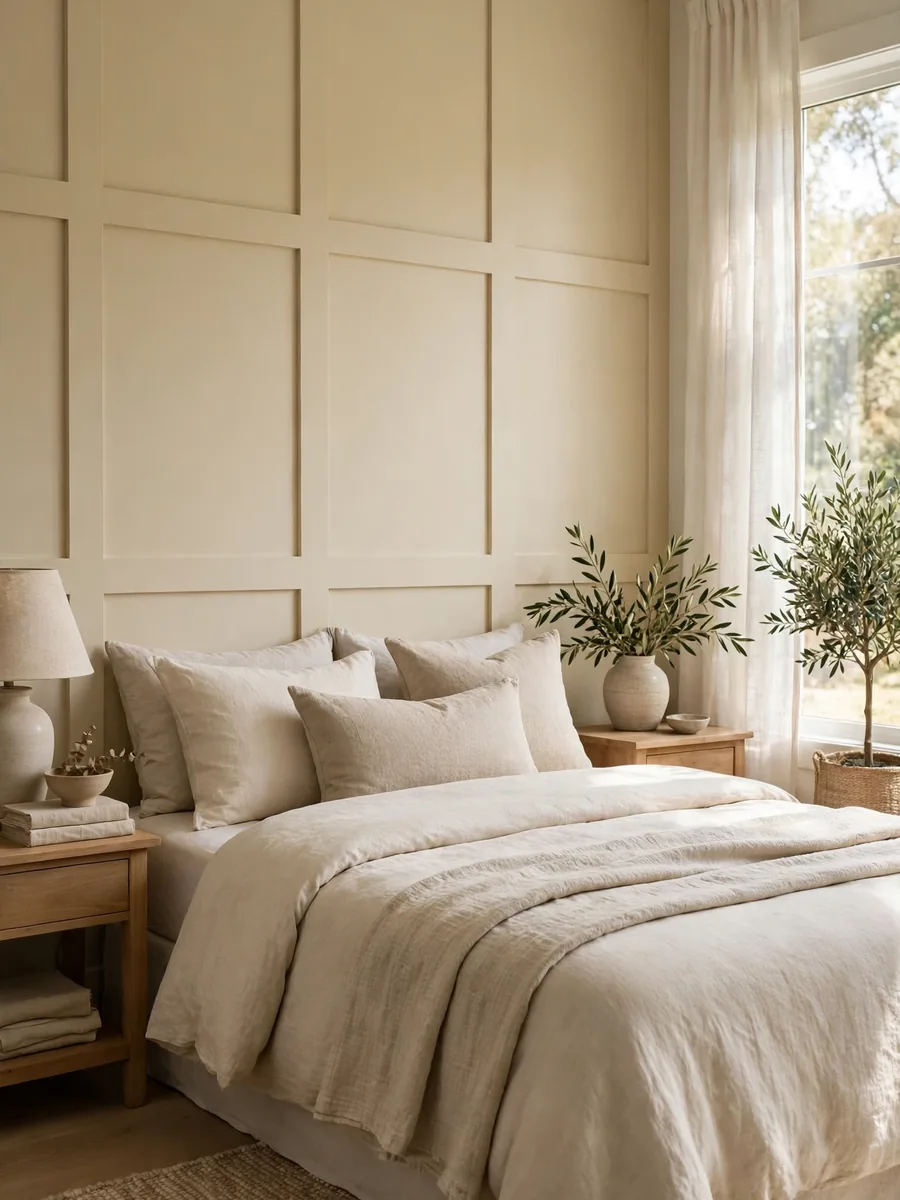
Painted faux panels use paint and painter’s tape to create the look of trim panels without any wood at all. Tape neat rectangles on the bed wall, paint inside each rectangle in a slightly deeper shade than the wall, then remove the tape while the paint is still slightly tacky for a clean edge. Approximate cost as of 2026: roughly $40 to $100, including tape and paint.
12. Framed Panel Art as a Headboard Wall
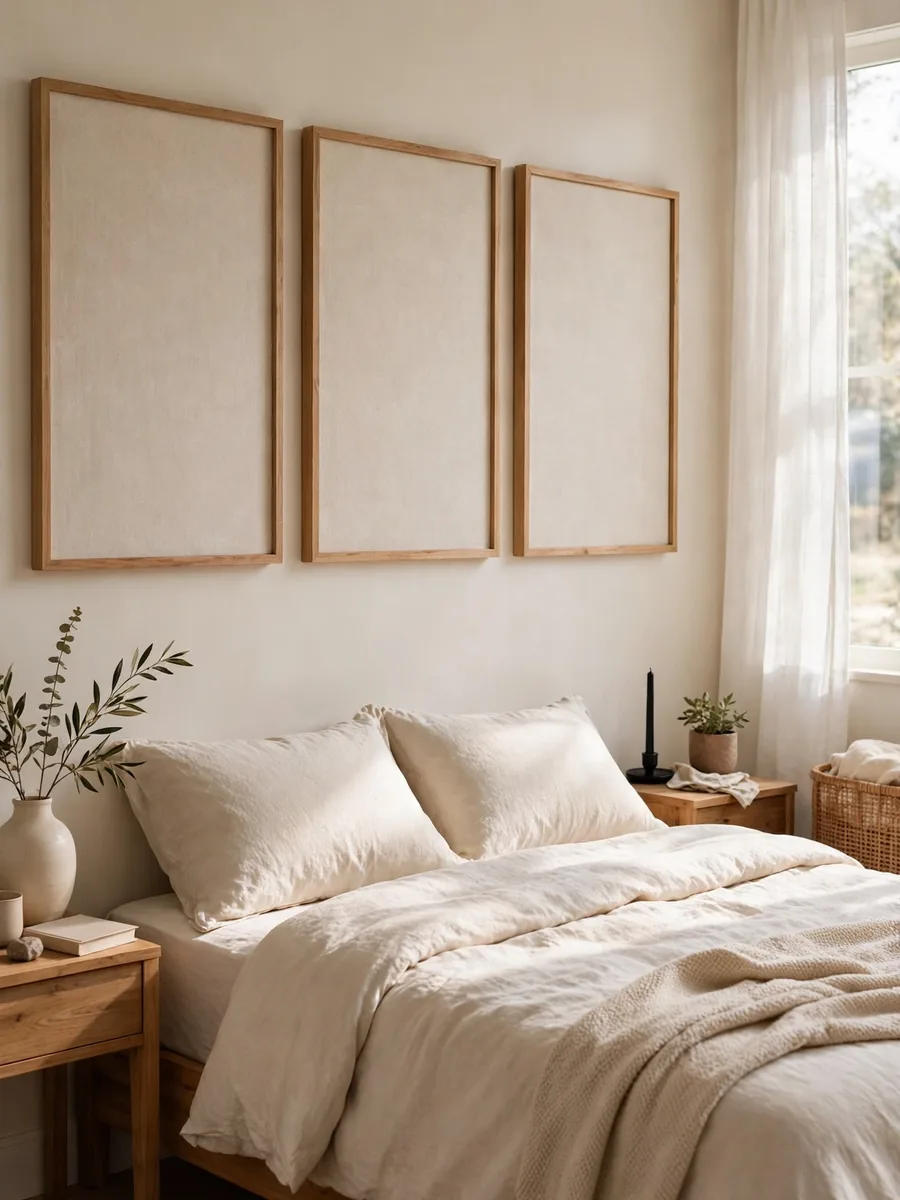
Framed panel art means hanging a row of large, matching frames — filled with fabric, wallpaper, or plain linen — behind the bed, so they read as panels but hang like pictures. Choose three matching frames the width of the bed, fill each with the same fabric or wallpaper sample, and hang them level with picture hooks, keeping the frames shallow so they do not crowd the pillows. Approximate cost as of 2026: roughly $80 to $250, depending on frame size and filling.
Panels Beyond the Bed Wall
13. Half-Height Wainscoting Around the Room
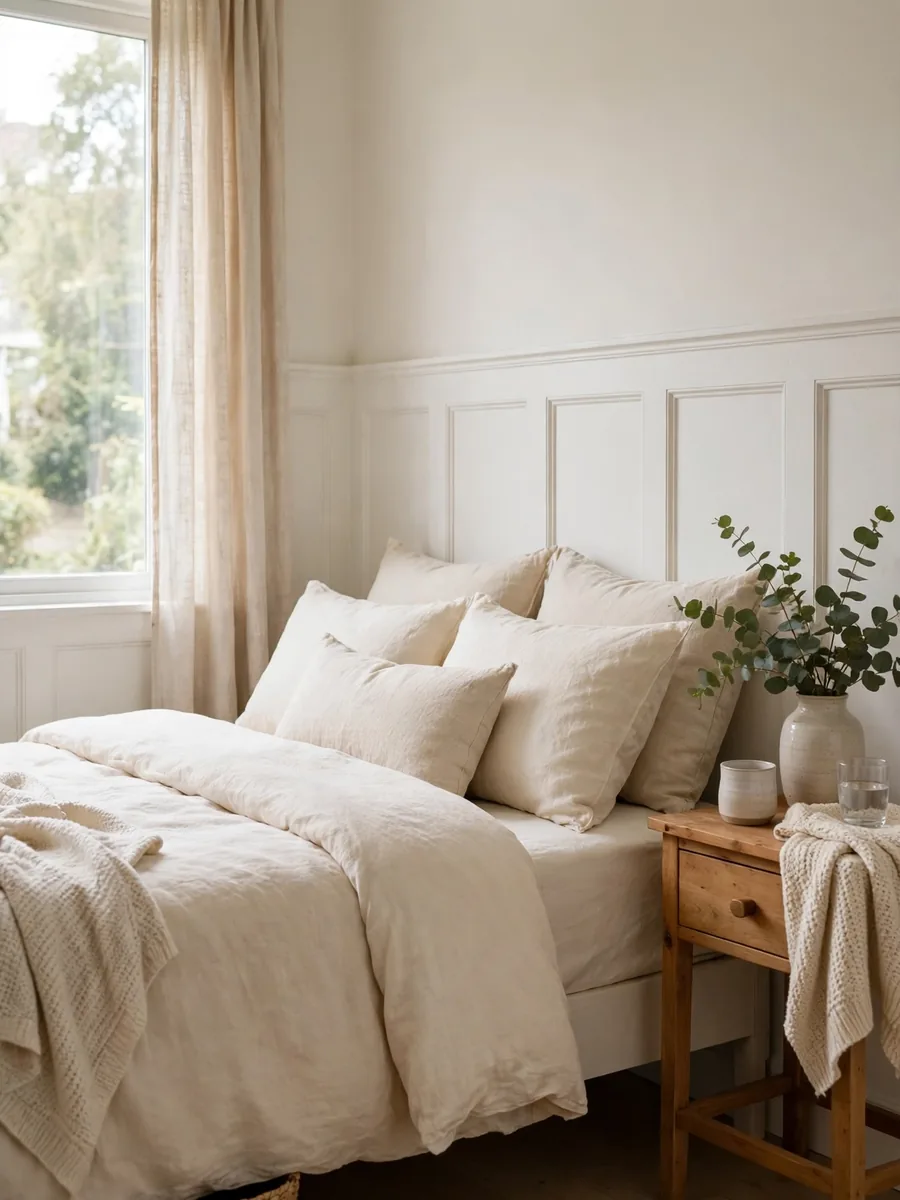
Half-height wainscoting runs panels up to chair-rail height around the whole bedroom, giving the room a finished, tailored feel without overwhelming it. Run a simple board-and-batten or beadboard-style panel to about 32 to 36 inches high, cap it with a slim rail, and paint it the same colour as the trim. Approximate cost as of 2026: roughly $300 to $700 for a typical bedroom.
14. A Panelled Reading Nook or Dressing Corner
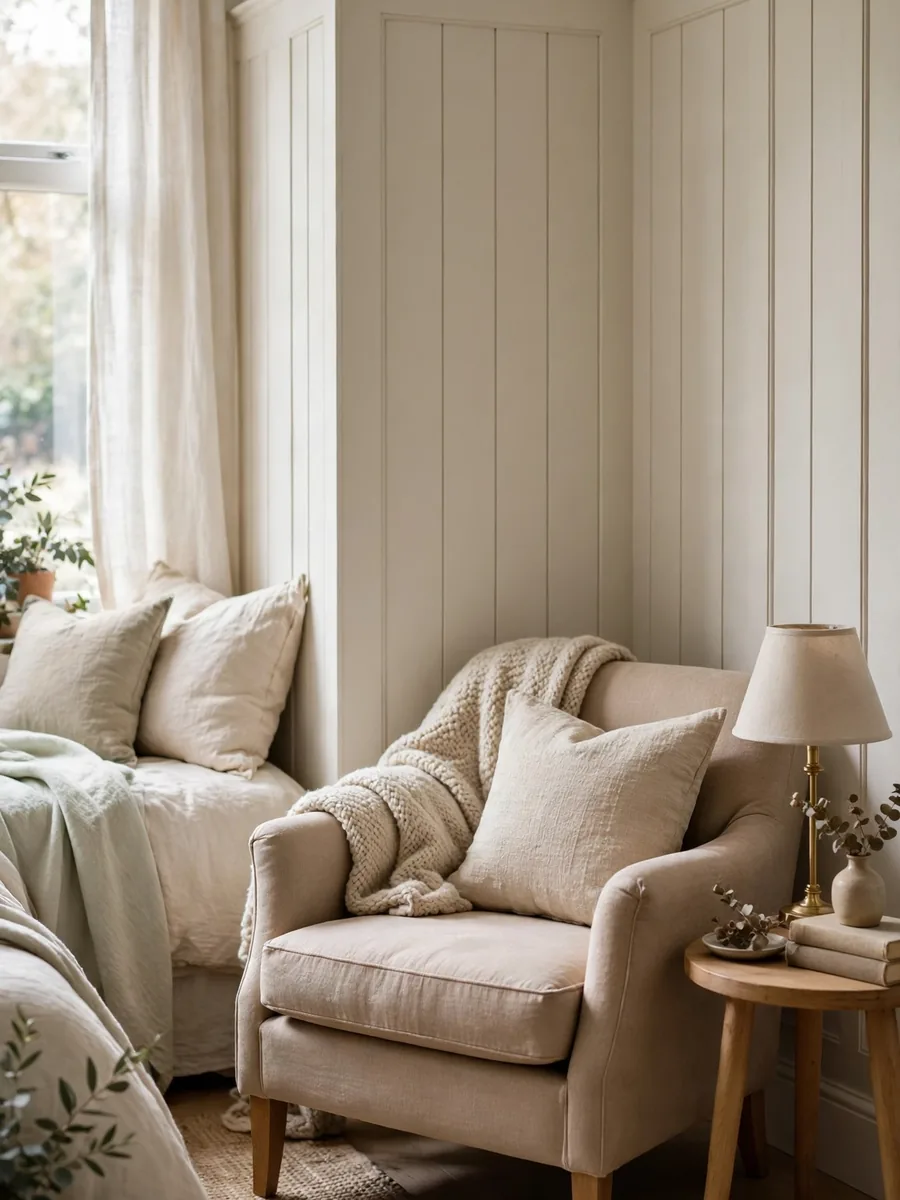
A small panelled corner — behind a reading chair, beside a dressing table, or around a window seat — turns an unused part of the bedroom into a destination. Panel one short wall or a corner section in the same style as the bed wall, add a chair, a small lamp, and a cushion, and keep the colour consistent so the corner feels connected to the rest of the room. Approximate cost as of 2026: roughly $80 to $250, depending on size.
15. Panels With Built-In Sconces and Shelves
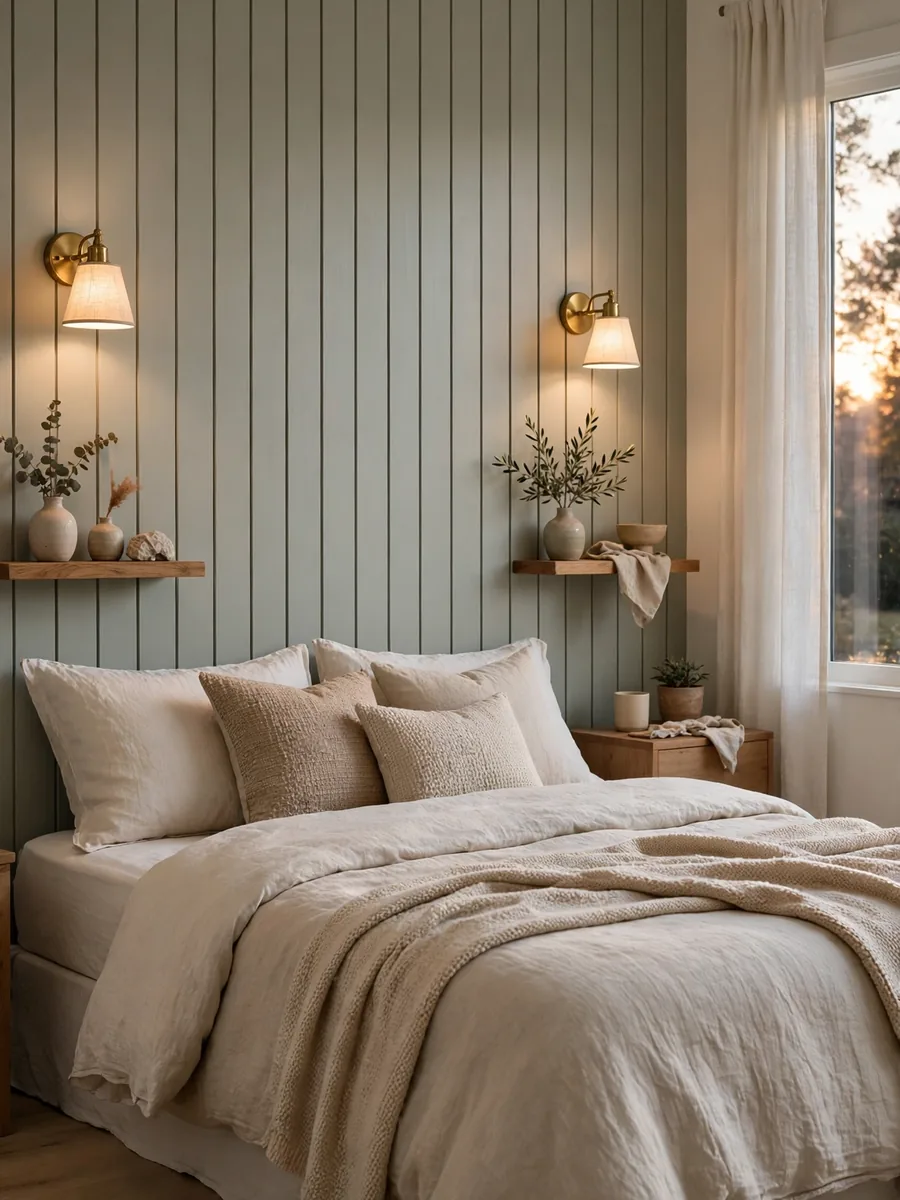
Panels with sconces or small shelves combine the accent wall with practical bedroom lighting and storage. Plan the panel layout around the sconce positions first, then choose plug-in sconces with a cord cover that matches the panel colour, or hire an electrician for hardwired lights. Approximate cost as of 2026: roughly $200 to $500 plus the cost of the sconces.
Frequently Asked Questions
How much does a bedroom accent wall panel project usually cost?
Most bedroom panel walls cost roughly $100 to $600 in materials as of 2026, depending on size, material, and whether you do the work yourself. Painted trim and peel-and-stick panels are usually at the lower end, while upholstered, wood-slat, and full-height wood panels are at the higher end.
Which panel style is best for a small bedroom?
Keep it simple and light. Painted panels in the wall colour, vertical flutes, or a single arched feature usually work best, because they add texture without closing the room in. Avoid covering every wall, and keep the panel colour close to the wall colour.
Are wall panels safe for renters?
Some are, and some are not. Peel-and-stick panels, painted faux panels, and framed panel art are usually the safest choices, because they come off with little or no damage. Nailed or glued wood trim, slats, and heavy panels usually need landlord permission first, so check your lease and ask before you start.
Do bedroom wall panels make a room feel darker?
They can, if the panels are dark and cover a large wall in a room with little natural light. To keep the room feeling bright, choose a light or mid-tone finish, keep the panels to the bed wall only, and balance them with light bedding, a mirror, or a lamp on each nightstand.
How do I clean panelled bedroom walls?
Dust painted and wood panels regularly with a dry cloth or duster, and wipe marks with a damp cloth and mild soap. Fabric and felt panels need gentle vacuuming with an upholstery attachment, and upholstered panels should be spot-cleaned following the fabric care instructions.
Can I put panels on a textured or uneven wall?
Usually, yes, but the result depends on the panel type. Lightweight peel-and-stick and felt panels often follow small bumps, while rigid wood and MDF panels need a fairly flat surface to sit flush. If your wall is heavily textured, a backing board gives rigid panels a flat surface to mount to.
Conclusion
A bedroom accent wall does not need to be dramatic to work. The best panelled bedrooms usually have one clear idea — a painted grid behind the bed, a soft upholstered wall, a warm slat feature, or a simple renter-friendly panel — carried out neatly, with the rest of the room kept calm. Start with the bed wall, choose the material that fits your budget and how long you plan to stay, and test the colour and the layout before you commit.


Thiago Alexander is the Chief Editor at Nested Charm. With a deep passion for interior design and cozy living spaces, he leads the editorial team in crafting stories that make every house feel like a home.





One Comment