

15 Fabric Ceiling Ideas That Make a Room Feel Soft and Finished
Executive Summary
Most rooms get all their decorating attention at eye level, while the ceiling stays plain white and forgotten. Fabric changes that in an afternoon. A length of voile, a gathered canopy, or a set of padded panels can soften hard edges, hide a tired ceiling, and make a bedroom or living room feel finished.
Some versions are fully renter-friendly, using tension rods or adhesive hooks that come down without a mark. Others are more permanent, like stretched-fabric track systems or upholstered panels. The ideas below cover both, with approximate costs as of 2026, and each one flags the safety checks that matter: keeping fabric clear of lights and heat, never covering a smoke detector, and getting landlord permission in writing before drilling in a rental.
In short: A fabric ceiling is one of the cheapest ways to make a plain room feel soft and finished. Start with lightweight fabric, keep it clear of lights, fans, and smoke detectors, and choose a renter-friendly fixing method if you rent.

Soft Draped Ceilings That Hide a Plain Ceiling
Draping is the simplest way into a fabric ceiling. Lightweight fabric hangs in soft folds, hides cracks and uneven paint, and needs little more than a few fixings and a step ladder.
1. A Full-Room Voile Ceiling Drape

Cover the whole ceiling with lightweight white or cream voile, gathered loosely from the centre out to the walls. The sheer fabric lets a little light through, so the room still feels bright, and the soft folds hide a stained or uneven ceiling completely. Fix it with ceiling hooks or a slim track around the edges. Approximate cost: $40–$90 for fabric and hooks as of 2026. Keep the fabric clear of pendant lights and ceiling fans.
2. A Soft Swag From a Centre Ceiling Hook

Hang one generous swag from a single centre hook and let it fall to a hook on each wall. One long piece of fabric, five fixings, and about half an hour. Approximate cost: $25–$60 for fabric and hooks as of 2026. In a rental, use a screw-in hook only with written landlord permission; the safer alternative is a heavy-duty adhesive ceiling hook rated for the fabric’s weight.
3. A Fabric Ceiling for a Reading Nook

A small alcove or reading corner is the perfect place to try a fabric ceiling. Drape a length of soft cotton or linen across the nook’s ceiling, fixing it at the front edge and letting it billow slightly toward the back wall. Approximate cost: $20–$50 as of 2026. Keep the fabric well away from any lamp shade or bulb, and use a light colour so the small space does not feel dark.
Canopy and Bed Ceilings for a Cozy Bedroom
A canopy turns the ceiling above the bed into the room’s best feature. These versions range from a full four-poster to a simple track, so there is one for most budgets and most rental rules.
4. A Classic Four-Poster Bed Canopy

Drape sheer or light cotton panels over the top frame of a four-poster bed, letting them fall softly at the corners. The fabric creates a ceiling just for the bed, which makes the sleeping area feel sheltered without closing it in. Approximate cost: $60–$150 for canopy panels as of 2026, plus the bed frame if you do not already own one.
5. A Ceiling-Mounted Curtain Track Canopy

Fix a ceiling curtain track in a rectangle above the bed, then hang sheer curtains from it to form a canopy. This is the most flexible canopy: slide the curtains open during the day and close them at night. Approximate cost: $70–$160 for track and curtains as of 2026. This version needs screws into the ceiling, so in a rental get written landlord permission first; the safer alternative is a freestanding canopy frame that stands on the floor around the bed.
6. A Half-Canopy Drape Above the Headboard

A half-canopy covers only the headboard end of the bed, which is ideal if a full canopy feels too heavy or your ceiling is low. Fix a short curtain rod or a pair of hooks on the ceiling above the headboard, drape fabric across it, and let the ends fall behind the headboard and onto the wall. Approximate cost: $30–$80 as of 2026. Keep the fabric clear of any wall light or reading lamp above the bed.
Upholstered and Padded Ceiling Panels
Upholstered panels give a fabric ceiling a tailored, finished look: the fabric is stretched over a firm panel, so the ceiling reads as smooth and deliberate.
7. Upholstered Ceiling Panels Over the Bed

Mount a set of fabric-covered panels on the ceiling directly above the bed, like a padded headboard that has moved overhead. Fit the panels edge to edge in a plain linen or cotton, so the ceiling looks upholstered rather than patched. Approximate cost: $150–$400 for materials as of 2026. This is a screwed-in, semi-permanent change, so it suits homeowners best; renters should skip it and use idea 5 or 14 instead.
8. Padded Fabric Tiles in a Grid
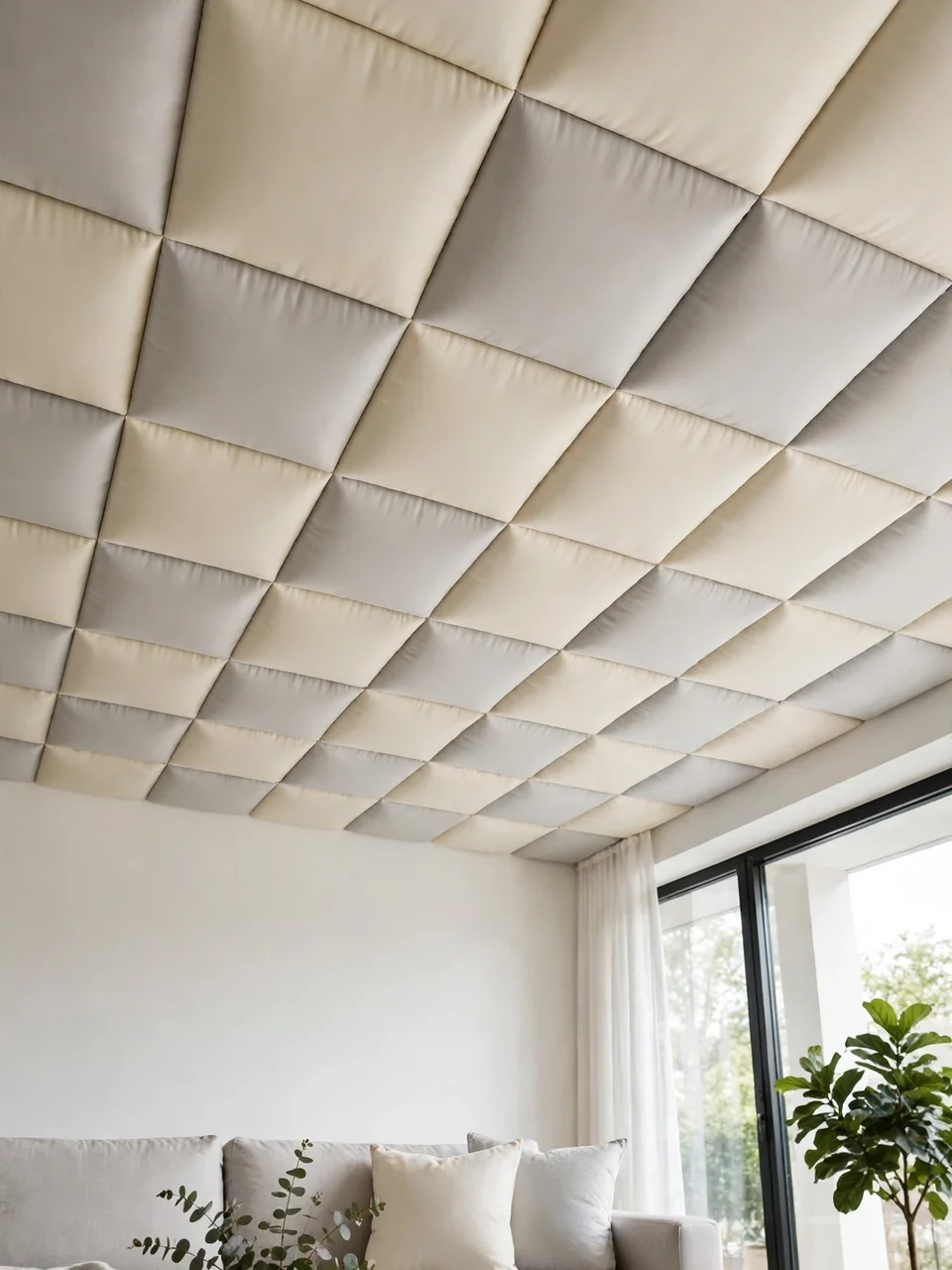
Cover the ceiling with a grid of square padded fabric tiles, each one a lightweight board wrapped in fabric and fixed to the ceiling. The grid pattern gives the room structure, and you can mix two close colours — for example, cream and pale grey — for a subtle checkerboard. Approximate cost: $120–$300 for a small room as of 2026. Never fix tiles over a smoke detector or a ceiling vent.
9. A Fabric-Covered Ceiling Medallion

If you want one fabric moment rather than a whole ceiling, cover a large ceiling medallion with fabric and mount it at the centre of the room. A round medallion wrapped in linen or velvet draws the eye upward, especially above a dining table or in the middle of a bedroom. Approximate cost: $40–$100 as of 2026. Fit it around the light fitting, not over it, and leave a clear gap between fabric and any bulb.
Stretched-Fabric Ceilings for a Smooth, Finished Look
A stretched-fabric ceiling uses a slim track fixed around the edges of the room, with fabric pulled taut inside it. The result is a perfectly smooth ceiling that hides wires, cracks, and old paint.
10. A Stretched-Fabric Ceiling Kit
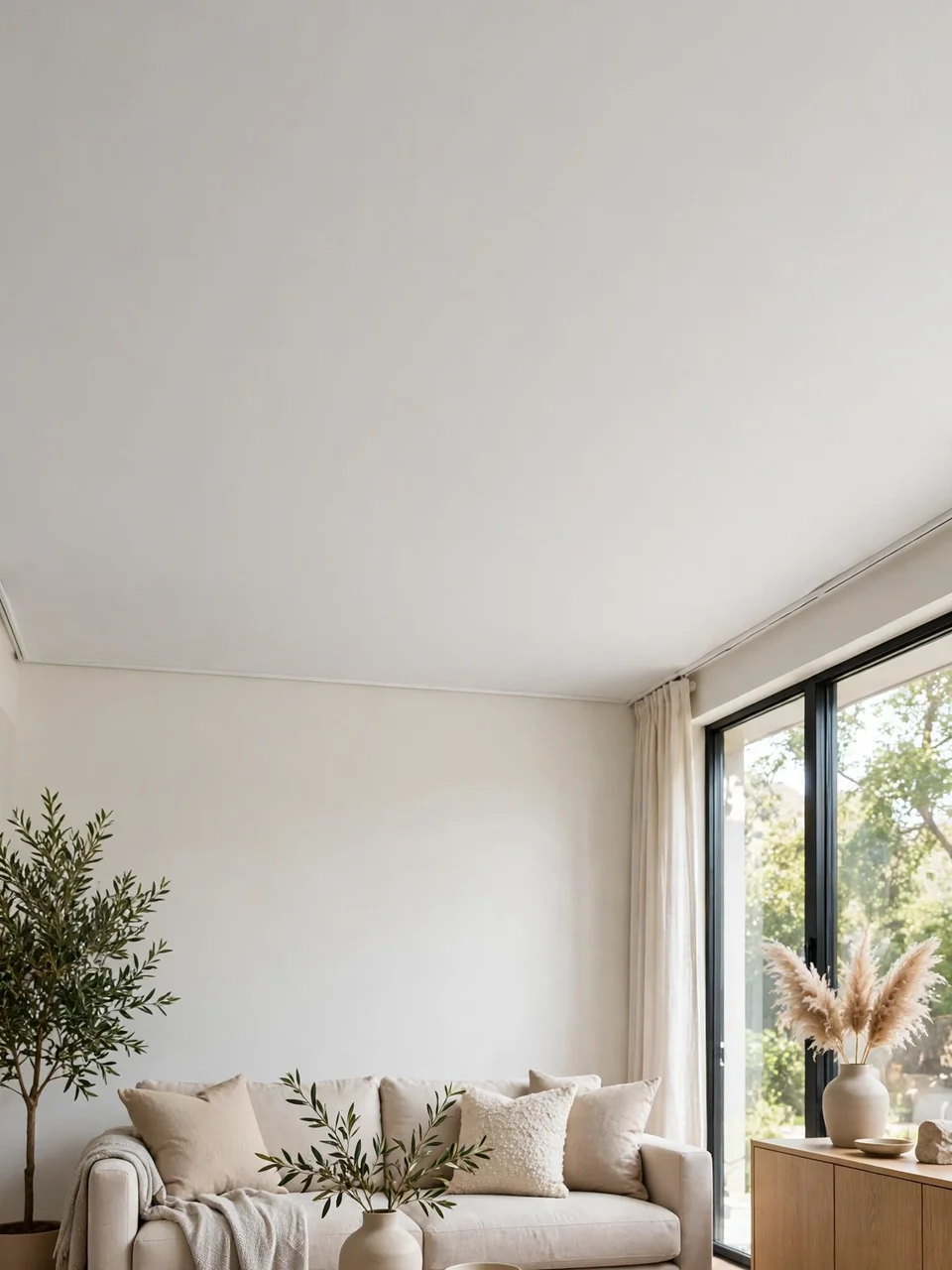
A stretched-fabric ceiling kit gives you a smooth, taut fabric ceiling in a weekend. The track fixes to the walls just below the existing ceiling, and the fabric tucks into it with a small tool. Approximate cost: $200–$500 for a small room as of 2026. Leave clear openings for light fittings and smoke detectors.
11. A Fabric Ceiling on a Sloped Attic Ceiling

Sloped attic ceilings are hard to paint neatly and often show every join, so fabric is a kind fix. Run lengths of light fabric along the slope, fixing them at the top ridge and the low wall, and let the fabric follow the angle of the roof. Approximate cost: $80–$200 as of 2026. Keep fabric clear of any skylight and away from roof lights, and make sure nothing blocks the room’s ventilation.
12. Acoustic Fabric Panels on the Ceiling

If your living room echoes — bare floors, tall ceilings, little soft furniture — fabric panels on the ceiling can quiet it. Fix a few fabric-wrapped acoustic panels above the seating area. Approximate cost: $150–$400 as of 2026. This is a decor choice, not a soundproofing fix: it softens echo in the room, it does not block sound from neighbours. Keep panels clear of lights and detectors.
Renter-Friendly Fabric Ceiling Tricks
Renters can have a fabric ceiling too. These three ideas use no drilling and no damage. If you like removable, renter-safe treatments in general, our peel-and-stick wall panels for renters use the same leave-no-mark idea on the walls.
13. A Tension-Rod Fabric Ceiling in a Rental

Span two tension rods across a small room or alcove, then drape lightweight fabric over them so it hangs in a soft curve between the rods. Tension rods grip the walls without screws, so the whole ceiling comes down in minutes when you move out. Approximate cost: $30–$70 as of 2026. Test the rods’ grip first, and use the lightest fabric you can so the rods stay put.
14. A Removable Swag on Adhesive Ceiling Hooks

Hang a loose fabric swag from heavy-duty adhesive ceiling hooks, the kind made to be removed without marking paint. Space the hooks in a gentle curve across the ceiling and let the fabric dip between them. When you move out, the hooks peel off. Approximate cost: $25–$55 as of 2026. Check your lease first, and test one hook with the fabric’s full weight for a day before you hang the whole swag.
15. A Gathered Fabric Cloud Above the Dining Table

Gather a large piece of sheer fabric at its centre, fix that one point to the ceiling with an adhesive hook, and let the fabric billow out to the edges of the table below, like a soft cloud. Approximate cost: $30–$70 as of 2026. Keep the lowest edge of the fabric well above head height and well clear of any pendant light over the table, and use flame-resistant fabric if you can find it.
FAQ
Is a fabric ceiling safe?
A fabric ceiling is safe with light fabric, secure fixings, and clear space around lights, fans, and smoke detectors. Keep fabric away from any bulb or heat source, and never cover a smoke detector or a vent. If you rent, get written landlord permission before you drill anything.
Can renters have a fabric ceiling?
Yes. Tension rods, adhesive ceiling hooks, and freestanding canopy frames all create a fabric ceiling without drilling. Ideas 13, 14, and 15 in this post are all renter-friendly, and they all come down without marking the ceiling. Always check your lease first.
What is the best fabric for a ceiling?
Lightweight, matte fabrics work best: voile, sheer cotton, linen, and light cotton. Avoid heavy upholstery fabric for draped ceilings, since the weight pulls on fixings and the folds look stiff.
How do you clean a fabric ceiling?
Take it down and wash it if the fabric allows, which is one advantage of draped and swagged ceilings over fixed panels. For a ceiling you cannot take down, dust it gently with a long-handled duster or a vacuum with a soft brush attachment on the lowest setting. Check the fabric’s care label first.
How much does a fabric ceiling cost?
A simple draped or swagged fabric ceiling usually costs $25–$90 for fabric and fixings as of 2026. A canopy or a stretched-fabric kit costs more, roughly $70–$500 depending on the size of the room and the system you choose. Renter-friendly versions sit at the lower end.
Will a fabric ceiling make a room feel smaller?
A heavy, dark fabric on a low ceiling can make a room feel smaller, but a light-coloured, sheer fabric usually does the opposite: it softens the ceiling and makes the room feel finished rather than smaller. If your ceiling is low, keep the fabric high, tight, and pale.
Conclusion
A fabric ceiling is a small change with an outsized effect. Whether you drape a full room in voile or fit a stretched-fabric ceiling in a bedroom, the result is the same: a ceiling that feels considered instead of forgotten. Start with a lightweight fabric, keep it clear of lights, fans, and smoke detectors, and choose a fixing method that fits your home — tension rods and adhesive hooks if you rent, a track or panels if you own. If you are rethinking the room too, our bedroom furniture layout ideas show how to place the bed and seating under a soft ceiling. A ceiling you actually look up at is a ceiling that earns its place in the room.


Thiago Alexander is the Chief Editor at Nested Charm. With a deep passion for interior design and cozy living spaces, he leads the editorial team in crafting stories that make every house feel like a home.



One Comment