15 Shelf Wallpaper Ideas That Make Open Shelves Look Finished
Executive Summary
Open shelves are wonderful for display and terrible at hiding a plain, unfinished back. A bare shelf back can make even beautiful dishes and books look like they are sitting in a storage unit. Wallpaper solves it in the smallest possible way: one strip behind the shelves adds colour, pattern and texture.
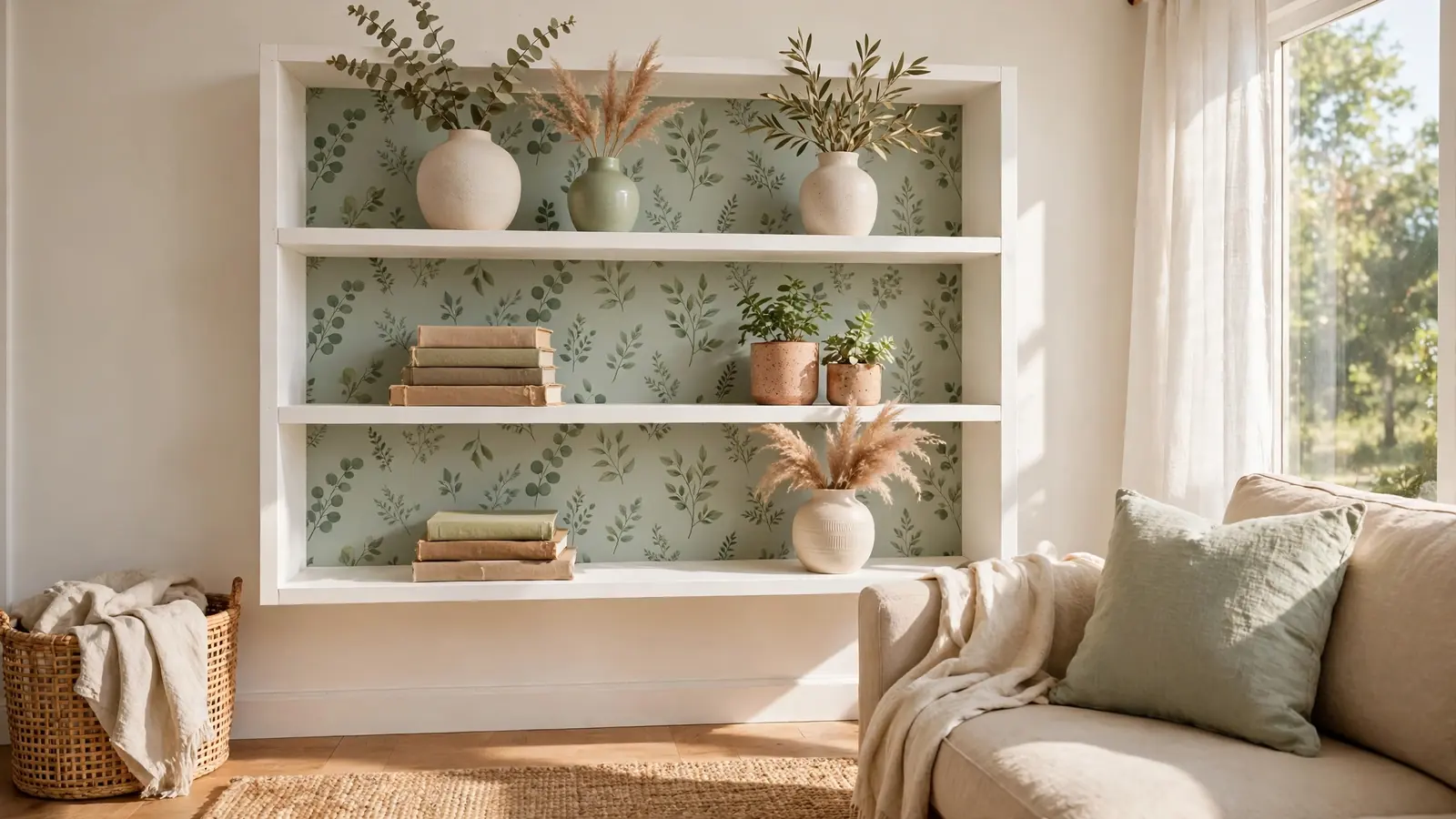
The trick is to treat the shelf back as its own small surface. Peel-and-stick paper is the friendliest option, and a removable backing panel makes the whole project reversible — handy in a rental. The fifteen ideas below cover bookcases, kitchens, pantries, bathrooms and kids' rooms, with an approximate cost for each.
In short: lining the back of an open shelf with wallpaper — usually peel-and-stick, usually on a removable panel — is the fastest way to make open shelves look finished, and most single-shelf projects cost roughly $15 to $60 in materials as of 2026.
First, the Foundation: Prep and Fit
Before any pattern goes up, two unglamorous steps decide whether the result looks professional or homemade.
1. Make a Paper Template Before You Cut

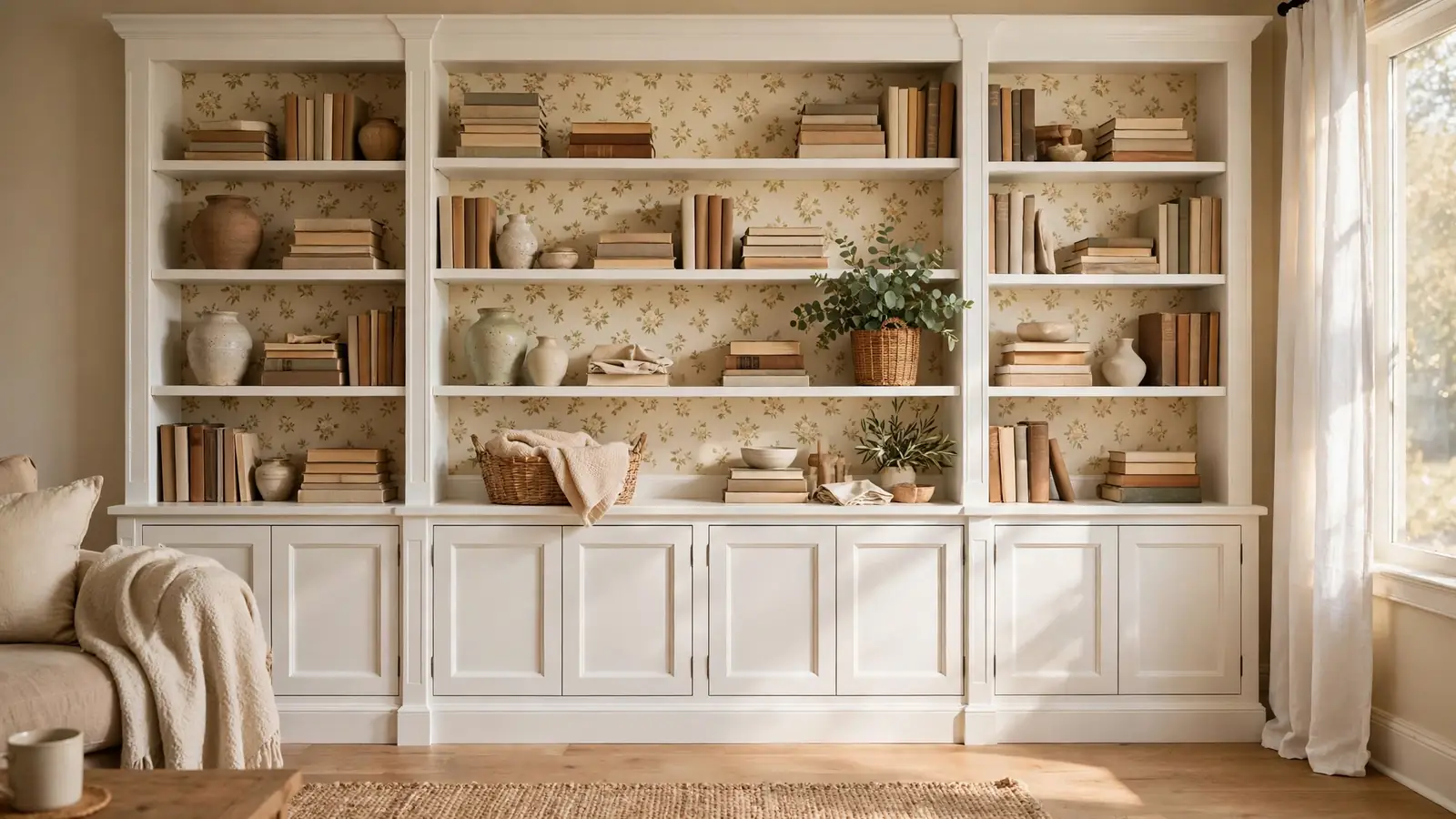
Wallpaper is not cheap enough to waste, and shelf backs are rarely perfectly square, especially in older homes. Cut a template from kraft paper, press it into the back of the shelf, and trim it until it fits. Then use it to cut the wallpaper.
Tape the paper to the back panel, mark the corners, and cut along the marks. Then trace the template onto the back of the wallpaper and cut that out. Approximate cost: about $5 to $10 for kraft paper and a pencil, as of 2026.
2. Wallpaper a Removable Back Panel, Not the Shelf Itself
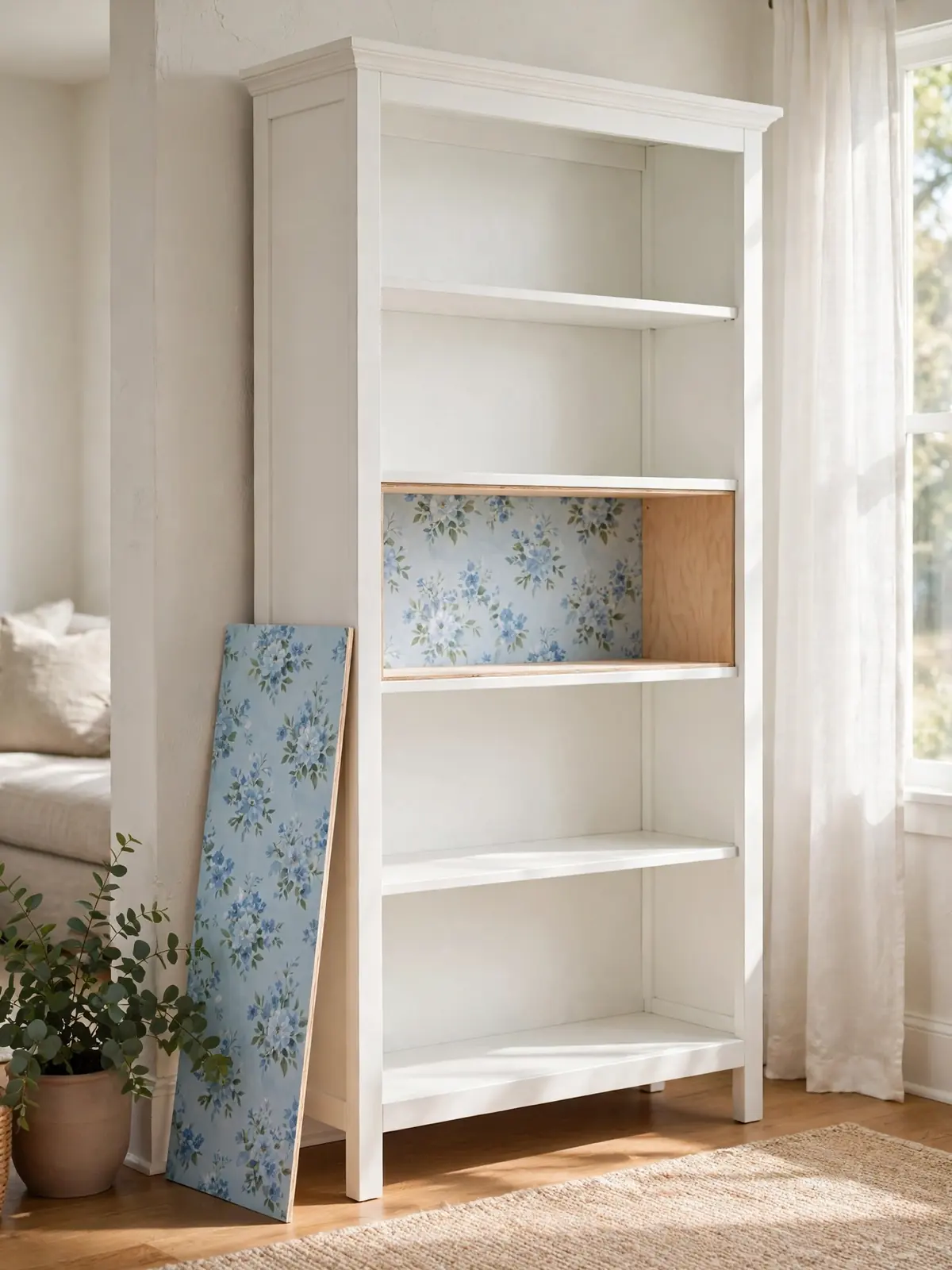
If you are renting, or you simply like changing your mind, skip sticking anything to the furniture. Cover a thin sheet of plywood or foam board cut to size, and slide it behind the shelves. A few pieces of removable mounting putty hold it, and it lifts straight out when you move.
To do it, measure the opening, have the panel cut to size at the hardware store if you do not own a saw, apply the wallpaper to the panel on a flat table, and trim the edges. Approximate cost: about $15 to $35 for the panel, paper and putty for one bookcase, as of 2026.
Peel-and-Stick Backs That Look Built-In
Peel-and-stick wallpaper is the natural fit for shelves: the pieces are small and the surface is flat.
3. Line a Plain Bookcase with Peel-and-Stick Wallpaper
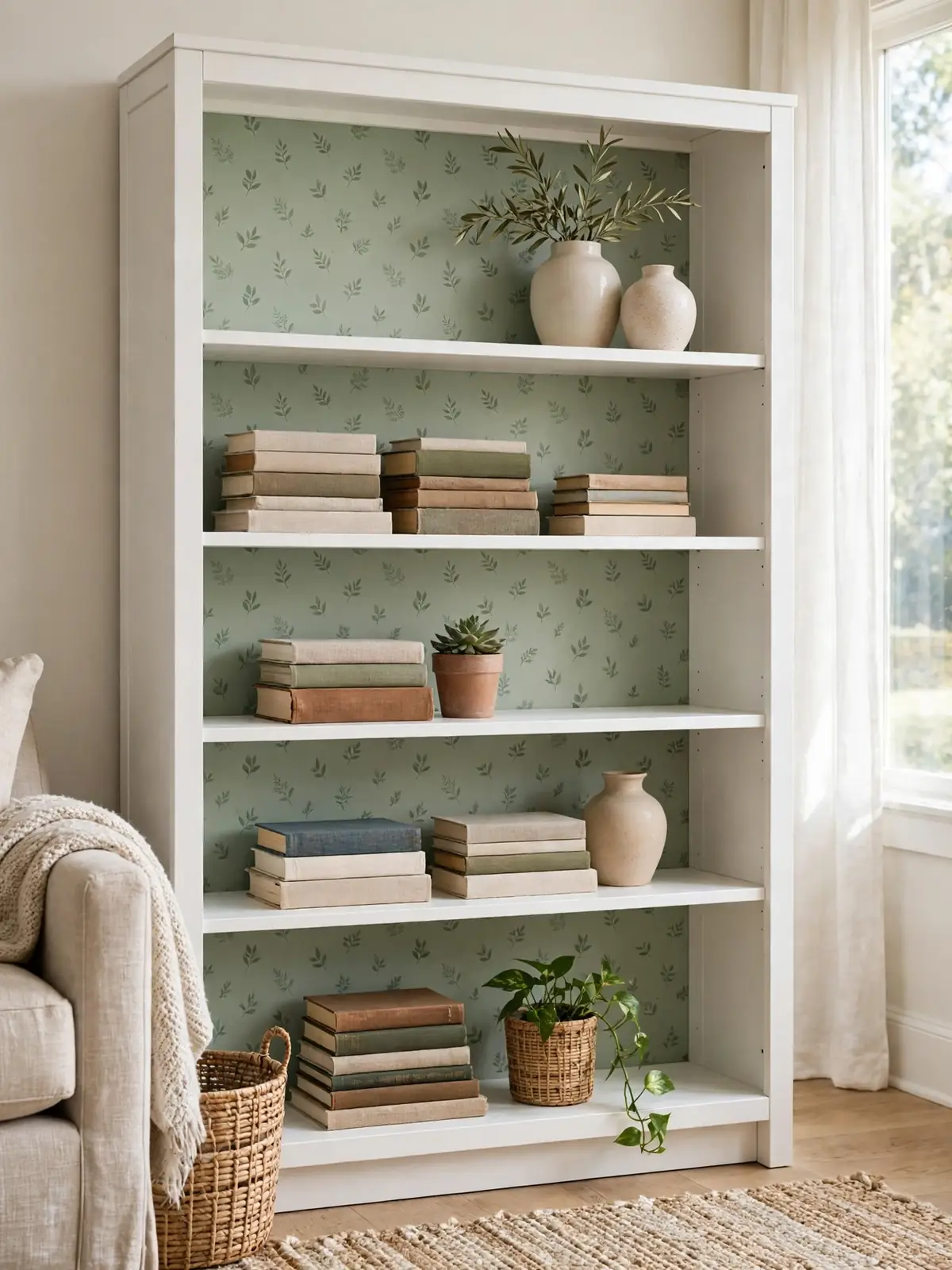
A plain white bookcase is the best candidate for this project, because any pattern reads clearly against the white frame. A soft sage green paper with a small leaf pattern is a good first choice: it suits books, ceramics and plants equally well.
Clean the back panel, cut the paper using the template above, and smooth it on from the top down with a dry cloth. Work one shelf section at a time. Approximate cost: about $20 to $40 for one roll, which usually covers a standard bookcase, as of 2026. These peel-and-stick wall panels for renters use the same damage-free thinking on a larger surface.
4. Go Bold with a Botanical Back
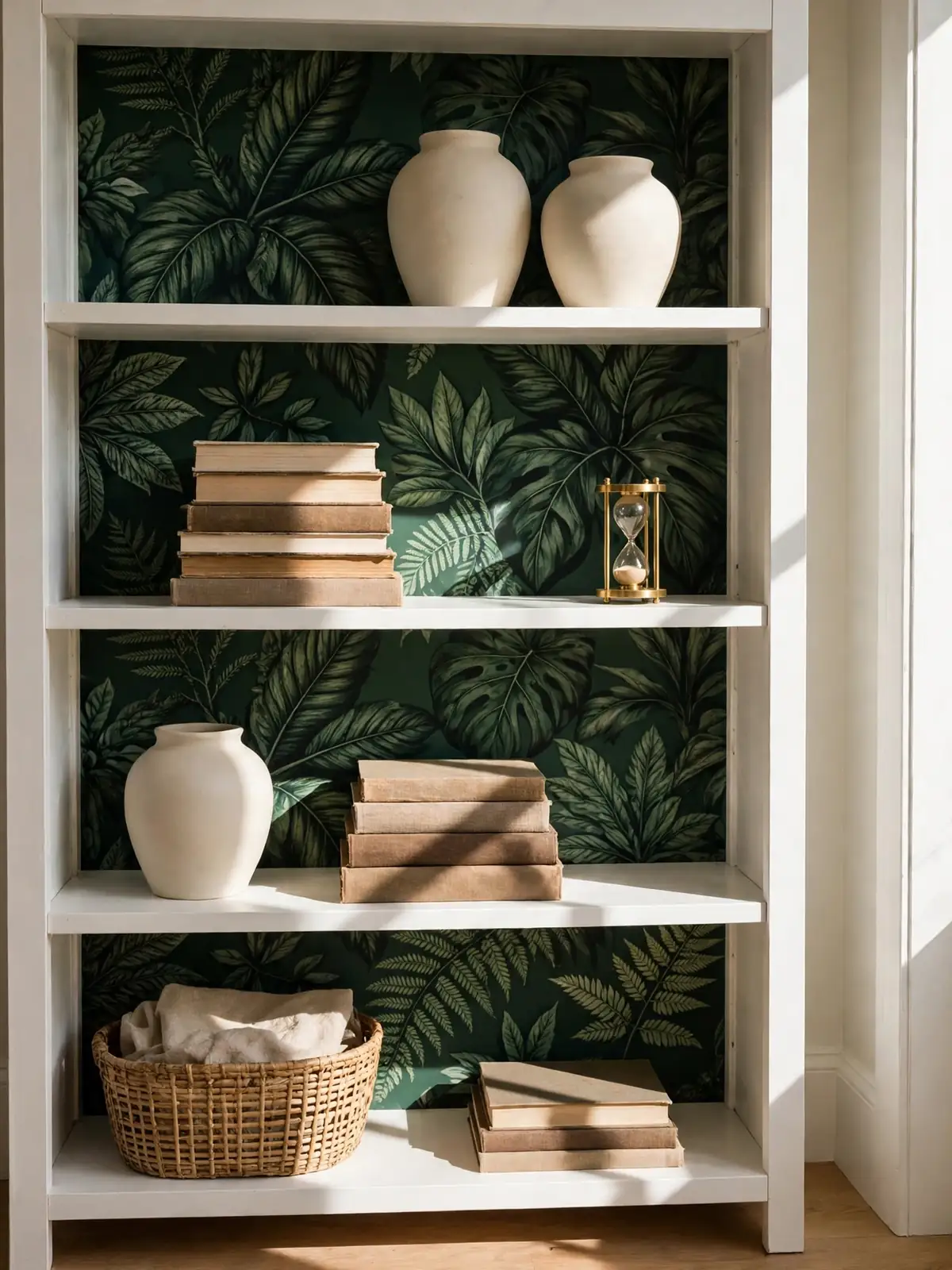
Small shelves can carry a big pattern. A large-scale dark green botanical leaf print turns a plain white bookcase into the feature of the room, and it makes cream ceramics and pale book spines stand out against the dark background.
Choose a print with a large repeat and centre the boldest motif at eye level, usually the middle shelf. Match the pattern across joins, and keep the objects on the shelves simple so the paper does the talking. Approximate cost: about $25 to $50 for a roll of bold peel-and-stick paper, as of 2026.
5. Use Stripes to Make Short Shelves Look Taller

Vertical stripes are a classic trick for making a low or wide shelf unit feel taller, and they work just as well on a shelf back as they do on a wall. Cream and sage stripes add height and rhythm without making the shelves feel busy.
Hang the strips with the stripes running straight up and down, lining up the edges where strips meet. A small spirit level helps keep the first strip true, because every strip after it follows the first one. Approximate cost: about $20 to $40 for a roll of striped peel-and-stick paper, as of 2026.
Pattern and Colour on a Small Surface
A shelf back is a small area, so you can be braver with colour and texture than on four walls.
6. Try a Dark, Moody Backing for Contrast
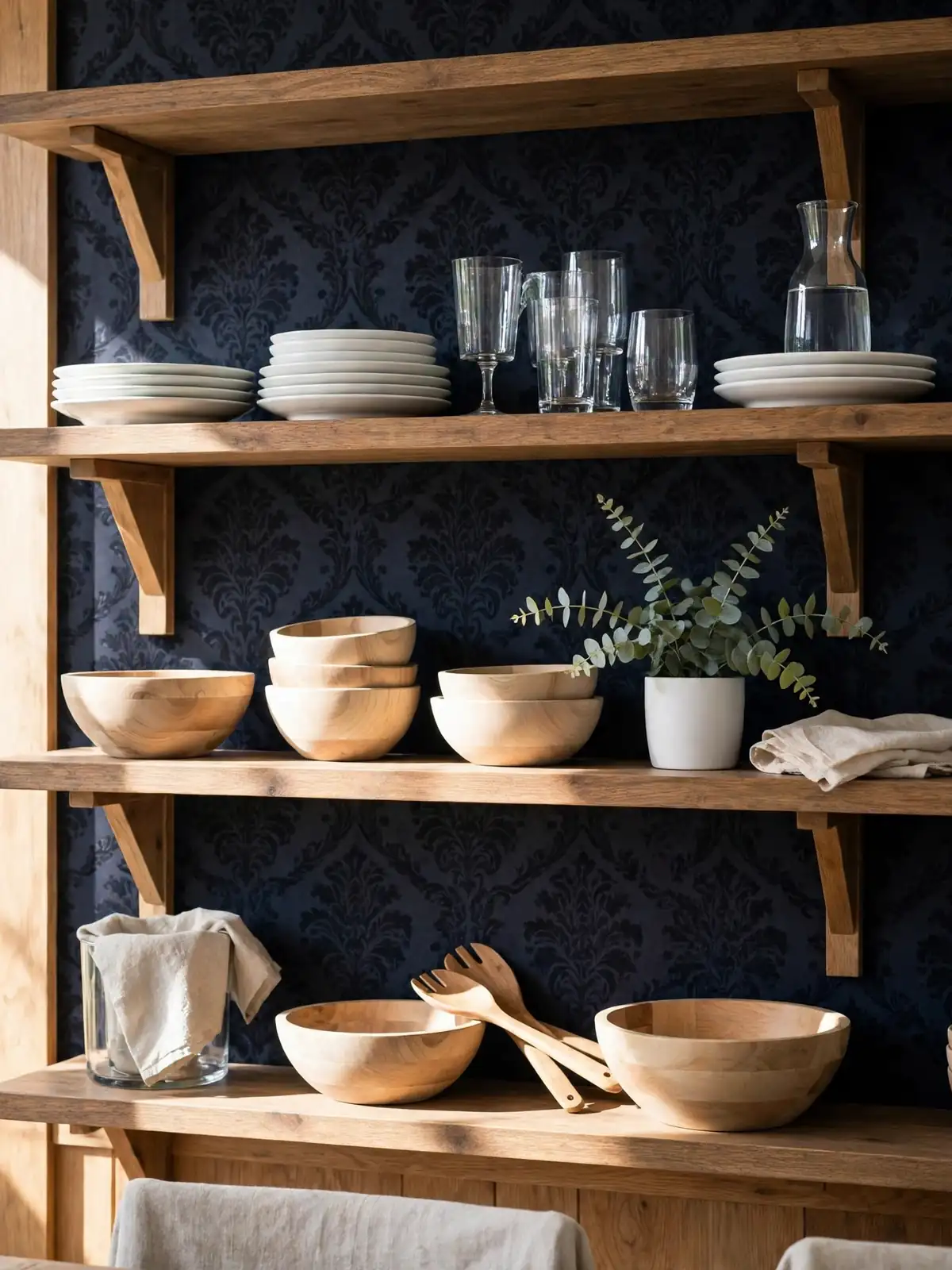
White dishes and pale wood disappear against a white shelf back, but they glow against a dark one. A deep charcoal-navy backing behind open dining-room shelves makes white plates, clear glassware and light wooden bowls look intentional and collected.
Pick a dark paper and keep the styling light: white ceramics, glass and pale wood. Leave a little breathing room between objects so the dark background shows through. Approximate cost: about $20 to $45 for a roll of dark peel-and-stick paper, as of 2026.
7. Keep It Calm with a Neutral Textured Backing
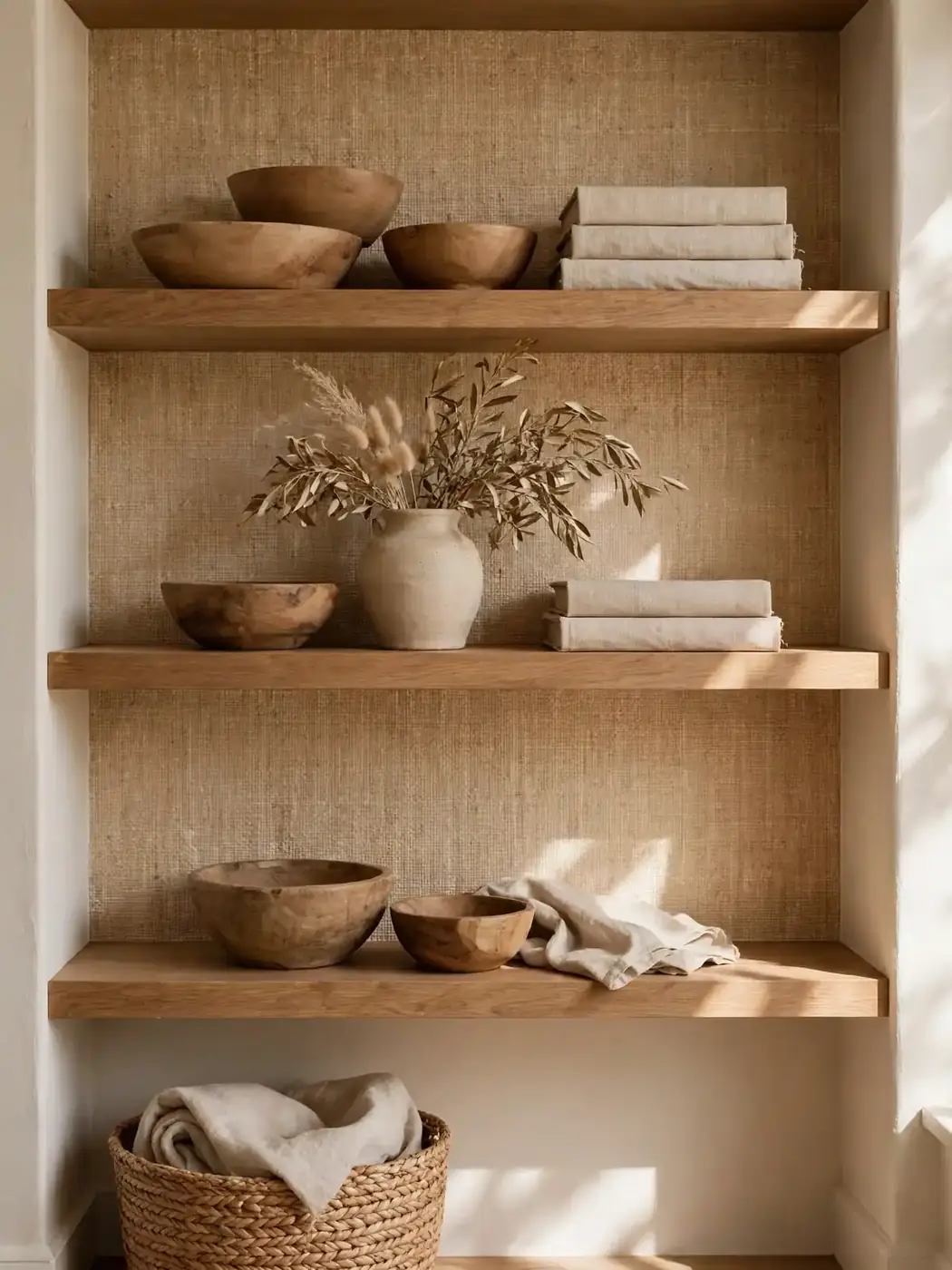
If bold pattern feels like too much, texture is the quieter route. A warm beige woven grasscloth-look paper adds depth to a shelf back without adding a visible pattern, and it pairs naturally with wooden bowls, linen-covered books and plain ceramics.
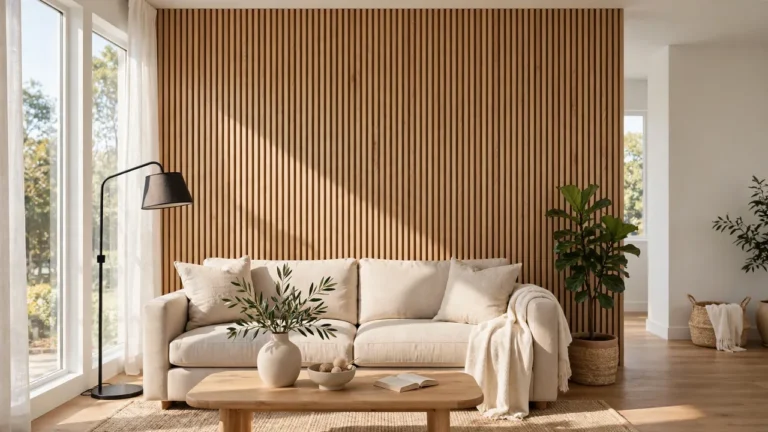
Choose a peel-and-stick paper with a woven or grasscloth effect rather than real grasscloth, which is harder to remove. Smooth it on carefully, since textured papers show creases more than smooth ones. Approximate cost: about $25 to $50 for a roll of textured peel-and-stick paper, as of 2026. For a more architectural version of the same warmth, see wood slat wall panels.
8. Add a Small Geometric Print to Kitchen Shelves
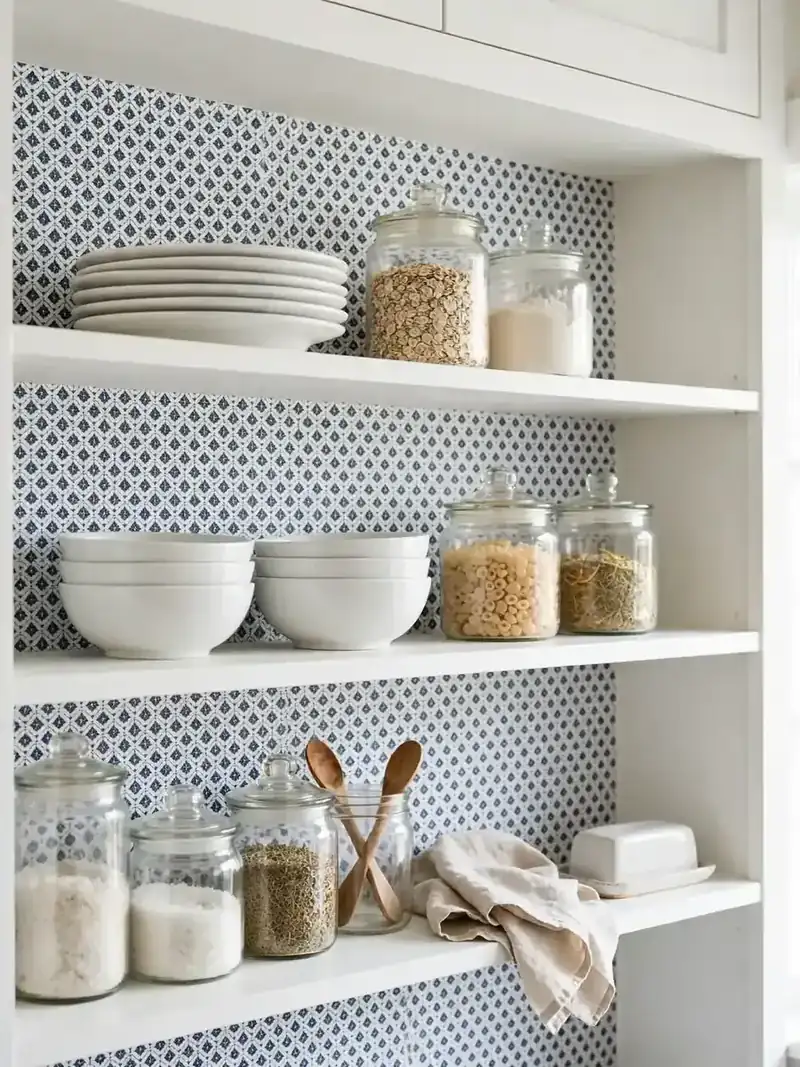
Kitchens suit small, tidy patterns, and a small-scale navy and white geometric print behind open kitchen shelves gives white plates and glass jars a crisp backdrop. The small repeat means little pattern matching, which makes the cutting easy.
Measure each shelf opening separately and cut each piece to its own opening. Avoid placing it directly behind a stove or hob, where heat and steam are strongest. Approximate cost: about $20 to $40 for a roll, as of 2026.
Room-by-Room Shelf Wallpaper
These three ideas match the practical demands of a pantry, a bathroom and a kids' room.
9. Line Pantry Shelves with Wipeable Gingham

A pantry is a working room, so the paper there needs to survive flour dust and the occasional spill. A sage green gingham-check vinyl-look paper is wipeable, cheerful and classic, and it makes glass jars, baskets and folded linens look organised.
Choose a vinyl-coated peel-and-stick paper, press it firmly on, and seal the edges so crumbs cannot slip behind it. Approximate cost: about $20 to $40 for a roll of wipeable paper, as of 2026.
10. Choose Vinyl-Coated Paper for Bathroom Shelves
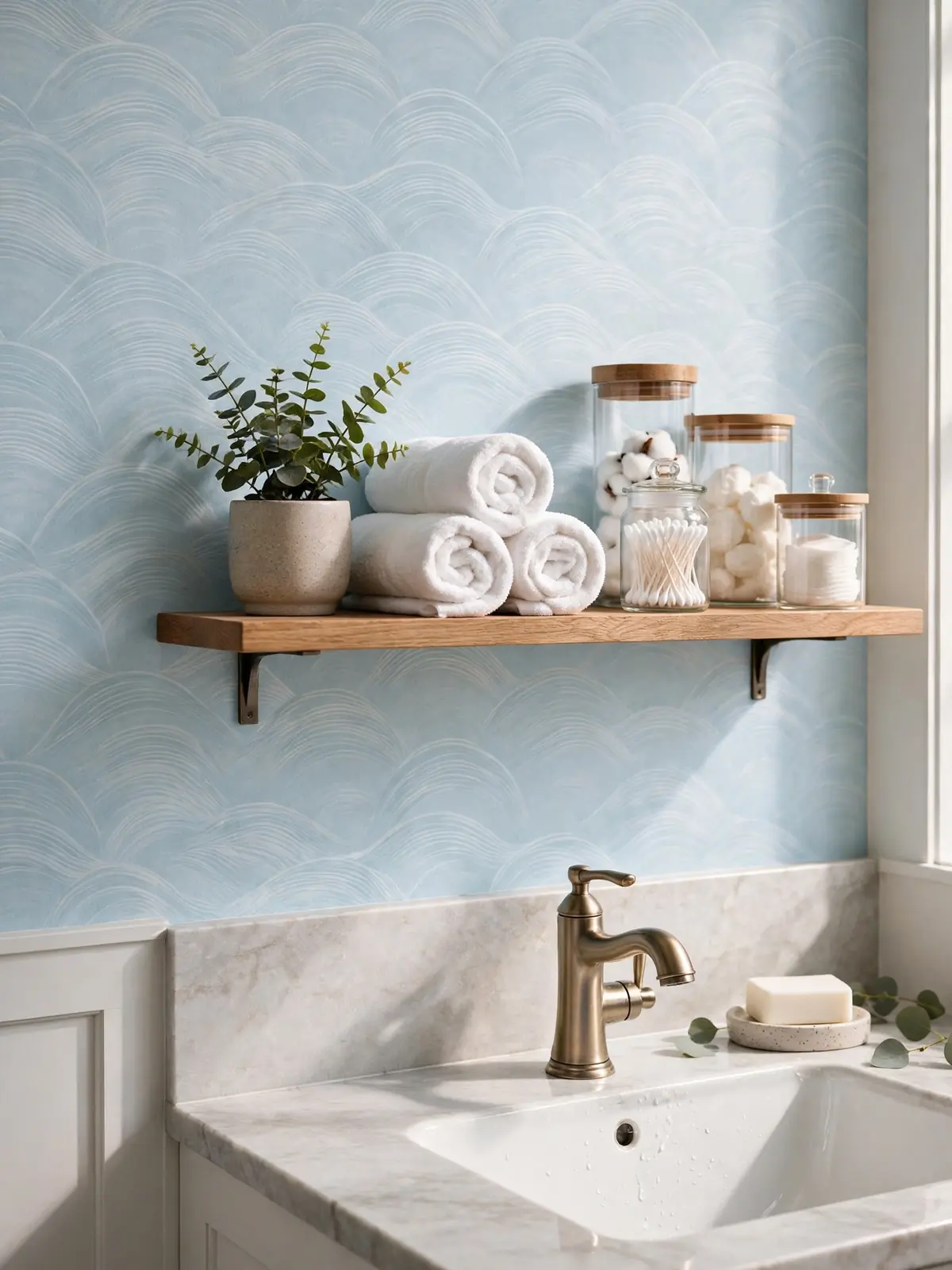
Bathroom shelves face steam, splashes and damp air, so ordinary paper will peel and bubble. A vinyl-coated peel-and-stick paper with a pale blue wave pattern resists moisture, wipes clean, and suits rolled white towels and a small potted plant.
Pick a paper labelled vinyl-coated or waterproof, and only use it where the bathroom has working ventilation, such as an extractor fan or an opening window. Keep it off shelves directly above a bath or shower, where constant steam defeats even vinyl coatings. Approximate cost: about $25 to $50 for a roll of vinyl-coated paper, as of 2026.
11. Give Kids' Room Shelves a Playful Pastel Backing
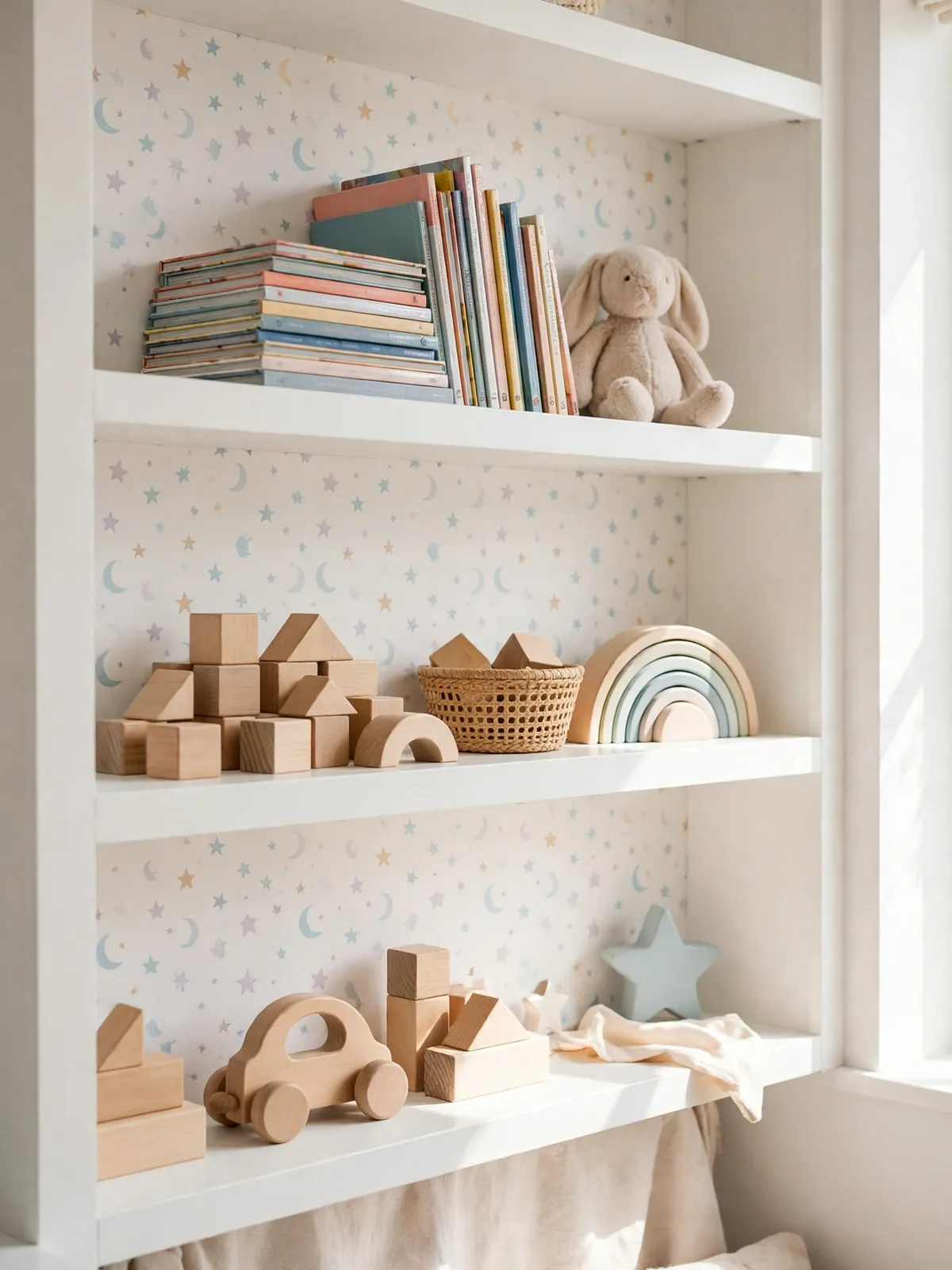
Kids' shelves hold picture books, toys and treasures that change every few months, so the backing should be cheerful and easy to swap. A soft pastel paper with small stars and moons makes white wall shelves feel magical without overwhelming the room.
Use peel-and-stick paper on a removable panel if the shelves are rented, so the next phase only needs a new panel. Choose a washable paper if you can find one. Approximate cost: about $15 to $35 for a roll of pastel peel-and-stick paper, as of 2026.
Texture, Lining and Layering Tricks
These two ideas use wallpaper on the shelf surface and the shelf edge, where it behaves more like a liner and a frame.
12. Use Wallpaper as a Shelf Liner Under Dishes
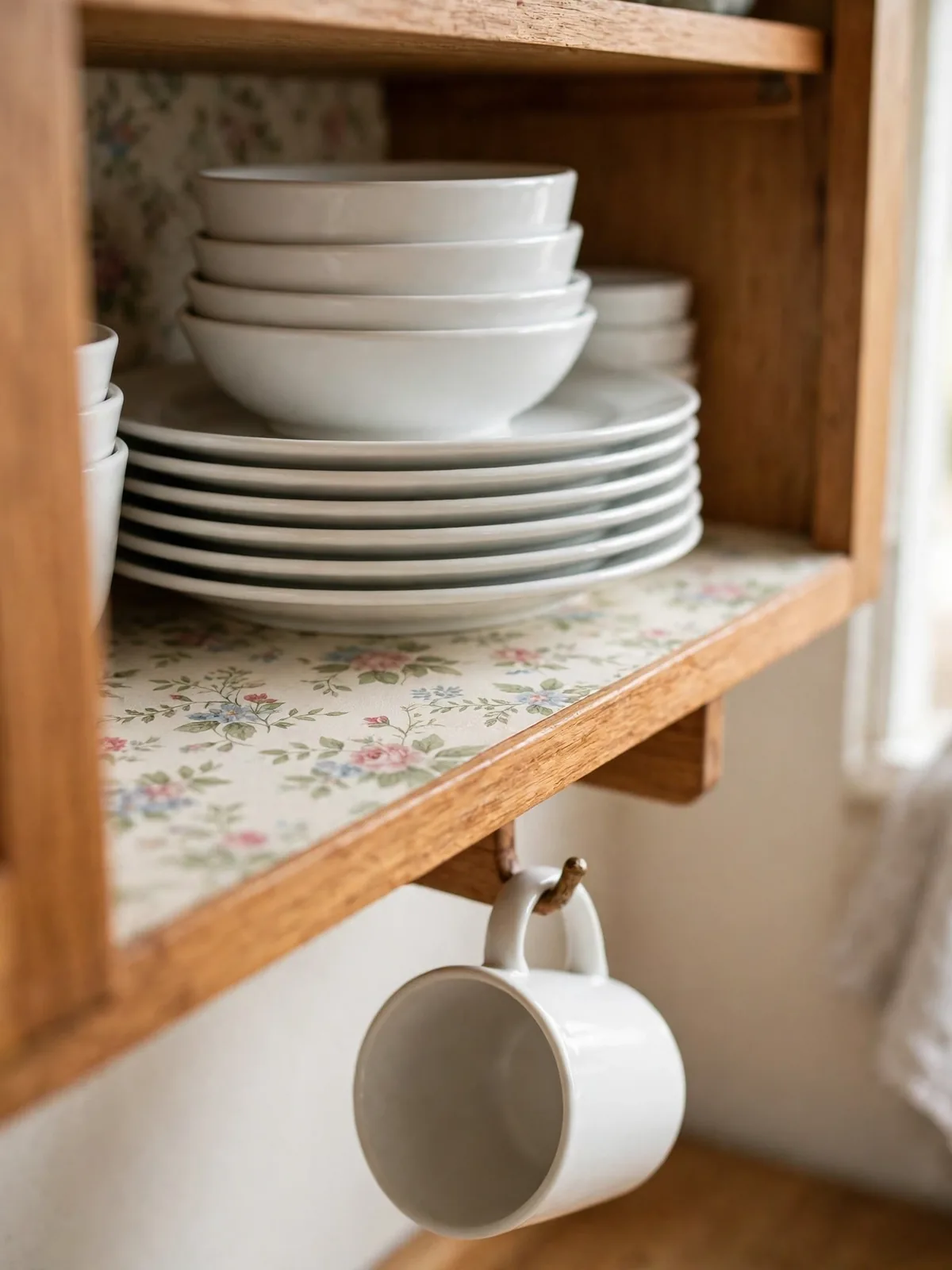
Wallpaper makes a beautiful shelf liner, and it is sturdier than most paper liners sold for the job. A washable floral paper under a stack of white plates and bowls protects the shelf and stops dishes from sliding.
Cut the paper to the shelf size, lay it pattern-side up, and fix the corners with double-sided tape so it does not creep. Choose a washable or vinyl-coated paper in the kitchen, and replace it if it gets stained. Approximate cost: about $10 to $25 for a half roll or an offcut, as of 2026.
13. Wrap the Shelf Edge for a Framed Look
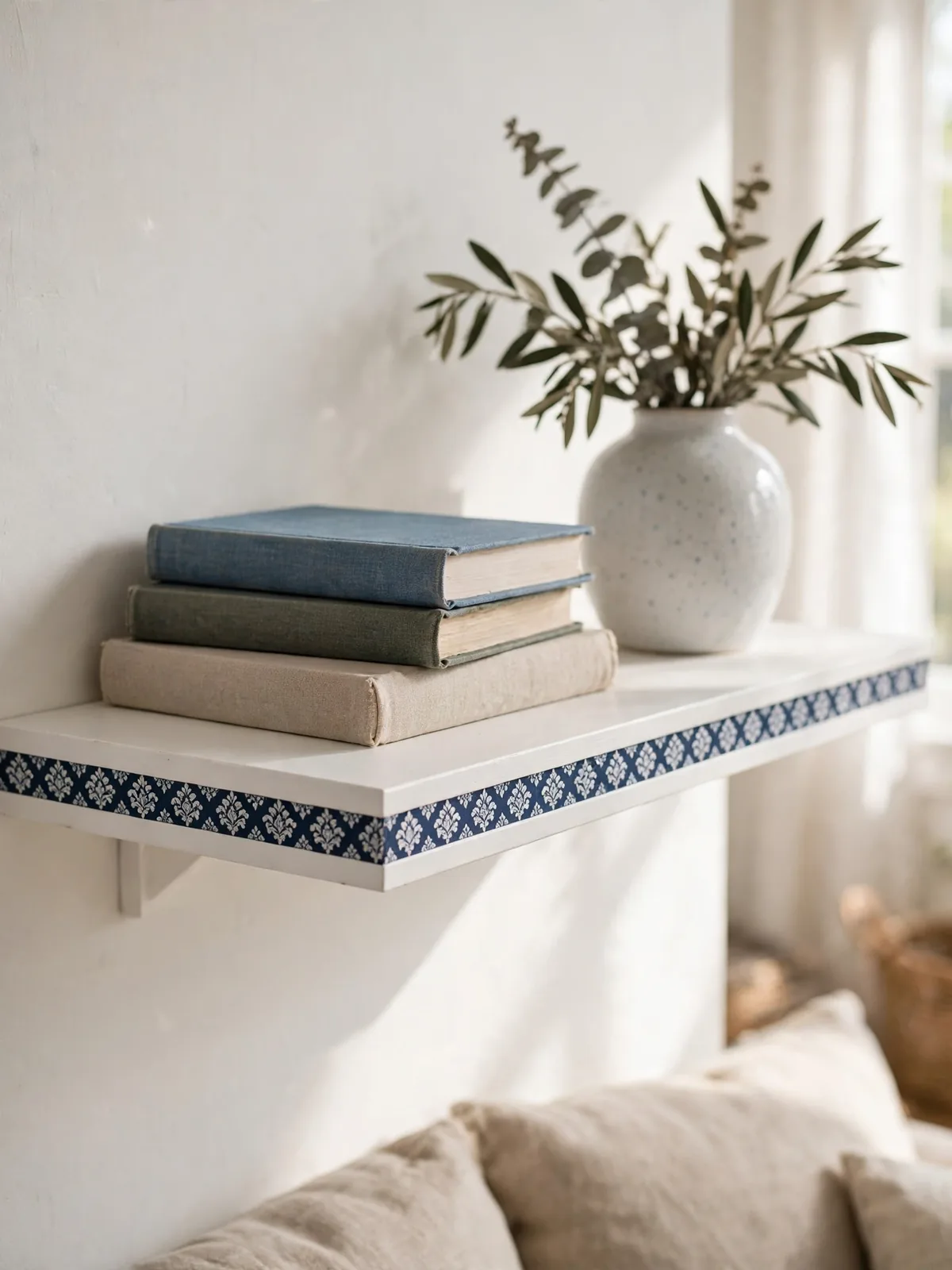
If covering a whole back panel feels like too much, try the opposite: cover just the front edge of the shelf. A thin strip of navy patterned wallpaper wrapped around the lip of a white shelf frames it like a picture.
Cut a strip slightly wider than the edge, wrap it around the front lip, and trim the ends neatly. Press it down firmly. Approximate cost: about $5 to $15 using an offcut or a sample strip, as of 2026.
Renter-Safe, Reversible and Budget Finishes
The last two ideas need no commitment at all: no adhesive on the furniture, and a swap that takes minutes.
14. Swap Backs Seasonally with Wallpapered Foam Board
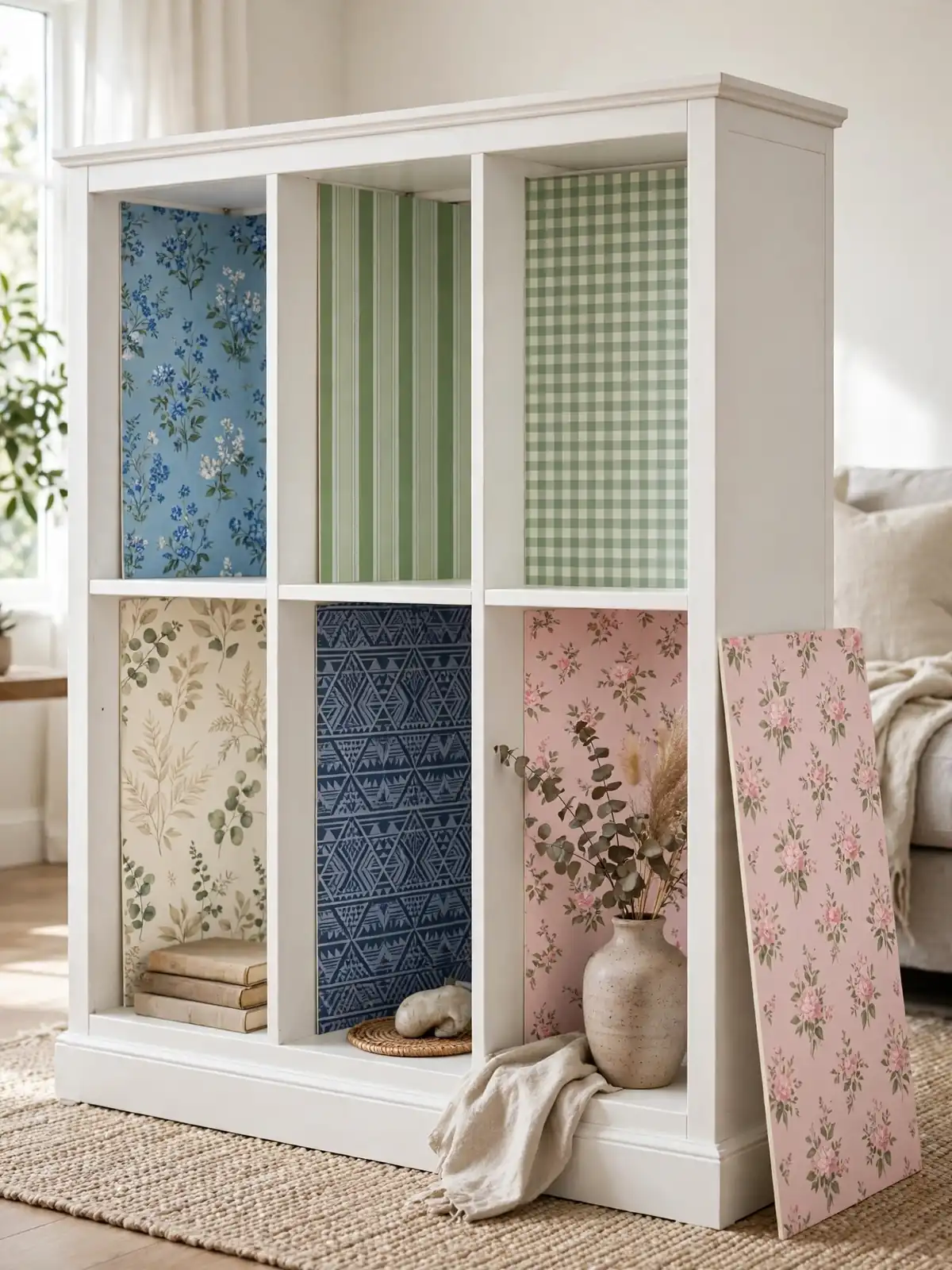
Foam board is light, cheap and easy to cut, which makes it the perfect base for a changeable shelf back. Cover a few boards in different papers, stand them inside the cubbies of a shelf unit, and keep a spare board leaning nearby for quick swaps.
Cut the foam board to fit each cubby snugly, cover each board with wallpaper, and trim the edges. Slide the boards in behind the shelves and store spares flat so they do not warp. Approximate cost: about $10 to $25 for foam board and paper for a small unit, as of 2026.
15. Mix a Different Pattern in Every Cubby
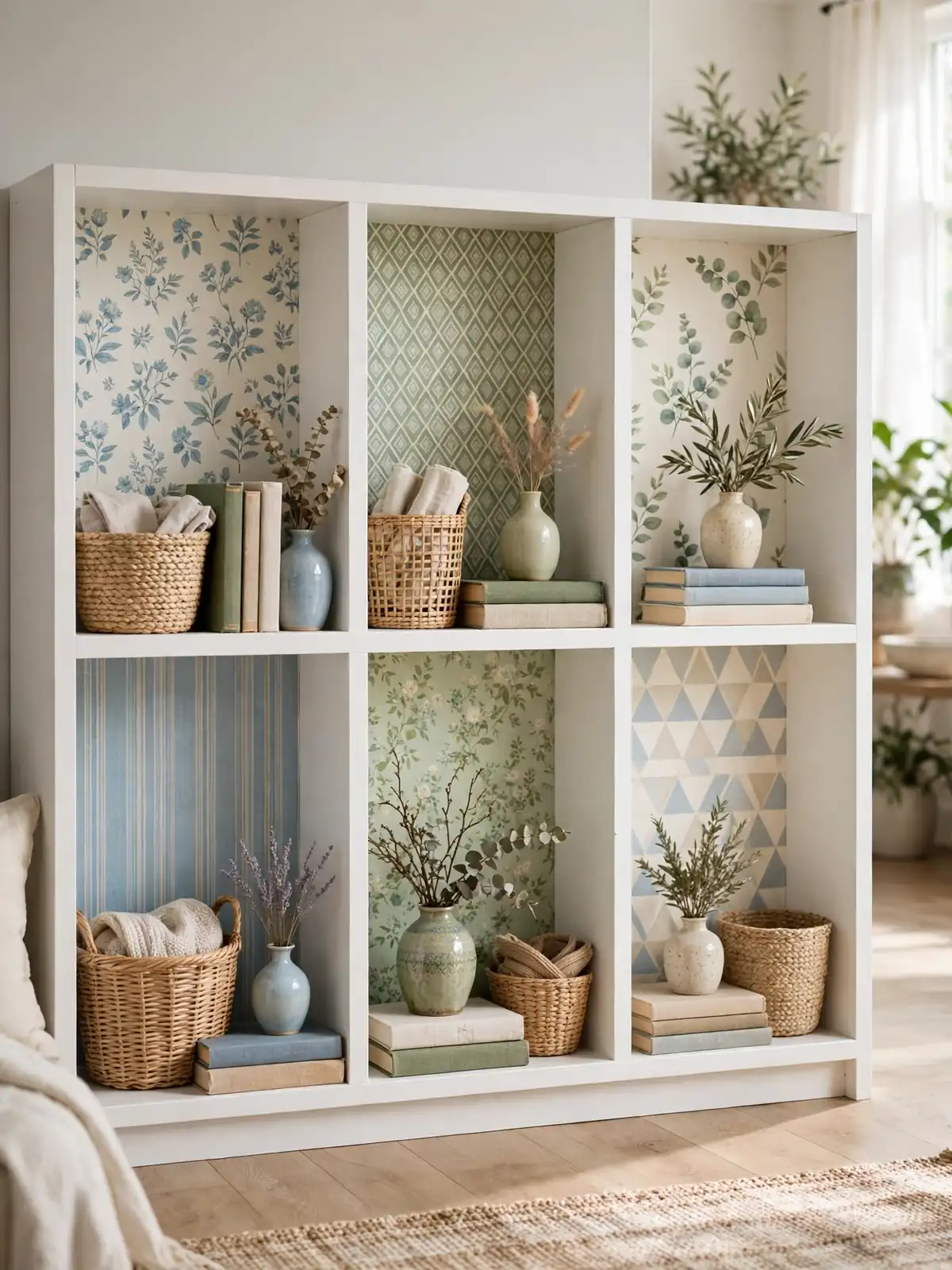
A cubby shelf with six square compartments is a ready-made patchwork: give each cubby its own wallpaper pattern, kept in the same colour family of soft blues, greens and creams, and the unit looks curated rather than chaotic.
Pick all six papers first, and lay them side by side to check they share at least one colour. Apply each one to its own removable panel, keeping the lightest pattern at the top. Approximate cost: about $25 to $60 for sample-sized pieces or short rolls, as of 2026.
Frequently Asked Questions
Does shelf wallpaper damage the shelf?
Peel-and-stick paper on a painted or sealed shelf back usually comes off cleanly if you peel it slowly. It can lift paint on unfinished wood or a fresh coat that has not cured, so if you are unsure, use a removable backing panel instead.
Can I use regular paste wallpaper on shelves?
You can, but it is usually more work than the job needs. Paste wallpaper is harder to remove and can buckle the thin back panel of a cheap bookcase. Peel-and-stick is easier to position and remove, and strong enough for a small, flat shelf back.
Will wallpaper survive in a bathroom or kitchen?
Vinyl-coated peel-and-stick paper usually holds up well on a shelf back in a bathroom with working ventilation, and in a kitchen away from the stove. Ordinary paper will not: steam and cooking grease loosen the adhesive and stain the surface.
How much wallpaper do I need for one bookcase?
Most standard bookcases need about one roll of peel-and-stick paper, roughly 45 to 50 square feet, including a little extra for trimming and pattern matching. Measure each shelf opening separately and add about 10 percent for waste.
Can renters use shelf wallpaper?
Yes, and it is one of the most renter-friendly projects there is, provided you use peel-and-stick paper on a removable panel rather than sticking paper to the landlord's furniture. Lift the panels out when you move.
How do I clean wallpapered shelves?
Wipe vinyl-coated and washable papers with a damp cloth and a drop of mild dish soap, then dry them. For non-washable paper, dust it with a dry cloth and avoid getting it wet. Replace a stained piece rather than scrubbing it.
Conclusion
A shelf back is a small surface with an outsized effect. One strip of wallpaper, chosen to suit the room and fixed in a way you can reverse, turns open shelves from bare storage into a finished part of the room — and most of these ideas cost less than a single new vase. Start with one shelf you see every day, using peel-and-stick paper on a removable panel.

Thiago Alexander is the Chief Editor at Nested Charm. With a deep passion for interior design and cozy living spaces, he leads the editorial team in crafting stories that make every house feel like a home.