

15 Closet Inspo Ideas That Make Getting Dressed Feel Good
Executive Summary
A closet does not need a renovation to feel completely different. Most fail on the small things: harsh lighting, mismatched hangers, a jumble of colours, one overstuffed shelf. Fix those, and the same space suddenly feels calm and organised.
The ideas below are styling and small upgrades, not demolition. Most cost under $100 as of 2026, and renters can do nearly all of them without touching a wall they do not own.
**In short:** Treat your closet like a small room, not a storage cupboard. A soft paint colour or peel-and-stick back wall, warm lighting, matching hangers, colour-ordered clothes, and a few matching baskets will make getting dressed feel good — usually for well under $100, and without a renovation.
Colour and Light That Change the Whole Feel
1. Paint the Inside a Soft, Light Colour

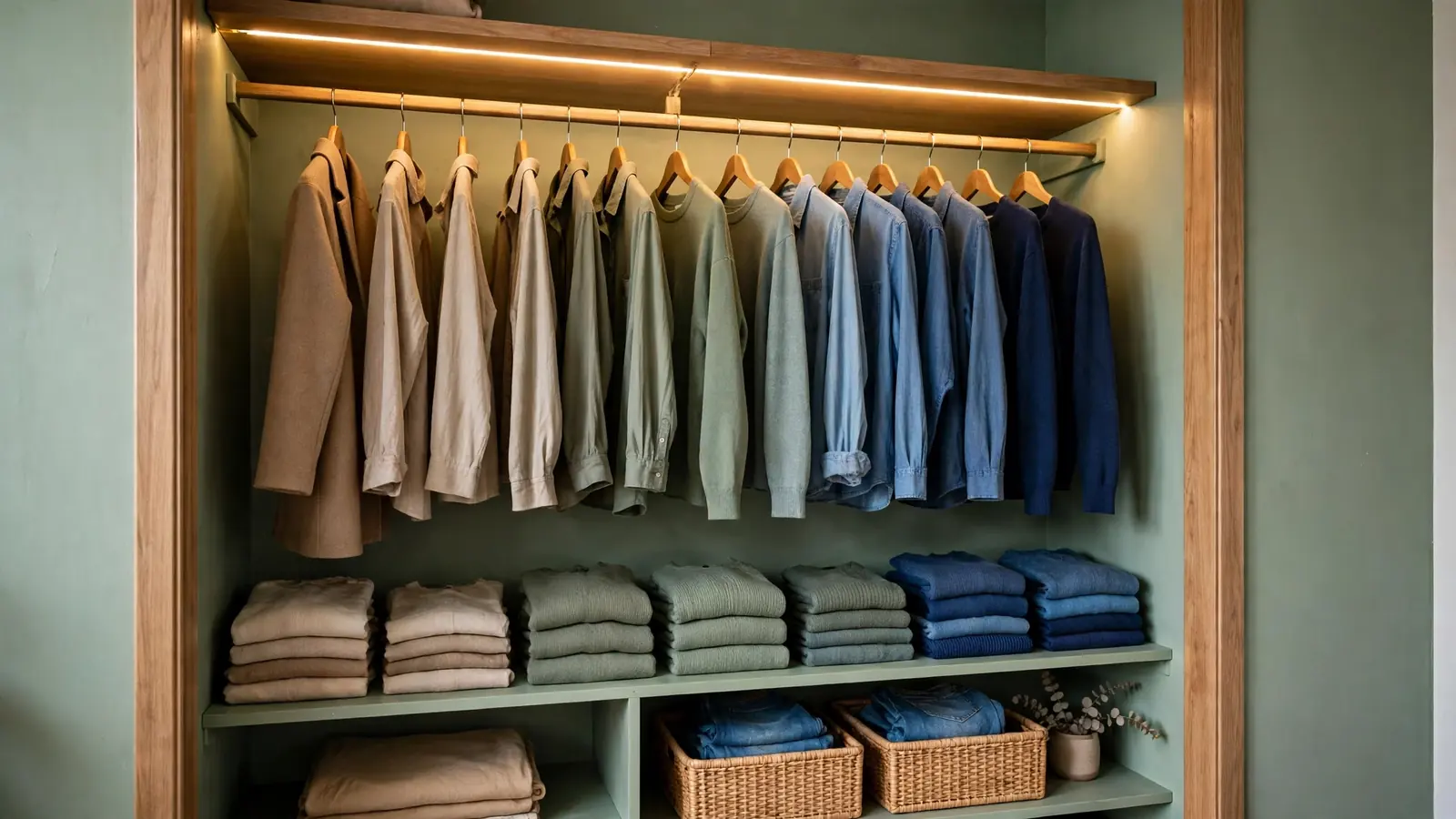
A soft colour — sage, warm cream, pale dusty blue — makes clothes stand out and the space feel finished. Two coats from a sample-size pot is usually enough, and as of 2026 a pot is typically $10–$20 with a roller kit $10–$15. Renters should get written permission first, since painted walls can cost you part of a deposit. Our guide to painting closet doors covers bifold, sliding, and mirrored doors.
2. Line the Back Wall With Peel-and-Stick Wallpaper
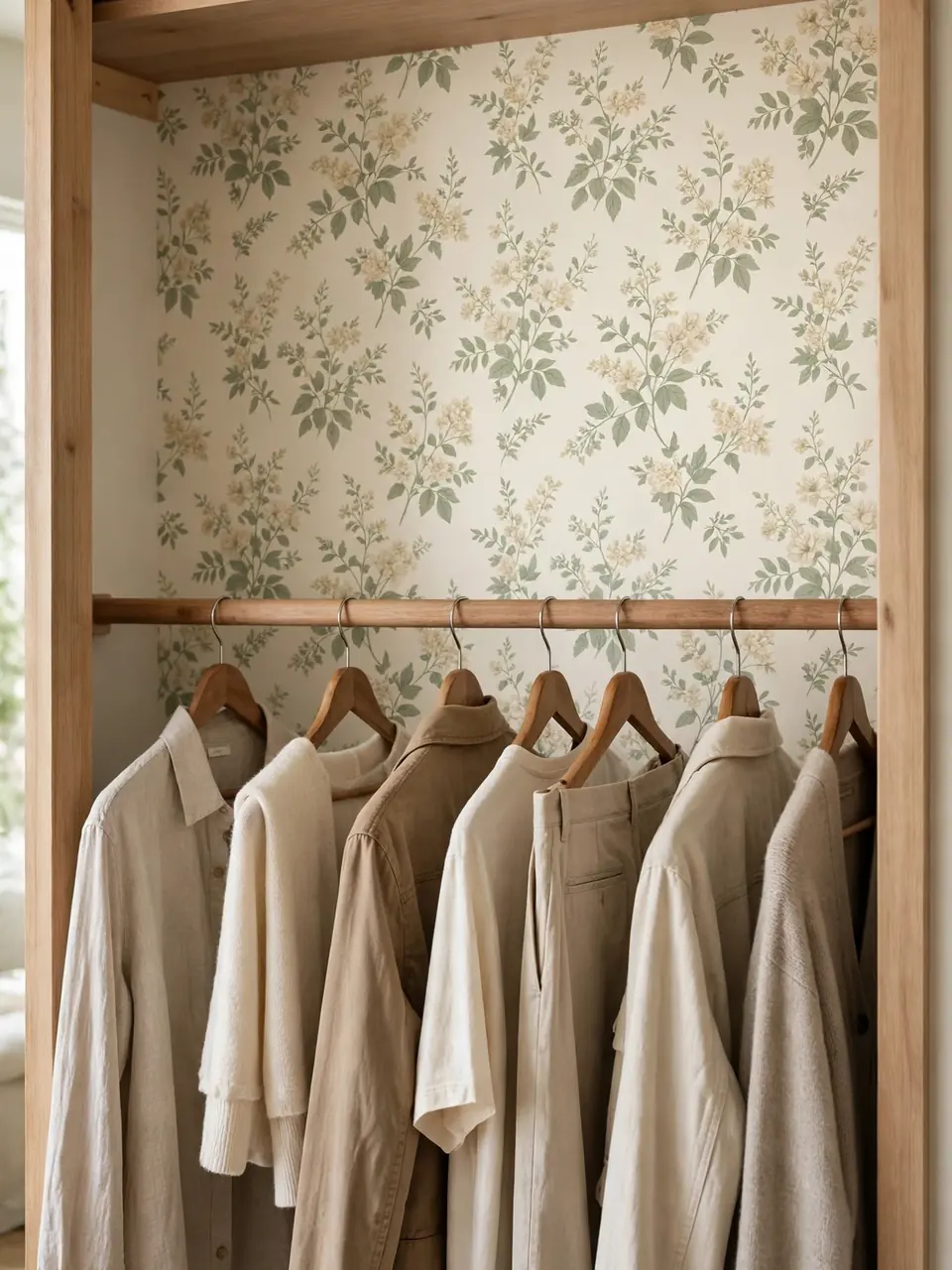
If paint feels too permanent, peel-and-stick paper on the back wall gives you the same finished look with a pattern — a subtle stripe, small floral, or soft gingham. Measure the back wall and buy one or two rolls (typically around $25–$40 per roll as of 2026), applying from the top down. It grips best on smooth, clean walls, so renters should test a small piece in a hidden corner first — if it grips too hard, a fabric wall hanging gives a similar effect with zero adhesive.
3. Add Warm LED Strip Lighting

Most closets have one sad ceiling bulb, or none at all. A battery-powered LED strip under the top shelf, or along the door frame, washes the clothes in warm light and makes colours read true. Look for warm white (around 2700K–3000K on the box) rather than cool daylight, which can make a closet feel like a stockroom. Peel-and-stick strips with a remote typically cost around $15–$30 as of 2026 and run on batteries or a USB plug — stick them under a shelf so only the glow shows.
Layout Tweaks That Make Mornings Easier
4. Add a Second Hanging Rod
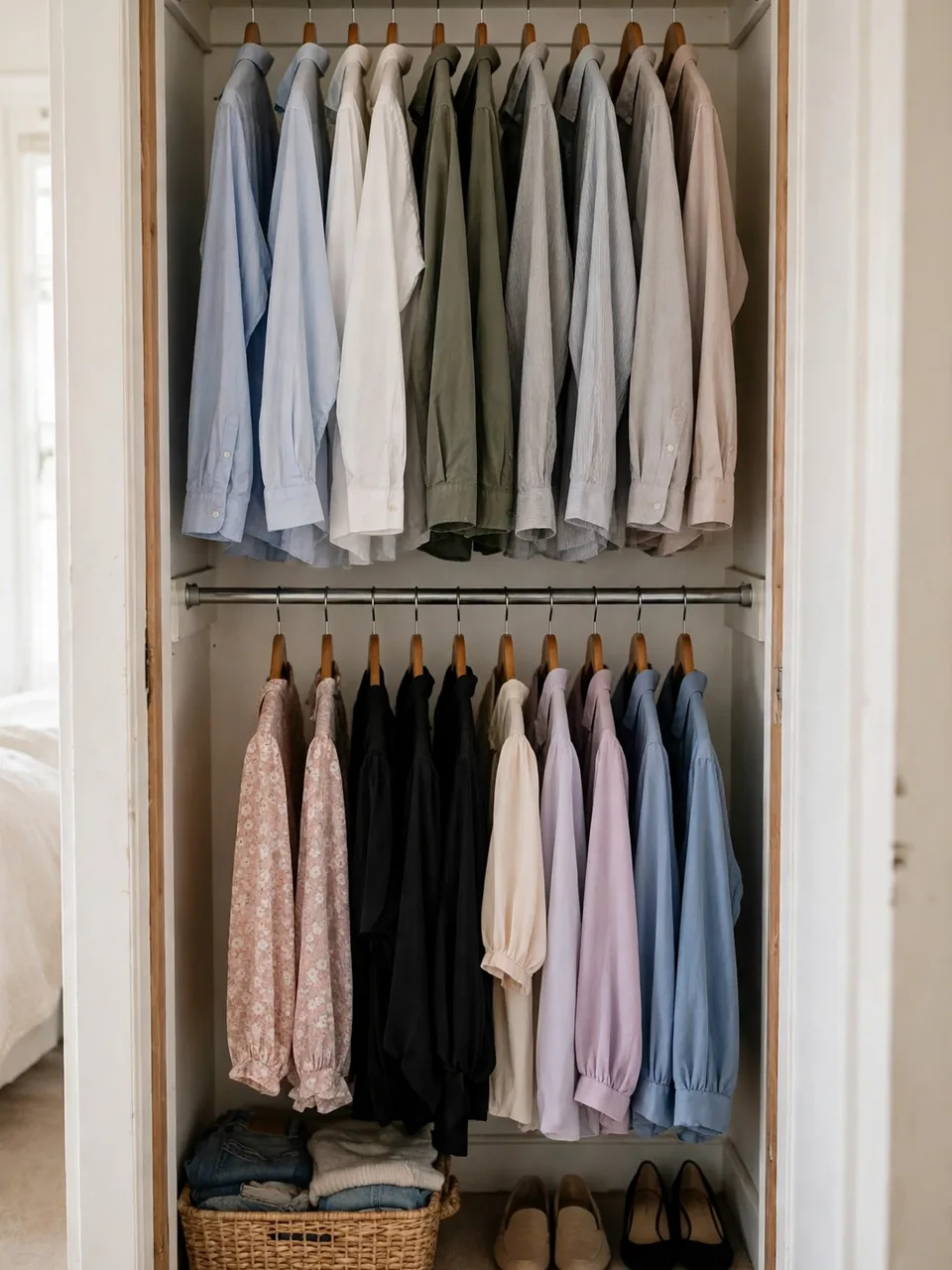
A single rod wastes the bottom half of most closets. A second rod, hung about halfway down, roughly doubles hanging space and separates tops from bottoms, or work from weekend clothes. Adjustable tension rods cost around $15–$25 as of 2026 and need no drilling, though they can slip under heavy loads — keep heavier coats on the fixed rod. A screw-in rod is sturdier (around $10–$20 plus brackets) but leaves holes, so renters should get permission first.
5. Zone the Closet by Outfit, Not Just Garment Type
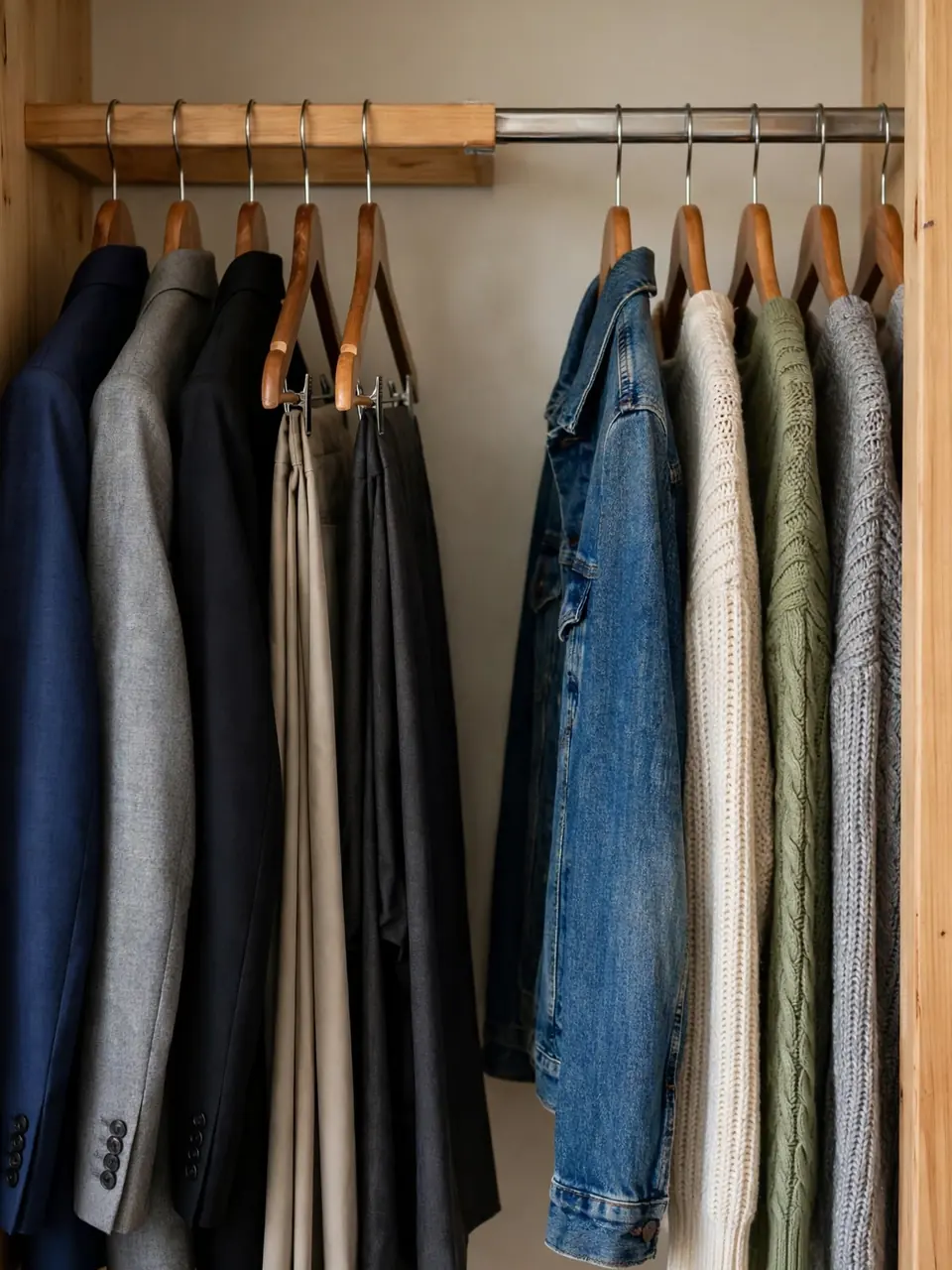
Grouping all shirts together and all trousers together looks tidy but does not help you get dressed. Instead, group by the outfits you actually wear: work in one zone, weekend in another, going-out pieces at the far end. Hang complete outfits together — shirt, trousers, jacket — and keep a small empty stretch of rail for tomorrow's outfit. It costs nothing, takes about twenty minutes, and many people find it cuts morning decision time more than any organiser does.
6. Colour-Order the Rail
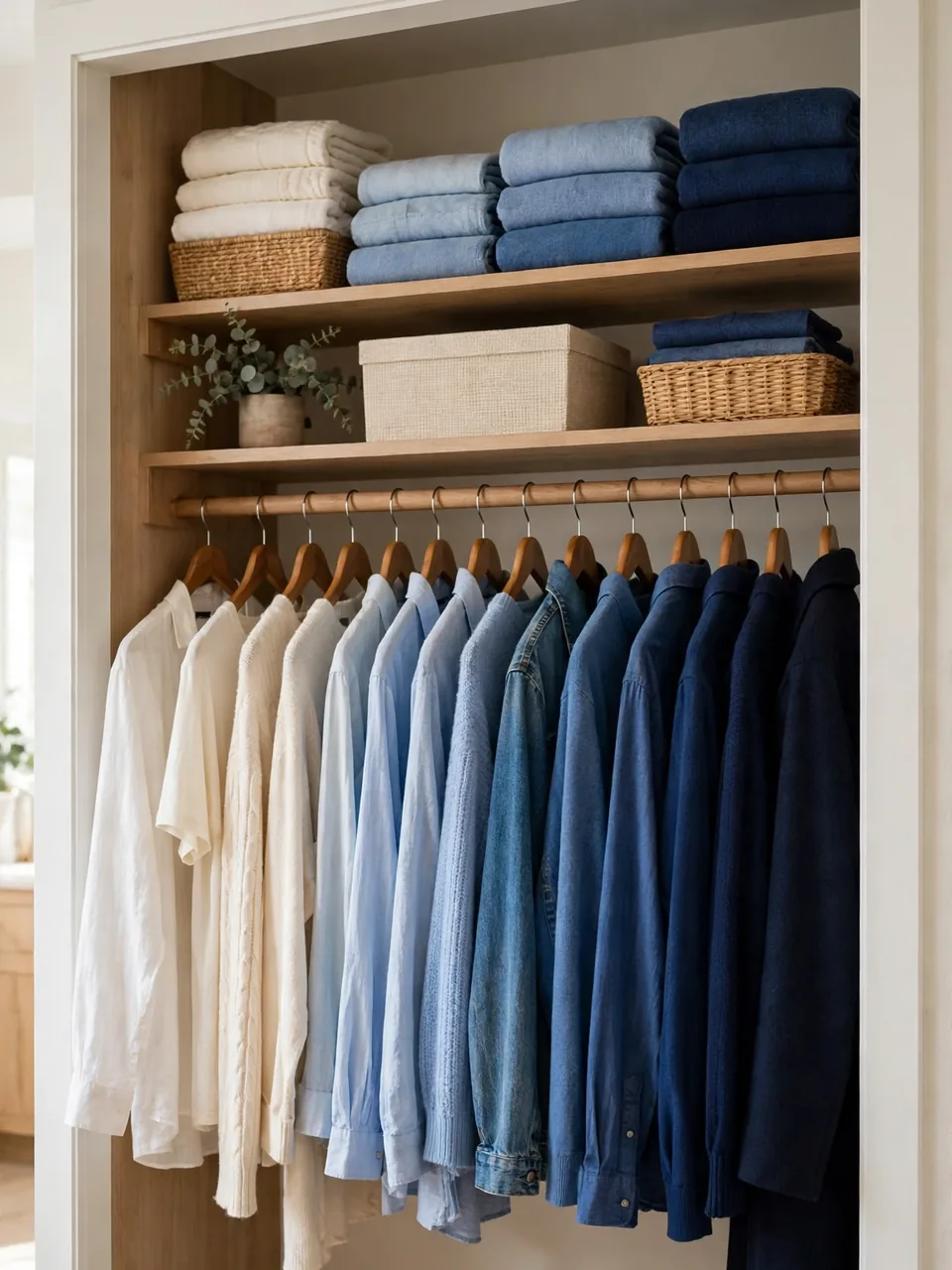
Once clothes are zoned, arrange each zone from light to dark: whites and creams first, then blues and greens, finally blacks and navy. The gradient makes a full rail look calm, and finding a specific colour gets much faster. This is free and takes minutes — and if a full rainbow feels too fussy, tonal groups (all the blues together, all the neutrals together) give most of the visual calm with less upkeep.
Storage That Looks Styled, Not Stuffed
7. Switch to Matching Slim Hangers
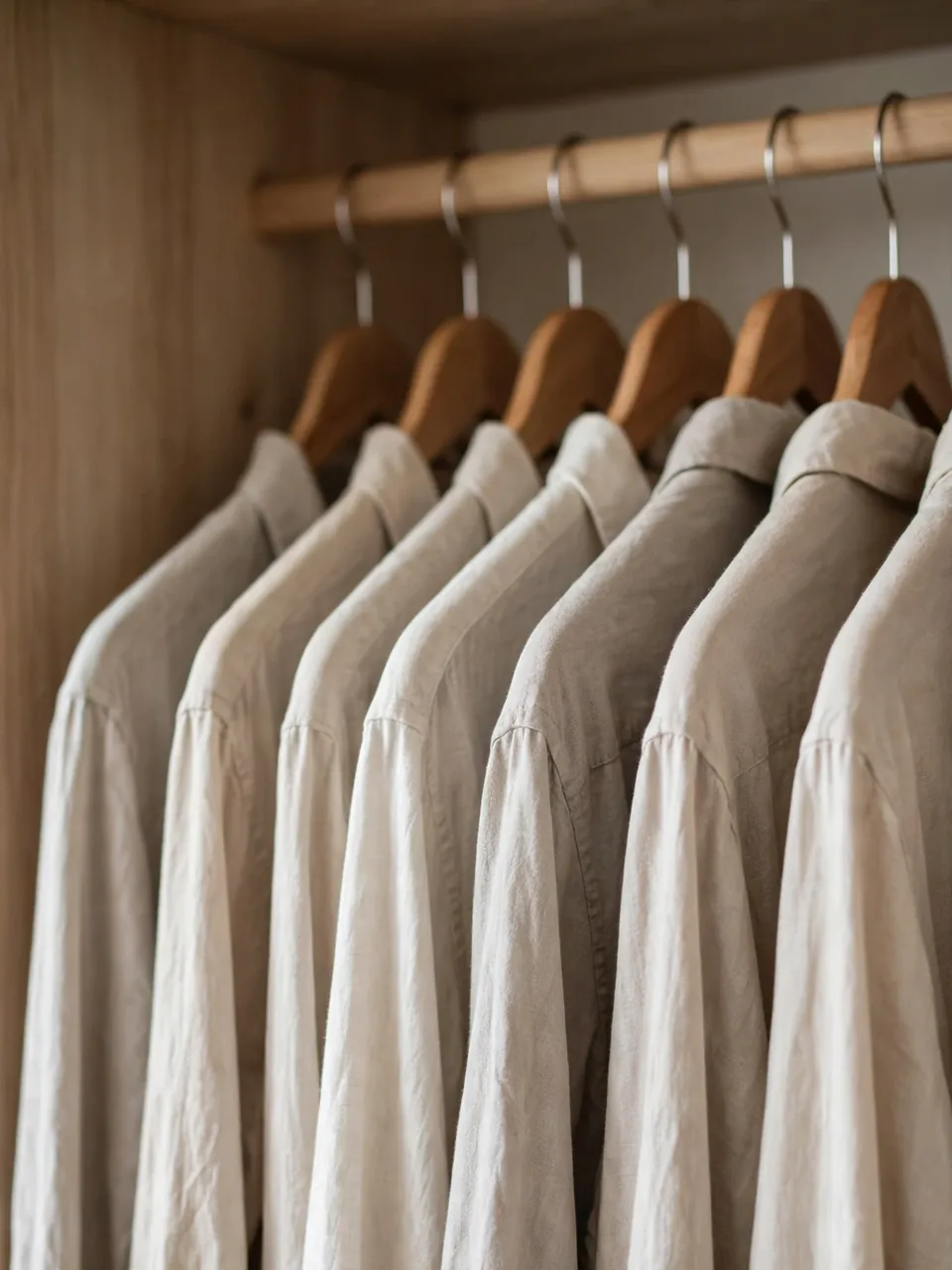
Mismatched hangers — thick plastic, thin wire, dry-cleaner freebies — are the fastest way to make a closet look messy, even when the clothes are tidy. One set of slim, matching hangers instantly straightens the whole rail. Slim velvet or wooden hangers typically cost around $15–$30 for a pack of 20–30 as of 2026: velvet grips slippery fabrics, while wooden ones suit heavier coats. Replace them in stages if the cost adds up — one zone at a time still reads as progress.
8. Use Matching Baskets on the Top Shelf

The top shelf is where out-of-season clothes, spare bedding, and "I don't know where this goes" items end up — matching baskets hide all of it behind one calm, repeated shape. Pick one basket style — woven seagrass, fabric cubes, or lidded boxes — and buy three or four in the same size, typically around $8–$20 each as of 2026. Keep the heaviest basket at the side you reach most easily.
9. Add a Slim Shoe Shelf at the Floor
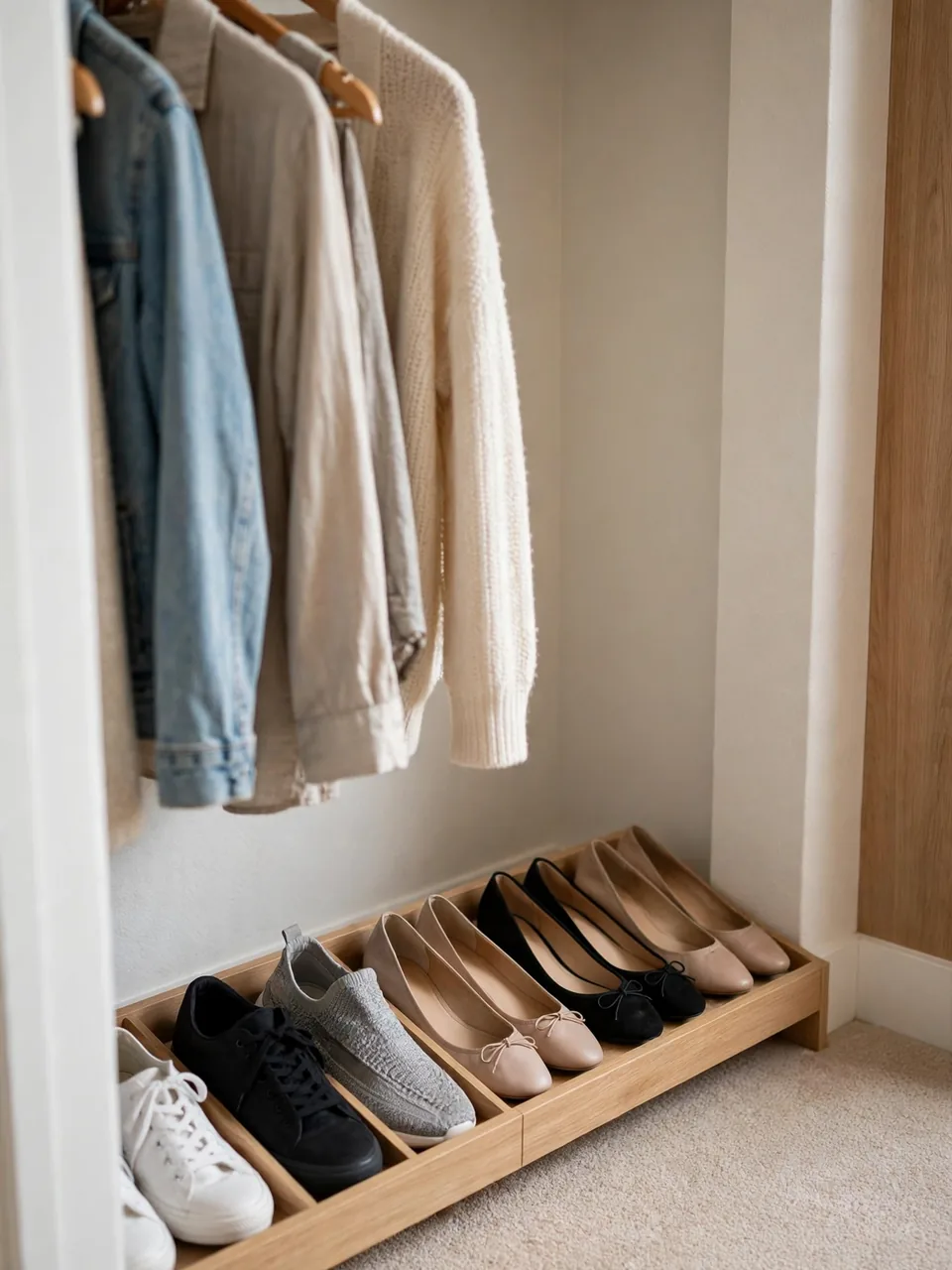
Shoes piled on the closet floor eat space and get scuffed. A slim two-tier shoe rack lines them up where you can see them and frees the floor for a small basket or a boot tray. A basic two-tier rack typically costs around $20–$40 as of 2026, and a boot tray for wet or muddy shoes runs around $10–$20. Keep everyday shoes at the front and out-of-season pairs in a basket on the top shelf.
Small Upgrades With a Big Impact
10. Put a Mirror on the Door or Back Wall
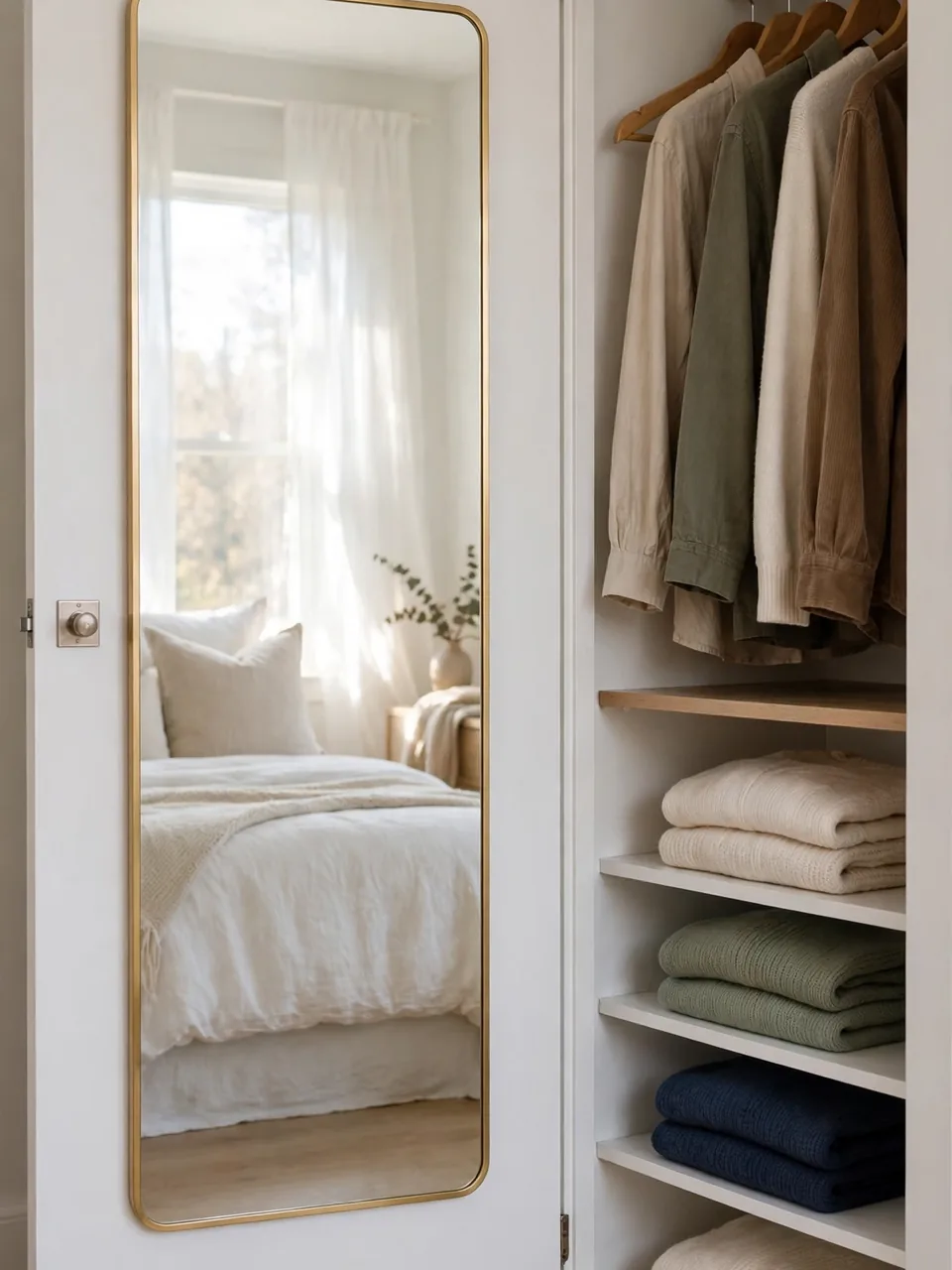
A full-length mirror inside the closet turns it into a proper dressing spot, and it bounces light into dark corners so a small closet feels bigger. It also means you check an outfit where the clothes actually are. Over-the-door mirrors typically cost around $25–$50 as of 2026 and need no screws, which makes them the renter-safe choice. A stick-on tile set is cheaper (around $15–$25) but can distort reflections if the wall is not perfectly flat — and never lean a heavy mirror against the wall inside a closet, since it can slide and chip the floor.
11. Add a Pull-Out Valet Rod
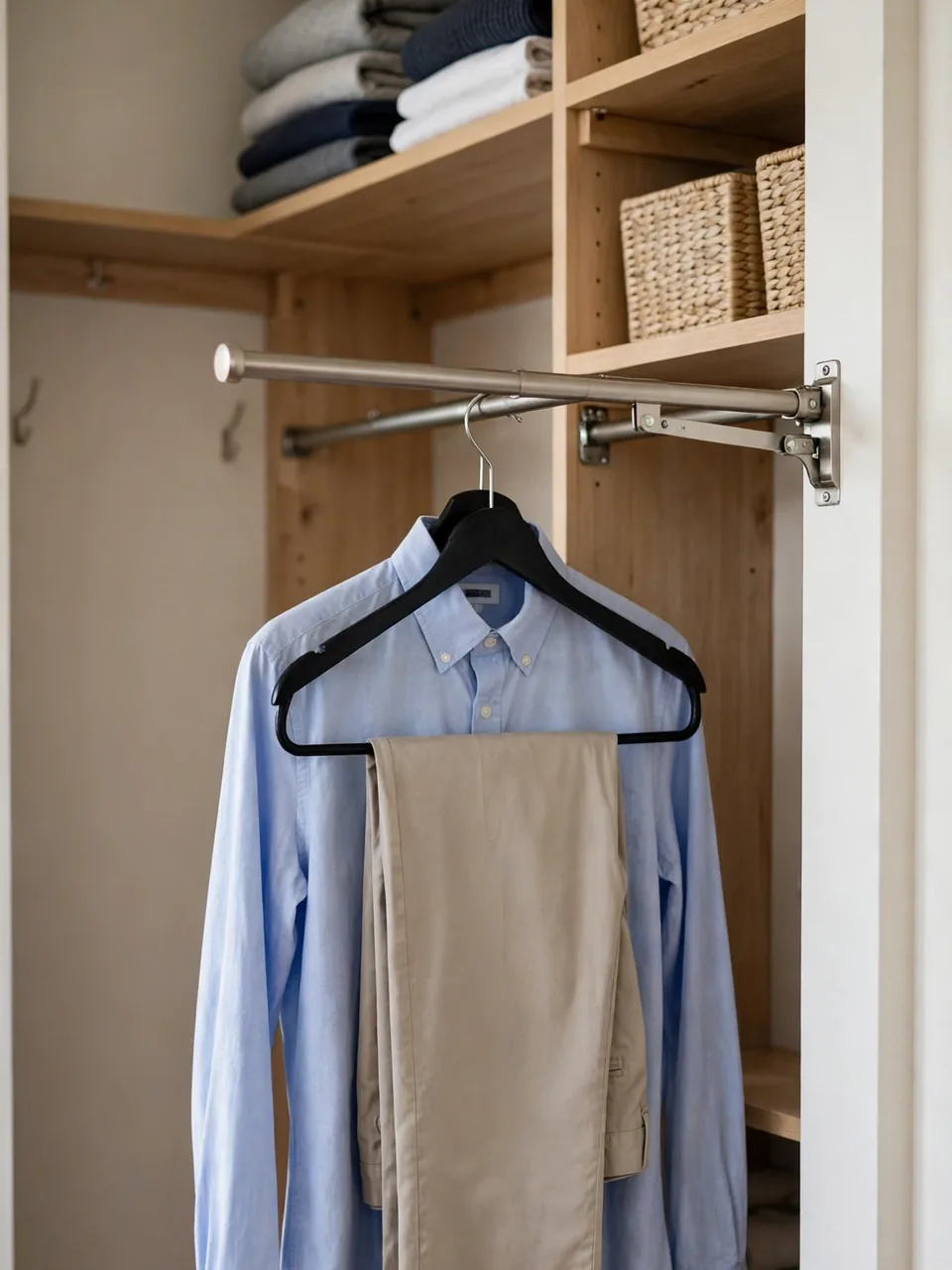
A valet rod is a small metal arm that pulls out from the closet wall or shelf, giving you a place to hang tomorrow's outfit, an outfit you are steaming, or clothes fresh from the dryer — and it folds away flat. Screw-in valet rods typically cost around $10–$20 as of 2026 and take ten minutes to fit, but they leave screw holes — renters should ask first or use a hook-style alternative. Place it near the door at shoulder height so it is easy to reach without blocking the main rail.
12. Divide Shelves and Fold in Stacks

Open shelves turn into leaning towers because folded clothes have nothing to hold them up. Shelf dividers — upright panels that slot onto the shelf — keep stacks of knits, jeans, and T-shirts standing straight. A set of dividers typically costs around $10–$20 as of 2026. Pair them with file-folding: fold clothes into neat rectangles so you can see the edge of every item, keeping each stack to about six to eight pieces so it stays stable.
Finishing Touches That Make It Feel Finished
13. Add a Small Tray for Jewellery and Everyday Items
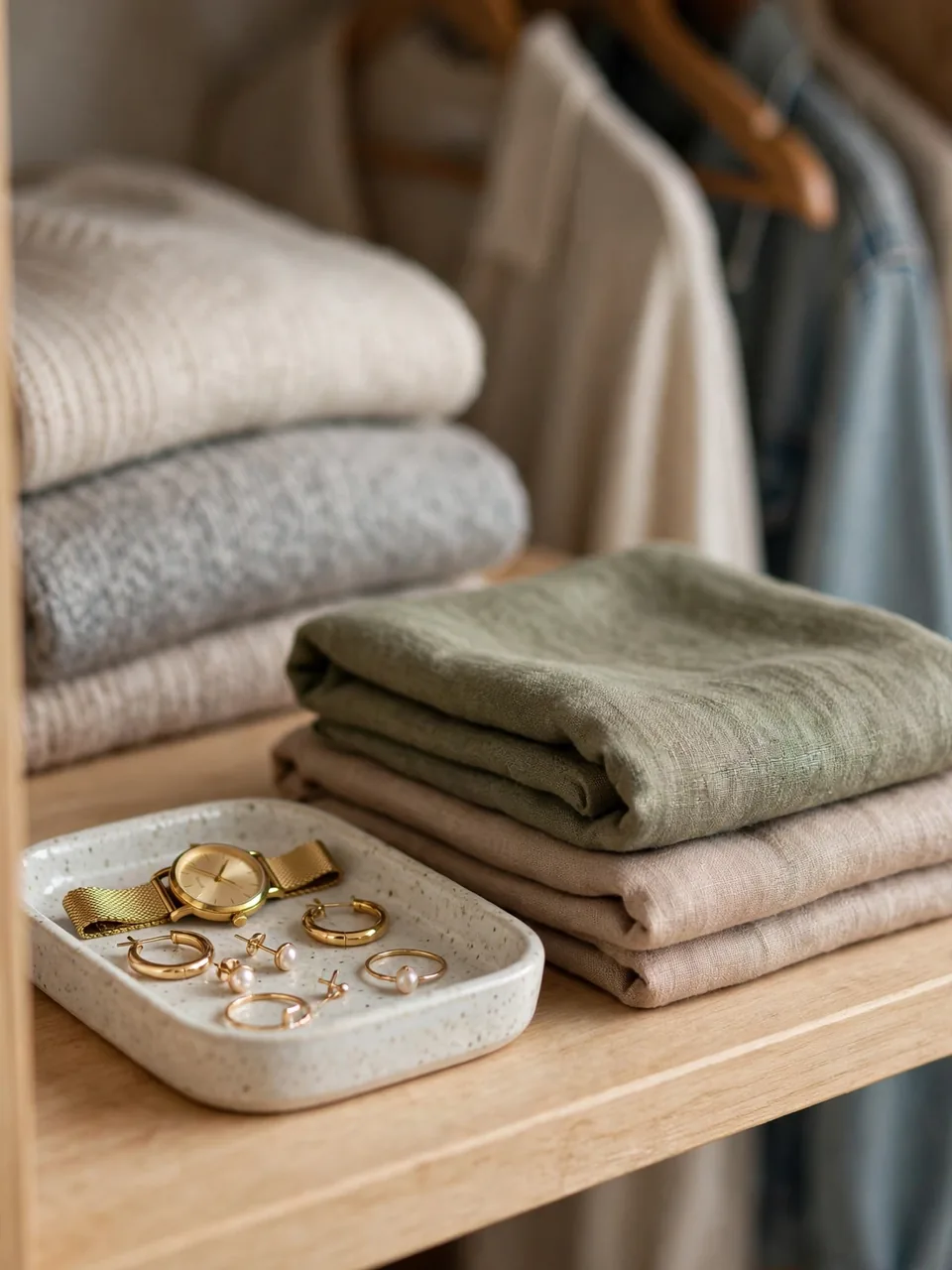
A small ceramic or wooden tray on a shelf gives watches, earrings, and pocket items a home, so they stop migrating to the dresser or the bottom of a bag. It is the closet equivalent of a bedside dish. Any small dish or tray works — a thrifted saucer is fine — or a purpose-made jewellery tray typically costs around $10–$25 as of 2026. Keep it near the door or at eye level so you actually use it, and limit it to the pieces you reach for weekly.
14. Keep It Fresh With Cedar and Linen Sachets
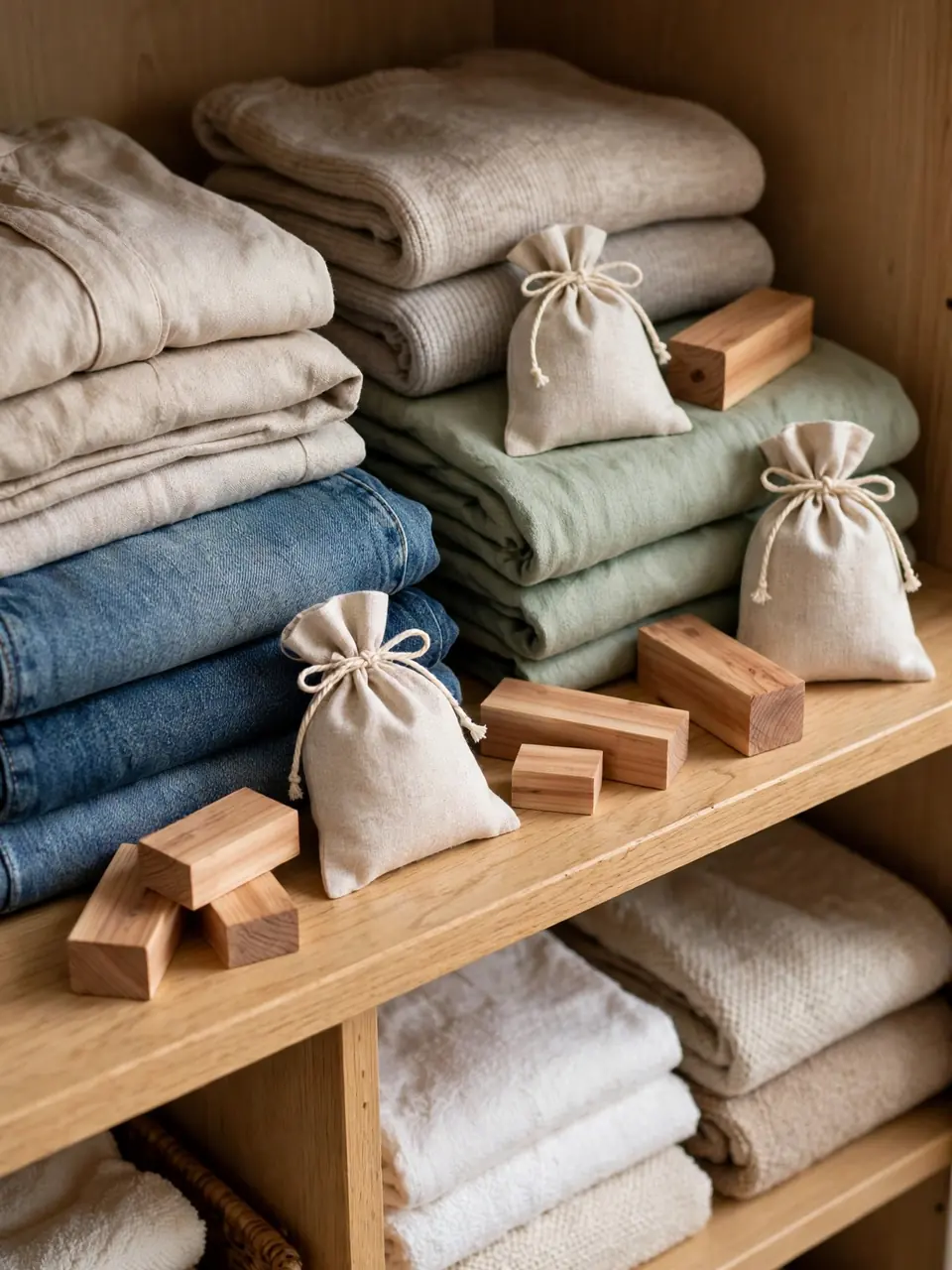
Closets go stale because air barely moves in them. Cedar blocks discourage moths and add a light wood scent, while small linen sachets tucked between folded clothes keep things smelling fresh without sprays. Cedar blocks typically cost around $8–$15 for a pack as of 2026, and sachets around $5–$10 — sand cedar blocks lightly every few months to refresh the scent. Skip plug-in fresheners and sprays inside a closed closet, since they can stain fabric and overwhelm a small space.
15. Style the Top Shelf Like a Display

The top shelf is usually the first thing you see when you open the door, so treat a small part of it like a display: folded blankets, a small framed print, and a faux plant. It costs little and signals that the closet is a cared-for space, not a dumping ground. Keep the display to one end of the shelf and the practical storage at the other. A faux plant is the safer choice here — real plants struggle in a dark closet — and as of 2026, a small faux plant and a simple frame together typically cost around $15–$30.
FAQ
How much does it cost to refresh a closet without renovating?
Pick three or four of these ideas and most closets transform for under $100 as of 2026 — paint and matching hangers alone do it for well under $60.
What is the best colour to paint the inside of a closet?
Soft, light colours: warm white, pale sage, dusty blue, or blush. They reflect the limited light and make clothes easier to see — dark colours usually make a small closet feel smaller.
Can renters do these closet ideas?
Nearly all of them. Zoning, colour-ordering, matching hangers, baskets, shoe racks, LED strips, and over-the-door mirrors need no permanent changes. Paint, screw-in rods, and stick-on wallpaper need written landlord permission first.
How do I keep a small closet from looking cluttered?
Repeat the same shapes and colours: one hanger type, one basket style, clothes colour-ordered. Matching containers do more for visual calm than any single organiser.
What lighting is best for a closet?
Warm white light (around 2700K–3000K) under the top shelf or along the door frame. Battery LED strips are the simplest option; avoid cool daylight bulbs, which make colours look harsh.
How often should I restyle or declutter my closet?
A light reset each season is enough for most people. Swap out-of-season clothes to the top shelf, check the baskets, and re-order the rail. A full declutter once a year keeps the system working.
Conclusion
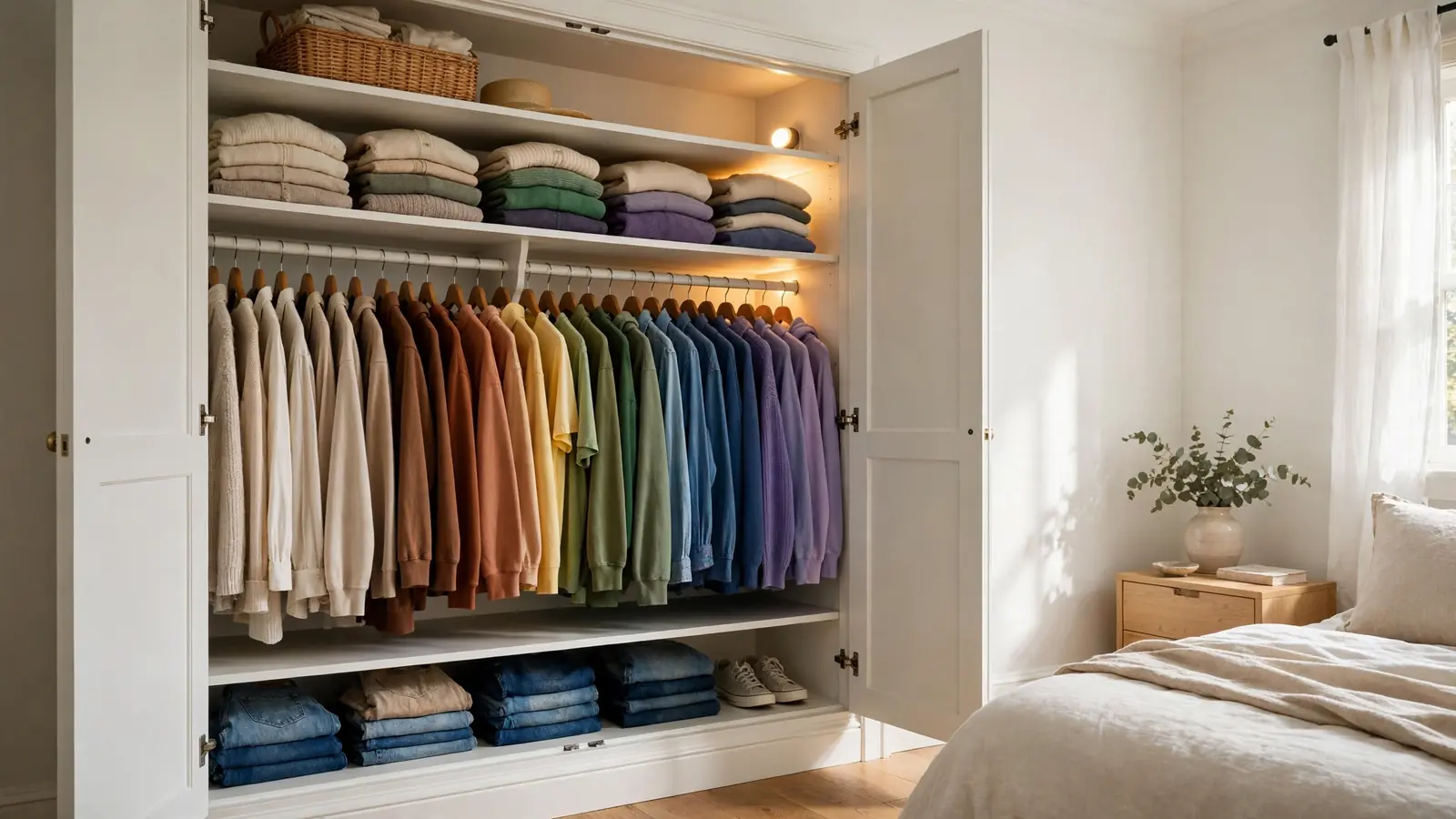
A good closet is not about having more space — it is about making the space you have feel calm, visible, and easy to use. Paint or paper the inside, add warm light, match your hangers and baskets, order the rail by colour, and finish with a mirror. None of it needs a contractor.
Start with the free ideas this weekend: zone your outfits, colour-order the rail, and move the out-of-season clutter into matching baskets. Then add one small upgrade — the lighting, the paint, or the hangers. If you are refreshing the bedroom around it too, our $500 phased bedroom makeover shows how to sequence a whole room one affordable step at a time.

Thiago Alexander is the Chief Editor at Nested Charm. With a deep passion for interior design and cozy living spaces, he leads the editorial team in crafting stories that make every house feel like a home.


3 Comments