

18 Sectional Sofa Living Room Layout Ideas That Actually Fit Your Room
Executive Summary
A sectional sofa can make a living room feel complete in a single purchase, but it can also swallow the room if it lands in the wrong spot. Its placement decides where people walk and sit.
Most sectional layouts follow a few repeatable patterns. Measure the room, pick a focal point, leave clear paths to walk through, and then choose the arrangement that fits your floor plan, whether that is a classic L, a floating arrangement, or a compact shape.
In short: measure first, face the long side of the sectional toward your focal point, keep walkways clear, and anchor the arrangement with a rug and a table that match the shape.
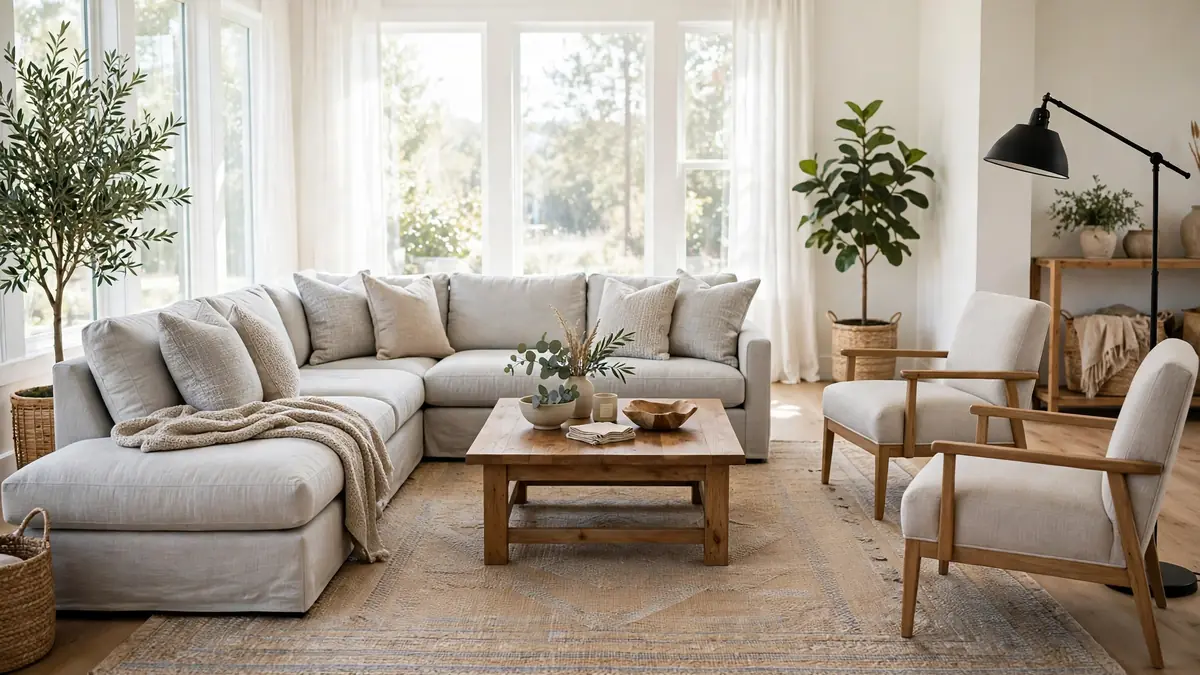
Start With the Room, Not the Sofa
1. Measure First and Tape the Footprint on the Floor

Measure the sectional and the room, including doorways, then mark the sofa’s footprint on the floor with painter’s tape, which usually lifts cleanly and is a safer choice than other tapes in a rental. This costs almost nothing, typically just a roll of tape for around $5 to $10 as of 2026, and it prevents the most common mistake: finding out too late that the chaise blocks the path to the kitchen.
2. Pick One Focal Point and Face the Long Side Toward It
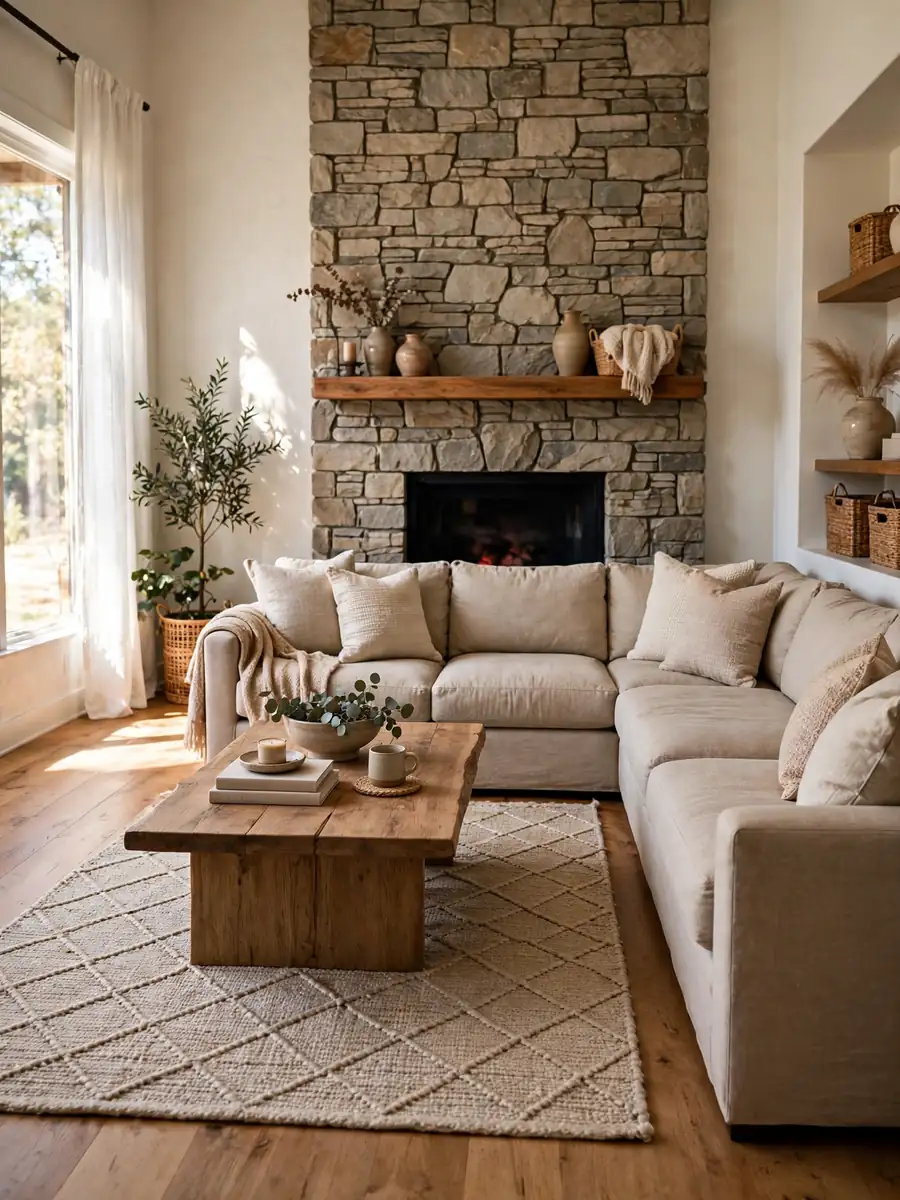
Every arrangement works better with one clear focal point, usually the television, the fireplace, or a large window with a view. Place the long side of the sectional facing that feature, with the shorter side or chaise running off to one side, so most seats have a comfortable view without anyone twisting around. With two competing focal points, choose the one you use most.
3. Leave Clear Walkways Around Every Side You Use
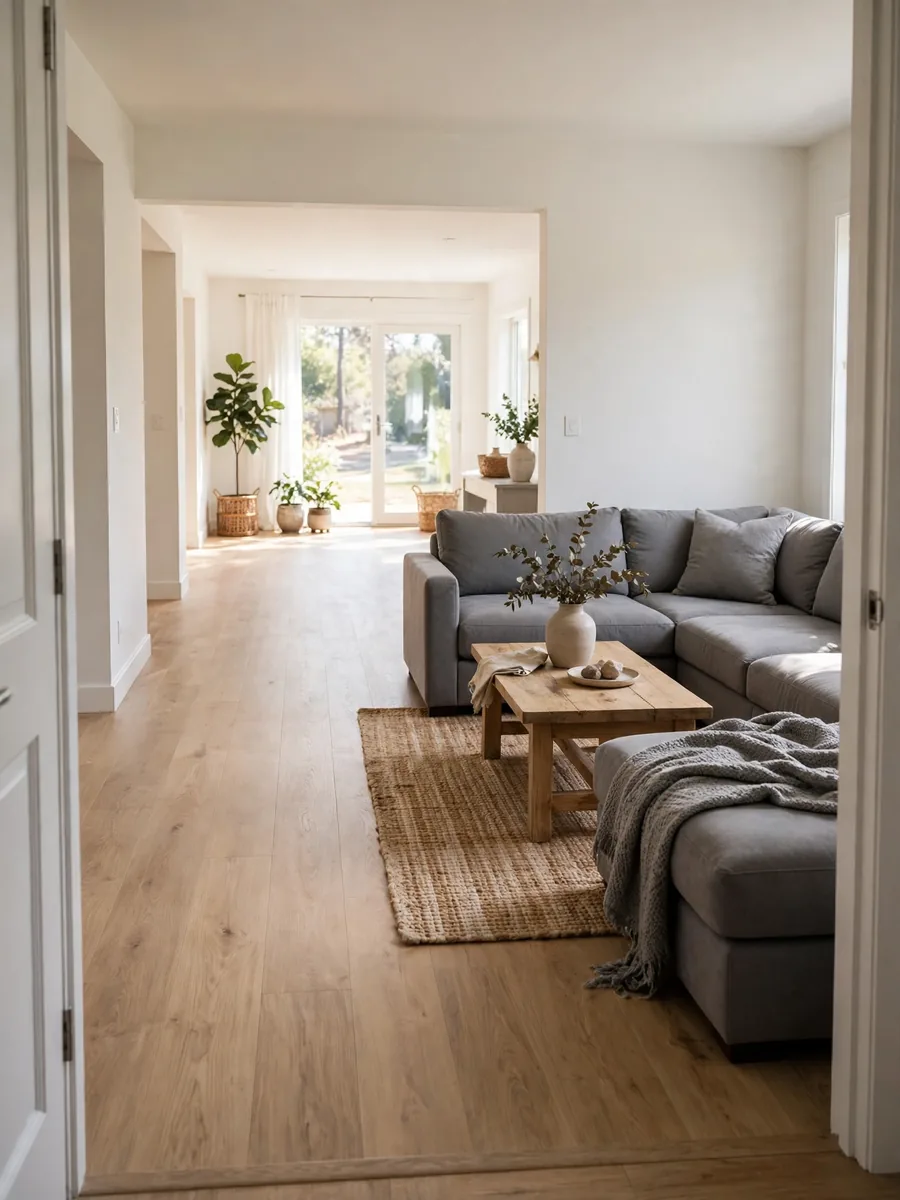
A sectional needs breathing room on the sides people actually walk past. As a planning guide, many people aim for roughly 30 inches of clear passage in main walkways, though smaller homes may settle for less on a secondary route. Pay special attention to the path from the entrance to the rest of the home; if it feels like a squeeze, shifting the sectional a few inches often solves it without buying anything new.
Classic L-Shaped Arrangements
4. Face the TV Wall Straight On

The simplest sectional layout is also one of the most reliable: put the long side of the L parallel to the television wall, with the sofa facing the screen directly. As a rule of thumb, sit roughly one and a half to two times the television’s diagonal size away from the screen. In a rental, check with your landlord before wall-mounting a television, since drilling may affect your deposit; a sturdy media console, typically around $100 to $300 as of 2026, is the safer alternative.
5. Float the Sectional Off the Wall
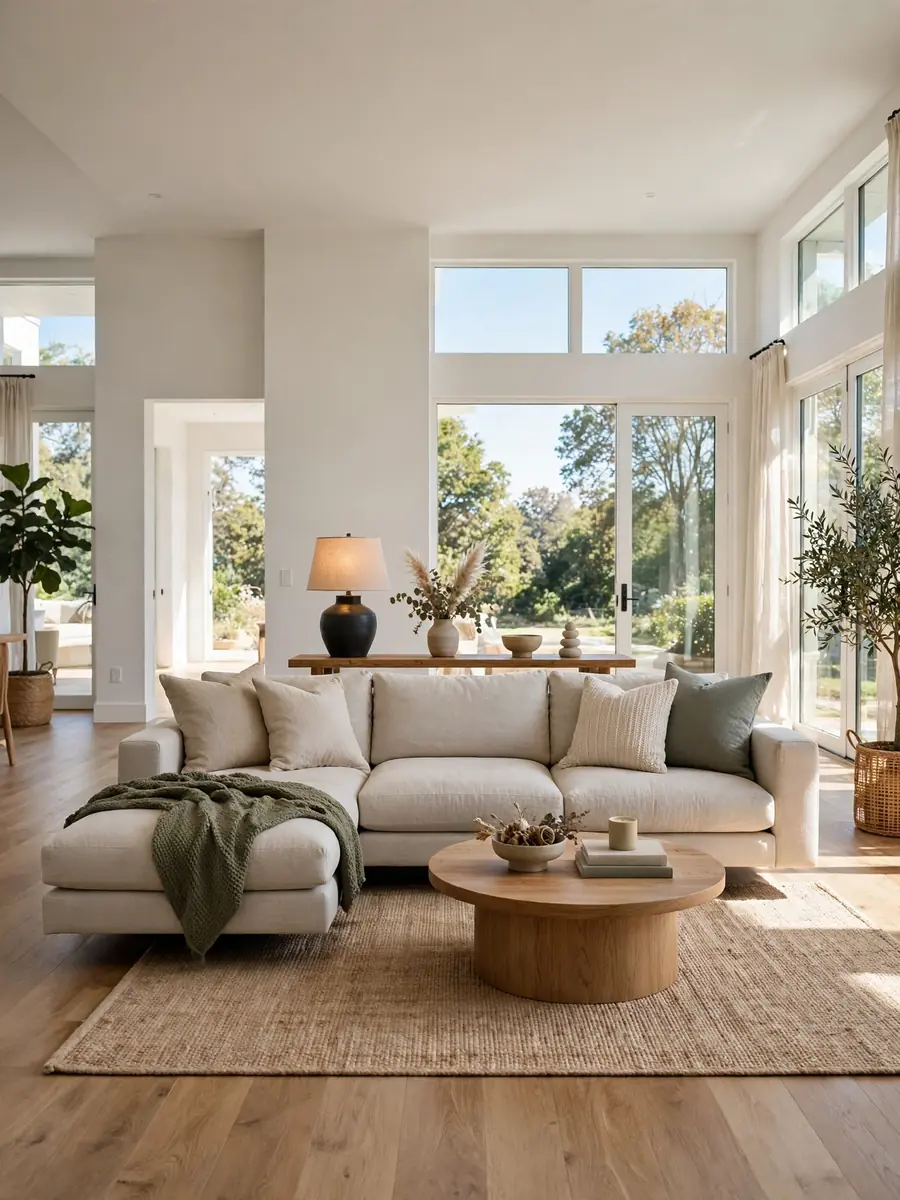
Floating means pulling the sectional away from the walls so its back faces into the room, which suits larger rooms and open floor plans. A slim console table behind the sofa, usually around $80 to $250 as of 2026, gives the floating back a finished look and a place for a lamp or books. Floating works best when there is enough floor behind the sofa for a walkway, so it is rarely the right call in a tight apartment, but it creates a natural gathering zone in a big room.
6. Tuck the Sectional Into the Corner
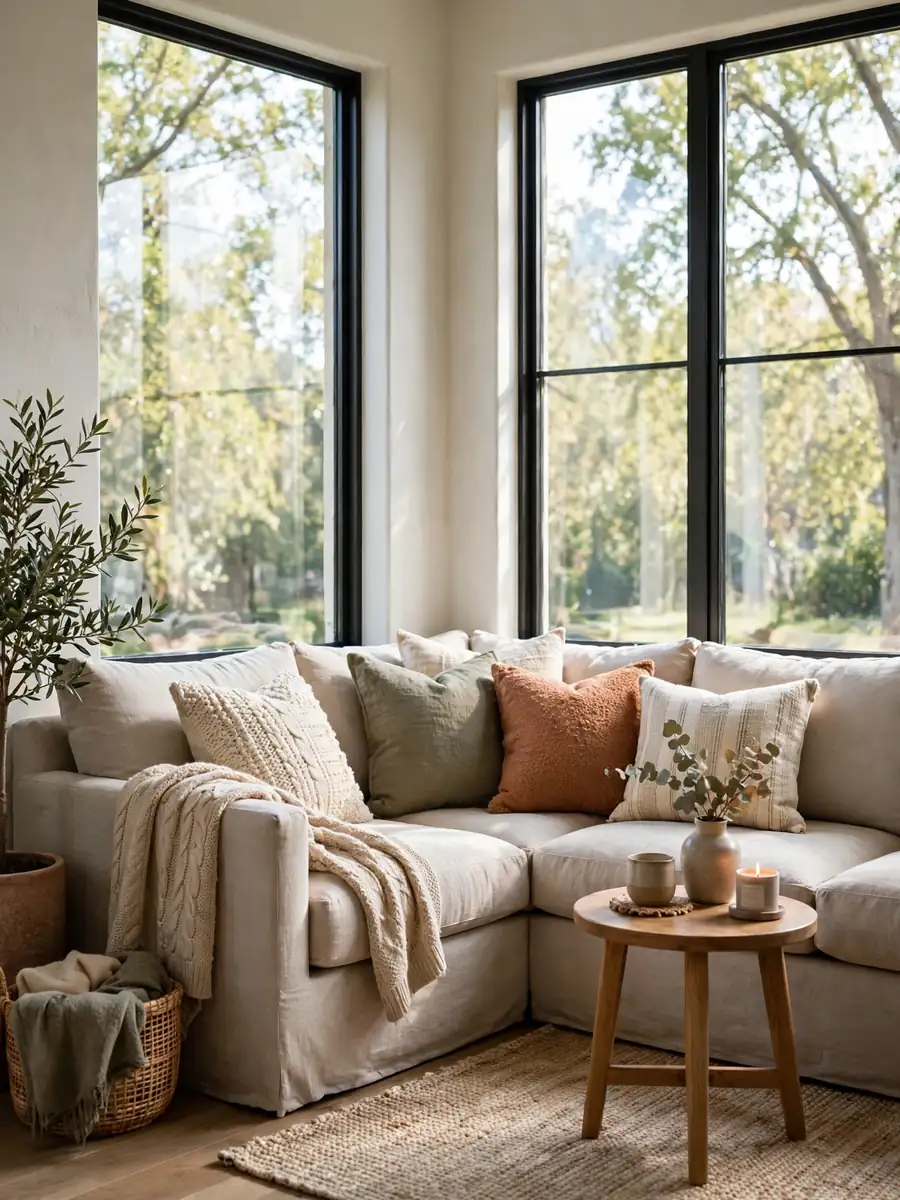
Pushing an L-shaped sectional into a corner is the classic small-room move: it uses two walls, frees up the middle of the floor, and leaves the rest of the room open. The trade-off is that the corner seat can be hard to get in and out of, and the wall sides are difficult to clean behind, so leave a gap of an inch or two for retrieving dropped items, and avoid pushing fabric hard against a cold exterior wall, where damp can mark upholstery over time.
U-Shaped and Chaise Layouts
7. Build a U-Shape for Conversation
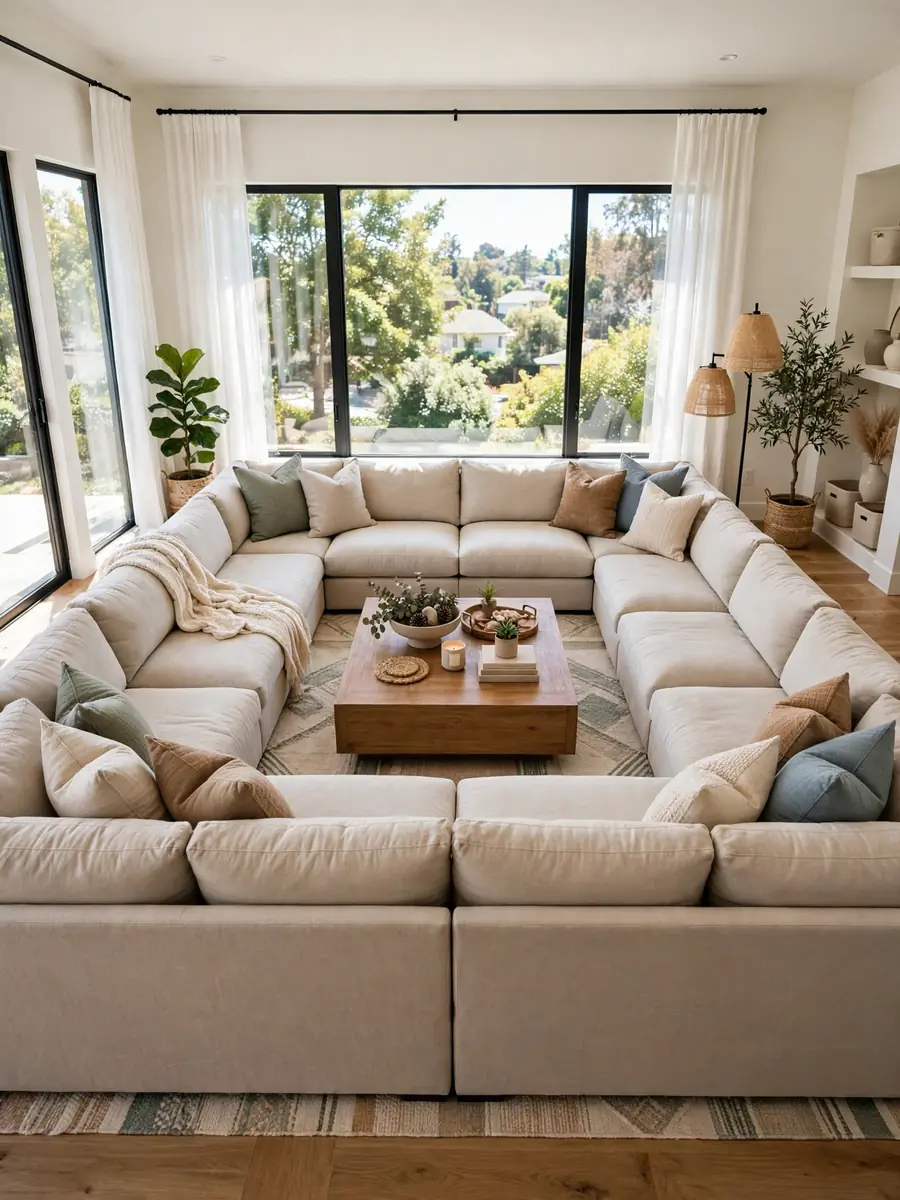
A U-shaped sectional wraps seating around three sides of a coffee table, which makes it the best layout for conversation. It suits households that host often. A U-shape needs a generous room, since it takes up floor on three sides and still needs a walkway in and out. A round or square coffee table or ottoman in the middle, typically around $100 to $350 as of 2026, keeps the center usable without sharp corners jabbing shins.
8. Put the Chaise on the Side You Actually Lounge On
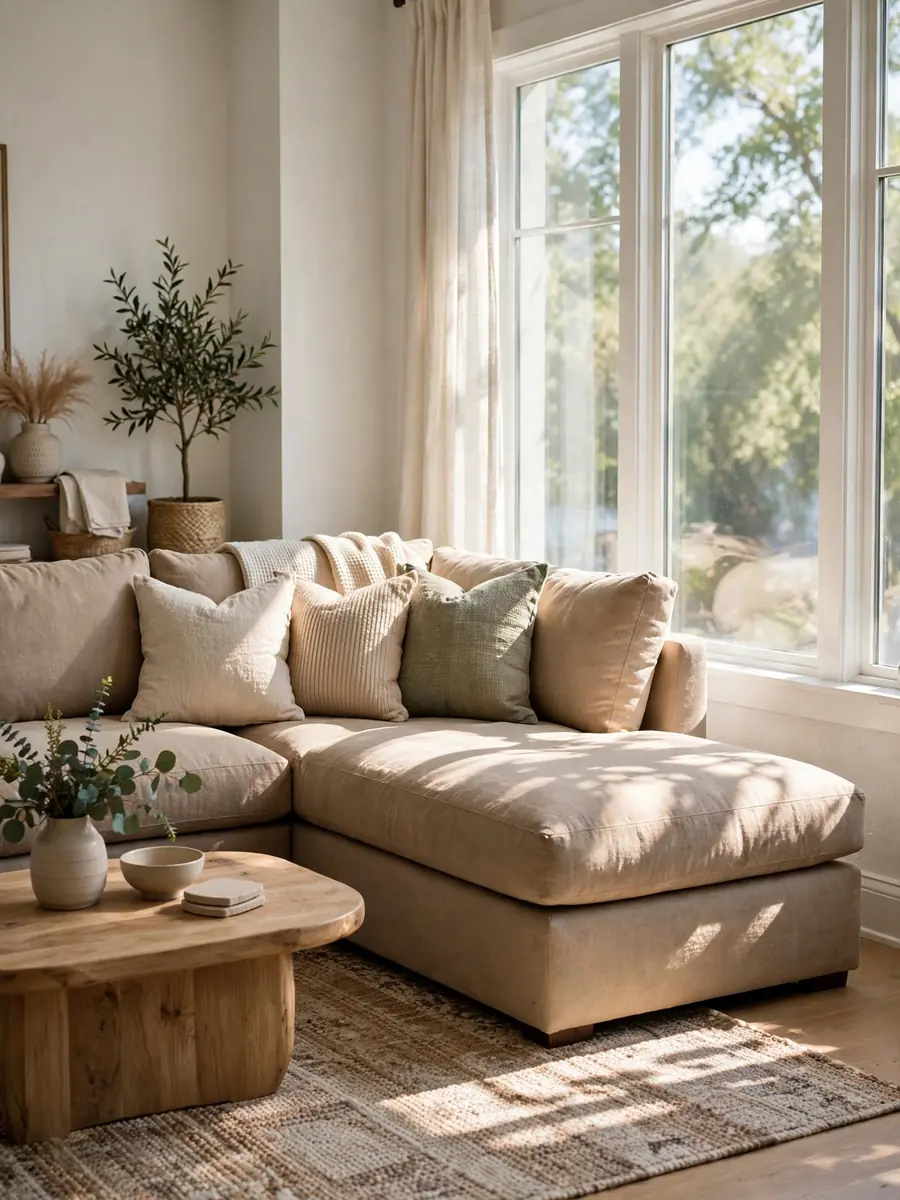
The chaise is the most contested seat in the house, so its side matters. Right-arm and left-arm chaises are mirror images, and the right choice depends on which end of the room you naturally stretch out toward, whether that is the window light, the fireplace, or simply the quieter corner. Before ordering, stand in the room and picture where you would put your feet up after a long day, then check that the chaise does not block a doorway or a radiator on that side. Some sectionals let you move the chaise piece to the other end, which is worth asking about if you rent and may move to a differently shaped room.
9. Split a Modular Sectional Into Two Pieces
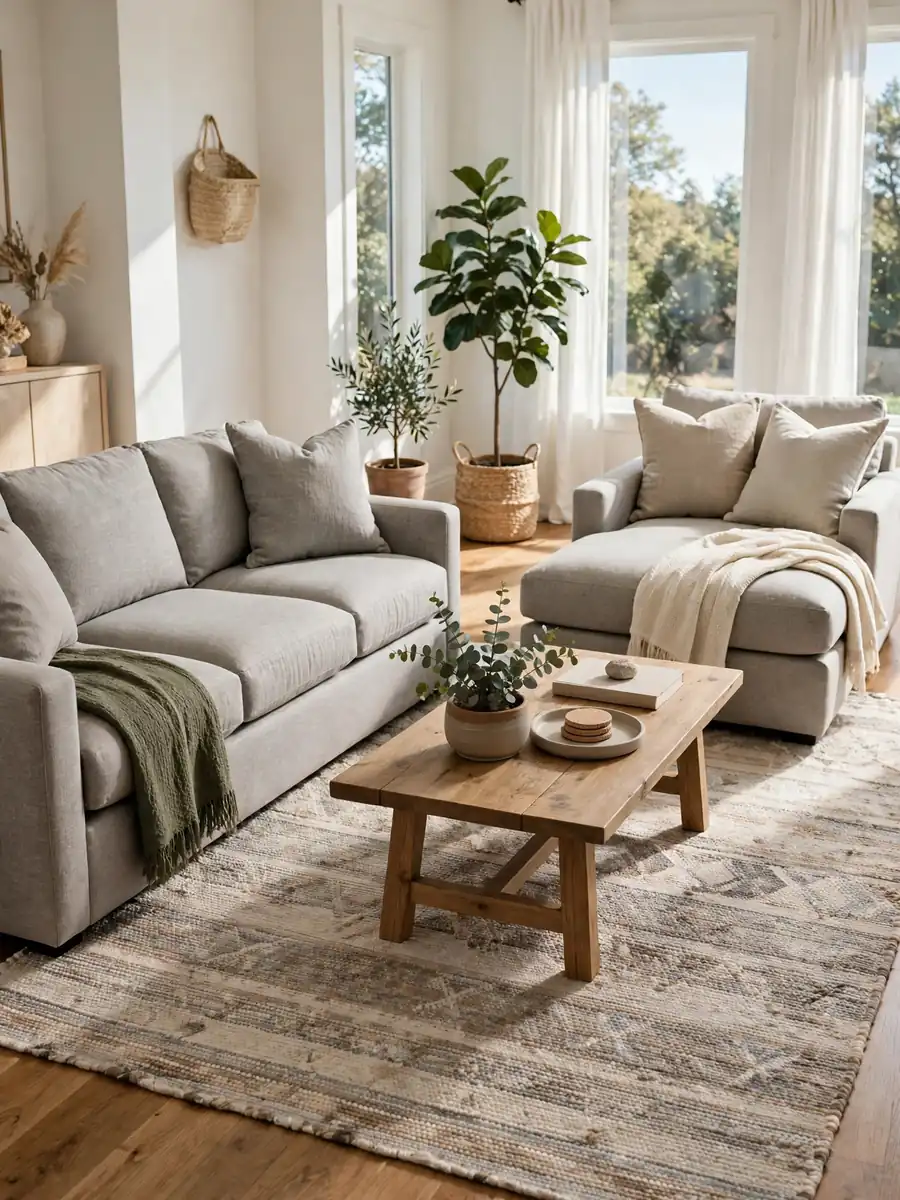
Modular sectionals are made of individual seats that connect, and nothing says they must stay connected. Splitting off a chaise or an armless chair to face the main sofa creates a conversation grouping, and separating the pieces can also solve an awkward room with two focal points. This flexibility is especially useful in rentals, since the same pieces can be rearranged for a new apartment instead of replaced. Keep the connecting hardware in a labelled bag.
Small-Space Sectional Layouts
10. Choose a Compact L for an Apartment Living Room
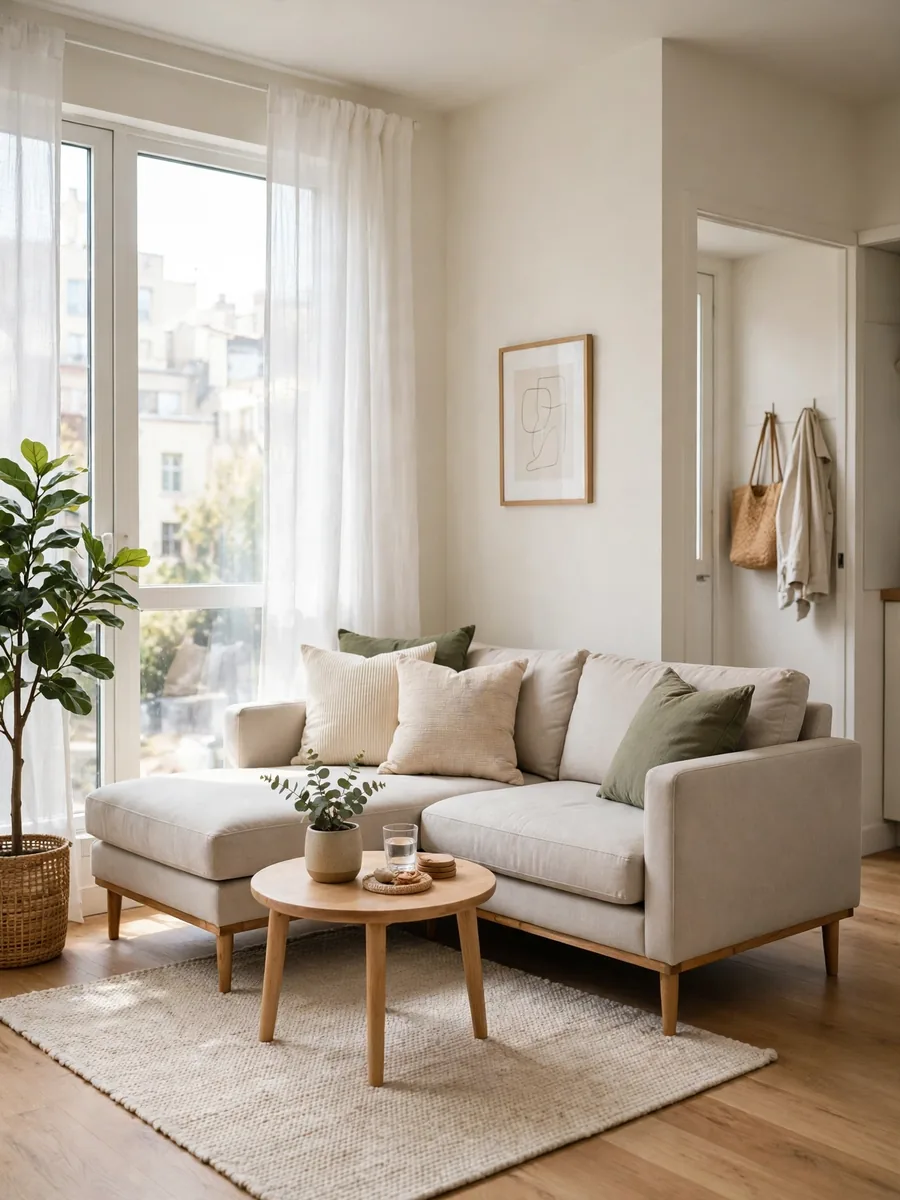
A small living room can still hold a sectional if the scale is right. Look for a compact L with a shorter overall length, shallower seat depth, and raised legs, which let more floor show and make the room feel less crowded. Size the rug and table to the room, not the sofa. For more ideas on scaling furniture to a tight floor plan, see our guide to living room furniture layout ideas for small spaces. A compact sectional typically costs around $600 to $1,500 as of 2026, depending on size and fabric.
11. Use the Sectional as a Room Divider in a Studio
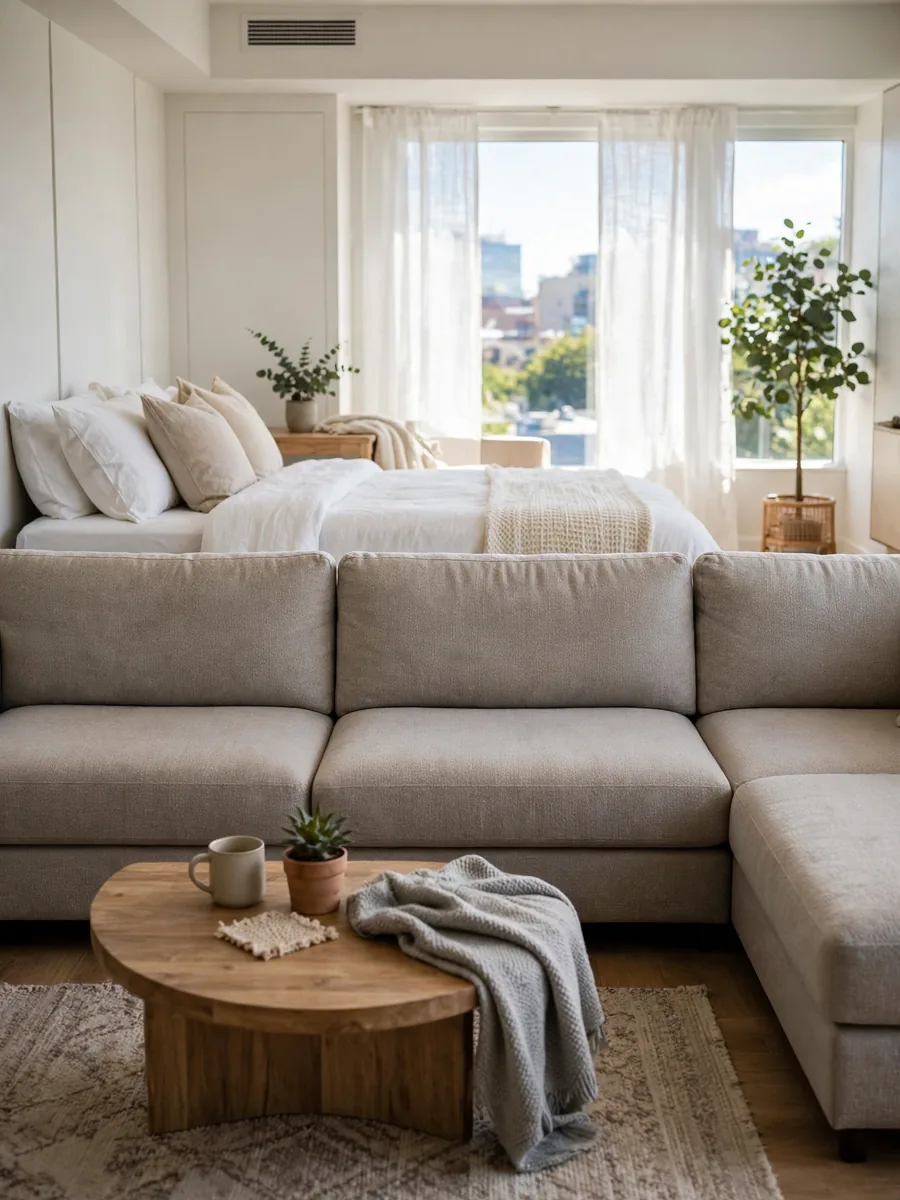
In a studio apartment, the back of a sectional can do the job of a wall. Place it with its back toward the sleeping area and its seats facing the living zone, and the room instantly reads as two spaces instead of one crowded box. A low bookshelf or console behind the sofa can reinforce the divide without blocking light. This layout works best when the sectional is not so long that it eats the walkway between the two zones.
12. Try an Armless or Low-Back Sectional in a Narrow Room

Narrow rooms punish bulky furniture. An armless or low-back sectional takes up less visual space, lets sightlines travel across the room, and makes a narrow living room feel wider than it is. The trade-off is less arm support for lounging, so add a cushion or bolster at the ends if you like to lean. If you sit near a window, check the back height against the sill so the sofa does not block the lower glass or press against blinds and curtains.
Open-Plan and Great-Room Layouts
13. Let the Sectional’s Back Define the Living Zone
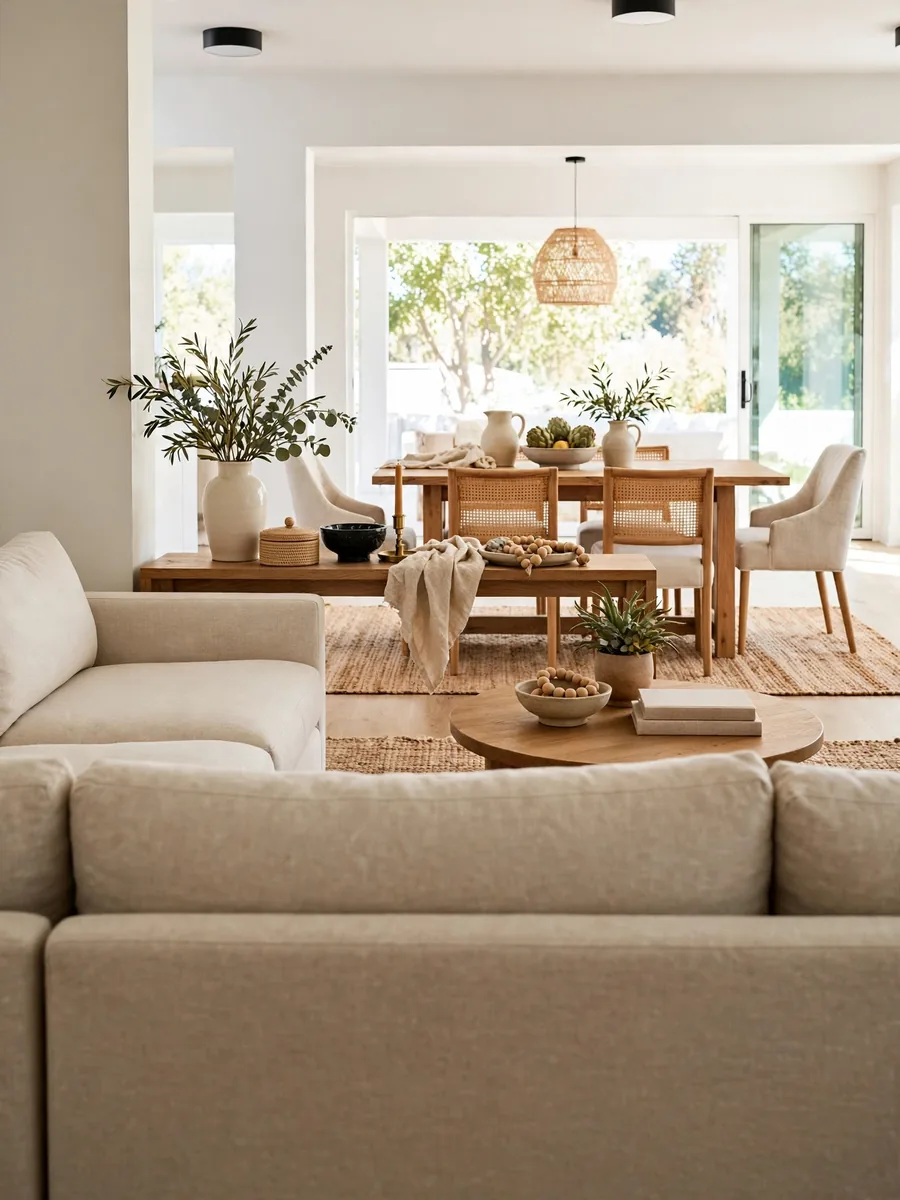
In an open-plan home, the sectional’s back can mark where the living room ends and the dining room or kitchen begins. Place the sofa perpendicular to the dining table, with a console table behind it, and the two zones feel separate even though no wall divides them. A console table behind the sofa, typically around $80 to $250 as of 2026, anchors the boundary, and a rug under the living zone reinforces it. Keep the passage behind the sofa wide enough for carrying dishes.
14. Angle the Sectional Toward a Bay Window or View
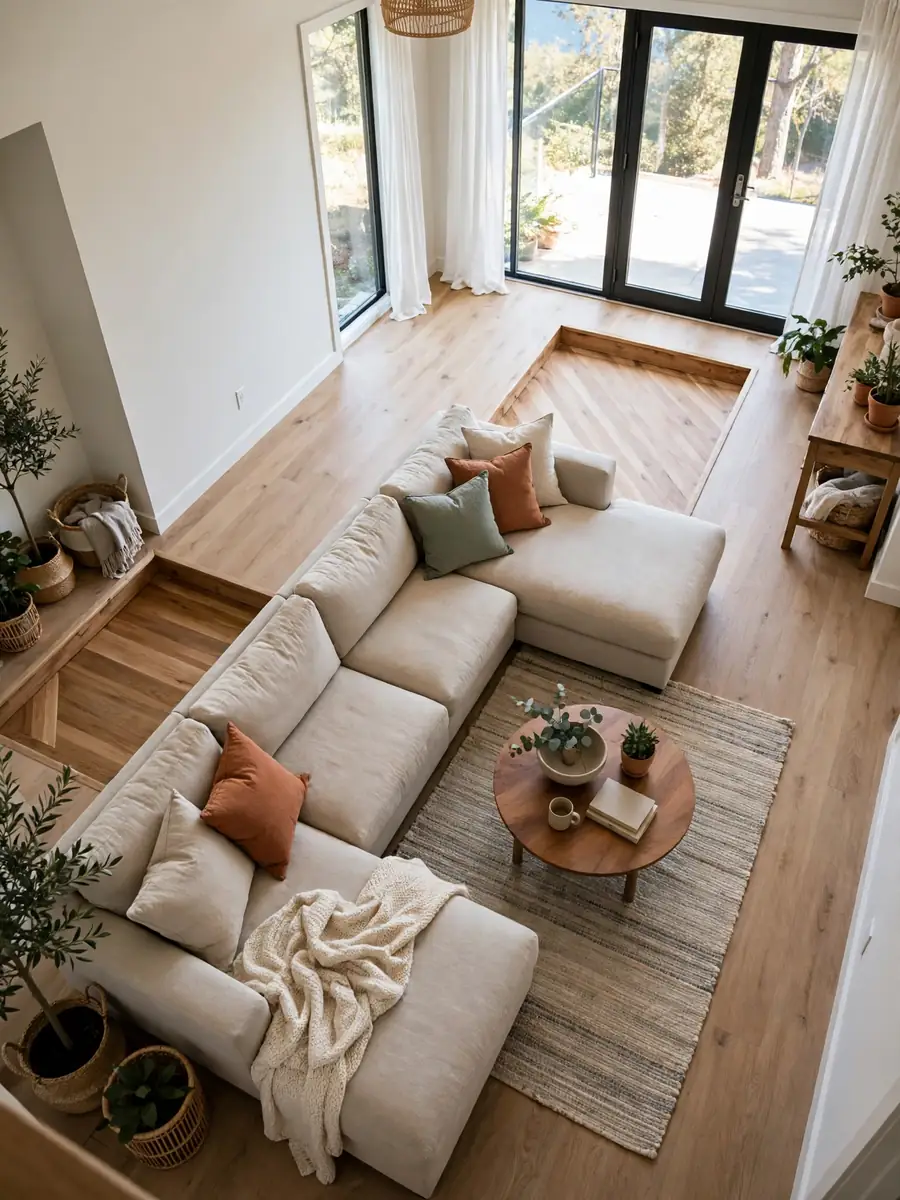
Not every sectional has to sit parallel to a wall. Angling the sofa toward a bay window, a garden view, or a diagonally set fireplace can make an awkward room feel designed rather than compromised. The cost of this layout is usually the floor space behind the angled corners, which can become dead zones, so a floor lamp, a plant, or a small side table can fill those triangles so they look deliberate. Tape the angled footprint first, as in idea 1, since it takes up more floor than the same sofa placed straight.
15. Pair the Sectional With a Dining Table Behind It
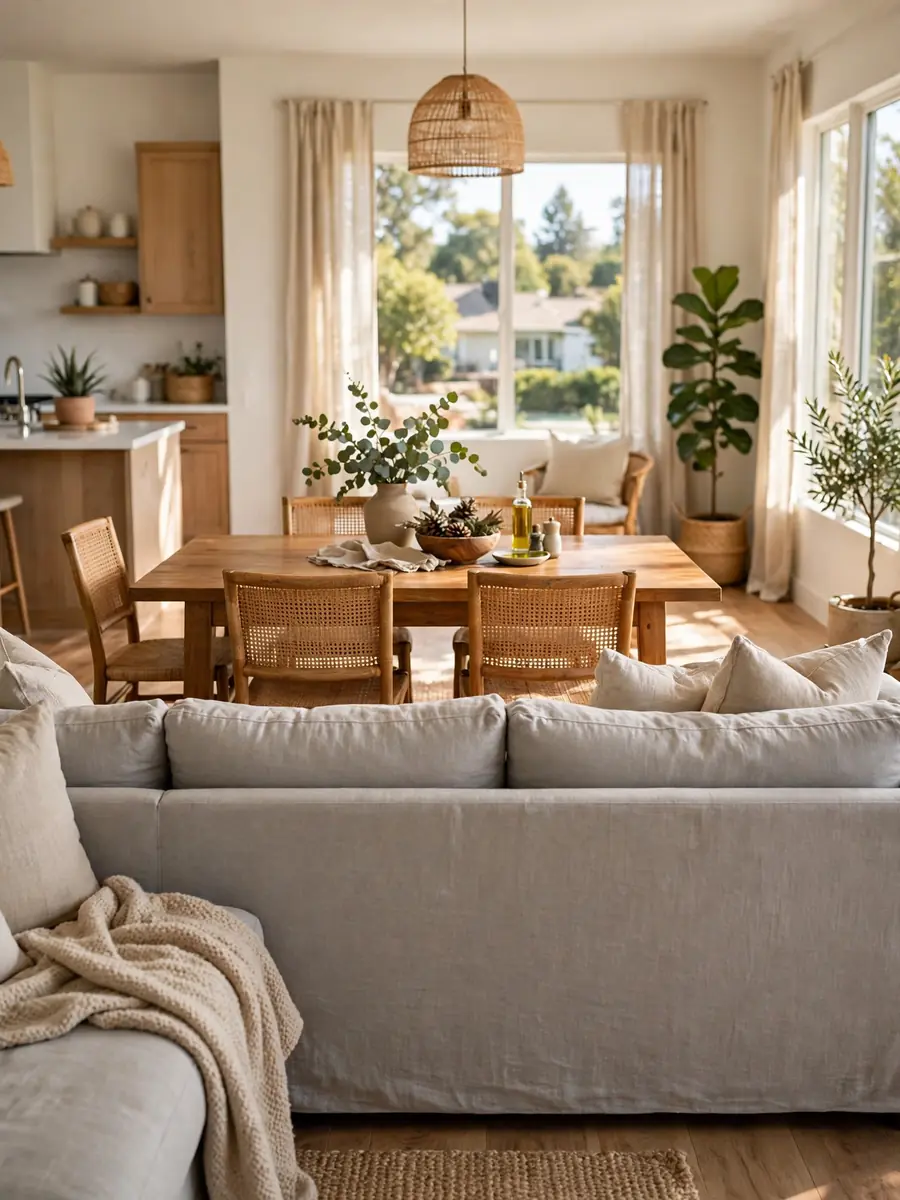
When the living room and dining area share one open space, placing a dining table directly behind the sectional creates a practical, sociable arrangement. People at the table stay part of the conversation, and the sofa’s back acts as a soft boundary between eating and lounging. Leave enough room between the sofa back and the table for diners to pull out chairs, usually around 30 to 36 inches from the table edge as a planning guide.
Finishing the Arrangement
16. Anchor the Sectional With the Right Rug Size

A rug that is too small makes a sectional look stranded, while the right size pulls the whole arrangement together. As a general guide, the rug should be large enough for the front legs of the sectional, and any accent chairs, to sit on it, with the coffee table fully on the rug as well. Use a non-slip rug pad underneath, typically around $20 to $60 as of 2026. Test rug pads on a hidden patch of floor first, since some backings can mark finishes. A rug large enough for a sectional typically costs around $150 to $400 as of 2026.
17. Match the Coffee Table or Ottoman to the Shape
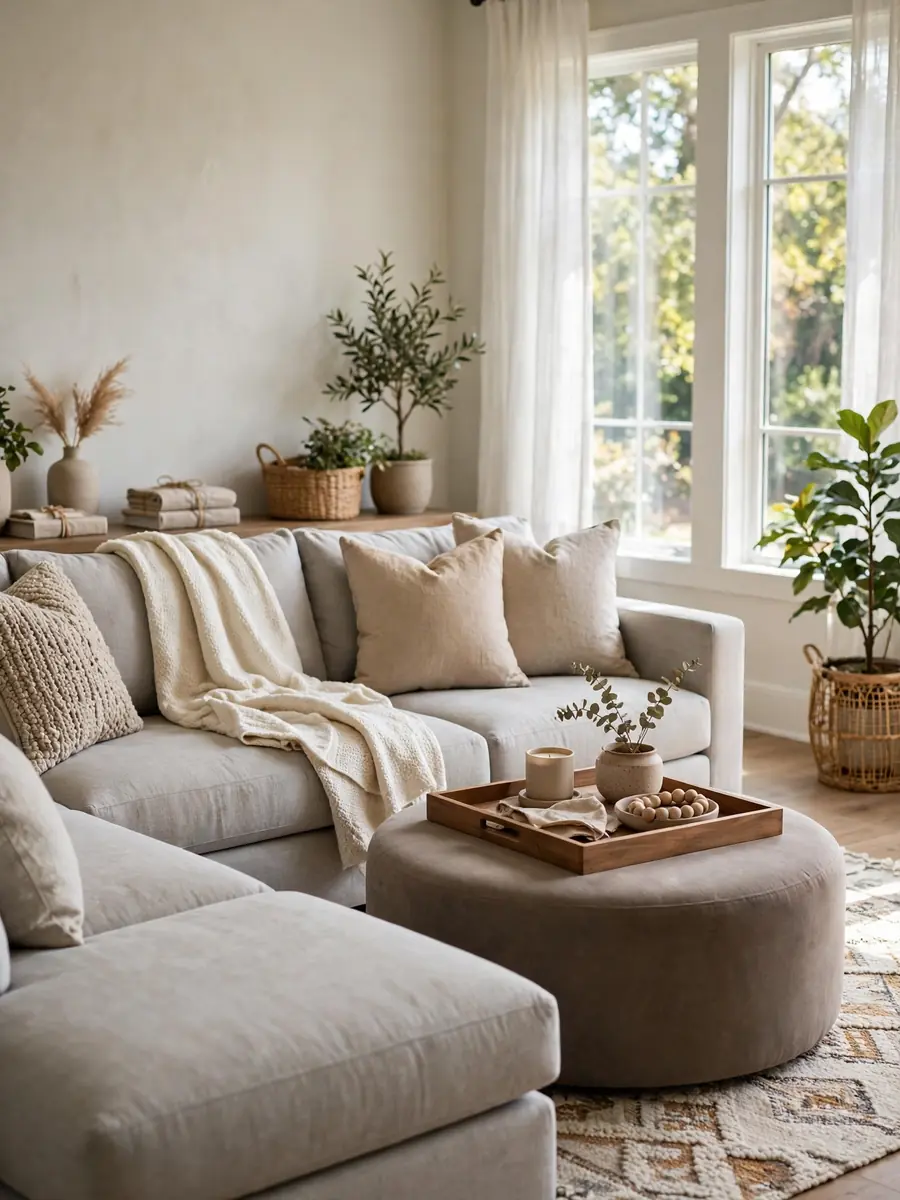
The table in front of a sectional should echo the sofa’s shape: a rectangular table suits a long L, a round table softens a U-shape, and a large ottoman can double as extra seating in a family room. Leave roughly 14 to 18 inches between the sofa edge and the table. For the soft layers, our guide to styling a throw on an oversized sectional shows how to place blankets so they look intentional. A coffee table or ottoman typically costs around $80 to $350 as of 2026.
18. Layer Lighting and Side Tables at Both Ends
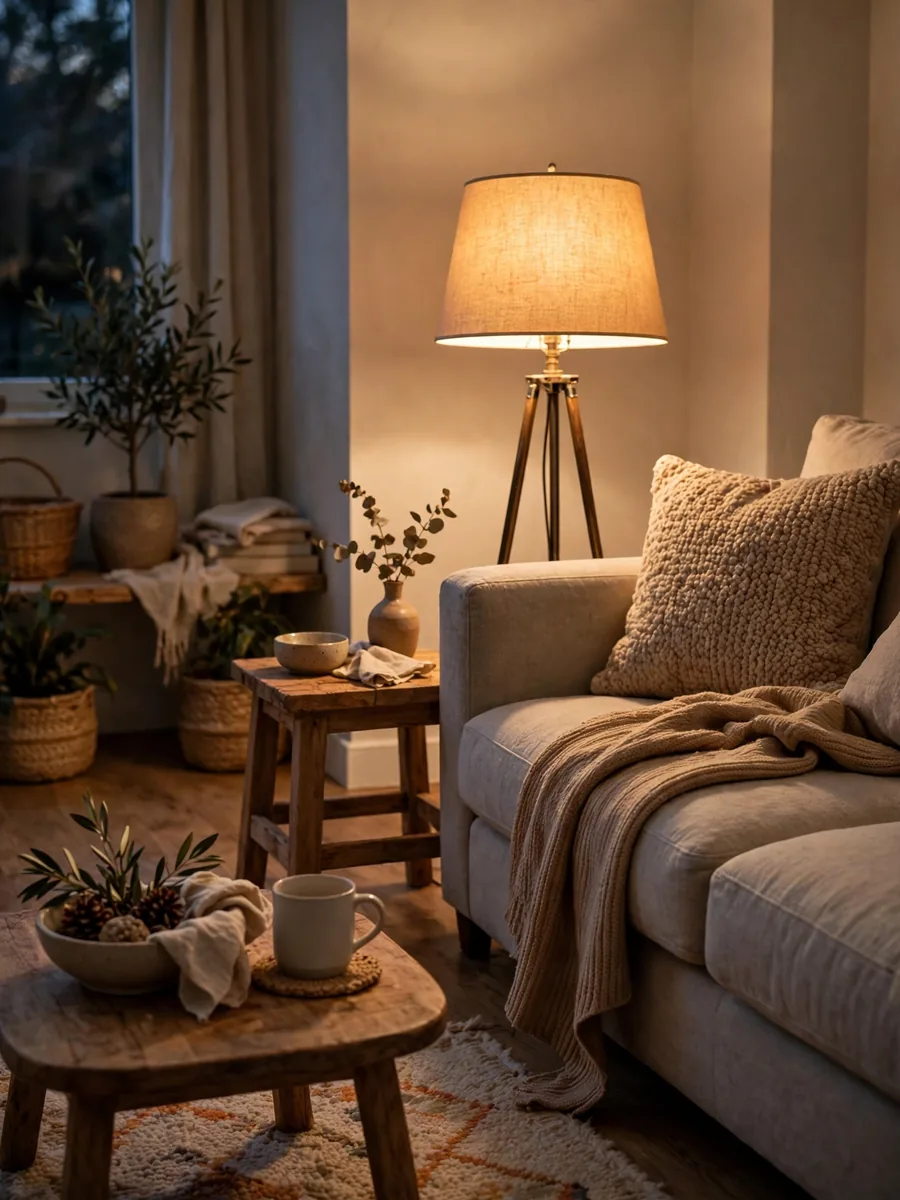
A sectional is long, so a single ceiling light rarely serves both ends well. Place a floor lamp or a table lamp at each end of the arrangement, plus a side table within reach of the end seats, so readers and phone-chargers both have a spot. Side tables typically cost around $40 to $120 each as of 2026. Keep lamp cables off walkways with cord covers. In a rental, choose floor or table lamps over drilled wall lights.
Frequently Asked Questions
What is the best layout for a sectional in a small living room?
A compact L tucked into a corner usually works best, since it uses two walls and leaves the middle of the floor open. Keep it shorter than its wall, with raised legs and a small coffee table.
Should a sectional go against the wall or float in the middle of the room?
It depends on the room size. Against the wall suits small and medium rooms, since it frees floor space and keeps walkways clear. Floating suits larger or open-plan rooms, where the sofa’s back can define a zone, but it needs enough space behind it for a comfortable walkway.
How much space should I leave around a sectional?
Aim for roughly 30 inches in main walkways and roughly 14 to 18 inches between the sofa and the coffee table. These are guides, not rules; smaller homes may compromise on a secondary route.
Which side should the chaise be on?
Put the chaise on the side you naturally lounge toward. Check that it does not block a doorway, a radiator, or a main walkway, and consider a reversible or modular chaise if you may move to a different room shape.
Can you put a sectional in front of a window?
Yes, in many rooms it works well, especially a low-back sectional that does not block much glass. Keep it a few inches from the glass so curtains move freely, and avoid pressing fabric against a cold window.
What size rug goes under a sectional?
Choose a rug large enough for the sectional’s front legs and any accent chairs, with the coffee table fully on it. Measure the full seating footprint, not just the sofa, before buying.
Conclusion
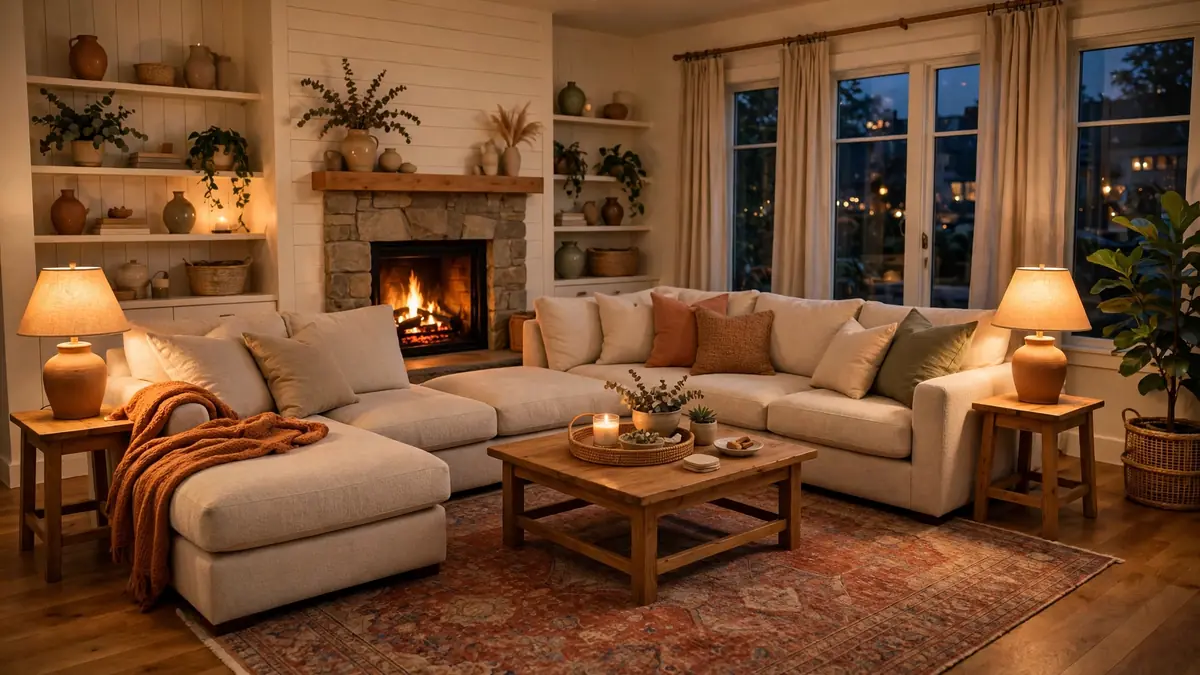
A good layout starts before the sofa arrives: measure, tape the footprint, pick a focal point, and protect the walkways. From there, pick the pattern that fits your home.
Once the shape is settled, the finishing touches do the rest. A rug sized to the seating area, a table that matches the sofa’s shape, and a lamp at each end turn a large piece of furniture into a room that feels easy to live in. Start with one change, and the rest often falls into place.

Thiago Alexander is the Chief Editor at Nested Charm. With a deep passion for interior design and cozy living spaces, he leads the editorial team in crafting stories that make every house feel like a home.



2 Comments