15 Room Inspiration Ideas for Bedrooms That Feel Personal, Not Showroom-Perfect
Executive Summary
A bedroom can have a beautiful bed, matching nightstands, and a rug in exactly the right size — and still feel like nobody lives in it. The rooms that feel personal are rarely the ones with the biggest budgets. They are the ones where a few choices repeat and the things on display actually belong to the person sleeping there.
That is good news for renters and first-time homeowners: no renovation or new furniture is needed. Start with one colour story, add texture you can touch, then let your own photos, books, and collections do the decorating.
In short: Pick one anchor colour and repeat it, layer textures on the bed, display things that are genuinely yours, and use renter-safe tricks like peel-and-stick wallpaper and command hooks. A personal bedroom is built from small, repeated choices — not a shopping spree.
Start With a Colour Story That Feels Like You
Colour is the fastest way to make a bedroom feel intentional, and it costs almost nothing. The trick is restraint: one anchor colour, repeated in a few places, beats five colours competing for attention.
1. Repeat One Anchor Colour Three Times
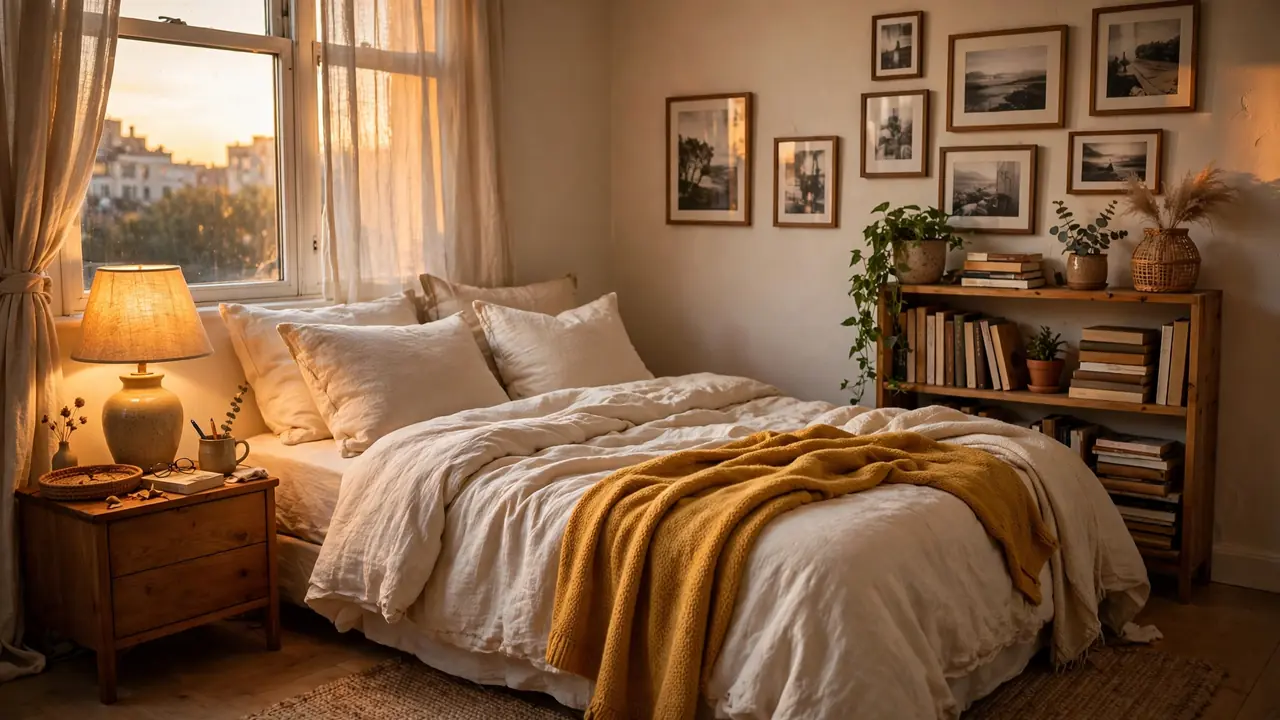
Choose one colour you genuinely love — sage green, dusty blue, warm terracotta, soft mustard — and repeat it in exactly three places: a pair of pillowcases, a throw at the foot of the bed, and one small piece of wall art. That repetition is what makes the room look designed rather than accidental. Expect $30–$60 as of 2026 for a throw and pillowcases.

2. Paint (or Stick) One Wall Behind the Bed
A single accent wall behind the bed gives the whole room a focal point. Homeowners can paint it in a weekend for roughly $40–$70 as of 2026 for a gallon of paint and basic supplies. Renters should get permission in writing first — many landlords allow painting only if you repaint before moving out. The safer route is peel-and-stick wallpaper or removable decals, which come off cleanly from smooth, painted walls. For more ways to make that wall work harder, see our bedroom accent wall panel ideas.

3. Try a Two-Tone Bedding Palette
Instead of a matching bedding set, pair two tones that sit well together: cream sheets with a terracotta flat sheet folded back over the duvet, or white bedding with dusty-blue pillowcases. The contrast adds depth without a single new piece of furniture. A new flat sheet or a pair of pillowcases usually runs $20–$40 as of 2026.

Layer Texture, Not Stuff
A personal bedroom feels soft and touchable, and texture does that work quietly: linen, knit, velvet, woven fibres. Three textures on the bed and one underfoot are usually enough.
4. Layer Three Textures on the Bed
Start with smooth linen or cotton bedding, add a chunky knit throw across the foot, and finish with one velvet or corduroy cushion. The contrast is what makes a bed look inviting. A throw ($25–$50 as of 2026) and one cushion cover ($10–$20 as of 2026) are enough.

5. Let a Rug Frame the Bed
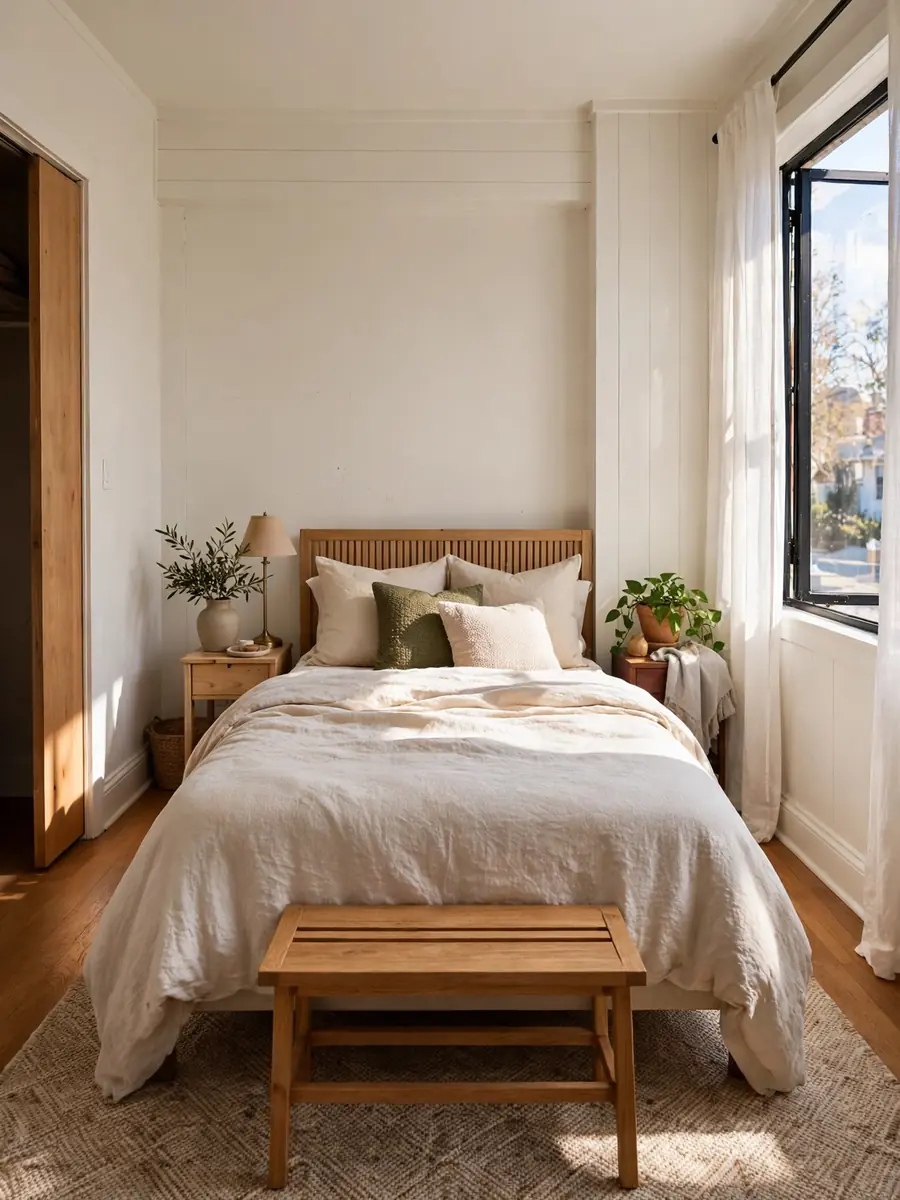
A rug that extends about 18 inches beyond the bed on both sides and at the foot makes the bed feel anchored and the room feel finished. Measure first: a rug that is too small looks like a bath mat. Budget flatweave or low-pile rugs in 5-by-7 or 8-by-10 typically run $80–$200 as of 2026, plus a thin rug pad underneath so it stays put.
6. Hang Curtains High and Wide
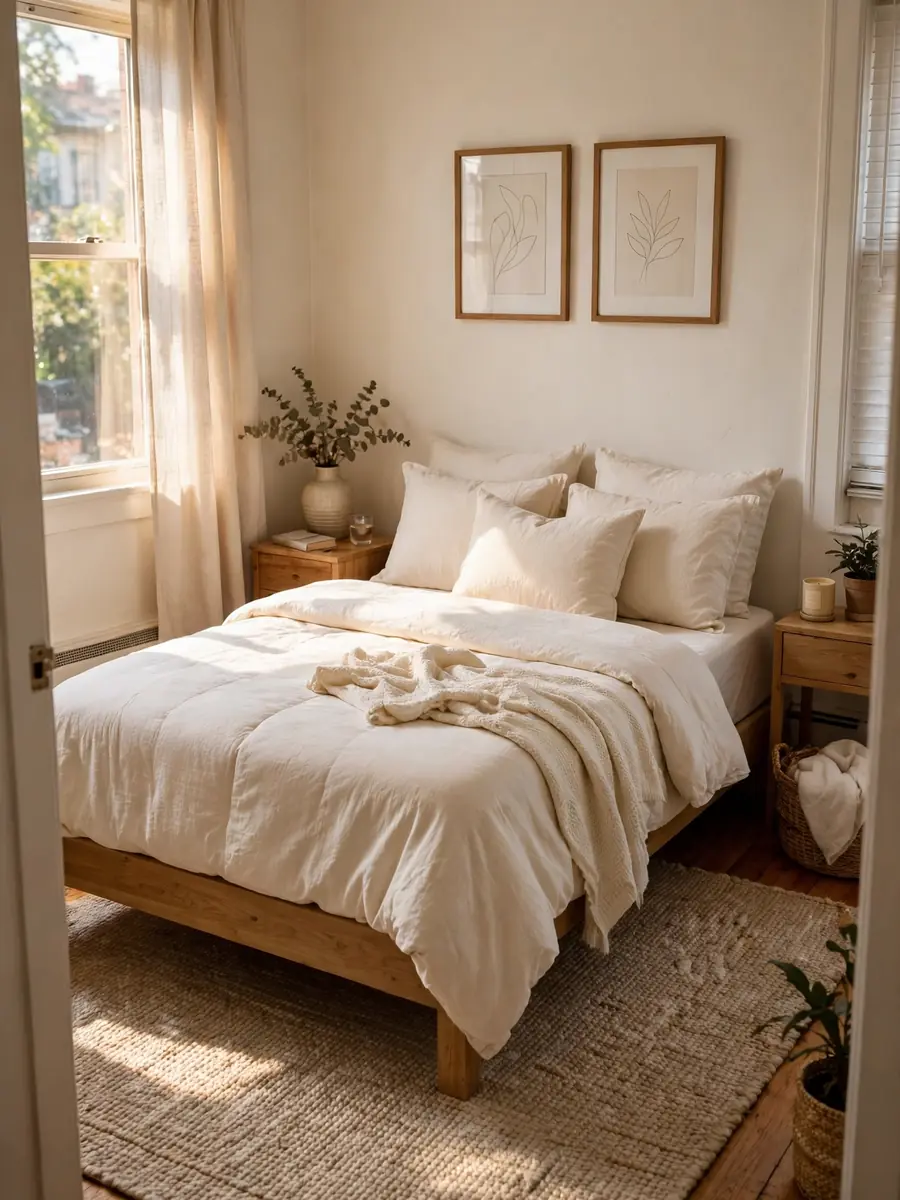
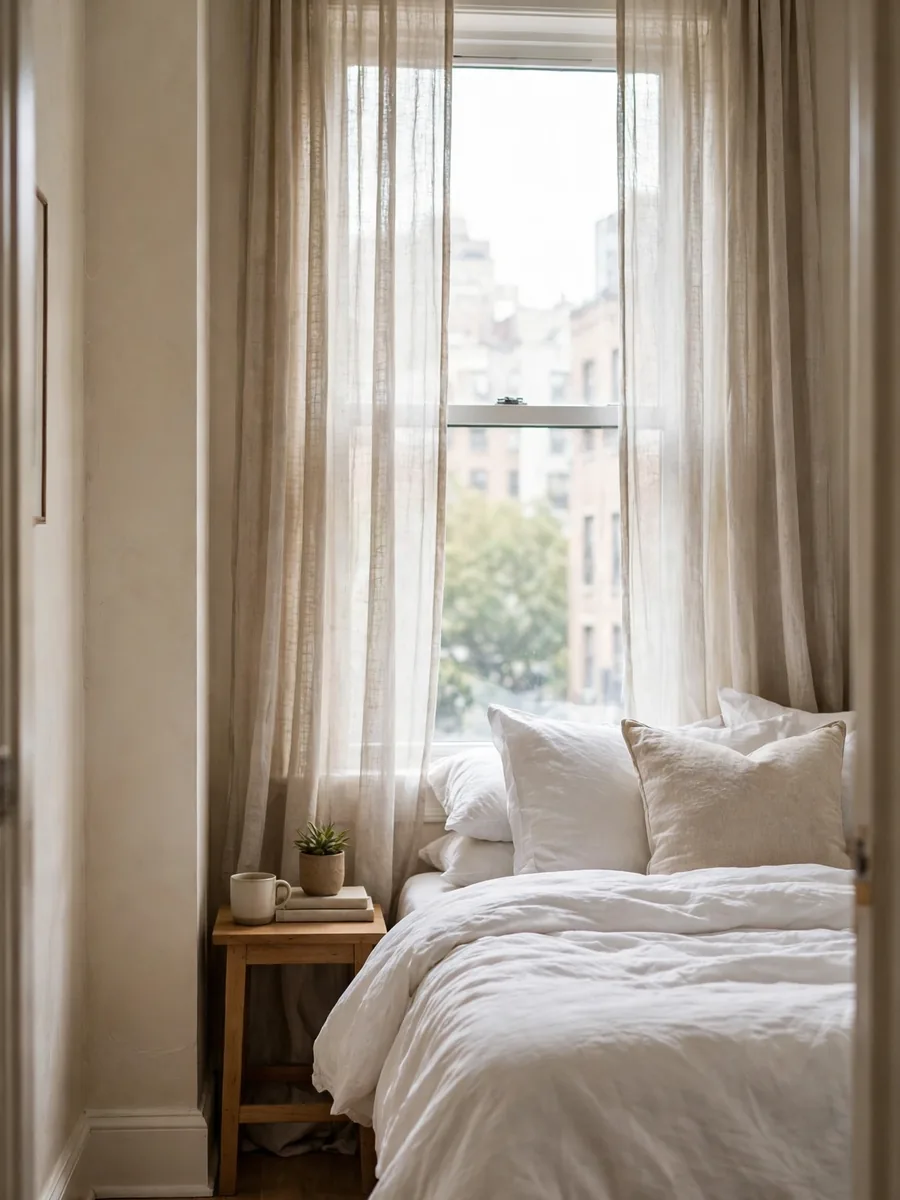
Mount the curtain rod a few inches below the ceiling and several inches wider than the window frame on each side, then let floor-length curtains fall to just above the floor. The window looks taller and the room looks bigger. Lightweight linen-look panels typically cost $25–$50 per pair as of 2026. Renters who cannot drill should use a tension rod inside the frame or heavy-duty command hooks rated for the rod’s weight — a fallen rod can chip paint, and that comes out of a deposit.
Make It Yours With Personal Collections
This is what separates a personal bedroom from a showroom, and nothing here needs to be bought new. The best material is already in your home: photos, books, souvenirs, and things you kept for a reason.
7. Build a Gallery Wall From Your Own Photos
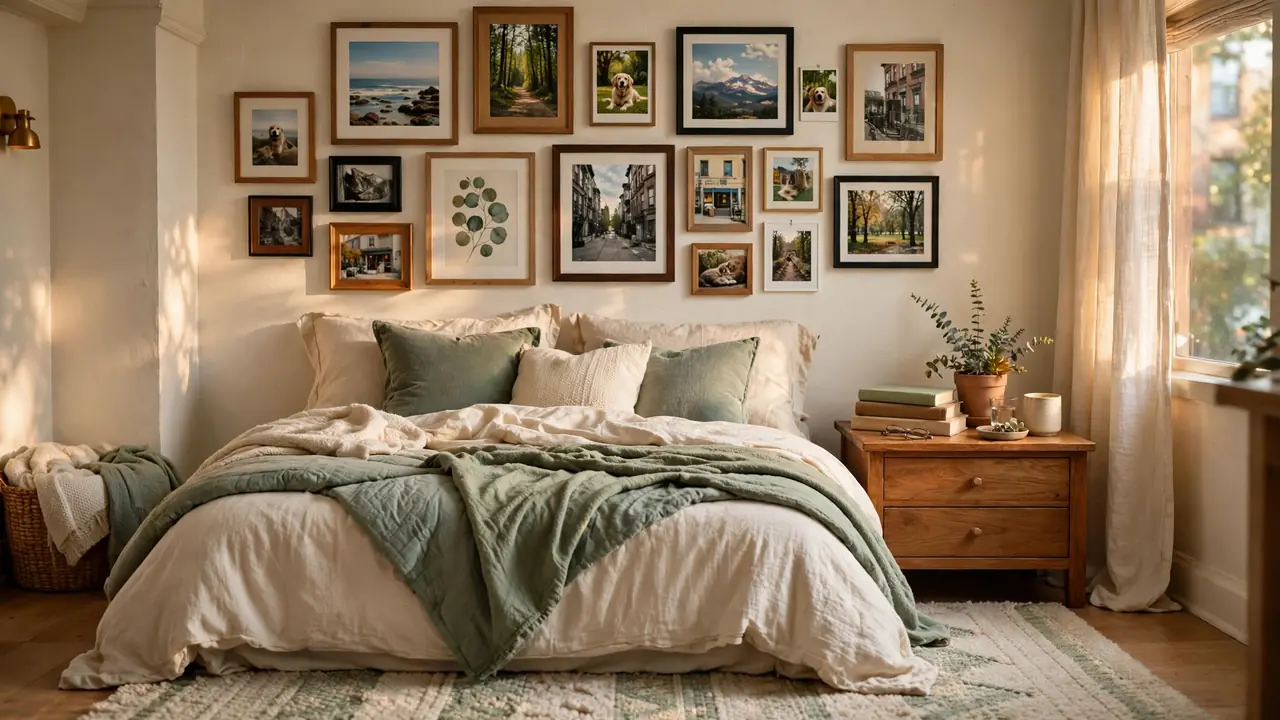
Print your own photos — trips, friends, family, the dog — and hang them in a loose grid above the bed or on the largest empty wall. Mixed frame sizes look collected rather than matched, and secondhand frames keep prints and frames to roughly $30–$60 as of 2026. Use removable picture-hanging strips for lighter frames in a rental.

8. Give One Collection a Single Shelf
Pick one collection — small ceramic vases, travel souvenirs, vintage books, plants — and give it one floating shelf, and only one. A basic floating shelf runs $15–$30 as of 2026, and many install with just two screws or heavy-duty adhesive strips rated for the weight. Keep the heaviest pieces closest to the brackets, and never overload adhesive strips.

9. Style a Bedside Vignette That Tells Your Story
A nightstand styled with three personal things — a lamp, a book you are actually reading, and one small object with a story, like a framed photo or a vase of dried flowers — turns a functional surface into a little portrait of its owner. It costs nothing if you shop your own shelves first, and it is the easiest idea here to change with the seasons.

Small-Space Tricks That Feel Intentional
A few deliberate moves make a small bedroom feel calm and considered.
10. Float the Bed and Rethink the Layout
Pushing the bed against the wall is the default, but it is not always the best use of a small room. Try pulling the bed a few inches out so you can walk around both sides, or move the headboard to the longest wall. Sketch it on paper first and move the lightest pieces before the heavy ones. For a fuller walkthrough of arrangements that work in tight rooms, see our bedroom furniture layout ideas.
11. Use the Walls: Tall Shelves and Hooks
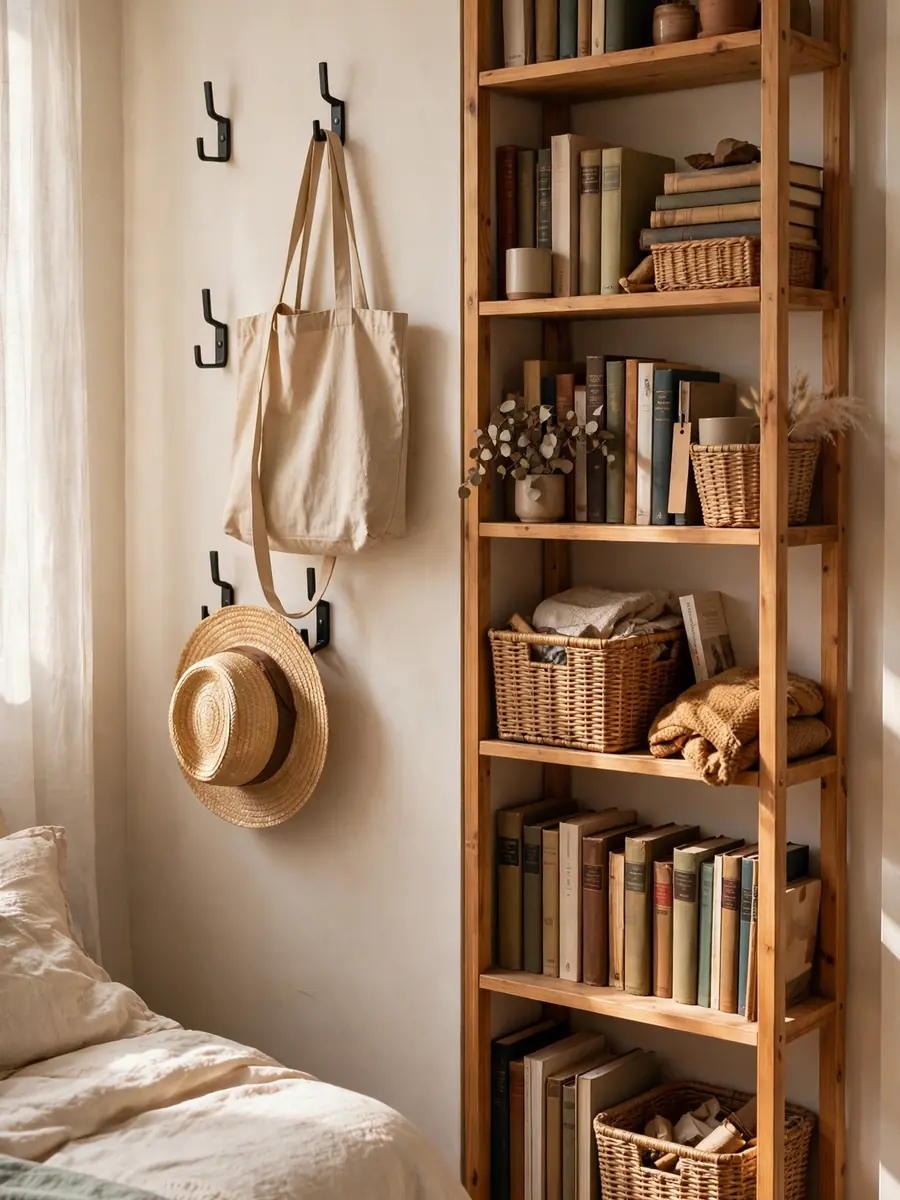
When floor space is gone, go up. A tall, narrow bookshelf and a row of hooks by the door hold tomorrow’s outfit, a tote bag, or a hat, and keep clutter off the bed and floor. A narrow shelf typically costs $40–$90 as of 2026. Anchor any tall shelf to the wall with the strap supplied — a freestanding tall shelf can tip, so never skip that step.
12. Let One Thrifted Piece Do the Talking
One piece with a past — a wooden dresser with worn brass knobs, a rattan chair, a vintage mirror — gives a bedroom a focal point that no flat-pack can copy. Check secondhand shops, local buy-and-sell groups, and estate sales; solid wood pieces often run $30–$100 as of 2026. Before buying, check drawers slide smoothly, sniff for musty smells, and look for signs of pests.

Renter-Safe Finishing Touches
These last three ideas are cheap, reversible, and make the room feel finished rather than furnished.
13. Try Peel-and-Stick Wallpaper on One Wall
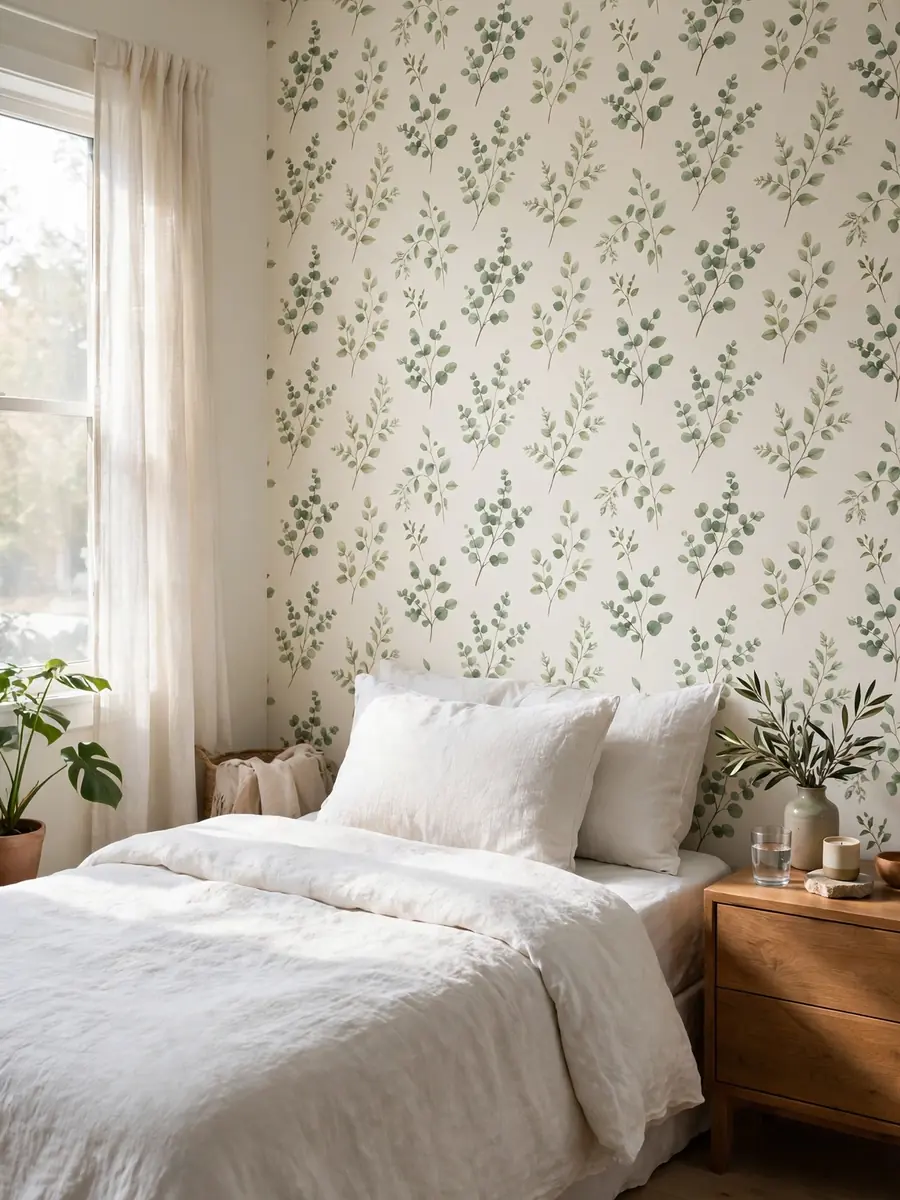
Peel-and-stick wallpaper on the wall behind the bed adds pattern and personality without paint, and it peels off when you move. A single roll typically covers around 45–50 square feet and costs $30–$60 as of 2026; one wall in a small bedroom usually needs one to two rolls. Test a small piece in a hidden corner first, and apply it only to a clean, smooth, fully cured painted wall — never to fresh paint or textured walls, since it can pull paint off on removal.
14. Layer Warm Light, Flameless After Dark
One overhead light flattens a bedroom. Add a bedside lamp, a small string of warm fairy lights along a shelf, and flameless LED candles on the nightstand for evenings. The mix makes the room feel warm and layered, and flameless candles give the glow without an open flame near bedding — never leave a real candle burning unattended in a bedroom. A small lamp runs $20–$40 as of 2026, fairy lights $10–$20, and a set of flameless candles $10–$15.
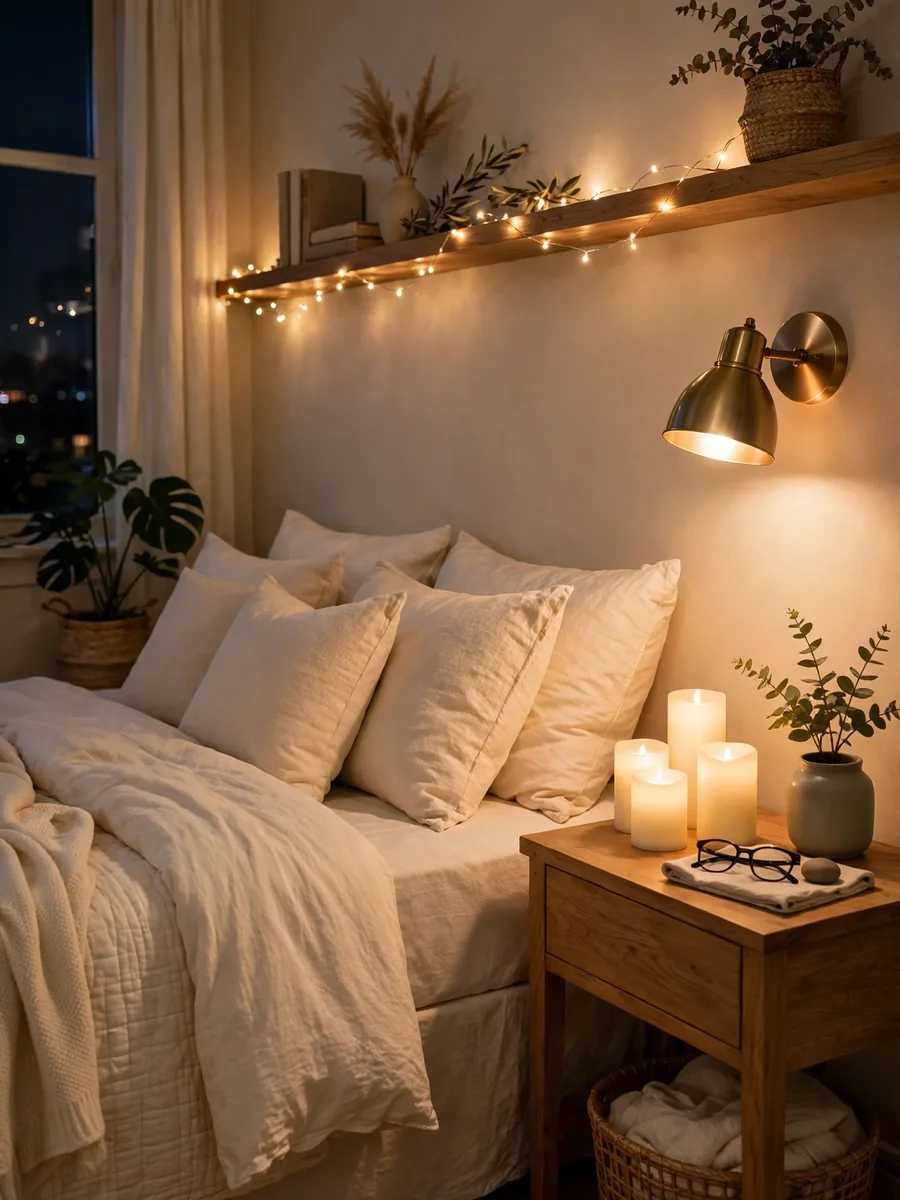
15. Keep a Seasonal Swap Basket
A single basket by the bed or in the closet holds the off-season textiles — a heavier throw, darker cushion covers, a different bed scarf — so you can swap the room’s mood in ten minutes without buying anything new. A woven basket costs $15–$30 as of 2026, and the swap itself is free. Change the basket, not the bedroom.

FAQ
How can I make my bedroom feel personal on a tight budget?
Start with what you already own: your photos, books, and collections cost nothing to display. Then spend on the highest-impact small things — a throw, pillowcases, and frames — usually under $100 as of 2026 together.
What is the easiest renter-friendly way to add personality to a bedroom?
Peel-and-stick wallpaper on one wall, removable picture-hanging strips for a gallery wall, and command hooks for curtains or a fabric hanging. All three come off cleanly from smooth, prepared walls.
How many colours should a bedroom have?
One anchor colour repeated three times, plus neutrals, is a reliable starting point. You can add a second accent later, but a tight palette is what makes a room feel calm and deliberate.
Can I make a small bedroom feel bigger without new furniture?
Yes. Hang curtains high and wide, float the bed so you can walk around it, use tall shelves instead of wide ones, and keep surfaces edited. Warm, layered lighting helps too.
Is peel-and-stick wallpaper safe for rentals?
Usually, yes, on a clean, smooth, fully cured painted wall, removed slowly with gentle heat from a hairdryer. Test a hidden corner first and check your lease.
How often should I refresh my bedroom decor?
A small seasonal swap — the throw, cushion covers, and bedside vignette — a few times a year is enough. The bigger pieces, like the rug and the layout, can stay put for years.
Conclusion
A bedroom feels personal when it shows evidence of the person who sleeps there: a colour they chose, a texture they love, photos they took, objects they kept on purpose. None of that needs a renovation or a big budget — just a few deliberate choices, repeated until the room reads as yours. Pick one idea from this list, the one that feels most like you, and start there this weekend. The rest of the room will follow.


Thiago Alexander is the Chief Editor at Nested Charm. With a deep passion for interior design and cozy living spaces, he leads the editorial team in crafting stories that make every house feel like a home.