15 Two-Tone and Statement Interior Door Paint Ideas That Make Doors the Feature
Executive Summary
Most interior doors are painted the same flat white as the trim and then forgotten, even though they take up more wall space than almost any other single feature in a room. A two-tone split or a single bold colour turns that blank slab into the room's focal point, usually for little more than a quart of paint and a weekend afternoon.
This list stays firmly on the design side of door painting: where to put the split, which colours carry a room without overwhelming it, and how painted frames, edges, and hardware finish the look.
In short: Pick one idea per door, not three. A clean split — bold below and white above, coloured panels inside a white frame, or one bold door in a white hallway — reads as intentional, while a door wearing every trick at once reads as a mistake. Two thin coats of durable interior paint, a steady taped line, and matching hardware are usually all it takes. Renters: get your landlord's permission in writing before painting any door — if refused, put the colour on a piece of furniture you own instead.
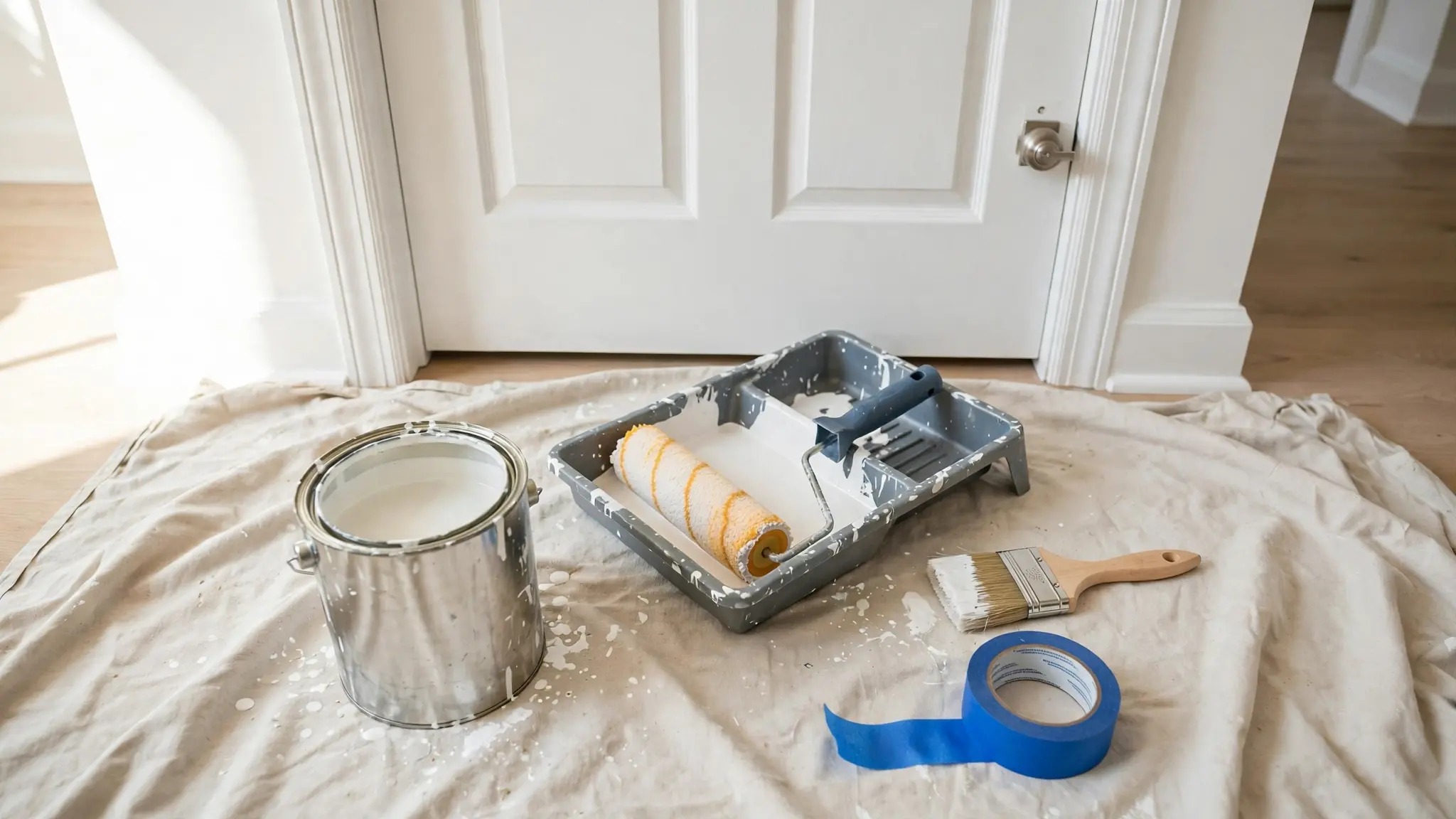
Before You Paint: Three Decisions That Make or Break a Two-Tone Door
First, decide where the colour stops. A split at the middle rail of a panelled door looks built-in, because the door's own moulding hides the join; a split drawn across a flat slab at a random height looks like a painting accident. Measure from a real feature — a rail, a panel edge, or the handle height — and tape the line before you start.
Second, decide how bold the room can take. A small, dark hallway can carry one deep-coloured door because the colour is contained; a large, bright living room can carry a bold door because the light balances it. A small room with several bold doors usually feels smaller, so start with one door and live with it for a week before painting the rest.
Third, decide whether the doors come off. Painting in place is fine for most two-tone work, since the tape line is easier to keep straight with the door hung and level, and the guide to painting interior doors without removing them covers the hinges-on method step by step. If a door needs both sides in different colours, taking it down and laying it flat usually gives the cleaner edge. Either way, clean the door, sand lightly to dull any gloss, and use a durable, washable interior paint — doors get touched and bumped every day.
Classic Two-Tone Splits
1. Bold Colour Below, White Above
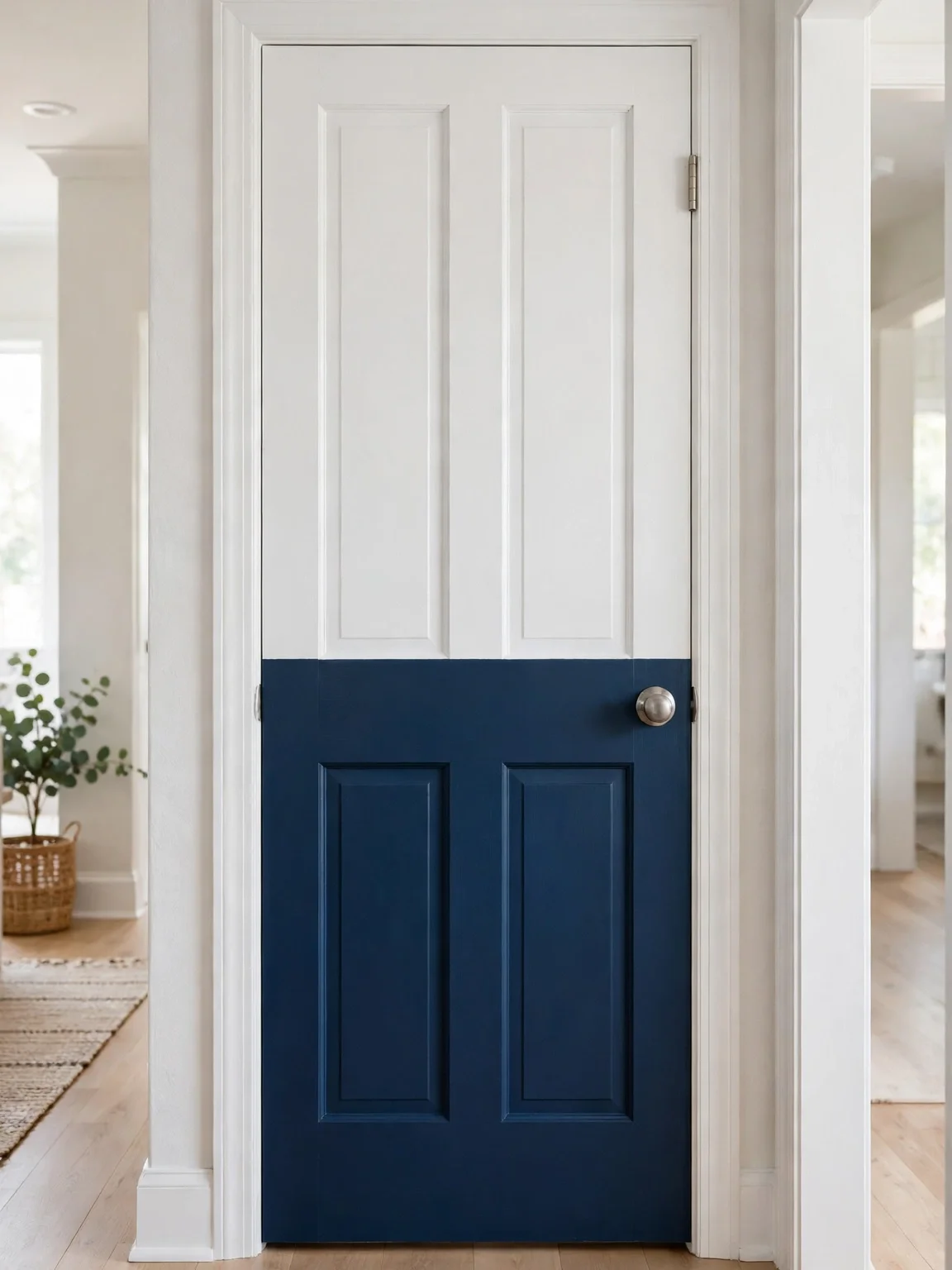
Paint the lower half a bold colour and keep the upper half white, splitting at the middle rail of a panelled door or at handle height on a flat door. The white top keeps the room bright, while the coloured bottom grounds the door and hides scuffs at hand height. Tape the line, paint the bold section first, and peel the tape while the second coat is still slightly tacky. A quart usually covers two or three doors and costs around $20–$35 as of 2026.
2. Bold Panels Inside a White Frame
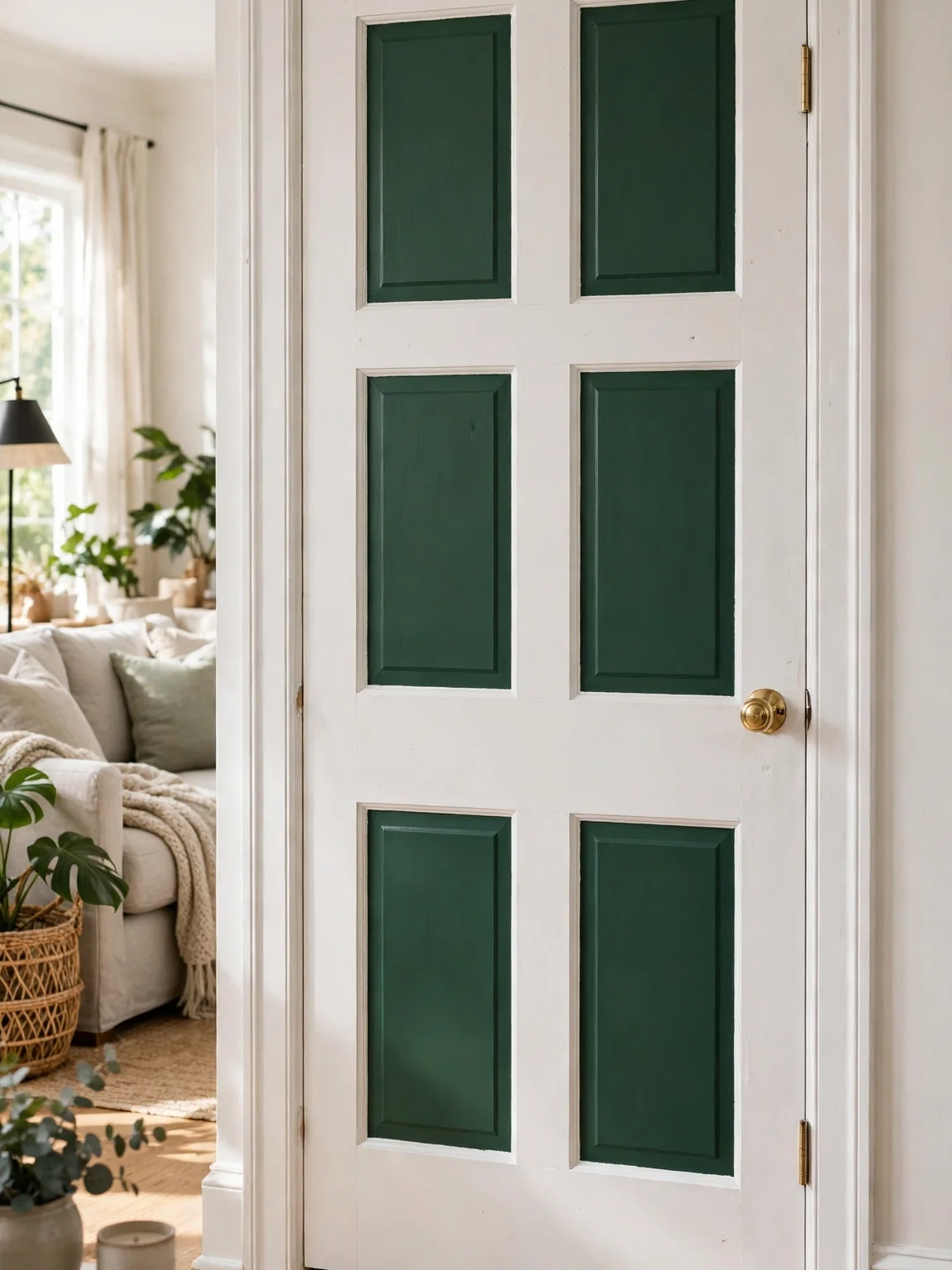
Keep the rails and stiles white and paint only the recessed panels in a bold colour. This is the most forgiving two-tone idea, because the door's own moulding does the lining up — there is no freehand line to keep straight. It works best on four- and six-panel doors, where the coloured rectangles read like framed pictures. Use a small brush for the edges and a mini roller for the centres; a quart costs around $20–$30 as of 2026.
3. Colour on the Room Side, White on the Hallway Side

Paint the side facing the main room in a statement colour and leave the hallway-facing side white. The hallway stays calm, while each room gets its own accent — a deep green door facing a bedroom, for example. Budget around $20–$35 per colour as of 2026 if each side needs its own quart.
Statement Colours That Carry a Room
4. One Bold Door in a Row of White Doors
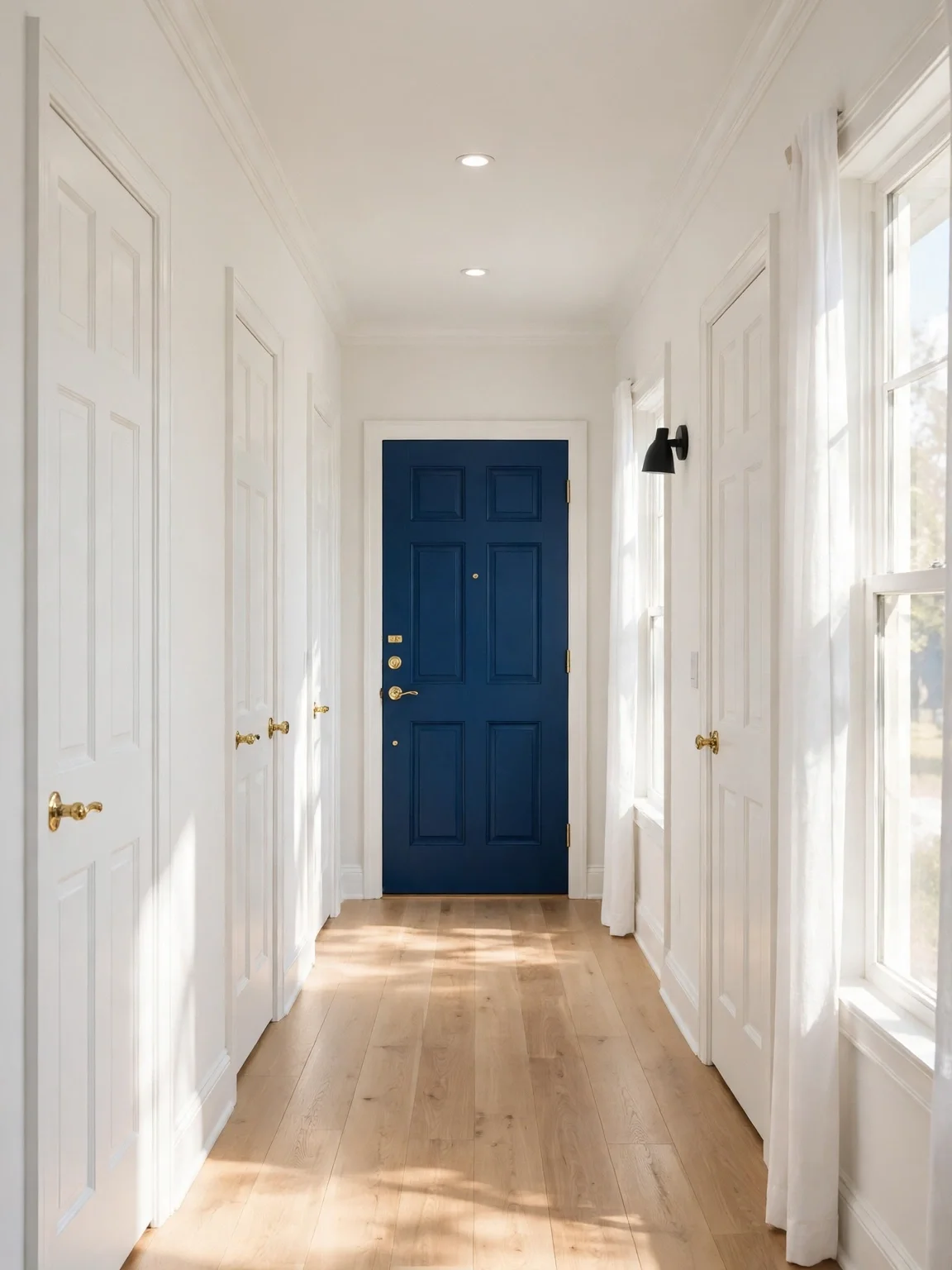
When a hallway has three or four identical white doors, paint just one — usually the one at the end of the hall, or the door to the room you use most. The single bold door becomes a signpost, and the white doors around it make the colour look deliberate. Choose a colour that already appears somewhere in the room beyond the door, even in a small amount. One quart, around $20–$35 as of 2026, is usually enough, and the job often takes a single afternoon.
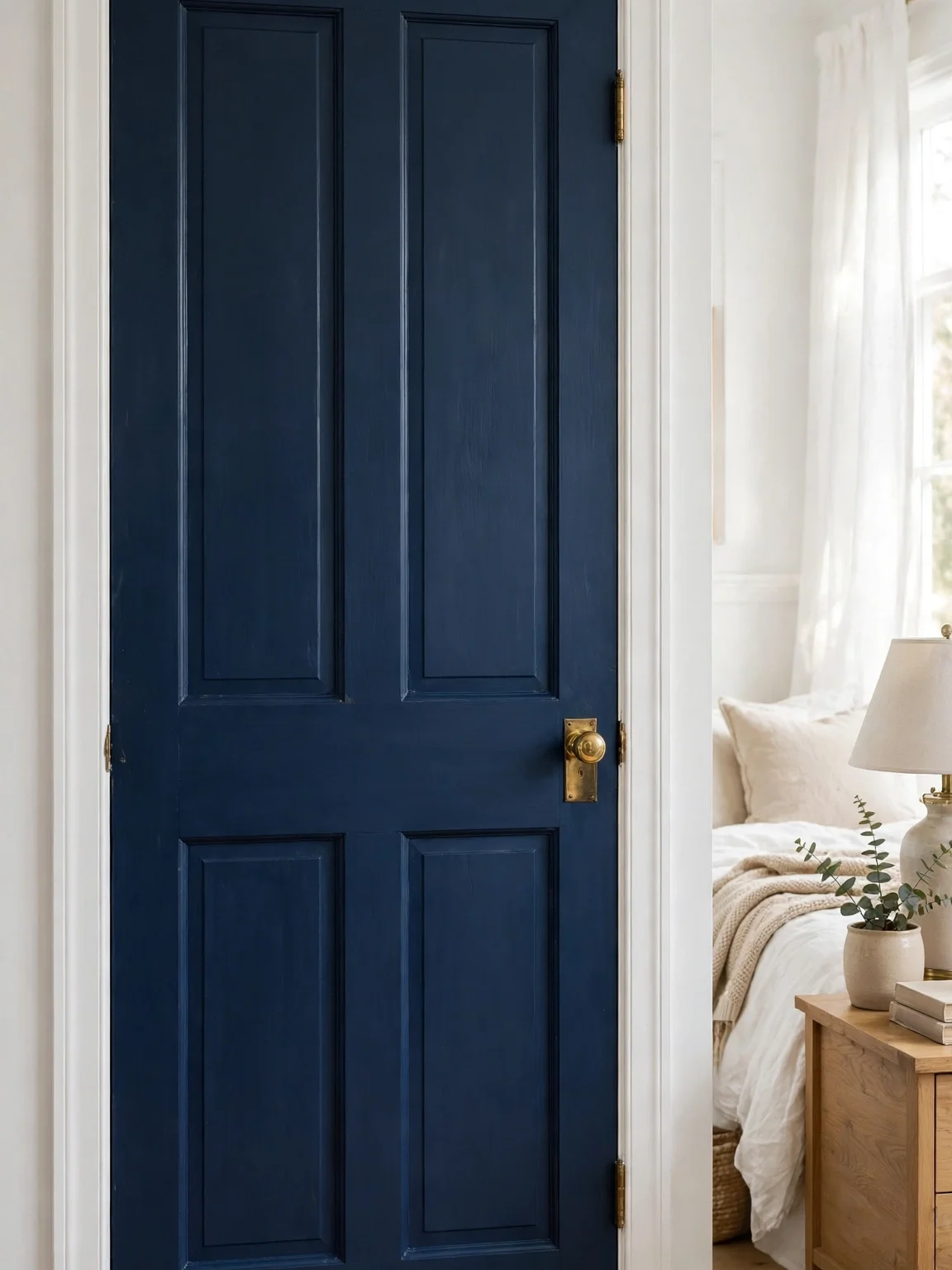
A deep navy door brings the calm, tailored feel of a dark accent wall without committing a whole wall to the colour. It suits white, warm grey, and pale wood trim, and it looks especially good in bedrooms and home offices. Navy shows brush marks more readily than paler colours, so use a good brush, work in thin coats, and keep a wet edge. If you are still choosing between dark shades, the guide to the best paint colours for interior doors compares them side by side. A quart usually costs around $20–$40 as of 2026.
6. A Deep Green Statement Door
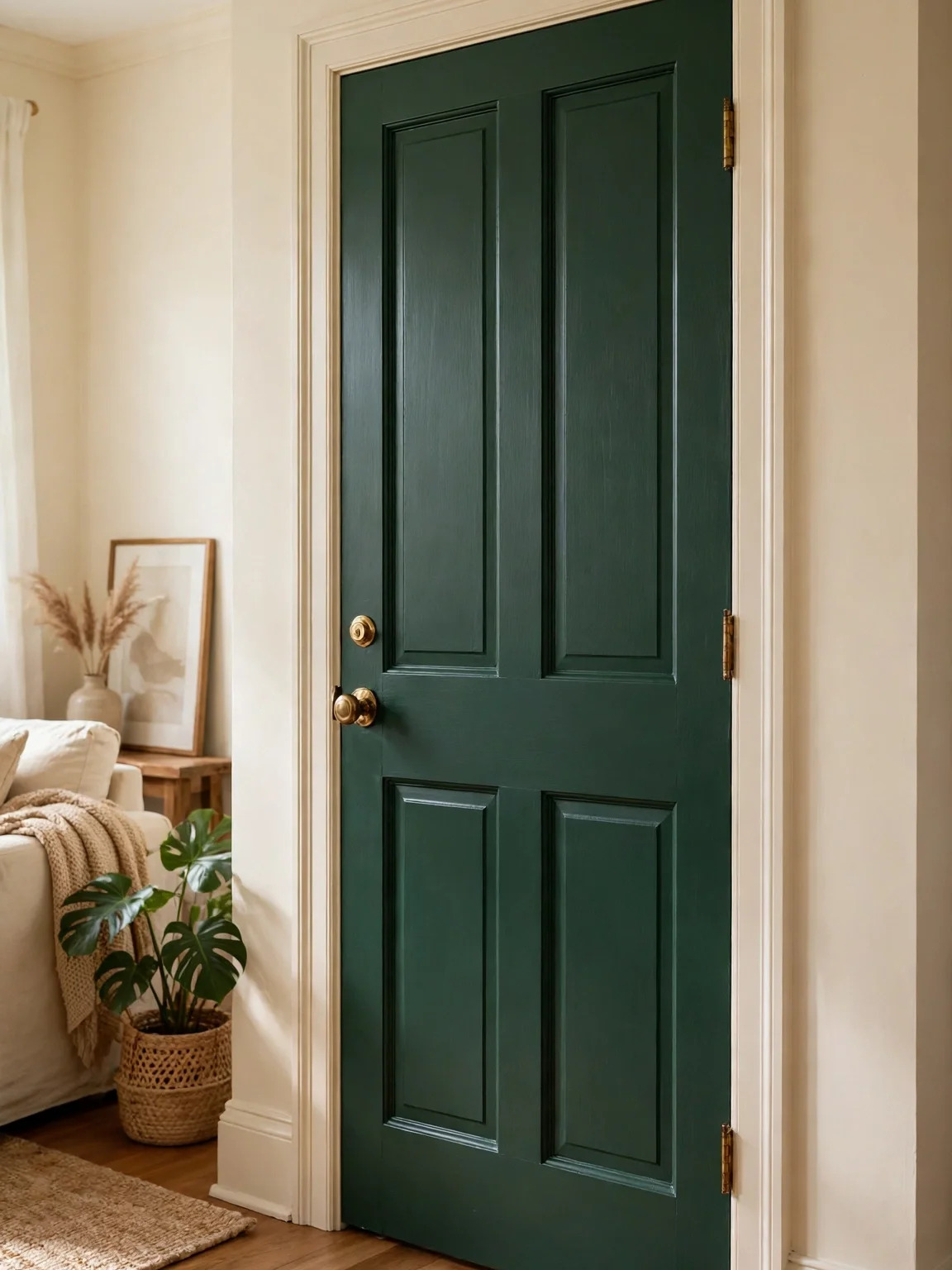
Deep green — forest, hunter, or a muted sage darkened a few shades — is the softest bold door colour, pairing naturally with wood floors, brass-toned hardware, and cream walls. It works well on a door guests actually see, such as the one between a hallway and a living room. Green can shift between warm and cool light, so test a sample on the door in daylight and lamplight before committing. A sample pot costs around $5–$10 as of 2026, and a quart around $20–$35.
Frames, Edges, and the Reverse Two-Tone
7. A Soft Black or Charcoal Statement Door
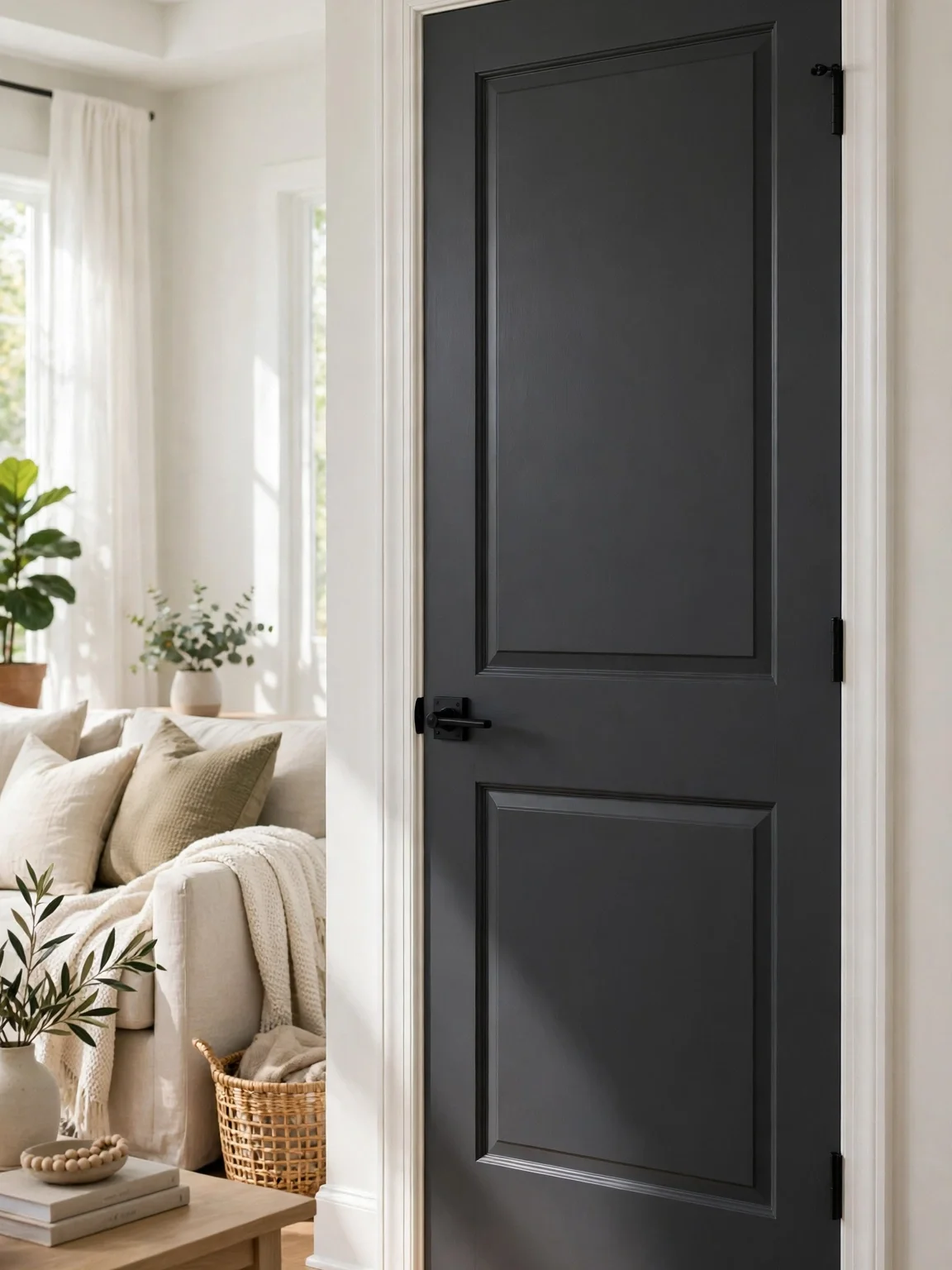
A soft black or charcoal door is the most dramatic option here, and it works best where plenty of light or pale trim balances it — a bright living room, a white hallway, or a bedroom with light bedding. Avoid a hard, pure black, which can look flat and harsh indoors; a charcoal with a warm or blue undertone usually reads richer and hides dust better. Two thin coats over a tinted primer give the most even result, and primer plus a quart typically runs $30–$50 as of 2026. Keep the surrounding trim white so the dark door has a clean frame.
8. A Bold Frame and Trim With a White Door
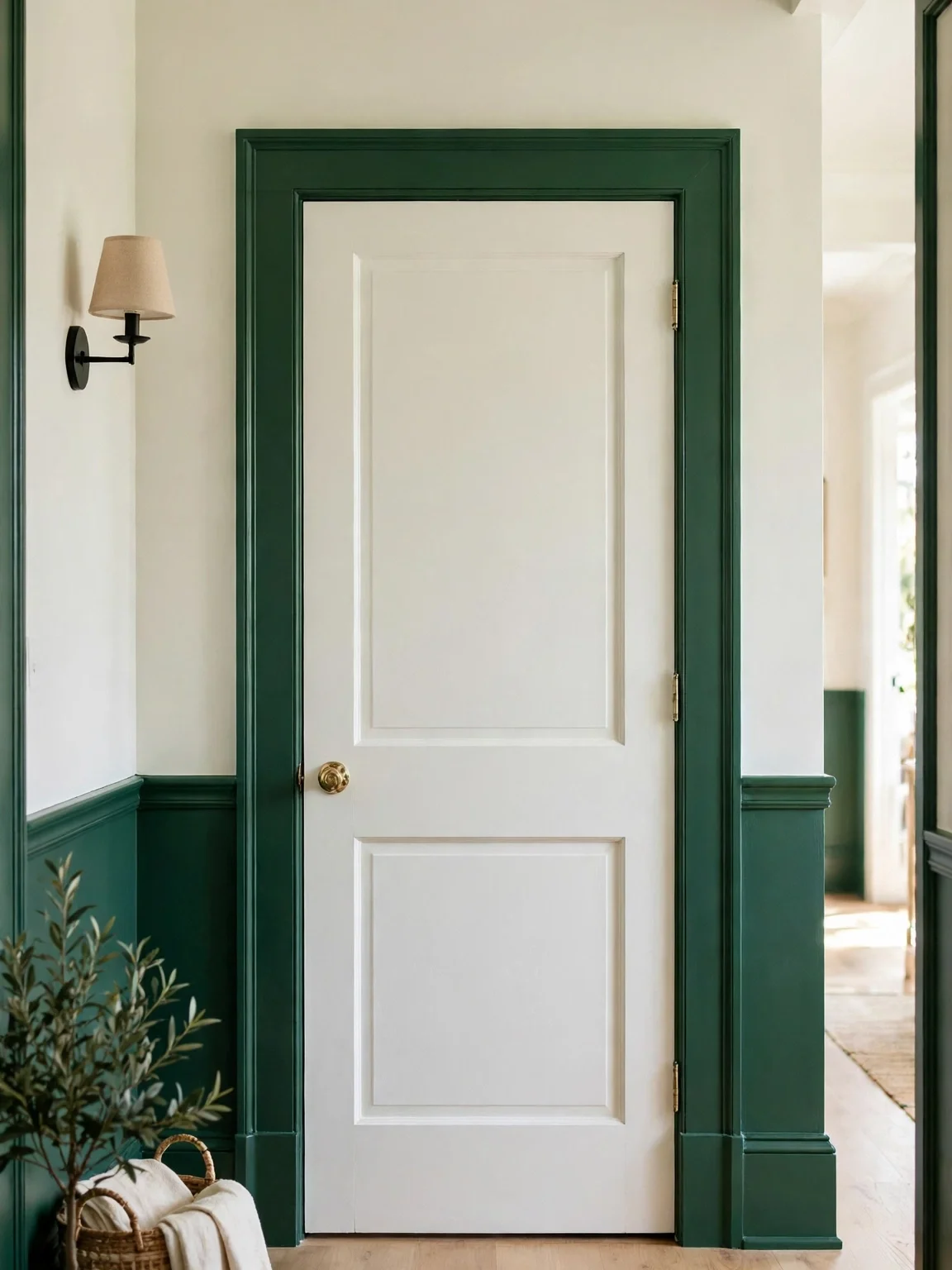
Flip the usual formula: leave the door white and paint the frame, architrave, and skirting in the same room in a bold colour. The coloured frame outlines the white door like a picture frame, striking from across the room while the door stays bright. It is also one of the easiest two-tone ideas to reverse, since trim is a smaller area to repaint. A quart usually covers the frame and skirting of one room and costs around $20–$35 as of 2026.
9. A Painted Door Edge as an Accent Line
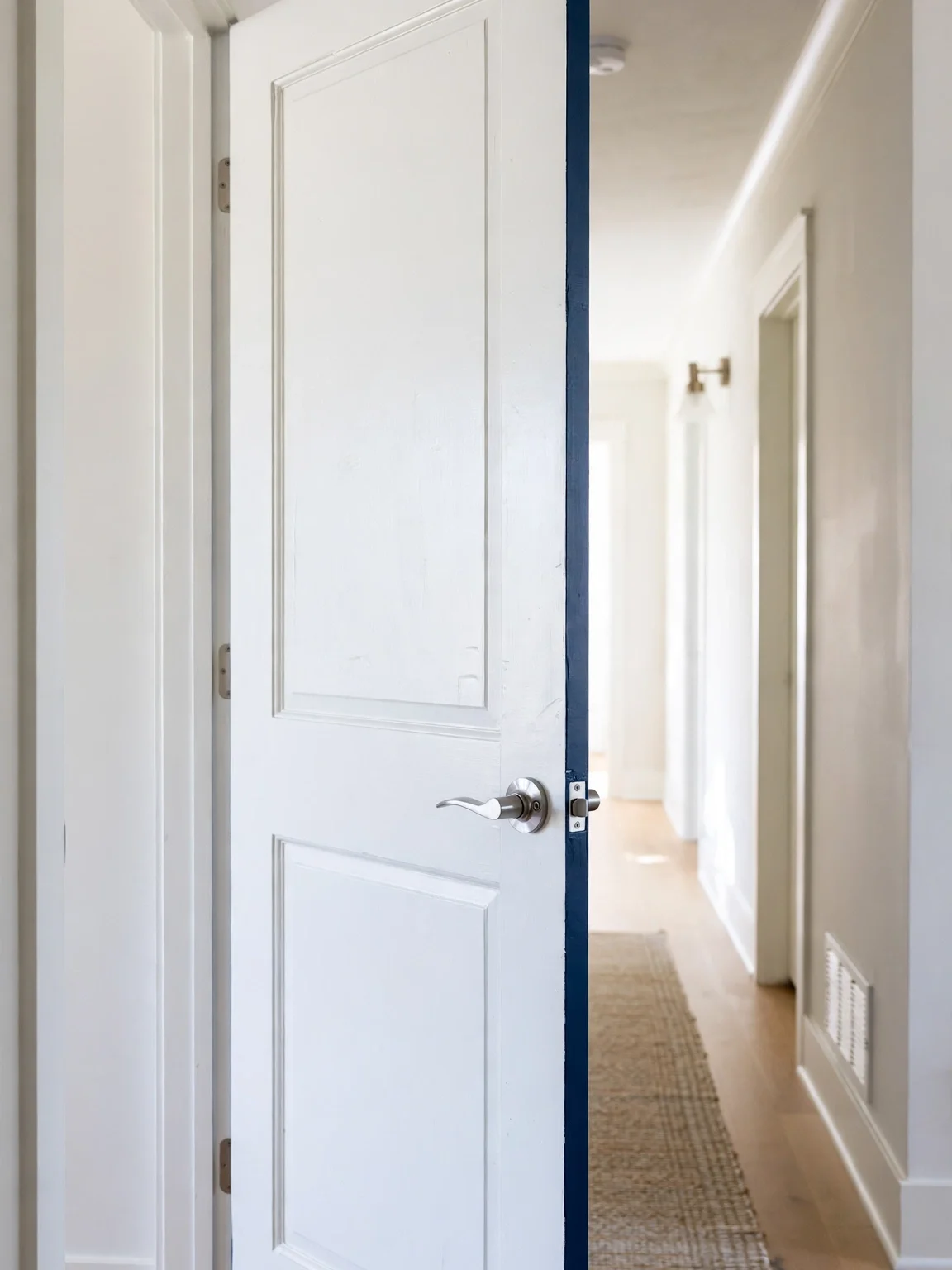
Paint only the thin edge of the door — the side you see when it stands open — in a bold colour, leaving both faces white or neutral. The colour appears as a slim line when the door is ajar and disappears when it is closed, a good first step if a full statement door feels like too much. Mask both faces with painter's tape, use a small brush, and expect to spend under $15 on a sample pot as of 2026.
Pattern and Texture Two-Tones
10. Two Colours on One Door
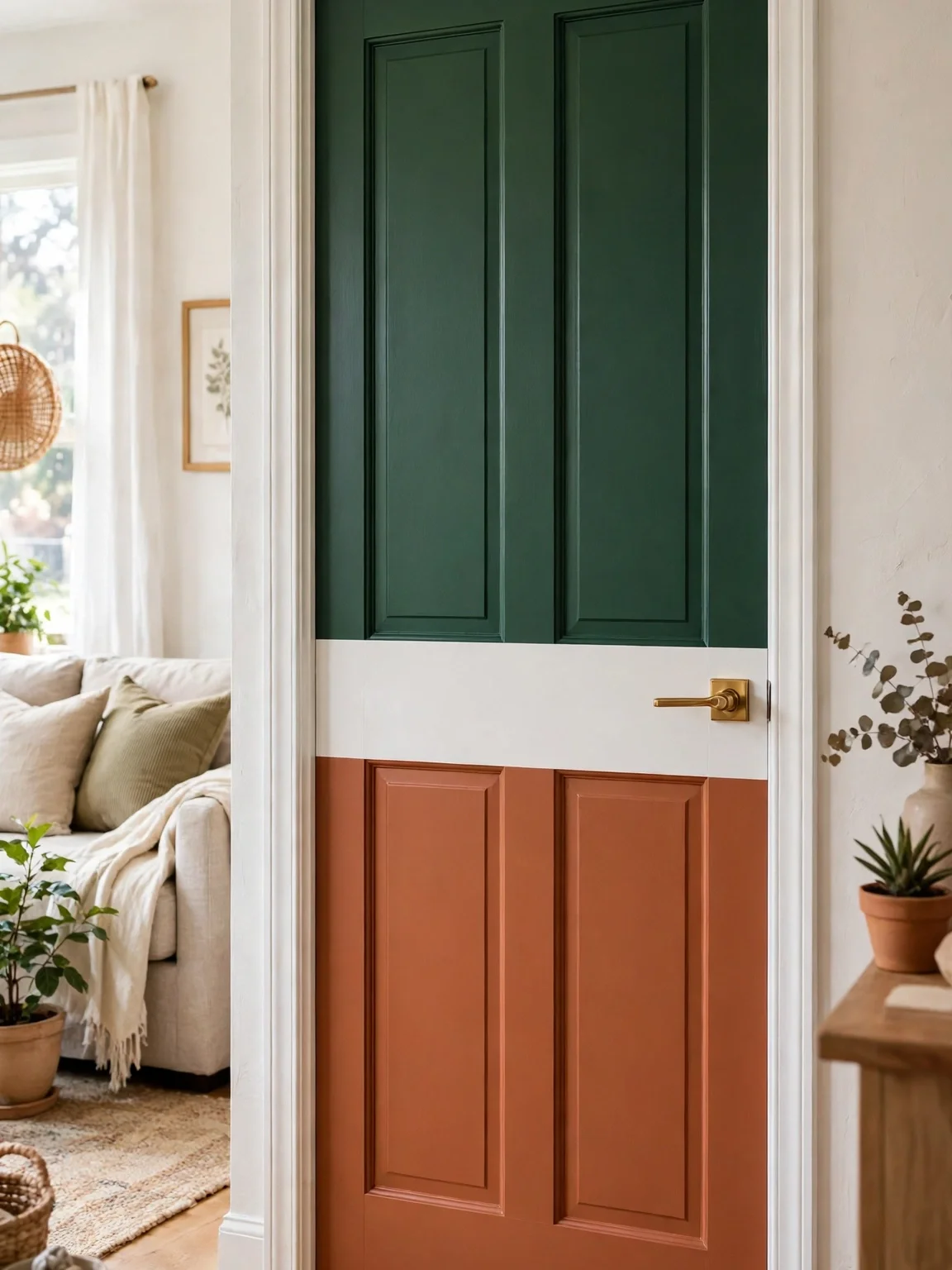
Use two bold colours on the same door — deep green on the upper panels and warm terracotta on the lower ones, separated by the middle rail. The rail acts as a natural border, so the colours never meet on a freehand line. This works best when the two colours share a similar depth and the room already contains both in small amounts. Two sample pots or small quarts usually cost around $25–$45 combined as of 2026. Test the pair on cardboard, held against the door, first.
11. Tone-on-Tone: One Colour, Two Sheens
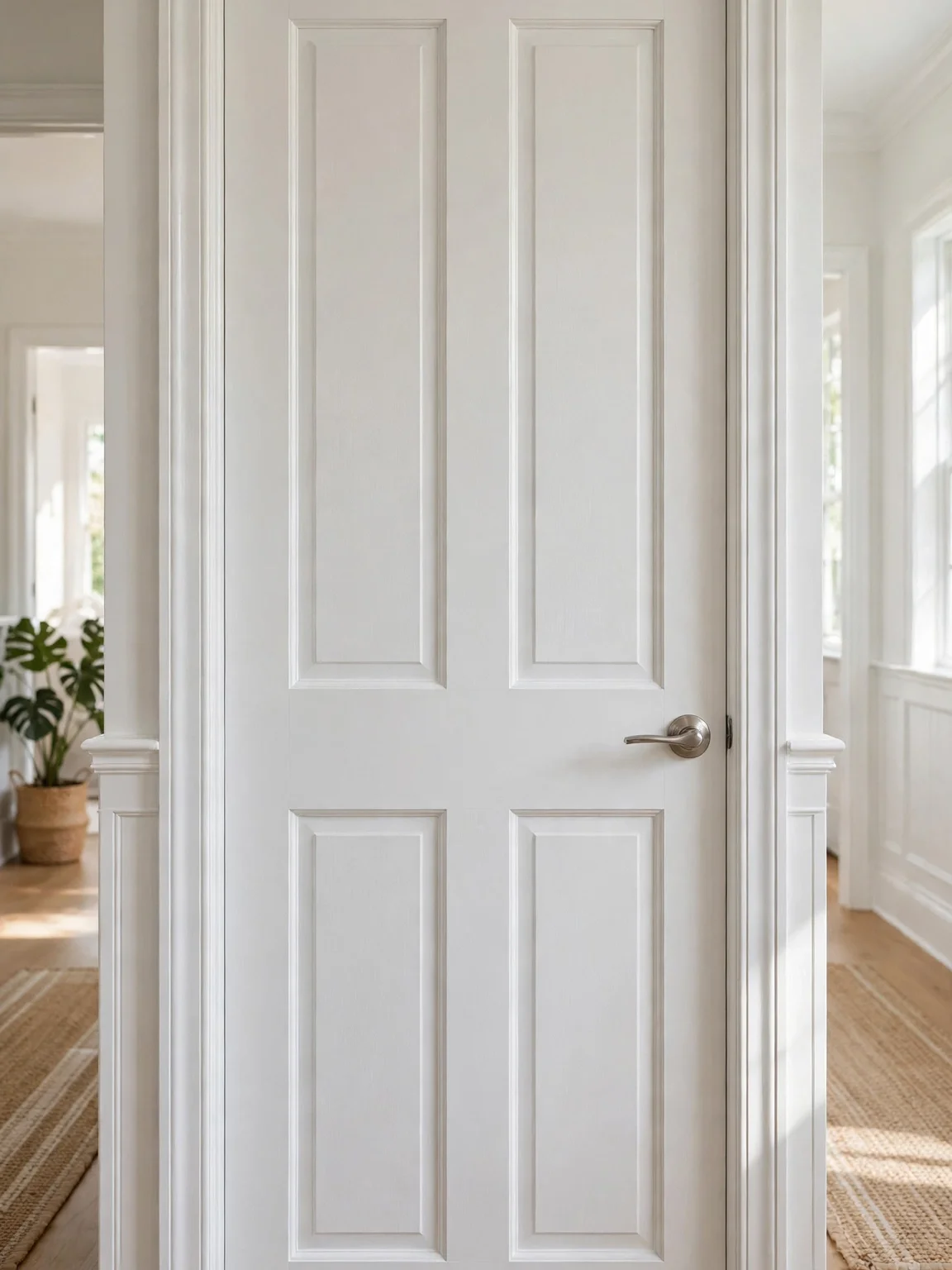
Paint the whole door in one colour but use two sheens — matte on the recessed panels and satin on the rails, stiles, and frame. In daylight the panels read soft and flat while the frame catches a gentle shine, a quiet effect that changes as you move around the room. This is the subtlest idea here. You will need two small cans, usually around $20–$35 each as of 2026, and satin wears better where hands touch daily.
12. Colour-Blocked Panels With a White Pinstripe Gap
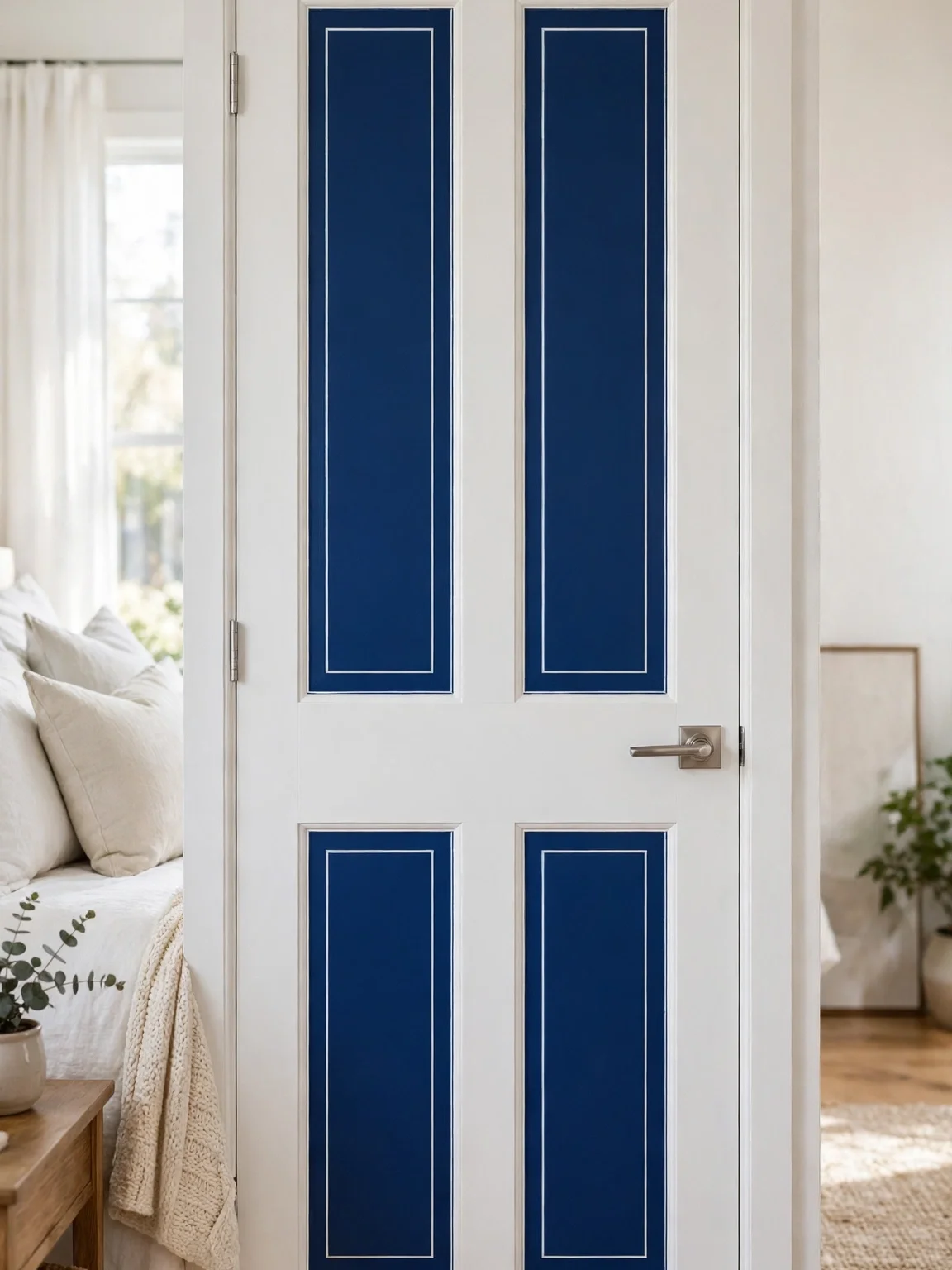
Paint the panels in a bold colour but leave a thin, even strip of white showing between the colour and the panel moulding, like a pinstripe border. The white gap makes the colour look framed and intentional, and it forgives small wobbles in the brush line. Mask the gap with narrow tape, paint the panels, and remove the tape once dry to the touch. A quart plus narrow tape usually costs around $25–$40 as of 2026.
Hardware and Room Echoes
13. Hardware That Matches the Statement Colour

A bold door with its original builder-grade handle can look unfinished, so swap the hardware to match the new colour's mood — matte black with navy, charcoal, or deep green; warm brass-toned with green or terracotta; brushed nickel with cooler blues. The handle, knobs, and visible screws should all match each other. A new handle set usually costs around $15–$40 as of 2026 and takes under half an hour to swap. Keep the old hardware in a labelled bag in case you ever want to switch back.
14. Echo the Door Colour Once, Somewhere Small
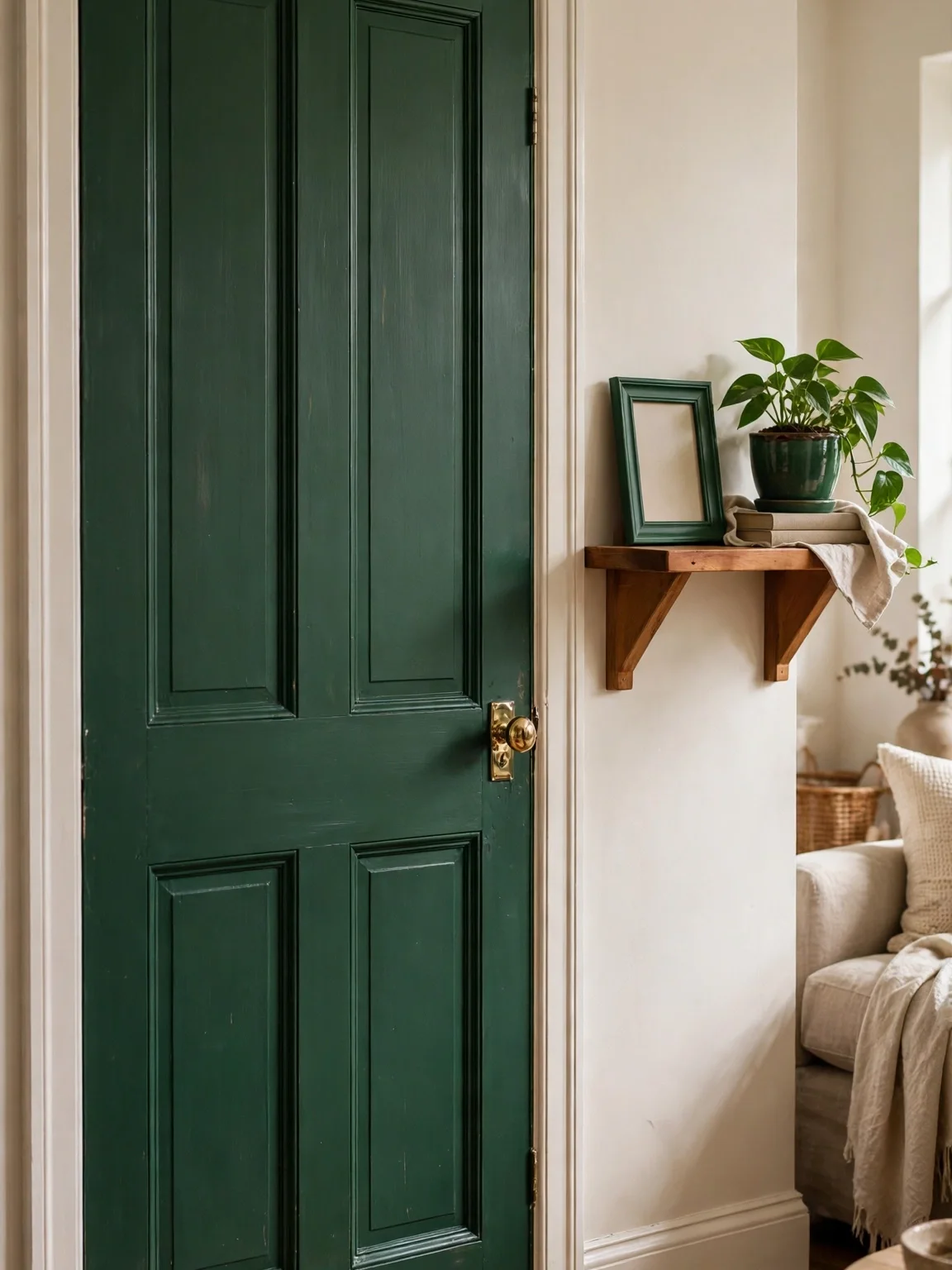
Repeat the door's colour exactly once elsewhere in the room — a small shelf, a picture frame, a plant pot, or the inside of a nearby open cupboard. One echo ties the door to the room; two or three start to look like a theme, and the door stops being the feature. The echo should be small and easy to change. A small tin of matching paint usually costs under $20 as of 2026. If the room already has a lot of colour, skip this idea — the door is strong enough on its own.
15. Two-Tone Double Doors as a Room Feature
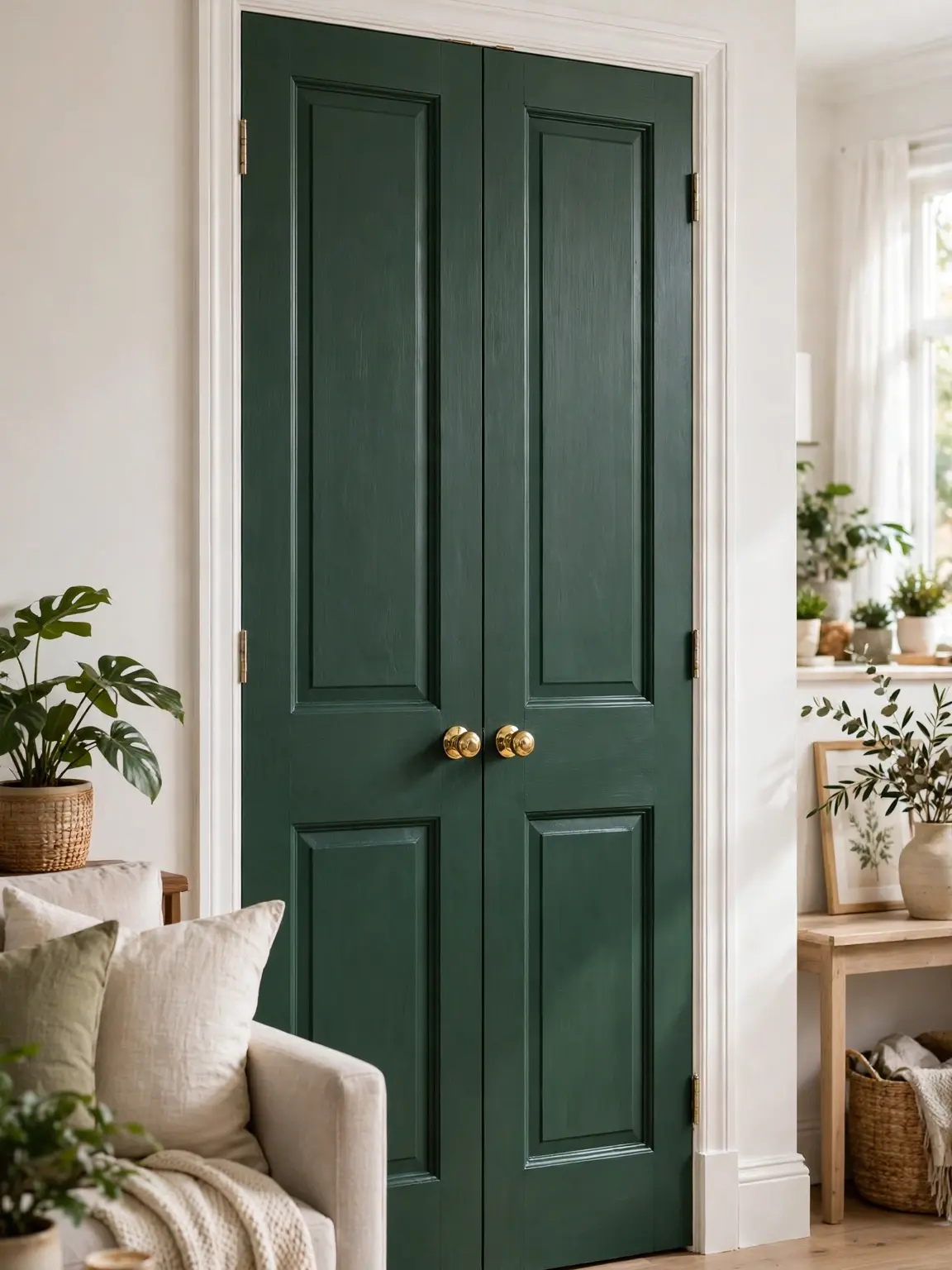
If a room has double doors, treat the pair as one feature: paint both the same bold colour, keep the shared frame white, and add matching hardware to both. Double doors have twice the visual weight of a single door, so a colour that feels bold on one can feel balanced across two. Paint both in the same session so the colour matches exactly, and budget for two quarts — around $40–$70 as of 2026. Save this for the room's main doors, not a cupboard pair.
Frequently Asked Questions
What is a two-tone interior door?
A two-tone interior door uses two colours or two finishes on the same door — bold below and white above, coloured panels inside a white frame, or a different colour on each face. The split usually follows the door's own rails, panels, or edges so the line looks built in.
Do two-tone doors work in small rooms?
Usually, yes, if you keep it to one door. A single bold door acts as a focal point, while painting every door in a small room bold can make the space feel smaller and busier. Pale trim and good light help balance a dark door.
What paint finish is best for a statement interior door?
A satin or semi-gloss finish is usually the safest choice, because both wipe clean and stand up to daily touching better than flat paint. Matte can look beautiful on panels, but it marks more easily where hands touch most.
Can renters paint their interior doors two-tone?
Only with the landlord's permission in writing. Painted doors are difficult and expensive to return to their original finish, and a bad repaint can cost part of a deposit. If permission is refused, put the bold colour on furniture you own and leave the door untouched.
How do I get a straight line between the two colours?
Mark the line with painter's tape, press the edge down firmly, and paint the darker colour first. Remove the tape while the second coat is still slightly tacky, pulling it away at an angle. Splitting at a rail or panel edge hides the join further.
Will a bold door colour go out of style quickly?
A bold door is easier to change than a bold wall — usually one quart and an afternoon to repaint. Choosing a colour that already appears elsewhere in your home, even in small amounts, usually keeps the door feeling connected to the room for longer.
Conclusion
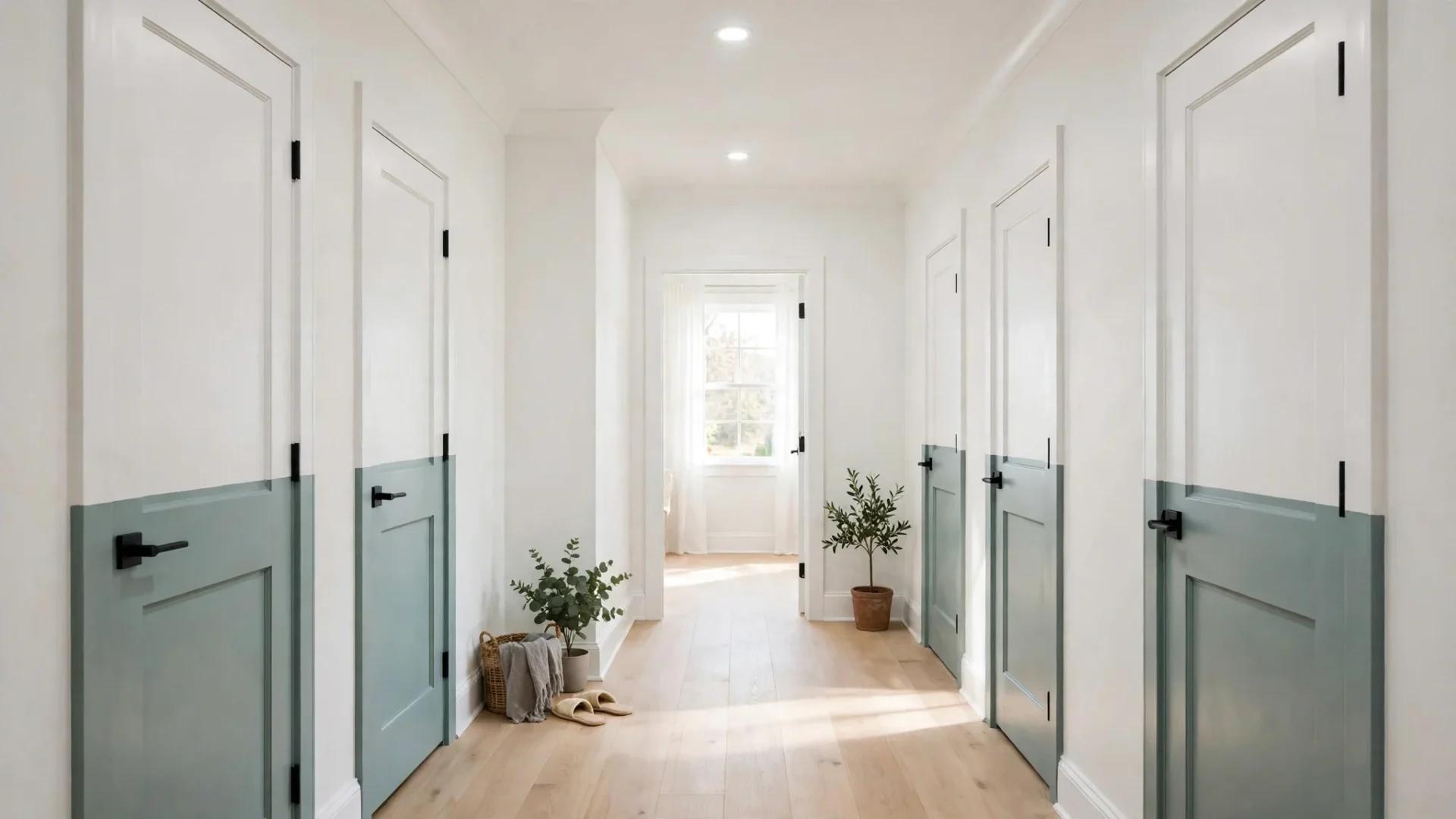
A two-tone or statement interior door is one of the smallest paint projects in a home and one of the most visible. Start with a single door, pick a split that follows the door's own lines, and let the hardware and one small echo finish the look. If the colour feels too bold after a week, a door is only a quart of paint away from a fresh start.

Thiago Alexander is the Chief Editor at Nested Charm. With a deep passion for interior design and cozy living spaces, he leads the editorial team in crafting stories that make every house feel like a home.