White Paint Turned Yellow? 13 Causes and Fixes That Actually Work
Executive Summary
White paint is supposed to look clean and bright, so it is unsettling when a wall, door, or cabinet slowly turns yellow. The good news is that yellowing is rarely random: it usually points to the paint itself, heat or smoke, moisture or stains underneath, or a skipped prep step.
Below are 13 causes in the order to check them, with how to spot each one, what to try first, and when repainting is the only honest fix. Costs are approximate planning figures as of 2026.
In short: Most yellowed white paint comes from old oil-based paint, darkness, heat, smoke, grease, or moisture. Clean surface yellowing first, seal stains with a stain-blocking primer, and repaint with a modern water-based paint in the right finish. Fix leaks and heat sources before you repaint, or the yellow will come back.
The Paint Itself: Age, Formula, and Light
Some yellowing starts before you ever touch a brush. The paint on the wall may simply be the wrong formula for the room, too old, or past its best in a way that no amount of scrubbing will reverse.
1. Oil-Based (Alkyd) Paint Oxidizing
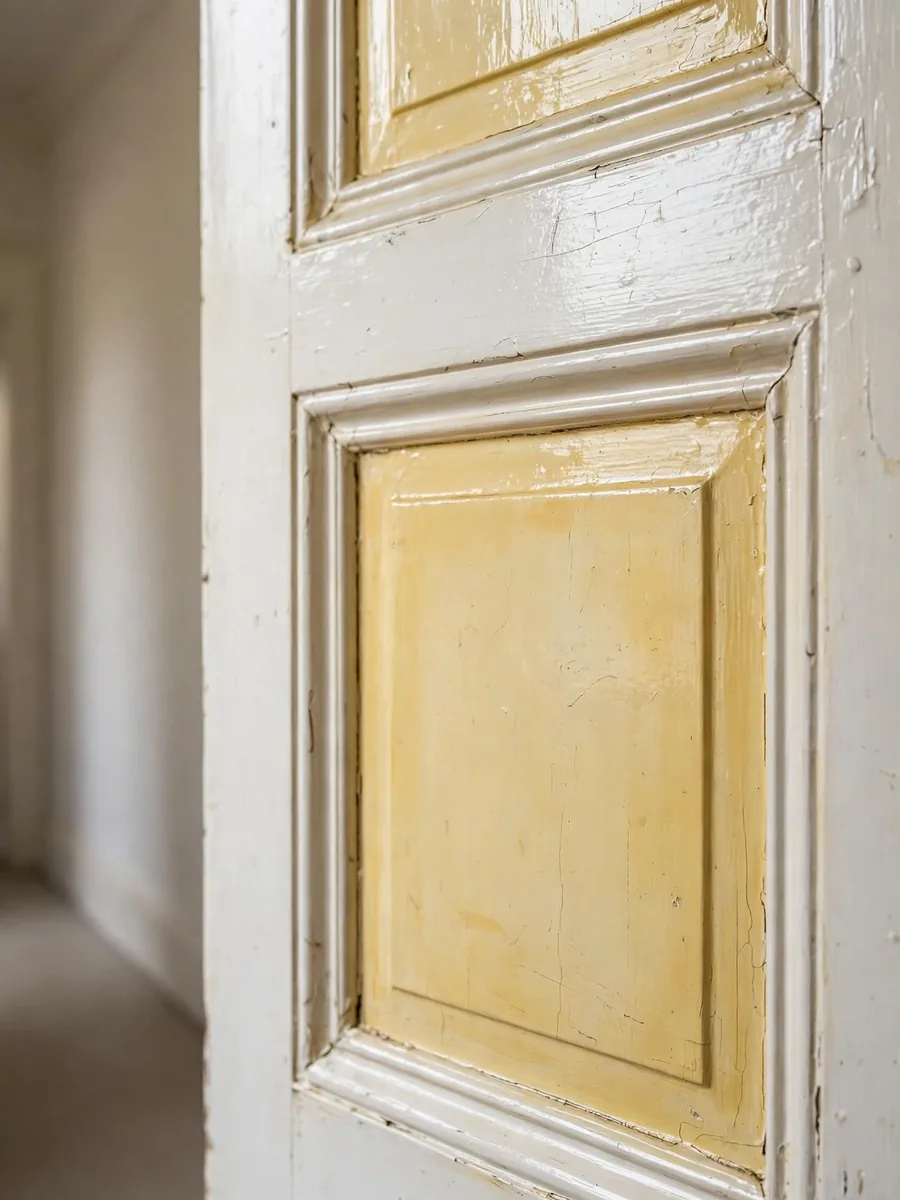
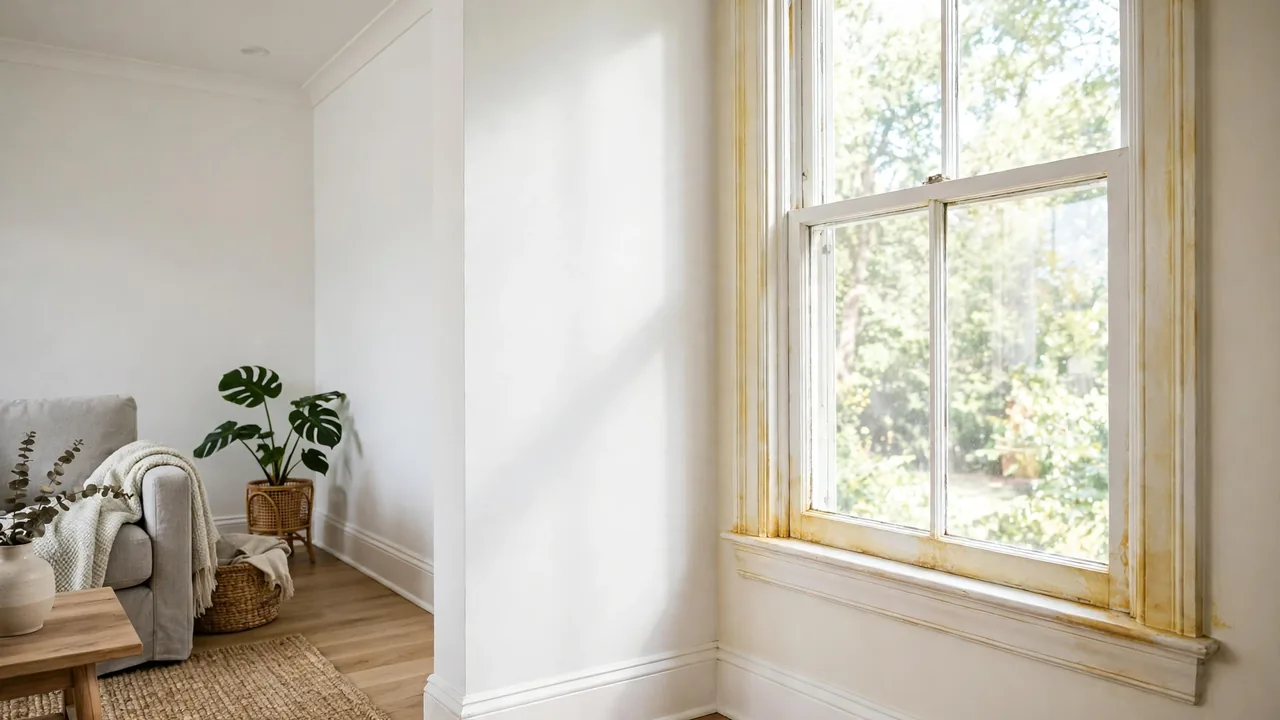
Oil-based, or alkyd, paint was once the standard for trim and cabinets. Its drawback is that the oils in it oxidize over time and turn yellow, especially on white and pale colors. Cleaning will not reverse oxidation, so lightly sand the surface and apply a modern water-based trim paint. A gallon costs about 35 to 60 dollars as of 2026. Renters: ask the landlord before repainting trim.
2. Darkness and Low Light

Alkyd paint yellows fastest where there is little or no natural light, which is why closet interiors, the backs of doors, and windowless hallways often look worse than sunlit walls. Open the space to light where you can, and plan on repainting the worst areas rather than cleaning them. A water-based paint is the better choice here, since it does not rely on light to stay white.
3. A Clear Topcoat Turning Yellow
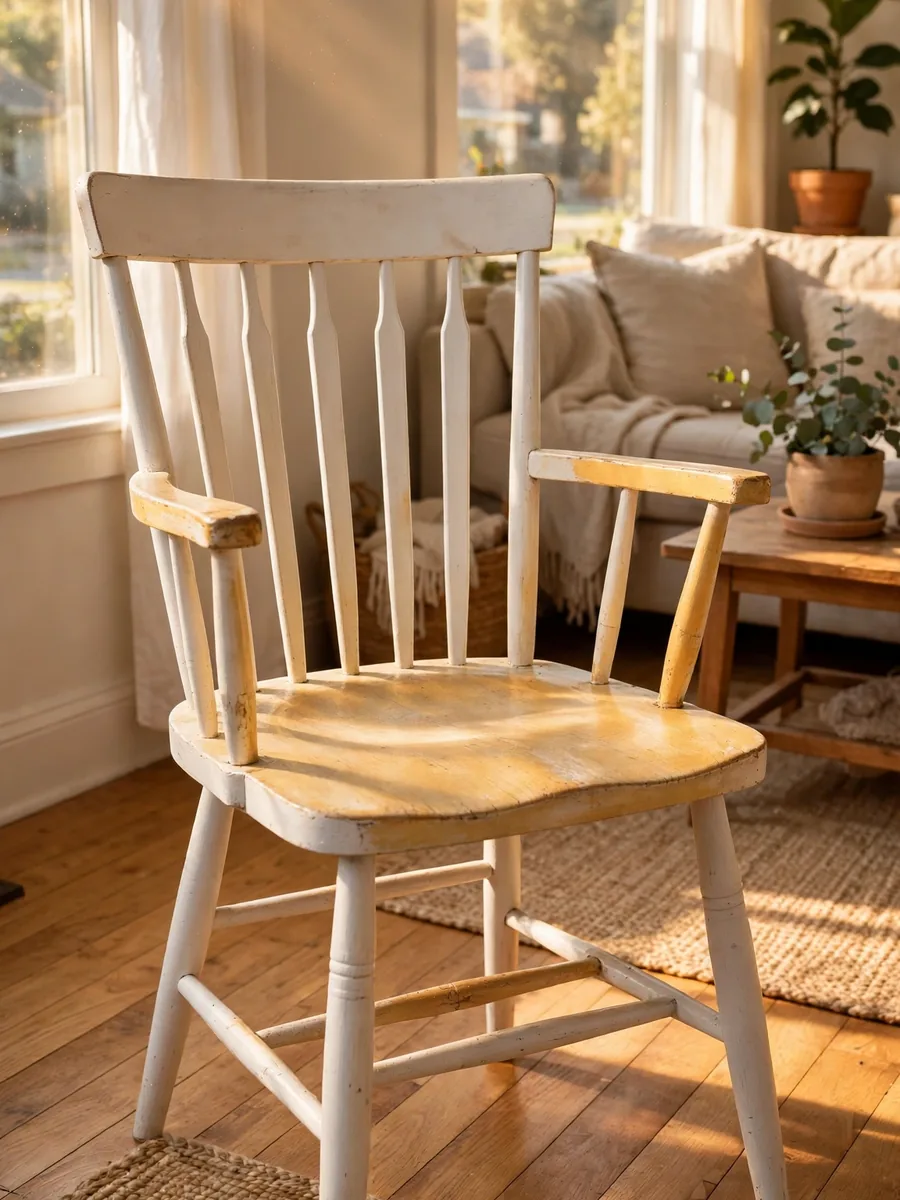
Sometimes the white paint underneath is fine and the clear coat on top is the problem. Older varnishes and some clear sealers yellow with age and sunlight, giving white furniture, chairs, and cabinets a honey-colored cast. Sand the yellowed topcoat back lightly, wipe away the dust, and recoat with a clear, non-yellowing water-based topcoat, about 20 to 35 dollars a quart as of 2026. Work in a ventilated room and wear a mask while sanding.
4. Old, Expired, or Incompatible Paint

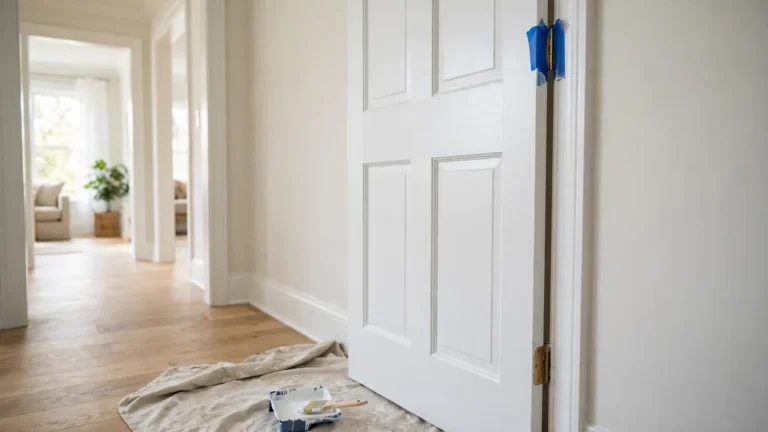
Paint that sat in a garage for years, froze and thawed, or went over an incompatible surface can yellow, crack, or peel. For a surface with unknown old paint, do a small test patch, scuff-sand glossy areas, and use a bonding primer before the topcoat. If you are repainting doors, our guide to painting interior doors without removing them walks through prep and finish choices.
Heat, Smoke, and Cooking
Heat and airborne residue are the next group to check, especially in kitchens, near radiators, and in rooms where anyone smokes indoors. These causes often leave a pattern that points straight at the source.
5. Heat From Radiators, Ovens, and Lamps

White paint near a radiator, a stove, a fireplace, or a hot lamp can yellow in a halo shape around the heat source. Move lamps and portable heaters away from painted surfaces, and let the area cool before you clean it. Wipe it with warm water and a little dish soap to remove dust and light residue. If the yellow remains, sand lightly, prime, and repaint. Never paint while a radiator or stove is hot.
6. Cigarette Smoke and Nicotine
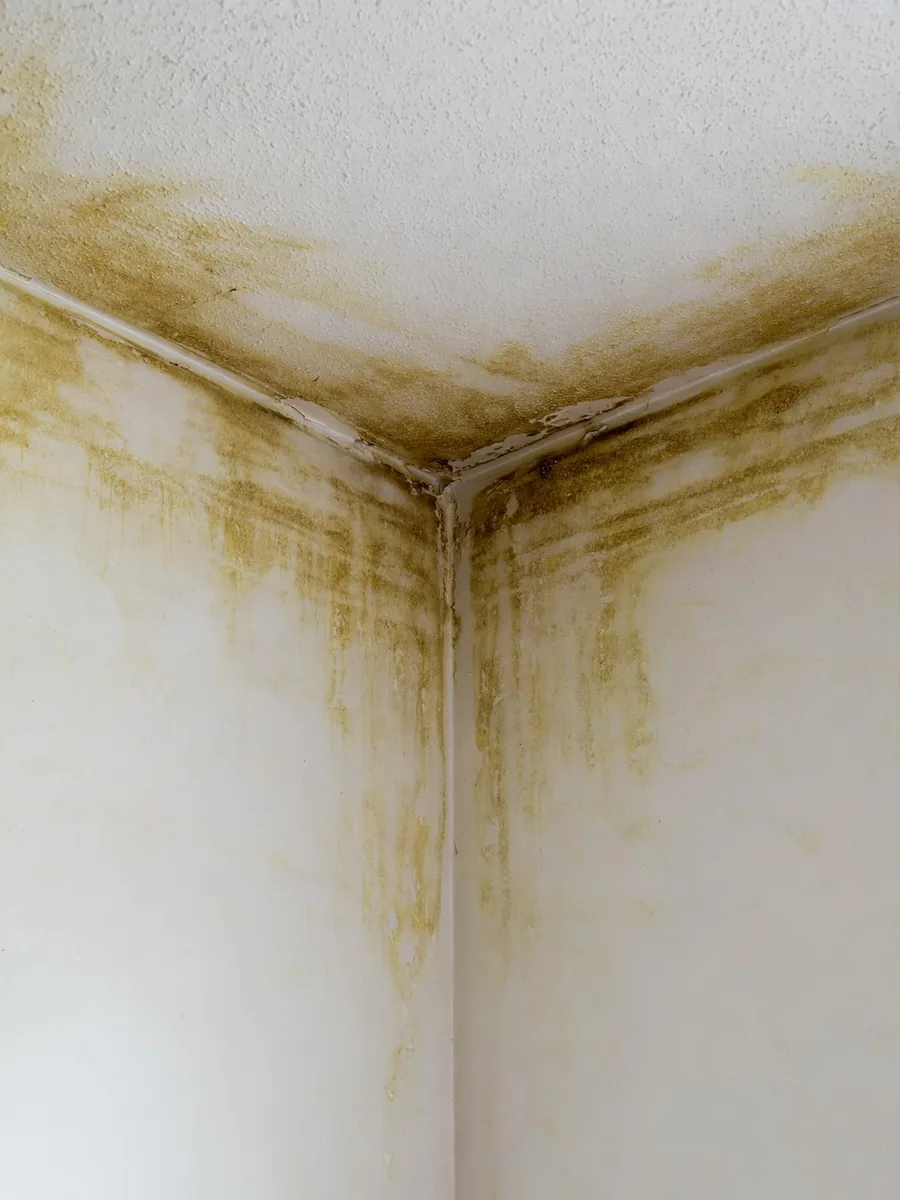
Nicotine leaves a sticky yellow-brown film that clings to walls, ceilings, and trim, often darkest near the ceiling and in corners. Wash the surface with warm water and a degreasing cleaner made for painted walls. A cleaner such as a TSP substitute costs about 8 to 12 dollars as of 2026. If yellow remains, seal the surface with a stain-blocking primer before repainting, or the nicotine will bleed through. Ventilate well, wear gloves, and renters should tell the landlord about smoke damage.
7. Cooking Grease and Steam

Kitchens yellow white paint from the top down. Grease and steam rise from the stove, settle on cabinets and walls, and build into a tacky yellow film. Degrease the surface with warm water and dish soap or a kitchen degreaser, then rinse and dry it. If it does not lift, prime with a stain-blocking primer and repaint. Use the range hood every time you cook. A gallon of kitchen-friendly water-based paint costs about 35 to 60 dollars as of 2026.
8. Gas Appliances and Poor Ventilation
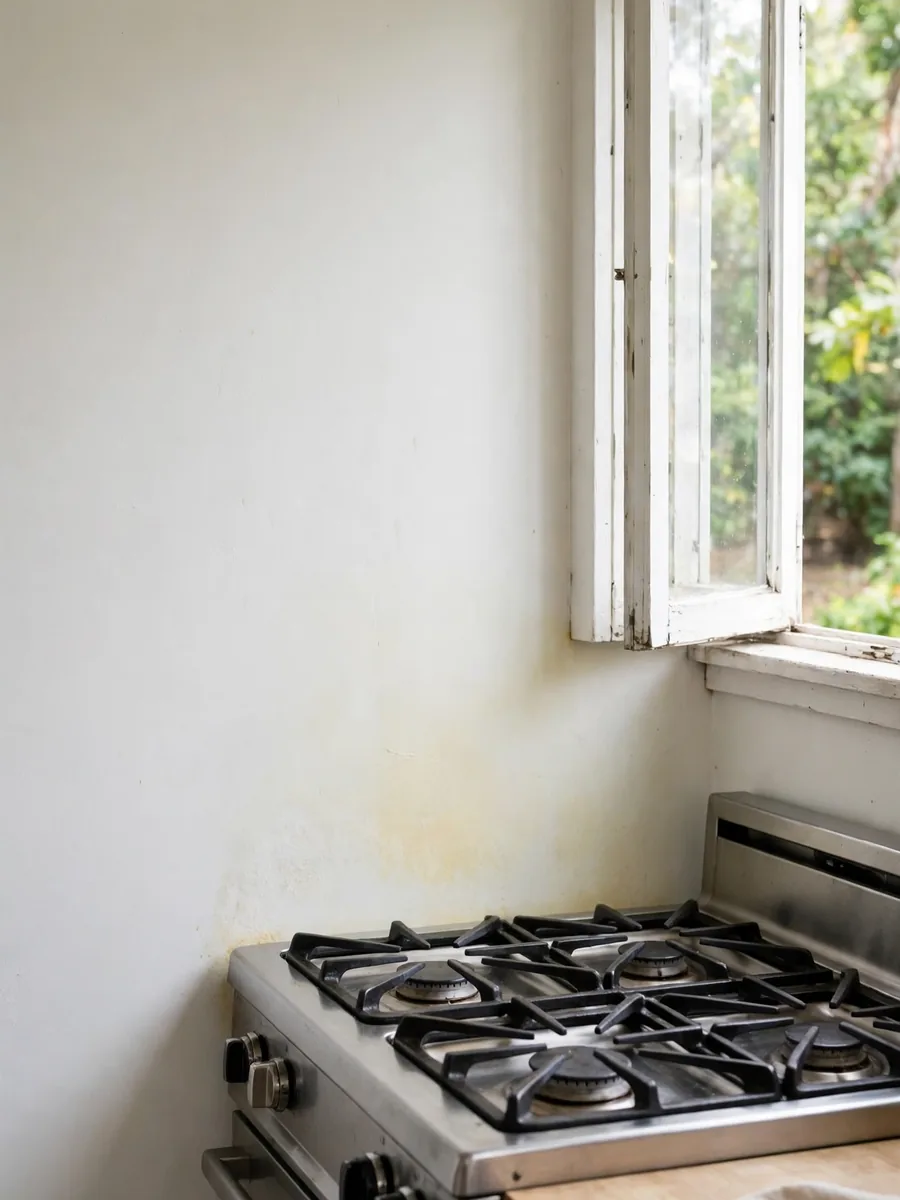
Unvented gas heaters, gas stoves used without a hood, and rooms with almost no airflow can leave a faint yellow film on white paint over time. Improve ventilation first: open windows, run the range hood, and unblock vents. Clean the walls with warm soapy water and let them dry fully. If you smell gas, leave the room and call your gas provider or emergency services.
Moisture, Stains, and Wood Bleed-Through
If the yellow shows up as spots, streaks, or patches rather than an even tint, the cause is probably under the paint, not on top of it. These causes must be fixed at the source before any repainting.
9. Moisture, Leaks, and Humidity

Water is one of the most common reasons white paint turns yellow in patches. A slow roof or pipe leak, a steamy bathroom with no fan, or damp rising from below can leave yellow-brown stains that grow over time. Find and fix the water source first, then let the area dry completely. Seal the stain with a stain-blocking primer and repaint. Renters: report leaks right away, and never paint over a stain that is still damp.
10. Tannin Bleed From Wood Knots
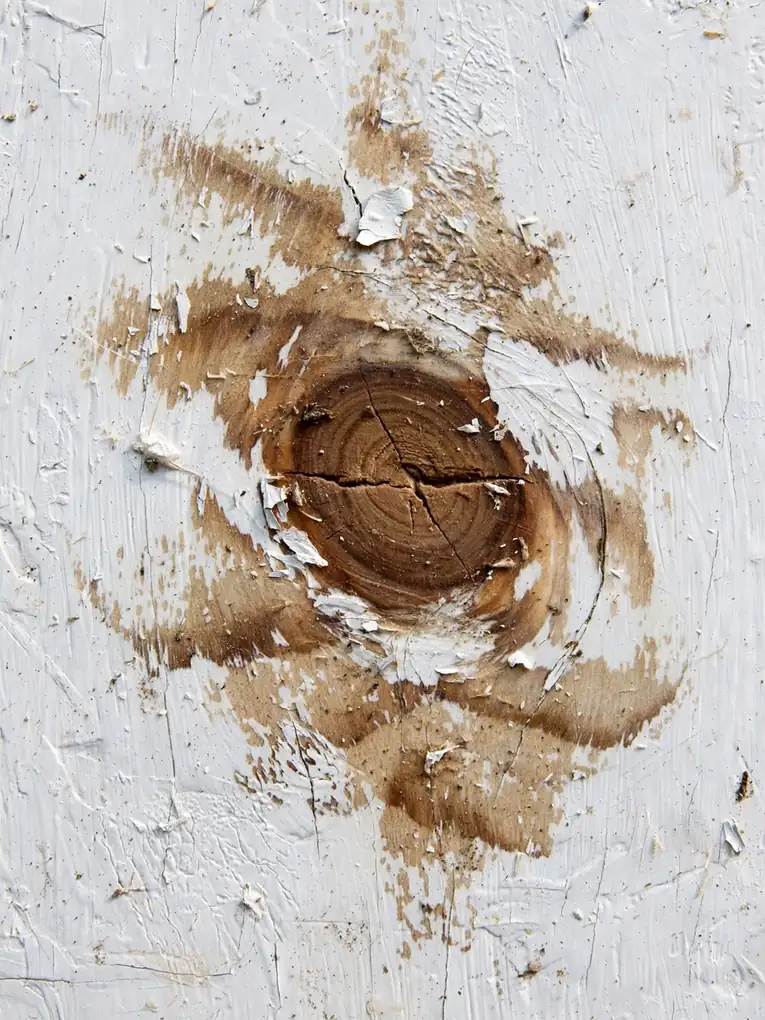
Wood contains natural tannins that can bleed through white paint. Ordinary primer will not hold tannin back for long. Spot-prime each knot and grain line with a shellac-based or stain-blocking primer, let it dry fully, then paint the whole piece. A quart of stain-blocking primer costs about 15 to 25 dollars as of 2026. Our guide to painting closet and bifold doors covers prep for wood surfaces.
11. Old Water Stains and Marks Bleeding Through
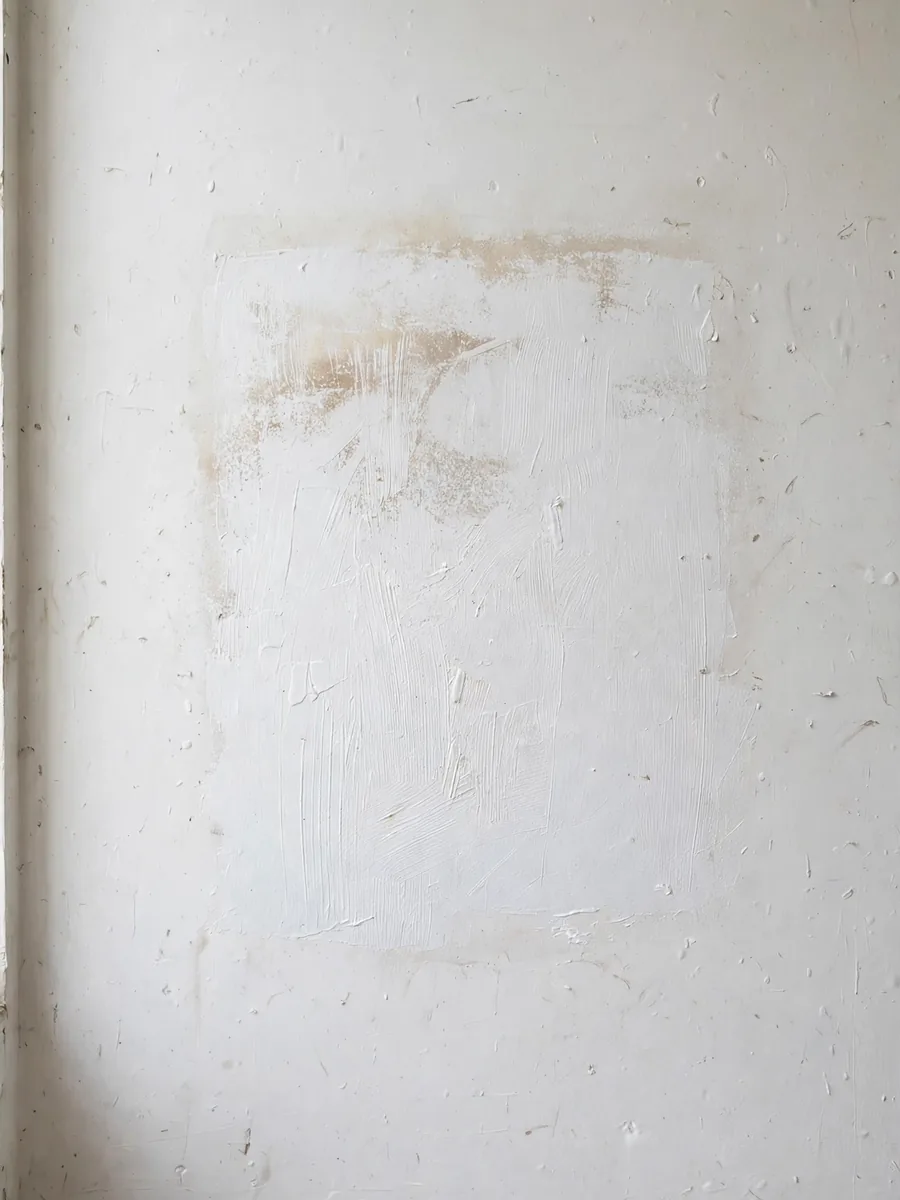
Markers, water rings, and old stains can ghost through fresh white paint, showing as faint yellow or brown shapes weeks after the job looked finished. Clean the mark gently, let the surface dry, and seal it with a stain-blocking primer before repainting. Feather the primer slightly past the edges of the stain so the outline does not show. One coat is often enough for light marks; dark or large stains may need two.
Prep and Cleaning Mistakes
The last two causes are the easiest to prevent, and they are also the ones most often blamed on the paint itself. A skipped primer or a harsh cleaner can undo an otherwise good paint job.
12. Missing or Wrong Primer

Primer is the layer that keeps the old surface from showing through the new one. Skipping it, or using a general primer where a stain-blocking one was needed, is a common reason white paint looks yellow or patchy soon after painting. Sand glossy areas lightly, then apply a stain-blocking primer over stains and knots, or a bonding primer over glossy or oil-based paint. Apply two thin topcoats rather than one thick one. A gallon of stain-blocking primer costs about 30 to 45 dollars as of 2026. Renters should get permission before priming and repainting.
13. Harsh Cleaners, Bleach, and Ammonia

Strong cleaners can yellow white paint instead of brightening it. Bleach, ammonia-based glass cleaner, and abrasive powders can dull the finish, leave yellow streaks, or react with the paint film, especially on trim and cabinets. Use warm water and a little dish soap for routine cleaning, and test any new cleaner on a hidden spot first. If a cleaner has already yellowed a patch, try a gentle wash first, then spot-prime and touch up if the color does not come back. Never mix bleach with ammonia-based cleaners.
Frequently Asked Questions
Can you clean yellowed white paint instead of repainting it?
Sometimes. Surface yellowing from grease, smoke, or dust often lifts with warm soapy water or a degreasing wash. Yellowing inside the paint film, such as oxidized oil-based paint or tannin bleed, will not wash off and needs primer and a fresh coat.
Why did my white paint turn yellow in a closet?
Closets are dark, closed, and often painted with oil-based paint, which yellows fastest without light. Repaint with a water-based paint, leave the door open when you can, and choose a stain-blocking primer if the old paint is very yellow.
Will white paint turn yellow again after I repaint?
It can, if the cause is still there. Fix leaks, improve ventilation, use the range hood, and choose a modern water-based paint with a stain-blocking primer where needed. Those steps keep white paint looking white far longer than a fresh coat alone.
Is yellowed paint a sign of mold?
Not usually. Yellowing alone is most often oxidation, smoke, grease, or a stain bleeding through. If the area is damp, soft, or smells musty, or you see dark spots that grow, treat it as a possible moisture problem and get advice before painting over it.
Can renters repaint yellowed white paint?
Only with the landlord's permission. Many leases require approval before repainting, and the landlord may want a specific color or finish. Cleaning and reporting the cause are safe first steps, and keeping the paint name and color helps if a repaint is approved.
How much does it cost to fix yellowed white paint?
Cleaning costs very little, often under 15 dollars for soap, cloths, and a degreaser as of 2026. A small repaint with primer and a gallon of paint usually runs about 60 to 105 dollars as of 2026. Larger rooms cost more, mainly in paint and time.
Conclusion
Yellowed white paint looks like a paint failure, but it is usually a clue. Work through the causes in order: check the paint type and the light, look for heat, smoke, and grease, then check for moisture and stains underneath, and finally review your primer and cleaning routine. Clean what can be cleaned, seal what can bleed through, and repaint with a modern water-based paint once the cause is fixed. Fix the cause first, then repaint once, and your white will stay white far longer than a quick coat ever could.

Thiago Alexander is the Chief Editor at Nested Charm. With a deep passion for interior design and cozy living spaces, he leads the editorial team in crafting stories that make every house feel like a home.