
13 Secondhand Furniture Safety Checks Before Any Thrift, Marketplace or Curb Find Comes Inside
Executive Summary
A great thrift, Marketplace, or curb find can furnish a first apartment for a fraction of retail — and a bad one can bring home pests, mold, or a chair that collapses the first time someone sits in it. The difference is rarely luck. It is a short, repeatable inspection you do before the piece crosses your threshold, not after you have already fallen for it.
This guide collects 13 checks in the order to use them: inspect outside, check for pests, quarantine, test smell and moisture, test stability, question old paint and materials, then clean and check anything with a cord. Every check is free or low-cost and ends with a clear keep, clean-and-keep, or walk-away decision. If you are building a room on a budget, pair this checklist with these interior design hacks that save money — saving money should never mean skipping the safety step.
In short: Inspect every secondhand piece in daylight before you pay or load it, check seams and undersides for bed bugs, quarantine it outside your living space, reject anything with active pests, strong mold, or a broken frame, question peeling paint on older pieces, deep-clean by material, and test lamps and powered furniture before regular use. When in doubt, walk away — another find will come.
Start Outside: Inspect Before You Commit

Do these two checks at the store, the seller’s home, or the curb, while walking away is still easy. Good light and two unhurried minutes prevent most secondhand regrets.
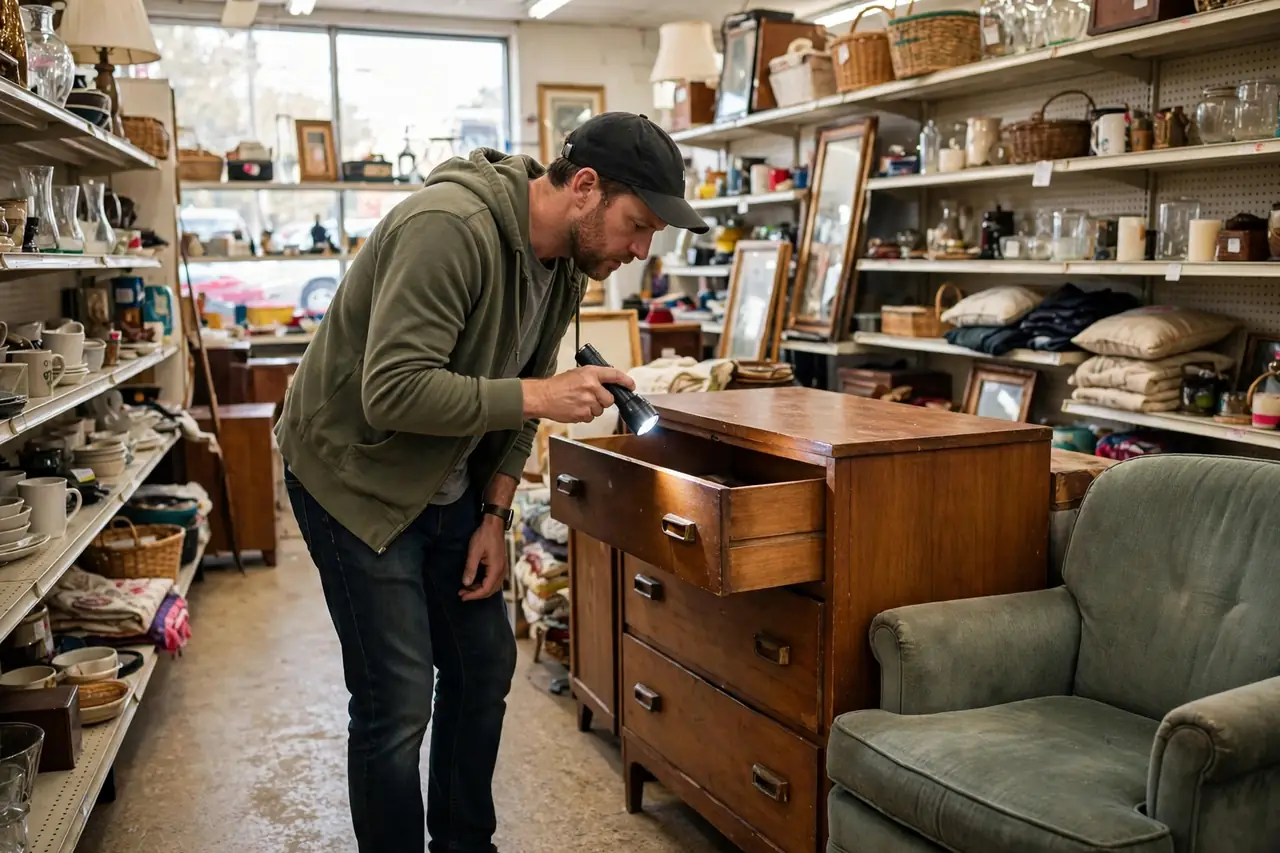
1. Inspect in full daylight, from every side. Turn the piece around, tip it carefully to see the underside, open every drawer and door, and look inside hollow legs, under cushions, and along back panels. Bring a phone flashlight for interiors. Check for cracks, stains, missing hardware, and marks or dates that hint at age. Take photos before you load it — they help you measure your space and record its condition. Cost: $0.
2. Ask where it lived, and decide your reject line in advance. Ask the seller where the piece was stored, whether the home had pets or smokers, and why they are parting with it. A garage-stored sofa, a basement dresser, and a bedroom headboard carry different risks. Vague answers plus a musty, damp smell are a useful warning. Decide before you arrive what you will refuse — active pests, visible mold, a broken frame — so a low price does not talk you out of it. Cost: $0, and it is the check that saves the most money.
Pests First: Bed Bugs, Hitchhikers, and Quarantine

Pest advice usually focuses on one pest at a time. For a furniture buyer, pests are one system: look carefully, isolate the piece, and never let a suspect item settle into your home while you decide.
3. Hunt for bed bug signs on seams, joints, and screw holes. Bed bugs hide where fabric folds and wood joins. Run a flashlight slowly along cushion seams, piping, zippers, staple lines, headboard joints, drawer corners, and screw holes. Look for tiny dark spots, shed skins, rusty smears, or live insects about the size of an apple seed. Check upholstered pieces most carefully. If you see signs of an active problem, do not negotiate or try to rescue it — walk away. Cost: $0 to check; a find you reject costs nothing.
4. Check wood and wicker for other hitchhikers. Look for fresh, light-colored pinholes and fine powder underneath wood, which can suggest active wood-boring insects, and tap suspect areas for hollow or crumbling wood. Shake out cushions and check woven wicker, cane, and hollow frames for webs, droppings, and nesting material, especially on garage- or barn-stored pieces. Pet hair alone is a cleaning job; droppings, nests, or active insects are a reject. Cost: $0.
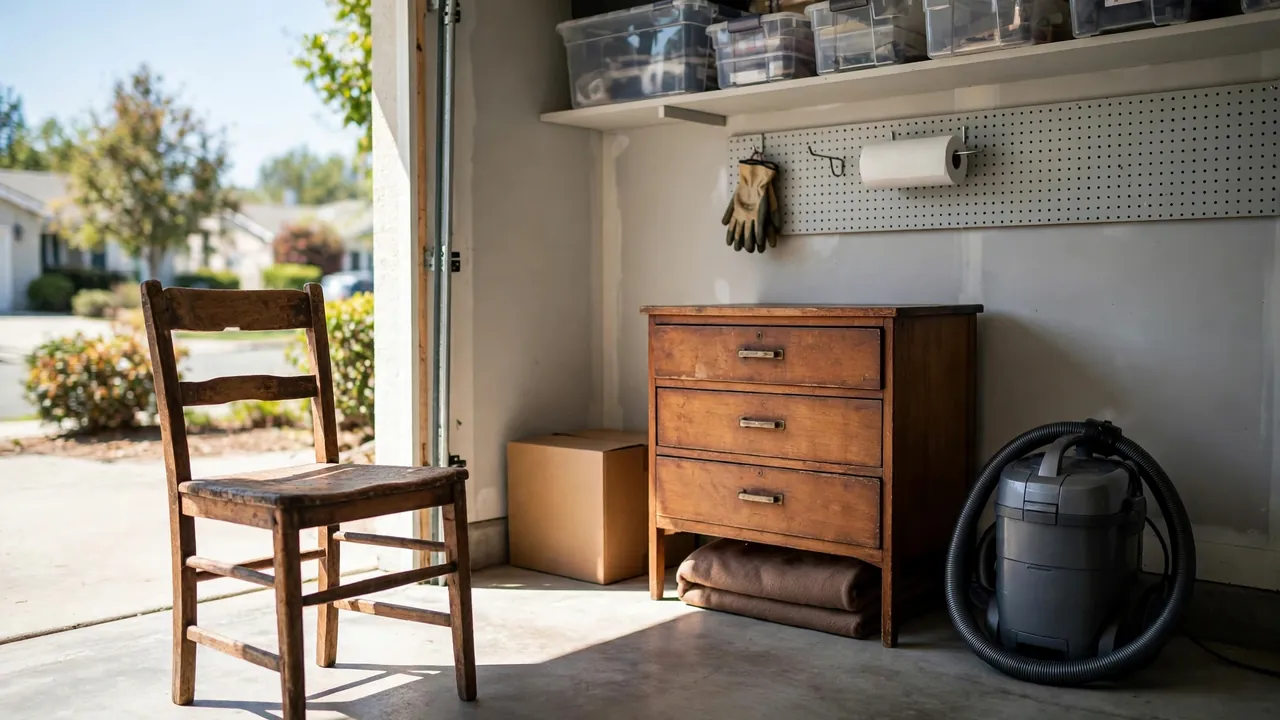
5. Quarantine every keeper before it joins the room. Even a clean-looking piece gets a holding period in a garage, balcony, porch, or bathroom for at least 24 to 72 hours where possible. Keep upholstered pieces off carpet and away from beds, vacuum thoroughly, and re-inspect seams after the piece has warmed up. If you have no spare space, isolate it on a hard floor and clean it the same day. Cost: $0, or roughly $5–$10 as of 2026 for plastic sheeting or a furniture cover.
| Signal | Decision |
|---|---|
| Live insects, dark spotting in seams, shed skins | Reject — do not bring home |
| Fresh pinholes plus fine powder under wood | Reject unless you can confirm it is old and inactive |
| Pet hair, dust, loose dirt, no pest signs | Quarantine, vacuum, and clean |
| No signs after inspection and quarantine | Proceed to the checks below |
Smell, Mold, and Hidden Moisture
Your nose is a real inspection tool. Smells tell you how a piece was stored and lived with, and some of them never fully leave porous materials, no matter how good the cleaning products are.
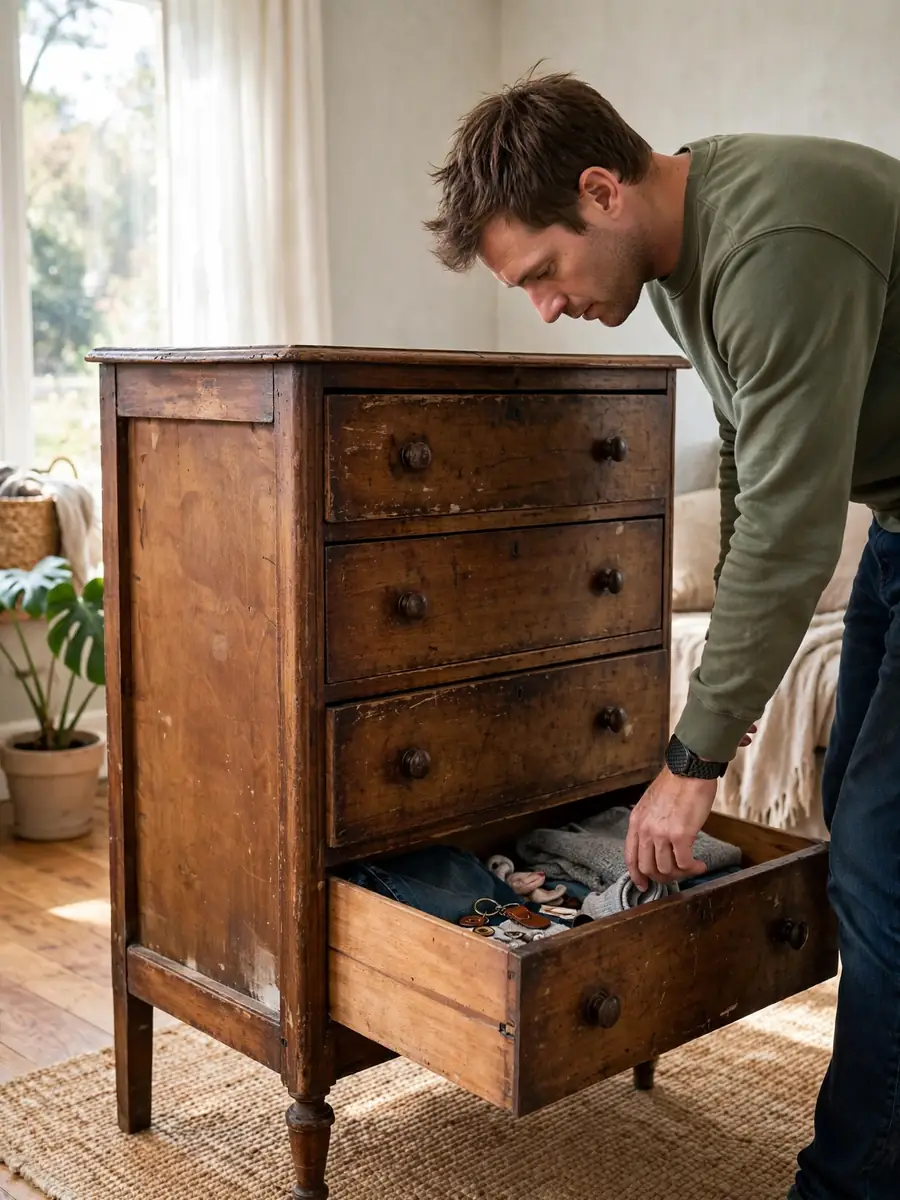
6. Do the close smell test — cushions, drawers, and underside. Smell upholstery up close, then inside drawers, then the underside and back. Light thrift-store dust usually airs out. Strong smoke, pet urine, sour damp, or a sharp chemical smell soaked into foam and particleboard is different: it is inside the material, and surface sprays usually mask it only briefly. Be honest about your threshold, especially for a sofa you will sit on daily. Cost: $0 to test.
7. Look for mold and water damage, not just stains. Check backs, undersides, drawer bottoms, and the lowest inches of legs for patchy growth, dark spotting, bubbled veneer, swollen particleboard, and warped boards. Press suspect wood gently — soft, spongy spots suggest rot or long damp, not a mark you can sand away. Small marks on solid wood are often cleanable; widespread growth, dampness, or swollen manufactured wood is a reject, particularly for a bedroom or child’s room. If a piece looks or smells moldy throughout, choose a different piece. Cost: $0 to inspect.
Stability, Structure, and Moving Parts
A pretty piece that wobbles, sticks, or tips is not a bargain. Test structure at the seller’s, not after you have carried it up two flights of stairs.
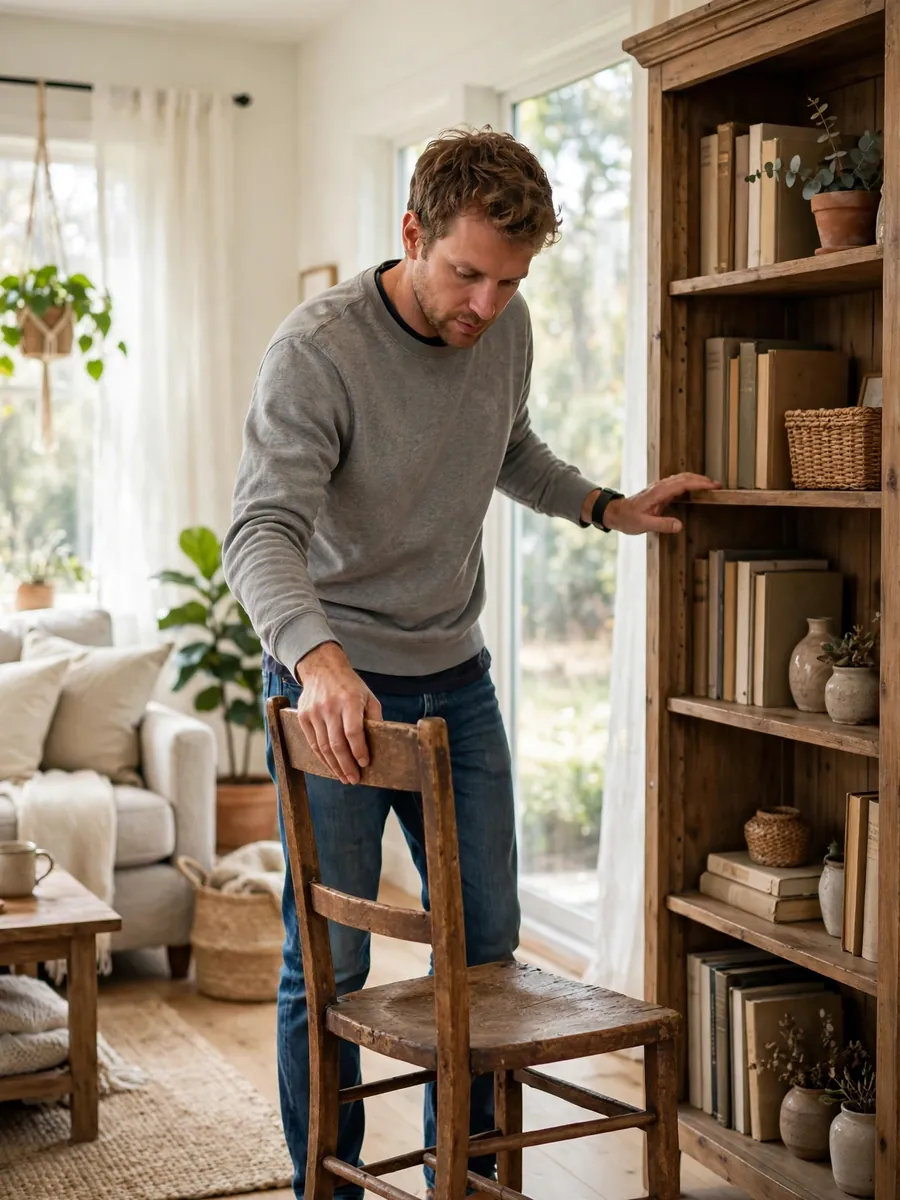
8. Wobble, rock, and load-test the frame. Sit on chairs and sofas, lean gently on tables, and push dressers and bookcases from the side. Joints should feel solid, not loose, cracked, or patched with mismatched screws. Check that all legs touch the floor and a bed frame has its full set of slats and hardware. A wobble from one loose bolt is a fix; a cracked leg, split rail, or twisting frame is a reject. Missing flat-pack hardware can cost roughly $10–$30 as of 2026 to replace — if you can find it — so count bolts and shelf pins first.
9. Test drawers, doors, glass, and tip-over risk. Drawers should slide without dropping or jamming, doors should hang level, and hinges should be fixed to solid material, not pulling out of crumbled board. Check glass and mirrors for chips, cracks, and loose edges. Tall, narrow dressers and bookcases deserve extra care: plan to anchor them to a wall stud, especially with children or pets around. If your rental limits anchoring, ask your landlord first and choose low, wide, stable pieces instead — the safer alternative. Cost: roughly $5–$15 as of 2026 for an anti-tip strap kit where anchoring is allowed.
Paint, Finishes, and Materials From Another Era
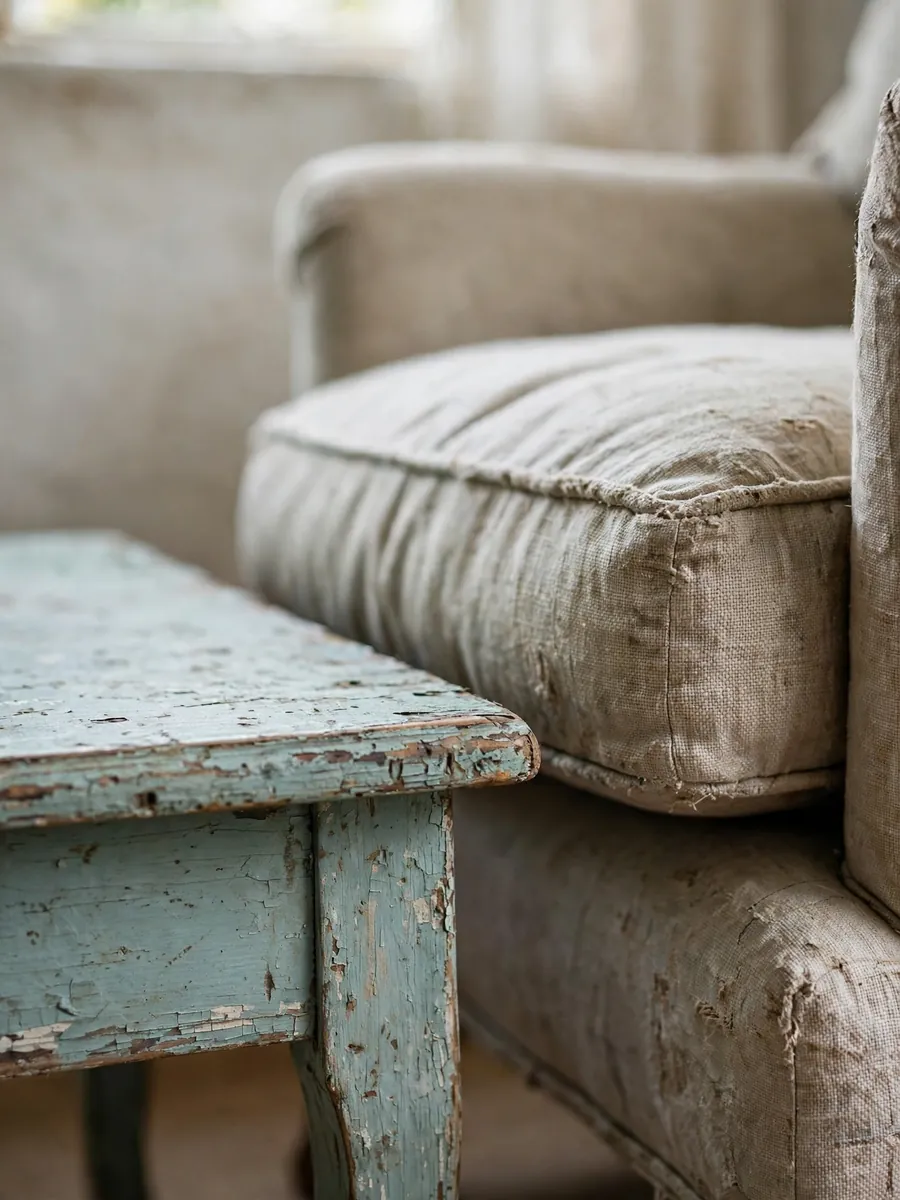
Older furniture can be beautifully made. It can also predate modern expectations about paint and materials, so give vintage pieces two extra, calm, non-alarmist checks.
10. Treat peeling paint on older pieces with caution. Paint on furniture made before the late 1970s may contain lead, and sanding or scraping peeling paint can create dust you do not want in a home. There is no need to panic or reject every older piece. Avoid dry-sanding a suspect finish indoors, keep peeling pieces away from young children until the finish is stable, and consider a general lead test kit — roughly $10–$25 as of 2026 for a small pack — or choose a piece with an intact finish instead. If a finish is flaking badly, the safer alternative is to pass, or have it handled by someone set up for that work.
11. Check upholstery, foam, and fabric condition honestly. Press cushions: foam should spring back, not stay dented, crumble, or feel damp. Look for thinning, seam tears, brittle sun-faded fabric, and broken zips. Replacing foam or reupholstering can cost roughly $40–$150 or more as of 2026 depending on size, which can erase the bargain. A solid frame with tired fabric is a project; collapsed foam, broken suspension, and tired fabric together are usually a pass. Browsing stores like Pottery Barn for the look you want can help you set a realistic price comparison before you commit.
Clean It Right — and Check Anything With a Cord
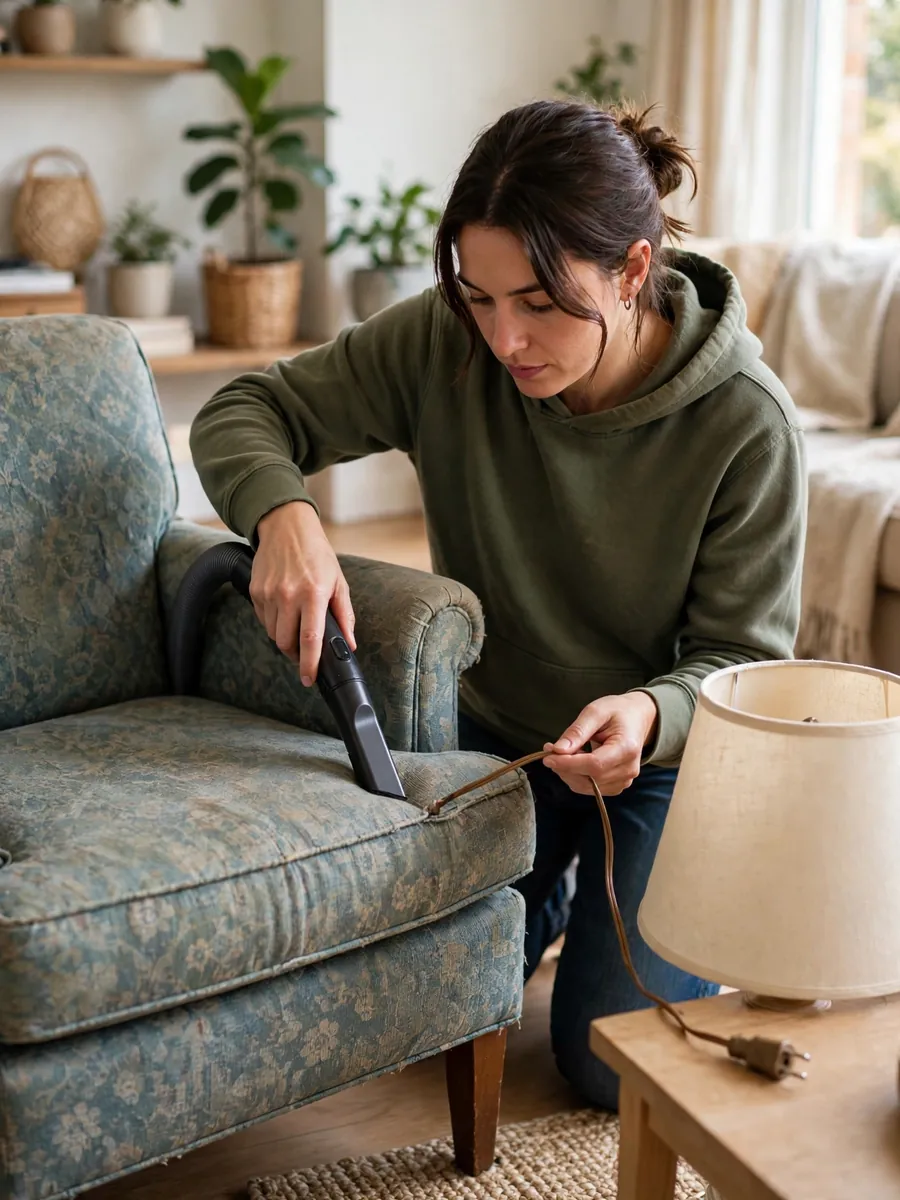
Cleaning is the last safety step, not the first. Only clean a piece that has already passed the pest, mold, and structure checks above.
12. Deep-clean by material, in the right order. Vacuum first — upholstery attachment on fabric, crevice tool in seams and drawer corners — then clean. For wood, use a lightly damp cloth and gentle cleaner, dry promptly, and avoid soaking joints, veneer, or particleboard edges, which can swell; test any cleaner on a hidden spot first. For upholstery, check the care tag, spot-test fabric cleaner in an unseen area, and let the piece dry completely in moving air. Do not set a still-damp piece on wood floors or carpet — use a sheet or mat underneath until dry. Cost: roughly $10–$25 as of 2026 for basic supplies; $0 if you already own them.
13. Test anything electrical before it becomes furniture. Lamps, powered recliners, lighted cabinets, and heated pieces need a cord check. Inspect the full cord for cuts, fraying, or taped repairs, check the plug, and pass on anything with a hot smell, flickering, buzzing, or a warm cord in a short test. Test switches and moving parts away from walls and curtains. A new bulb is roughly $5–$12 as of 2026; if a piece needs rewiring, price that honestly or choose another — do not use a damaged cord while you mean to fix it later.
Frequently Asked Questions
Can you really get bed bugs from a thrifted sofa or headboard?
It is possible, which is why upholstered pieces and headboards get the closest seam inspection here. A careful check, quarantine, and a firm walk-away rule for any piece with live insects or heavy spotting greatly reduce the risk. If a piece looks suspect, the safest choice is a different piece.
Is a free curb find ever worth the risk?
Sometimes — solid wood tables, chairs, and shelving with no pest signs, no mold, and a sound frame can be excellent. Free should raise your standards, not lower them, because you have no seller to ask about history. Inspect a curb find exactly as you would a paid one.
How long should I quarantine secondhand furniture?
A practical standard is 24 to 72 hours in a garage, porch, balcony, or hard-floor area, with a vacuum and a second inspection in that time. Longer is reasonable for upholstered pieces in warm weather, when hidden insects are more active.
Should I test every old painted piece for lead?
No — focus on older pieces with peeling or damaged paint, especially where children will use them. Keep the finish intact, avoid dry-sanding old paint indoors, and use a general test kit or choose a different piece if the finish is badly deteriorating. This is general guidance, not a substitute for professional advice on a specific piece.
Can I save a piece that smells like smoke or mildew?
Light surface odors on solid wood often air out after cleaning. Strong smoke or mildew soaked into foam, cushions, or particleboard usually does not fully leave. Test your threshold honestly before you buy — you will live with that smell daily.
What should I do first when I get a keeper home?
Keep it in quarantine, vacuum seams and undersides, re-inspect for pests, then clean by material and let it dry fully. Only then move it into place, anchor anything tall, and test anything electrical while you are present.
Conclusion
Secondhand furniture is one of the best ways to furnish a first home well on a small budget — as long as the inspection comes before the excitement. Inspect in daylight, put pests first, trust your nose, test the frame, question old finishes calmly, and clean and test before a piece becomes part of daily life. Print or save this checklist, use it in the same order every time, and let the occasional firm no protect a dozen good yeses. The best find is not just the cheapest one. It is the one you are still glad you brought home a month later.

Thiago Alexander is the Chief Editor at Nested Charm. With a deep passion for interior design and cozy living spaces, he leads the editorial team in crafting stories that make every house feel like a home.


