16 Night-Shift Home Office and Entryway Ideas for Daytime Sleepers
Executive Summary
Working nights and sleeping days turns an ordinary home upside down: the sun is brightest when you need darkness, the house is noisiest when you need quiet, and the front door gets used at hours when everyone else is asleep. A small home office and a thoughtful entryway can make that flipped schedule feel manageable.
Treat the two spaces as one system: the office corner needs controllable light, quiet surfaces, and storage that keeps work from spilling into rest, while the entryway needs a soft landing at dawn and a quick, calm exit at dusk.
In short: Block daylight, soften sound, and give every night-shift essential a landing spot — a blackout-ready work corner plus a quiet, low-light entryway protects your daytime sleep and makes coming home at dawn feel calm, not chaotic.

Keep Daylight Out of Your Work and Sleep Space
1. Hang Blackout Curtains in the Home Office
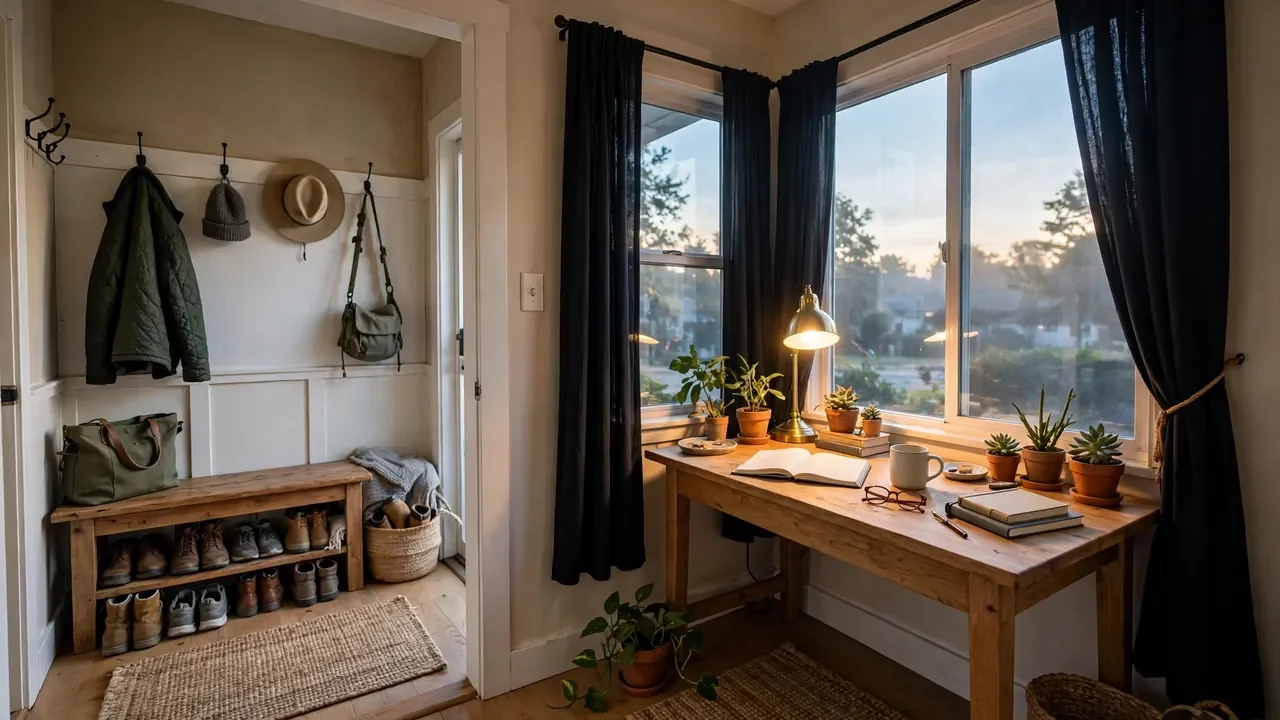
Blackout curtains are the single most useful purchase for a daytime sleeper with a desk near a window. Choose lined panels, hang them on a rod that extends past the window frame, and let them fall to the floor so light cannot sneak in around the edges. As of 2026, a ready-made pair typically costs about $30 to $80. If your lease bans drilling, use a tension rod inside the frame instead.

2. Add a Portable Blackout Panel for Odd Windows
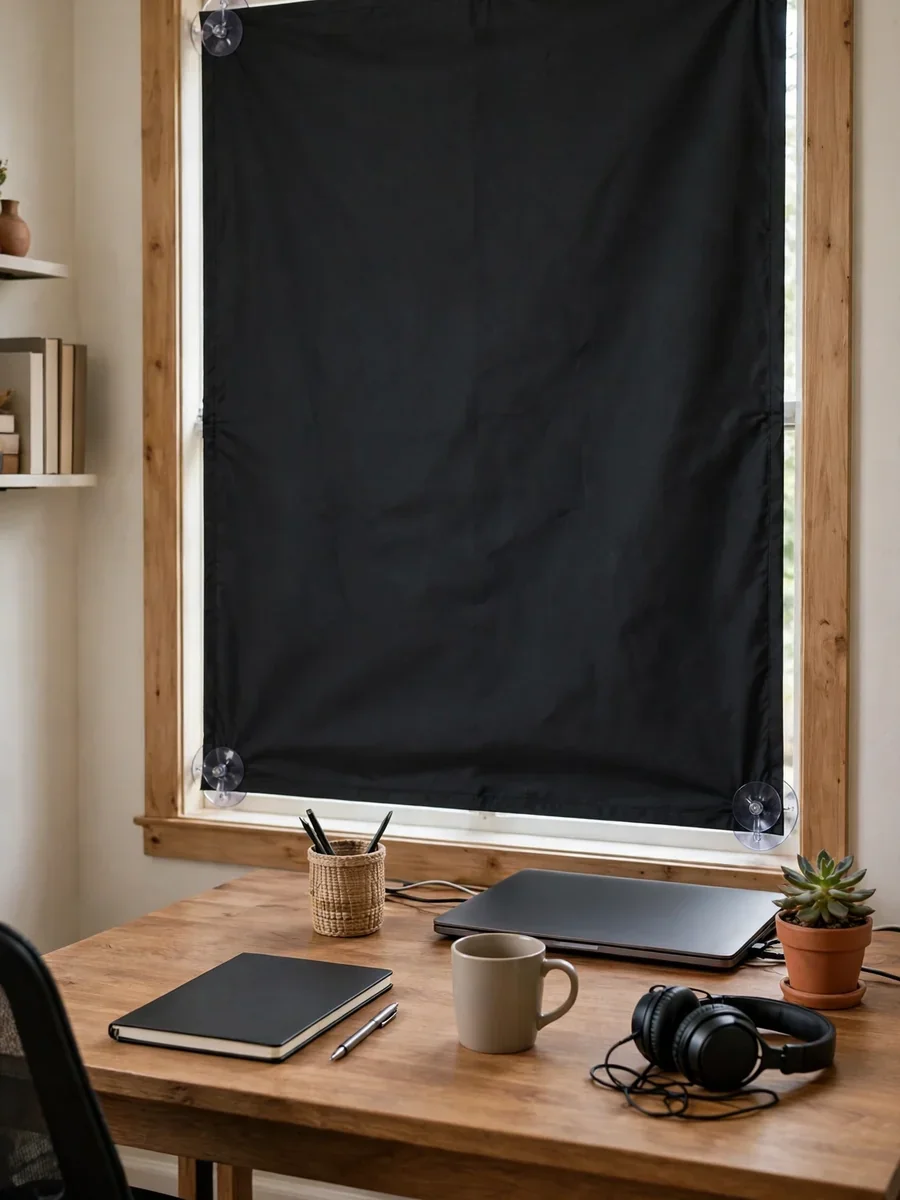
Not every window takes a curtain well, especially small, high, or oddly shaped ones. A portable blackout panel — blackout fabric cut to size and held with suction cups or removable adhesive strips — covers the gap without hardware. Measure the glass, add an inch on each side, and press the panel flat so no bright outline shows around it. As of 2026, blackout fabric by the yard usually costs about $10 to $25, plus a few dollars for suction cups.
3. Seal the Light Gap Under the Bedroom Door
Light from a hallway or a bright entryway often leaks under the bedroom door right when a night-shift worker is trying to sleep. A fabric draft stopper, sometimes called a door snake, blocks that bright line and softens hallway noise at the same time. Place it snugly against the door, or choose a double-sided version that slides underneath. As of 2026, ready-made draft stoppers typically cost about $10 to $20, and a rolled towel works as a free trial.

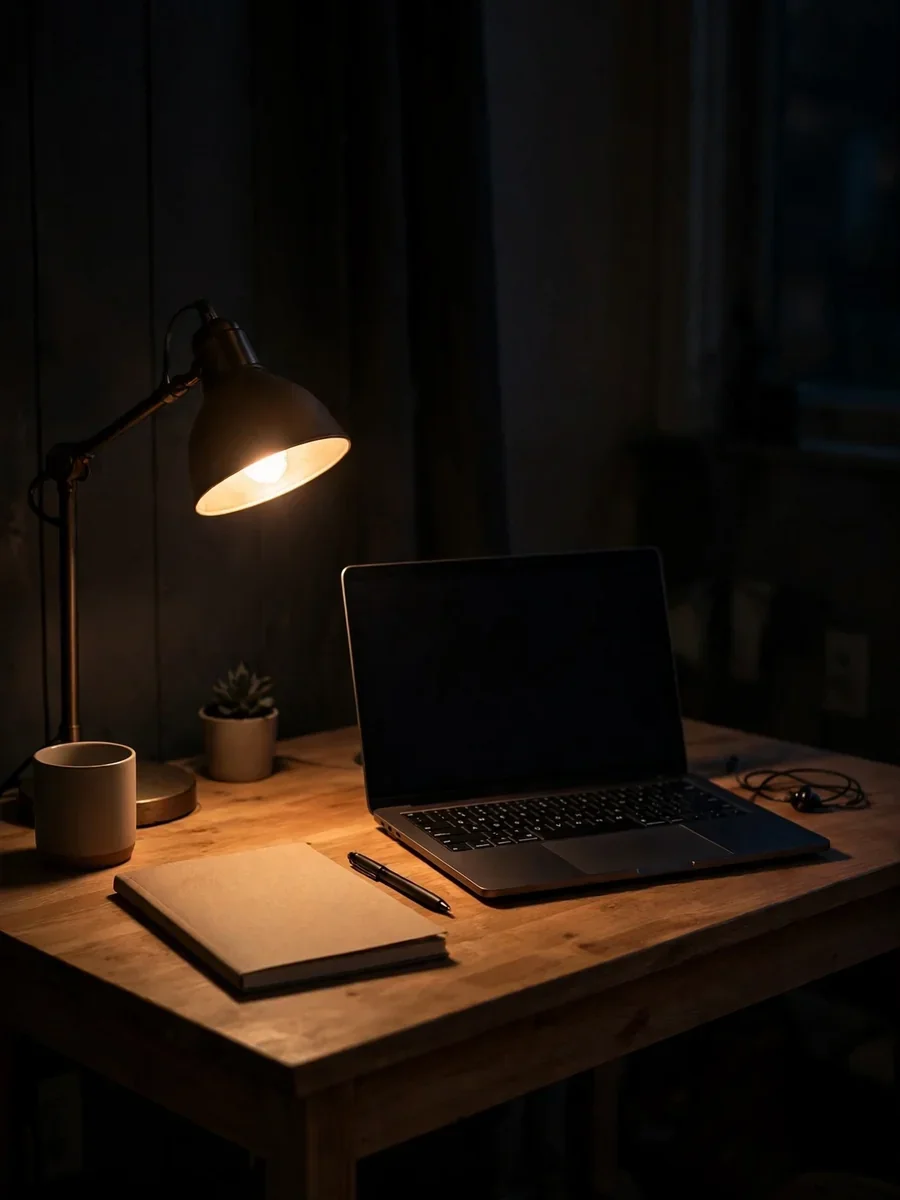
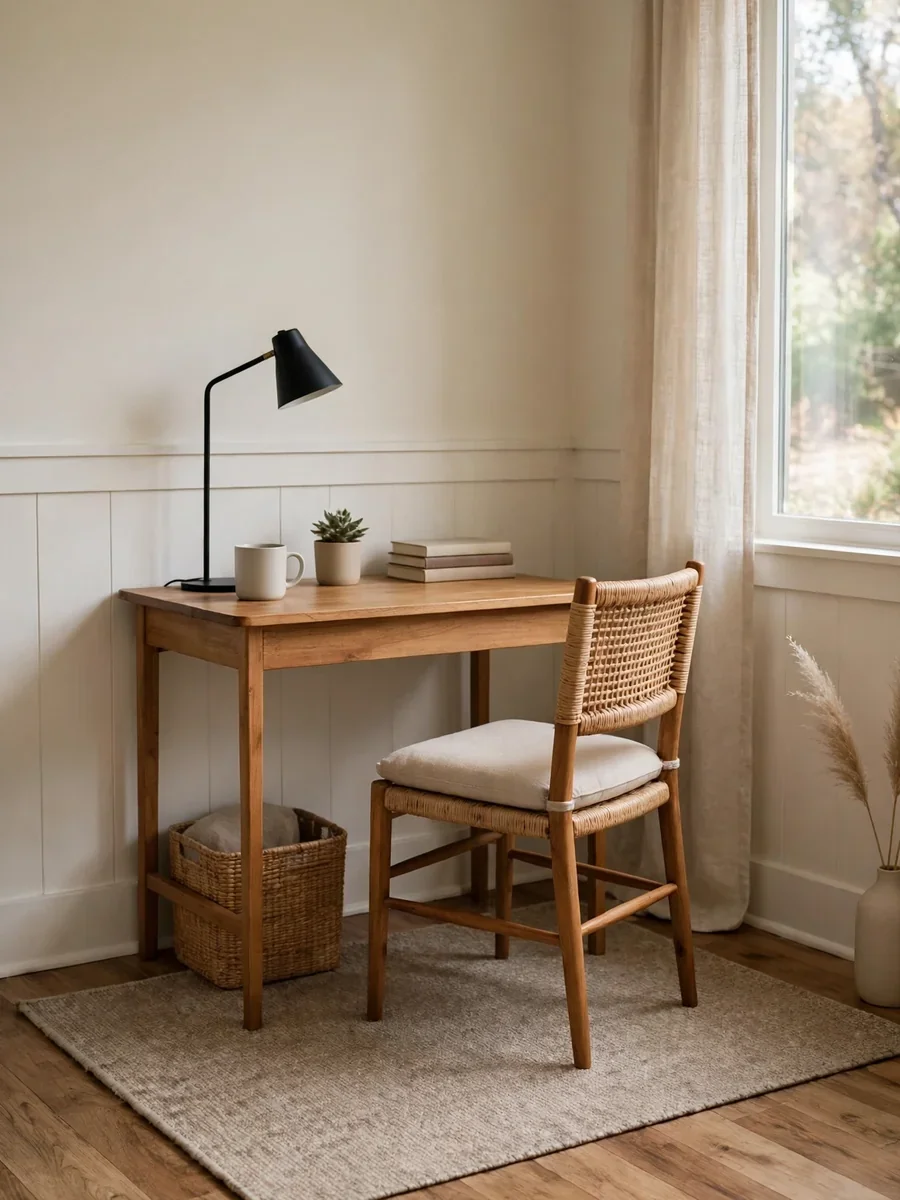
4. Switch to a Warm, Dimmable Desk Lamp
Harsh overhead light at 3 a.m. feels jarring, and a bright screen in a dark room can make it harder to wind down afterwards. A warm-toned desk lamp with a dimmer lets you light just the paperwork in front of you and keep the rest of the room soft. Look for a warm-white bulb, an adjustable arm, and a shade that directs light downward. As of 2026, a simple dimmable desk lamp typically costs about $25 to $60.
Set Up a Small, Quiet Home Office
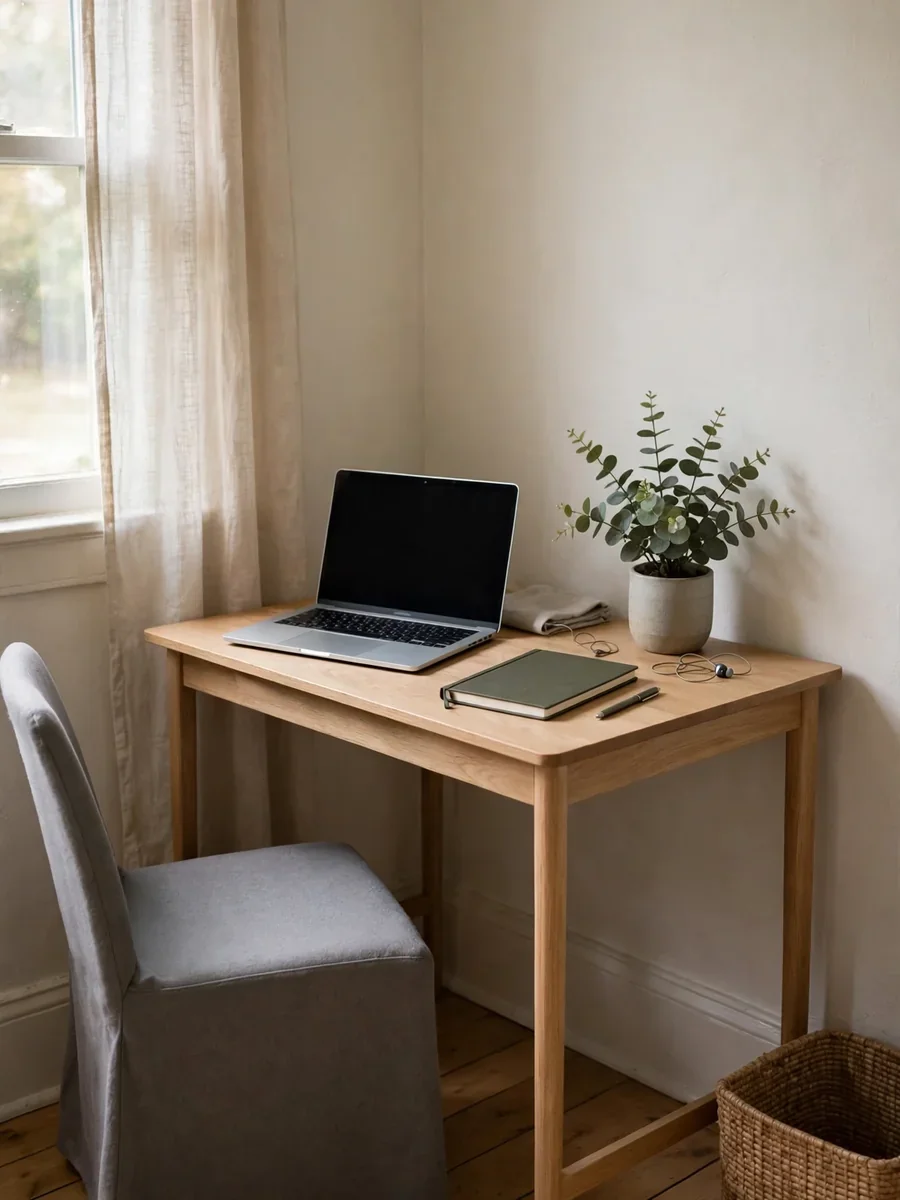
5. Choose a Slim Freestanding Desk
A small work corner does not need a big desk, and a freestanding one keeps a rental deposit safe. Look for a slim writing desk or a narrow console table, roughly 36 to 42 inches wide, with enough depth for a laptop and a notebook. Place it against a wall near an outlet, leaving a clear path behind the chair. For more small-space layout ideas, see our awkward living room layout fixes. As of 2026, a simple freestanding desk typically costs about $80 to $200. Skip wall-mounted fold-down desks without written landlord permission.
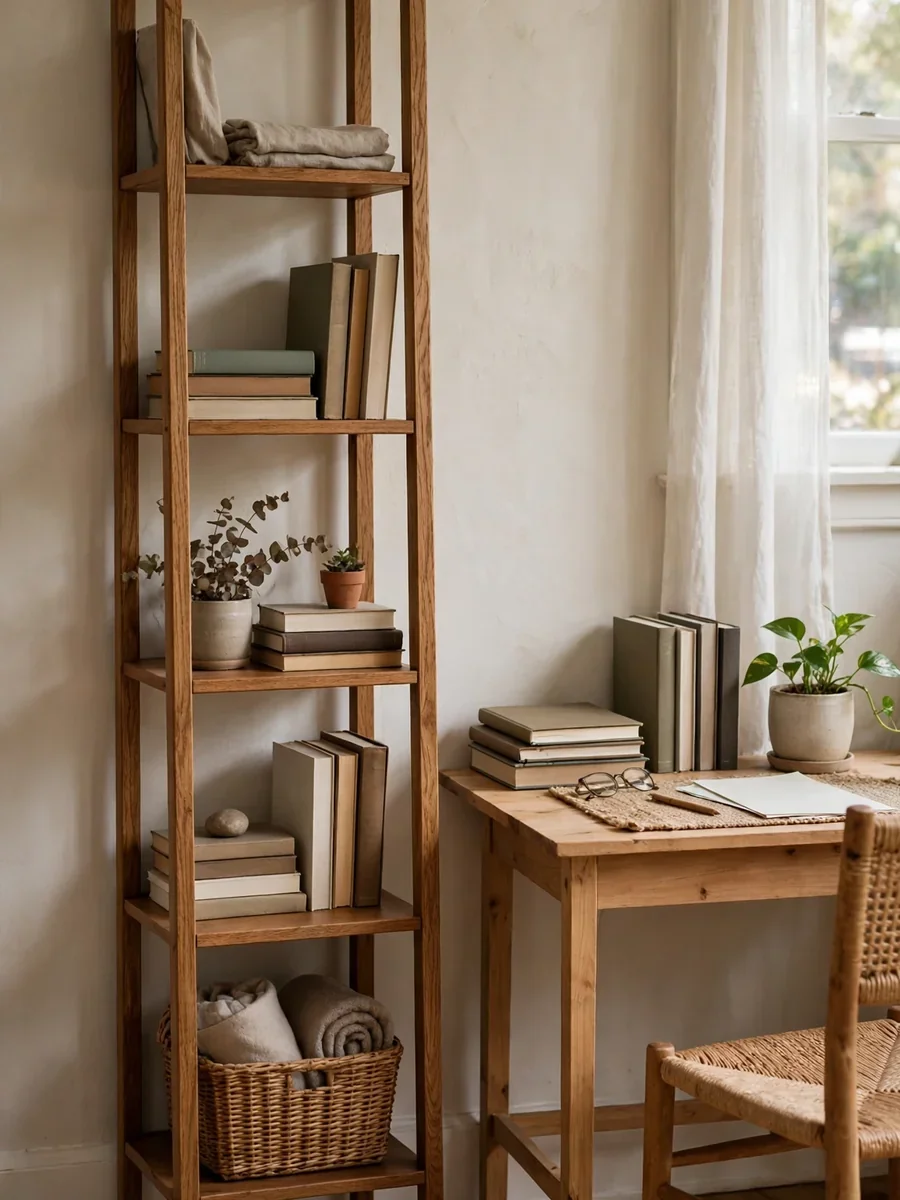
6. Go Vertical With a Freestanding Shelf
When floor space is tight, storage has to go up, but it does not have to go into the wall. A tall, narrow freestanding shelf or a leaning ladder shelf holds notebooks, chargers, and reference books without a single screw. Keep the heaviest items on the lowest shelves and the top shelf for light decor. Our closet inspo ideas use the same go-vertical thinking in an even smaller footprint. As of 2026, a narrow freestanding shelf typically costs about $40 to $120.
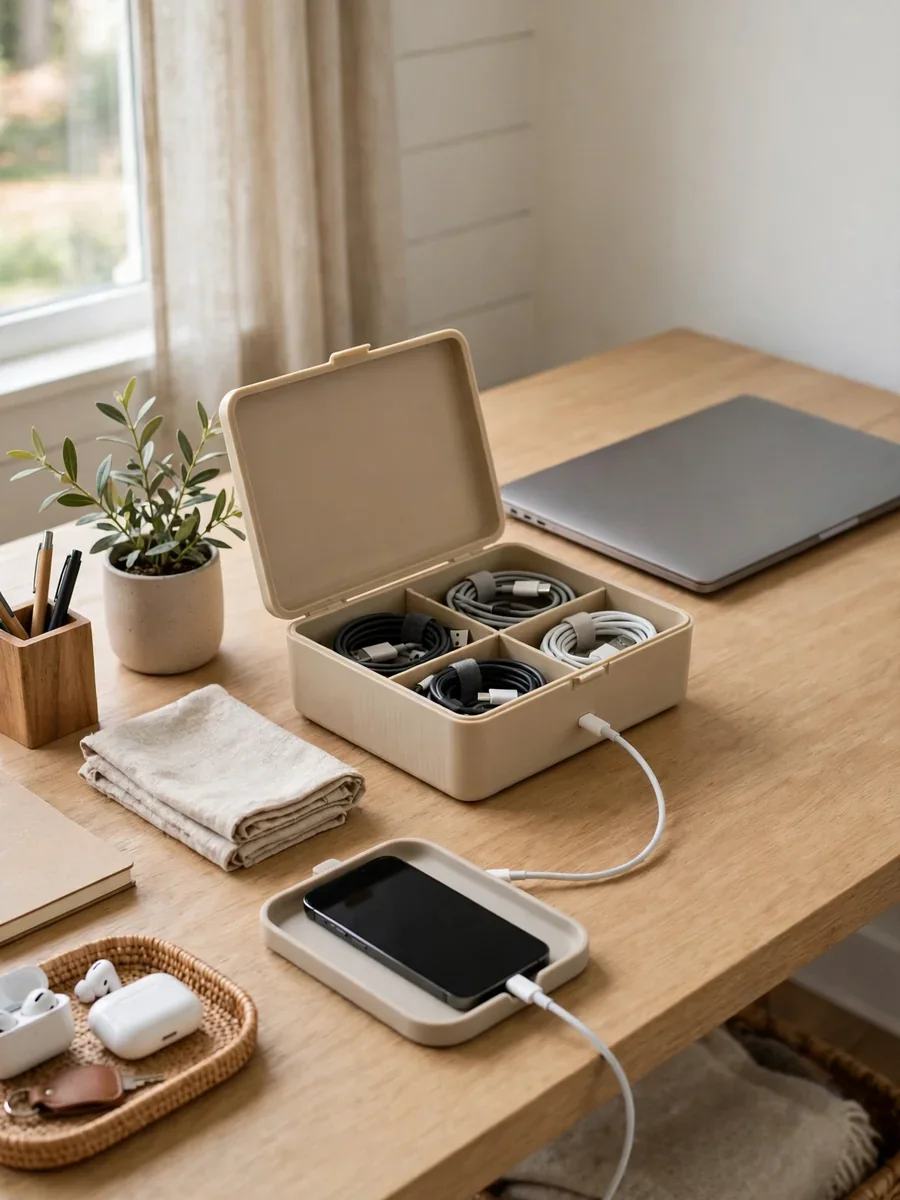
7. Tidy Cables and Build a Charging Station
Tangled cables make a small desk feel messy and make it harder to grab your phone, badge, or headphones on the way out the door. Gather chargers into one small tray or a lidded cable box, and run the cords through a clip or a short cable sleeve. As of 2026, a cable tray, a few clips, and a small charging tray together typically cost about $15 to $40. Keep the station off the floor, where a cord can trip you in the dark.
8. Soften Sound With a Rug and Felt Pads
Hard floors carry every footstep, chair scrape, and dropped pen, which matters when someone is sleeping in the next room. A low-pile rug under the desk and chair absorbs sound and warms up the corner, while felt pads under chair legs and desk feet stop the scraping that wakes light sleepers. Choose a flat-weave rug you can lift and clean easily. As of 2026, a small low-pile rug typically costs about $30 to $90, and a pack of felt pads costs a few dollars.
Make the Entryway Work the Night Shift
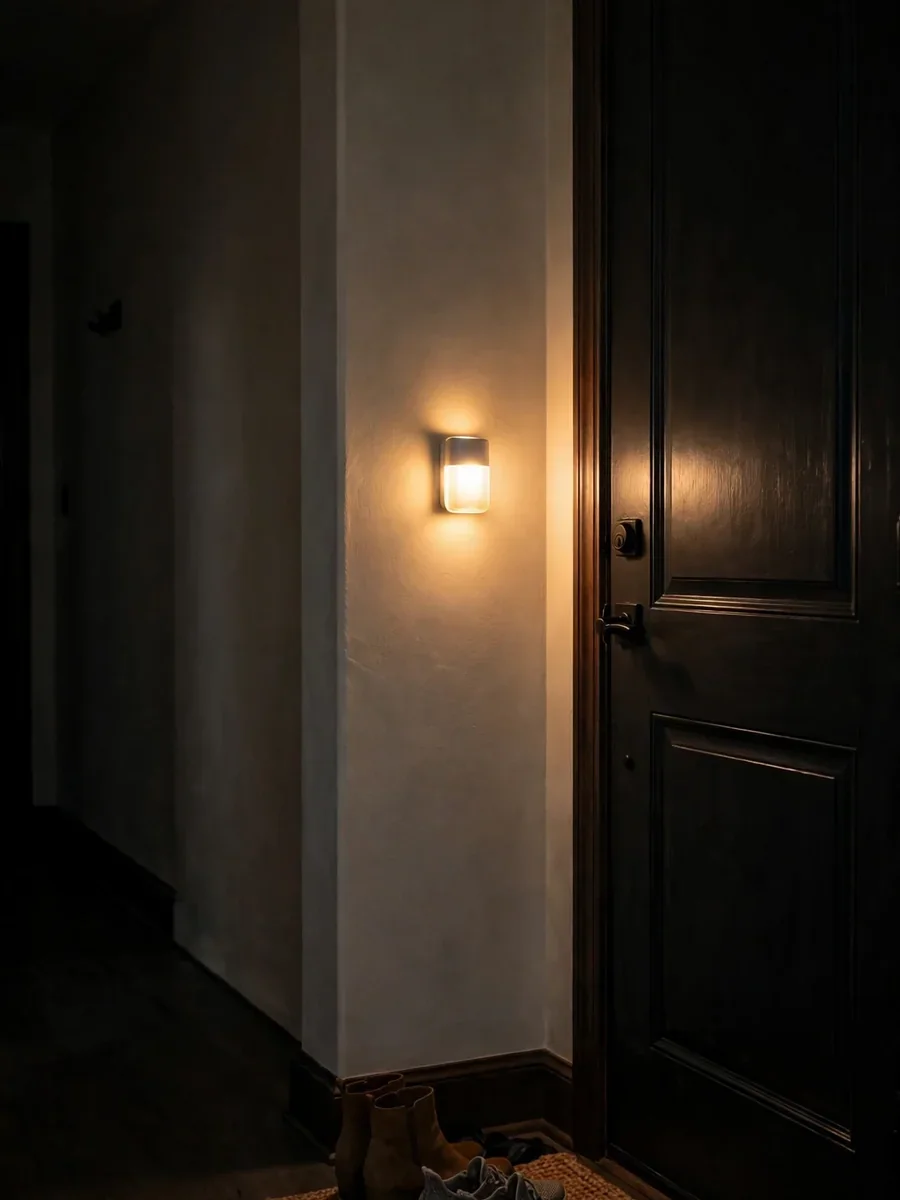
9. Fit a Warm Motion-Sensor Light by the Door
Coming home at dawn should not mean flipping on a bright ceiling light that floods the hallway and wakes the house. A small warm-toned, battery-operated motion-sensor light by the door gives you just enough glow to find your keys and shoes. Stick it low on the wall or under a console shelf, and keep the brightness low. As of 2026, a battery motion-sensor light typically costs about $10 to $25. Use removable adhesive rather than wiring anything in.
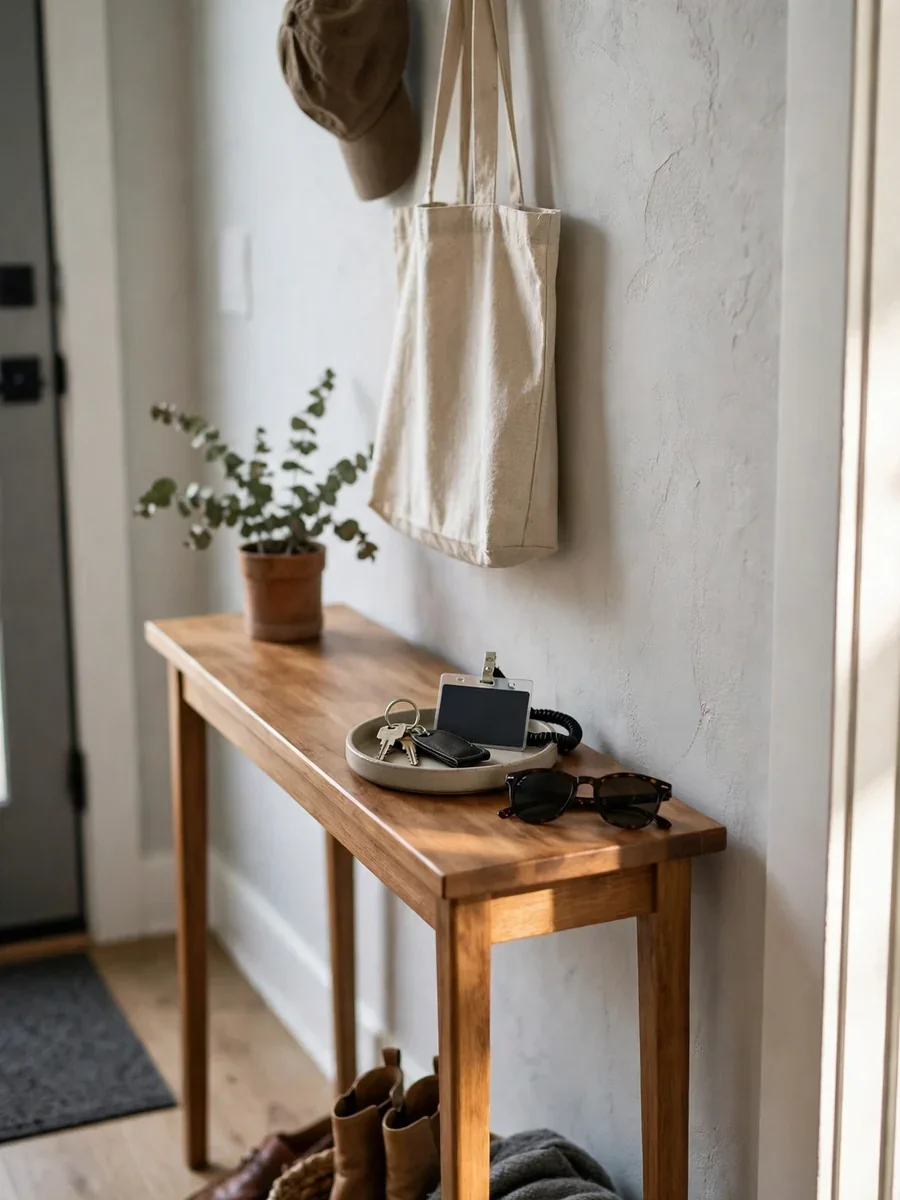
10. Build a Landing Station for Keys, Badge, and Bag
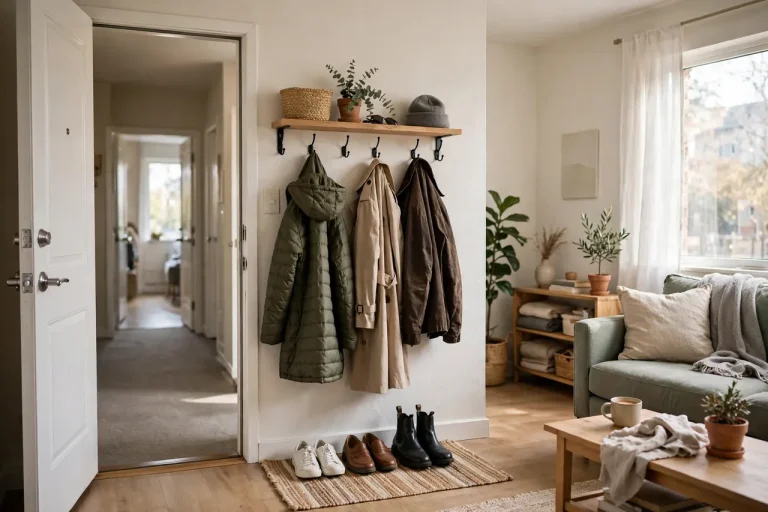
A landing station is a small shelf or tray by the door where everything you need for the next shift lives in one place: keys, work badge, wallet, and sunglasses for the drive home in morning sun. A narrow console table, a wall shelf with a tray, or a sturdy basket on a bench all work. Keep the tray at hand height, to the essentials, and empty it weekly so it never becomes a junk pile. As of 2026, a small tray and hooks typically cost about $20 to $50.
11. Add a Shoe Tray and a Quiet Entry Mat
Shoes coming in at dawn can be noisy, muddy, or both. A shallow boot tray by the door catches dirt and water, and a thick, low-pile entry mat muffles footsteps and gives you a soft place to stand while you change shoes. Choose a tray with a low rim, easy to step over in the dark, and a mat that lies flat without curling. As of 2026, a boot tray typically costs about $15 to $35 and a sturdy entry mat about $20 to $50.

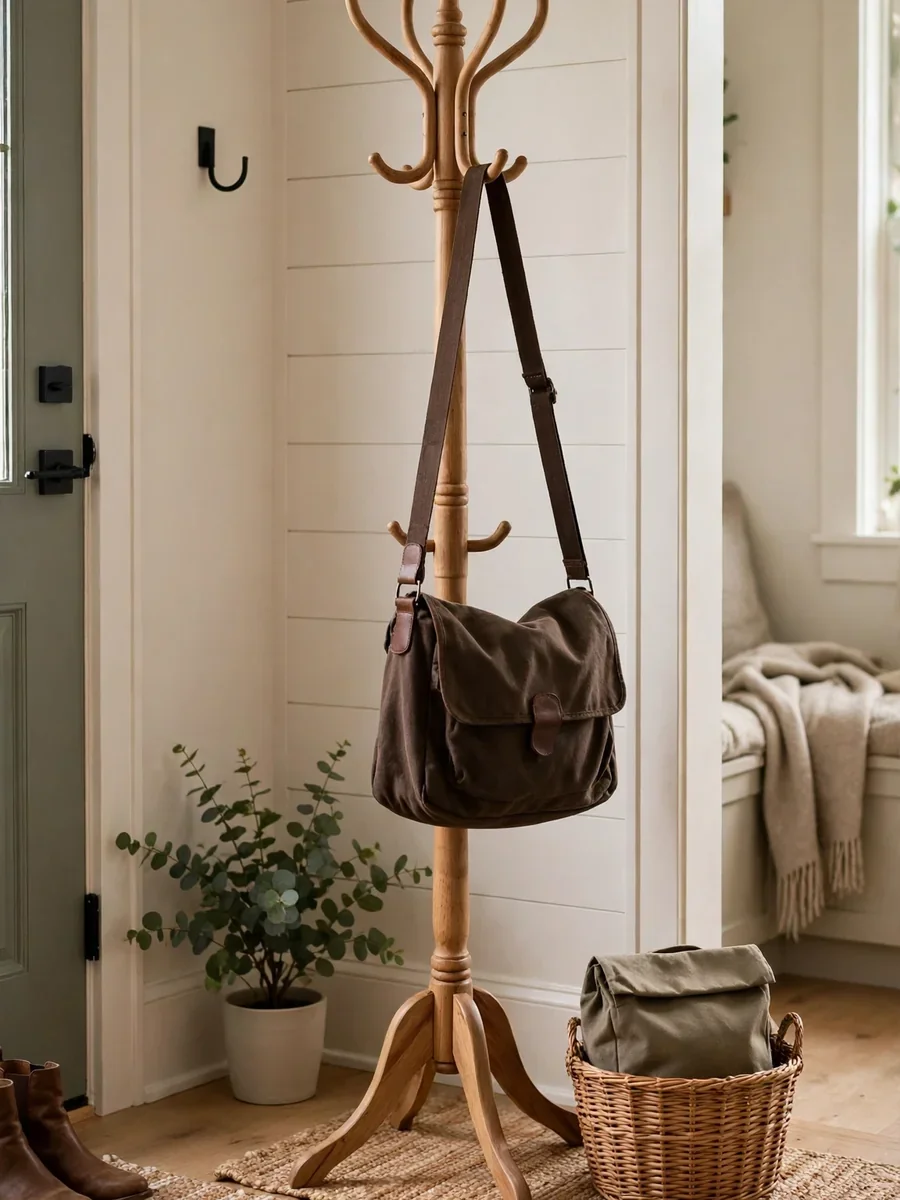
12. Hang a Bag Hook and a Lunch-Bag Caddy
A work bag dumped on the floor becomes a trip hazard at 5 a.m., and a lunch bag left on the kitchen counter is easy to forget. Give the bag a dedicated hook at shoulder height, and keep a small caddy beside it for the lunch bag, water bottle, and snacks. Pack the bag the night before and the morning exit takes seconds. As of 2026, a sturdy freestanding coat stand typically costs about $40 to $100, while a small basket caddy costs about $10 to $25.
Protect Your Sleep After You Walk In
13. Hang a Do-Not-Disturb Sign and a Shift Schedule
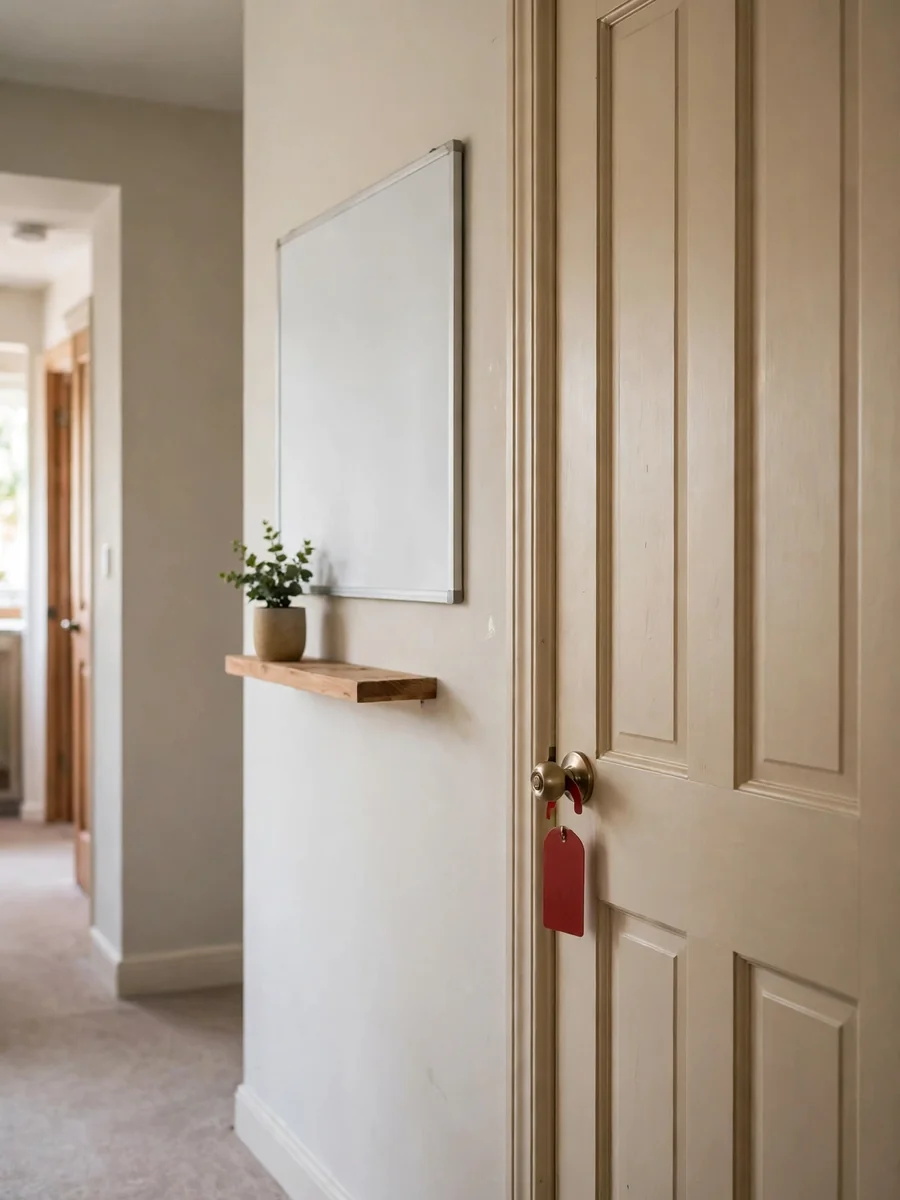
Housemates and family mean well, but they cannot respect a sleep schedule they cannot see. A simple door sign that says you are sleeping, plus a small whiteboard or printed schedule on the fridge showing your shift hours, removes the guesswork. Flip the sign when you get home, and keep the schedule current. As of 2026, a door sign and a small whiteboard together typically cost about $10 to $25. Use a removable door hanger, not a screwed-in sign.
14. Separate the Bedroom With a Blackout Entry Curtain
In a small home, the bedroom door may open straight onto the entryway or the living room, so every dawn arrival sends light and movement toward the bed. A blackout curtain hung on a tension rod across the bedroom doorway creates a soft buffer that blocks light and muffles sound without a permanent change. Choose a curtain that reaches the floor and overlaps the frame. As of 2026, a blackout curtain panel and a tension rod together typically cost about $25 to $60.

15. Set Up a Wind-Down Basket by the Bed
The first half hour after a night shift sets the tone for the whole sleep. A small basket by the bed with a sleep mask, earplugs, a paperback, and a notebook for tomorrow’s to-dos keeps the wind-down simple and screen-free. Put the basket where you can reach it without getting up, and keep the phone charger across the room so the bed stays a rest zone. As of 2026, a sleep mask typically costs about $10 to $20, earplugs a few dollars, and a small basket about $10 to $20.

16. Keep a Dawn Tea and Snack Station in the Entryway
A tiny station near the door — a mug, a small kettle or a thermos, and a snack jar — turns the walk in the door into a calm ritual instead of a raid on the kitchen. Keep it on a small tray on the entryway console, restock it on your day off, and choose simple snacks that need no cooking at dawn. As of 2026, a tray, a mug, and a lidded snack jar together typically cost about $20 to $45. Keep the kettle away from the edge, and never leave it plugged in unattended.

Frequently Asked Questions
How do I keep a home office dark enough for daytime sleep?
Start with blackout curtains or a portable panel on the nearest window, then seal the light gap under the door with a draft stopper.
What is the best entryway light for coming home at dawn?
A warm-toned, battery-operated motion-sensor light: enough glow to see keys and shoes without waking the household, and no wiring needed.
Can I make these ideas renter-friendly?
Yes, most of them are. Use tension rods, freestanding furniture, removable adhesive, and draft stoppers instead of drilling or painting, and get written permission before any permanent change.
How much should I budget to start?
Begin with blackout curtains, a draft stopper, and a motion-sensor light, together typically about $50 to $125 as of 2026, then add the desk and landing station over time.
How do I stop work clutter from taking over the entryway?
Give every essential one home — a tray for keys and badge, a hook for the bag, a basket for the lunch bag — and empty the tray weekly.
Will a rug really help with noise in a home office?
A low-pile rug plus felt pads softens footsteps and stops scraping when someone is sleeping nearby. It will not soundproof a room, but it makes a noticeable difference.
Conclusion
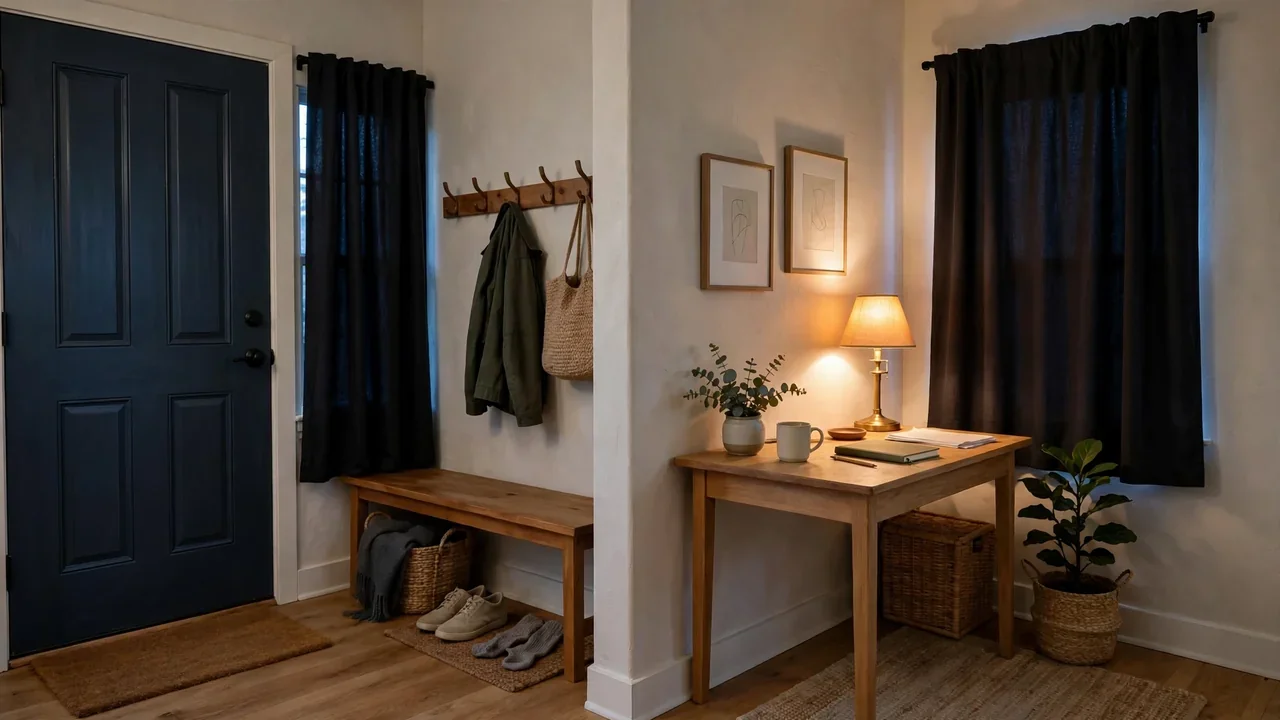
A night-shift home does not need a renovation, just a few deliberate choices in the two places you use most at odd hours. Block the daylight, soften the sound, and give your keys, bag, and wind-down kit a place to live, and the flipped schedule starts to feel like a routine instead of a disruption. Start with the blackout curtains, the draft stopper, and the soft entryway light — your daytime sleep will thank you for every quiet, dark, unhurried step home.

Thiago Alexander is the Chief Editor at Nested Charm. With a deep passion for interior design and cozy living spaces, he leads the editorial team in crafting stories that make every house feel like a home.