
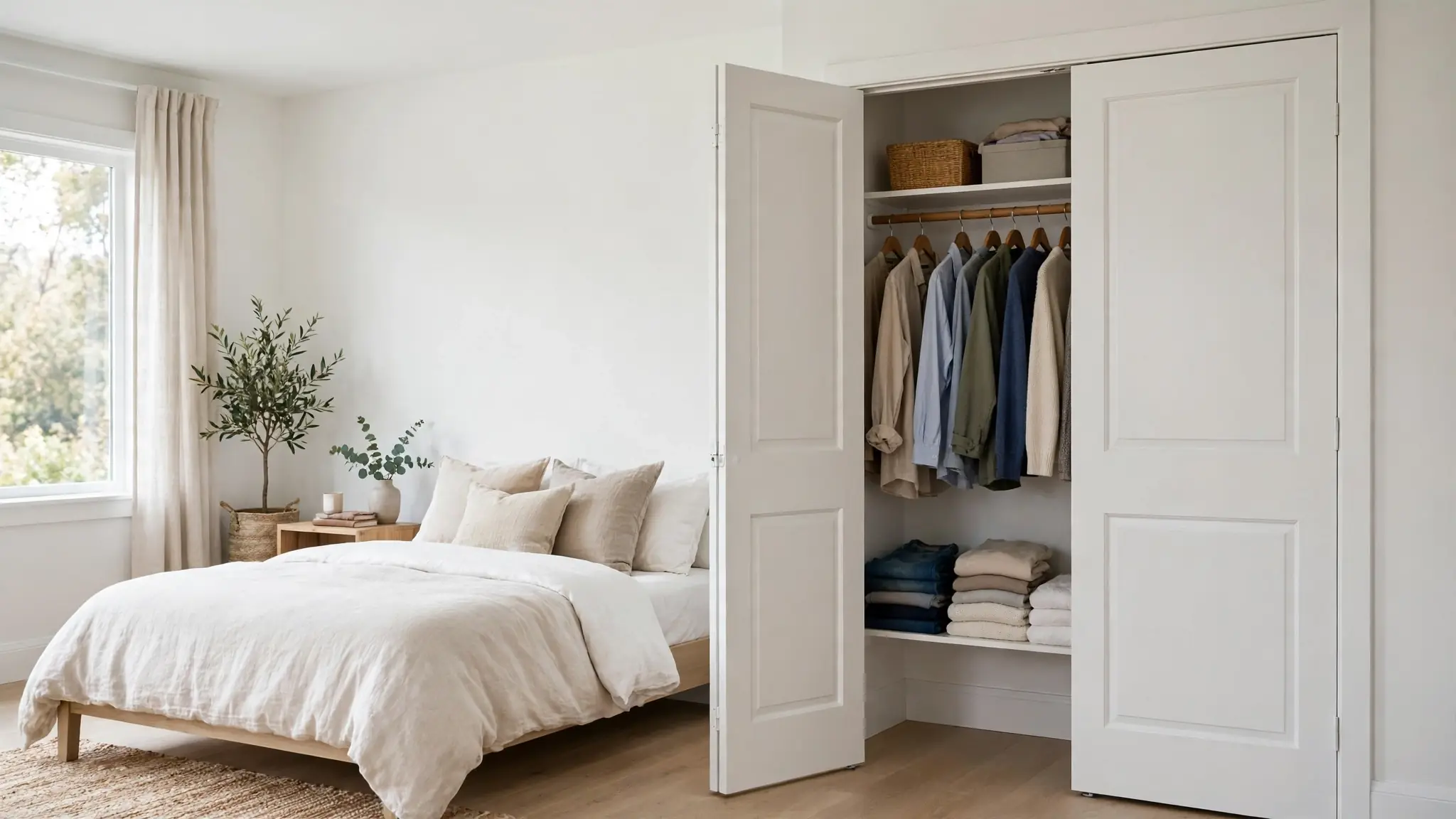
15 Painting Closet Doors Ideas for Bifold, Sliding & Mirrored Doors
Executive Summary
Closet doors take up more wall space than almost anything else in a bedroom, yet most of us leave them exactly as the builder left them — flat, yellowed, or scuffed. Painting closet doors is one of the cheapest ways to refresh a room without replacing a thing, and it usually costs less than a single can of paint and a weekend afternoon.
This list covers all four closet door types, with the prep, paint, and finishing ideas that actually make the difference.
**In short:** Clean and lightly sand your closet doors, prime where the old finish is glossy or stained, and use two thin coats of a durable interior paint. Bifolds paint best off their track, sliders can stay put, louvered doors need a brush or sprayer for the slats, and mirrored doors should only ever have their frames painted. Renters: get your landlord's permission in writing before painting anything — idea 15 gives you the no-paint alternative.
Start Smart: Prep and Planning
1. Test the Paint on One Panel First
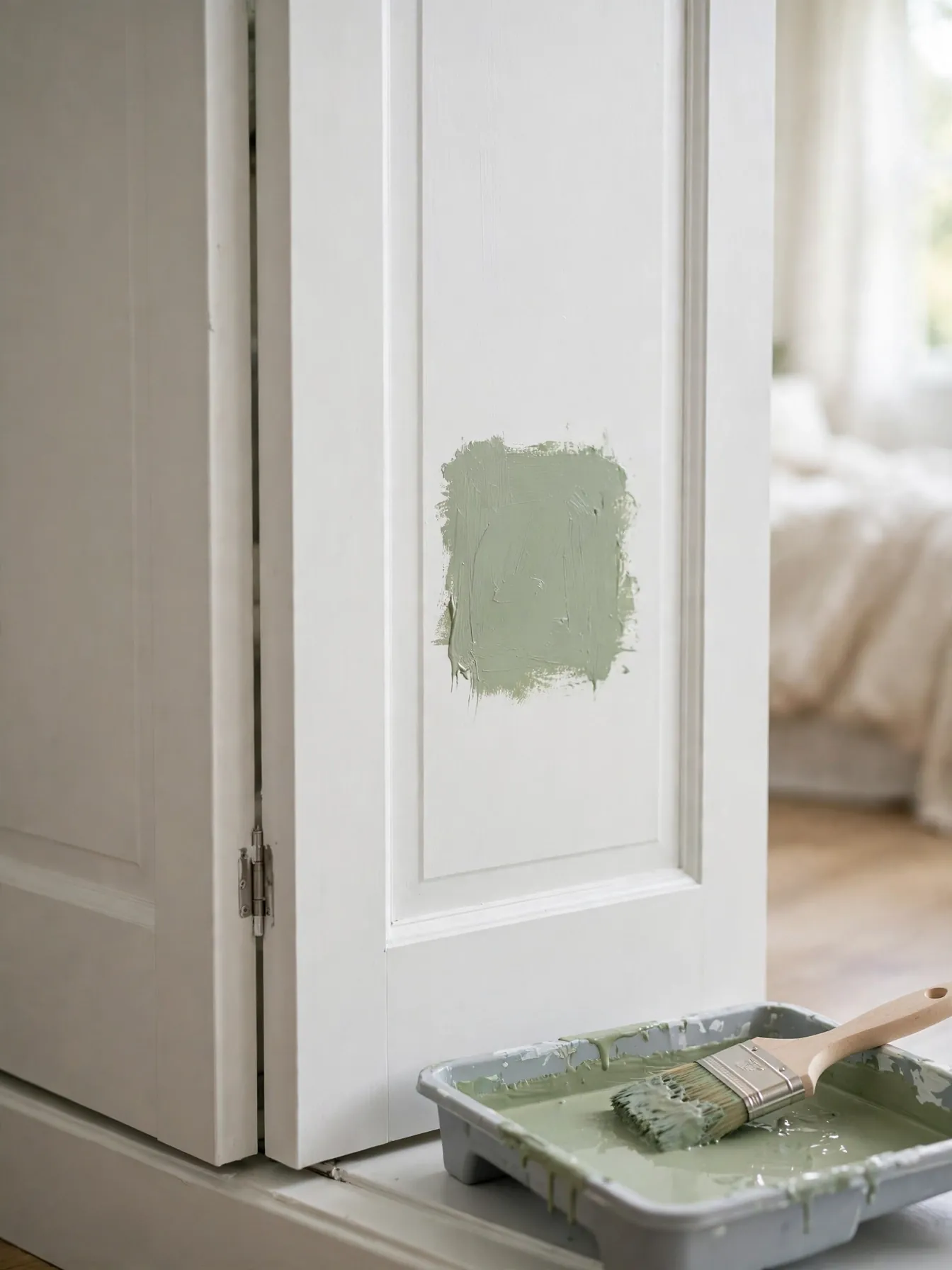
Before you commit to a colour, brush a test patch onto one door panel and live with it for a day or two. A small sample pot usually costs around $5–$10 as of 2026 — far cheaper than repainting four doors.
2. Clean, Sand Lightly, and Prime — the Closet-Door Order

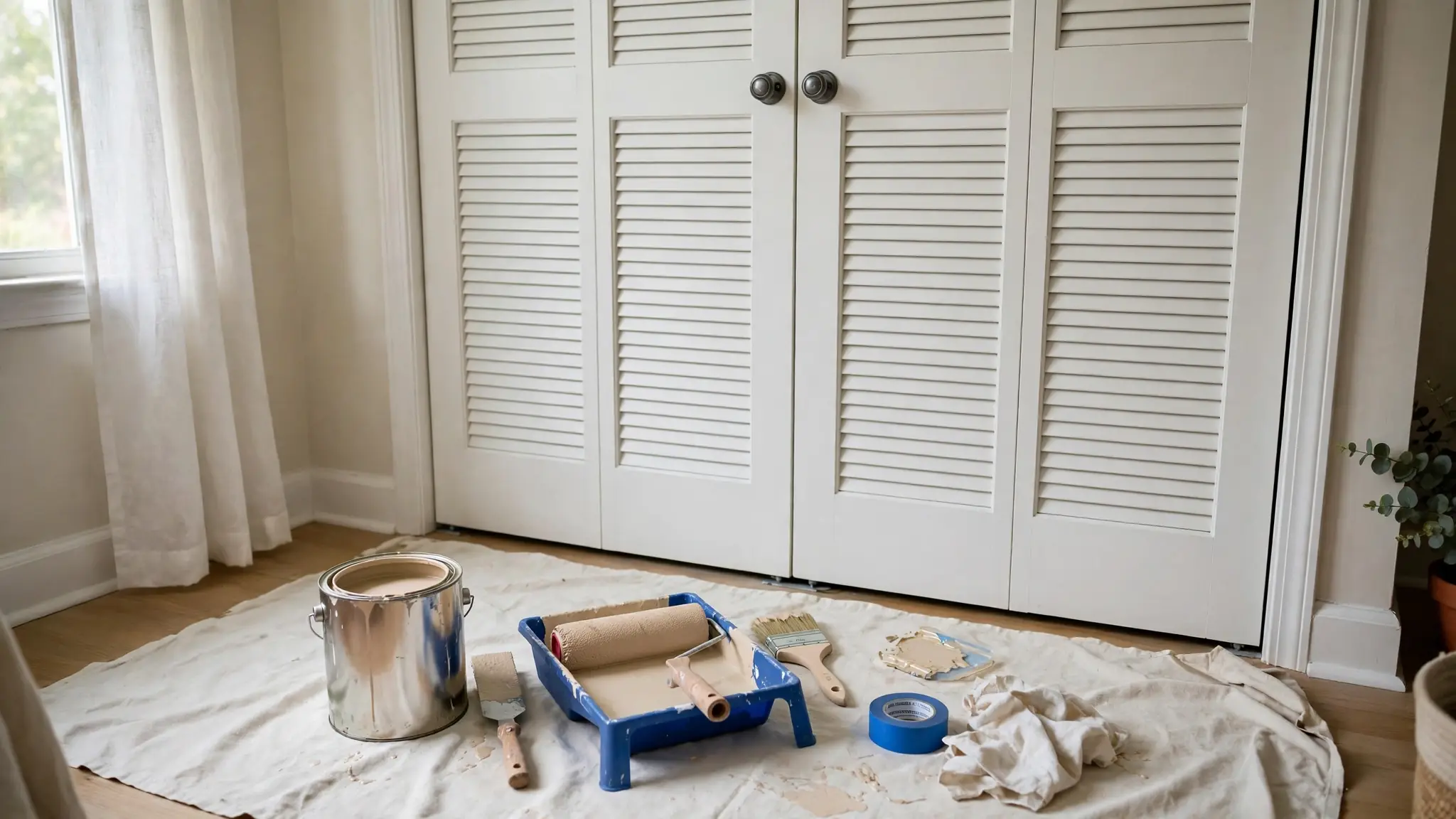
Closet doors collect dust, fingerprints, and closet grime, and paint will not stick well to any of it. Wash the doors with warm water and a little dish soap, let them dry fully, then sand lightly with fine-grit sandpaper just enough to dull the shine, and wipe away the dust. Prime bare wood, stained areas, and any door with a glossy old finish; already-painted doors in good condition can often skip primer. Supplies — cleaner, sandpaper, primer, and a drop cloth — typically run $20–$40 as of 2026.
3. Decide: Paint in Place or Take the Doors Off

Bifold doors are usually worth removing: lift them off the track, lay them flat on sawhorses or a drop cloth, and you can paint both sides without drips pooling in the folds. Sliding doors are heavier and fiddlier to remove, so most people paint them in place, working one panel at a time and sliding it along the track to reach the hidden edge.
Bifold Door Makeovers
4. Give Classic White Bifolds a Fresh Coat

The simplest bifold door makeover is also the most reliable: a fresh coat of bright white. Old bifolds yellow over time, especially in sunny rooms, and new white paint makes the whole bedroom look cleaner without changing anything else. Use a satin or semi-gloss finish so the doors wipe clean easily — our guide to semi-gloss vs satin for interior doors walks through which sheen suits high-touch doors. Cost: usually one quart of paint, around $15–$25 as of 2026.
5. Try Two-Tone Bifolds with a Painted Frame
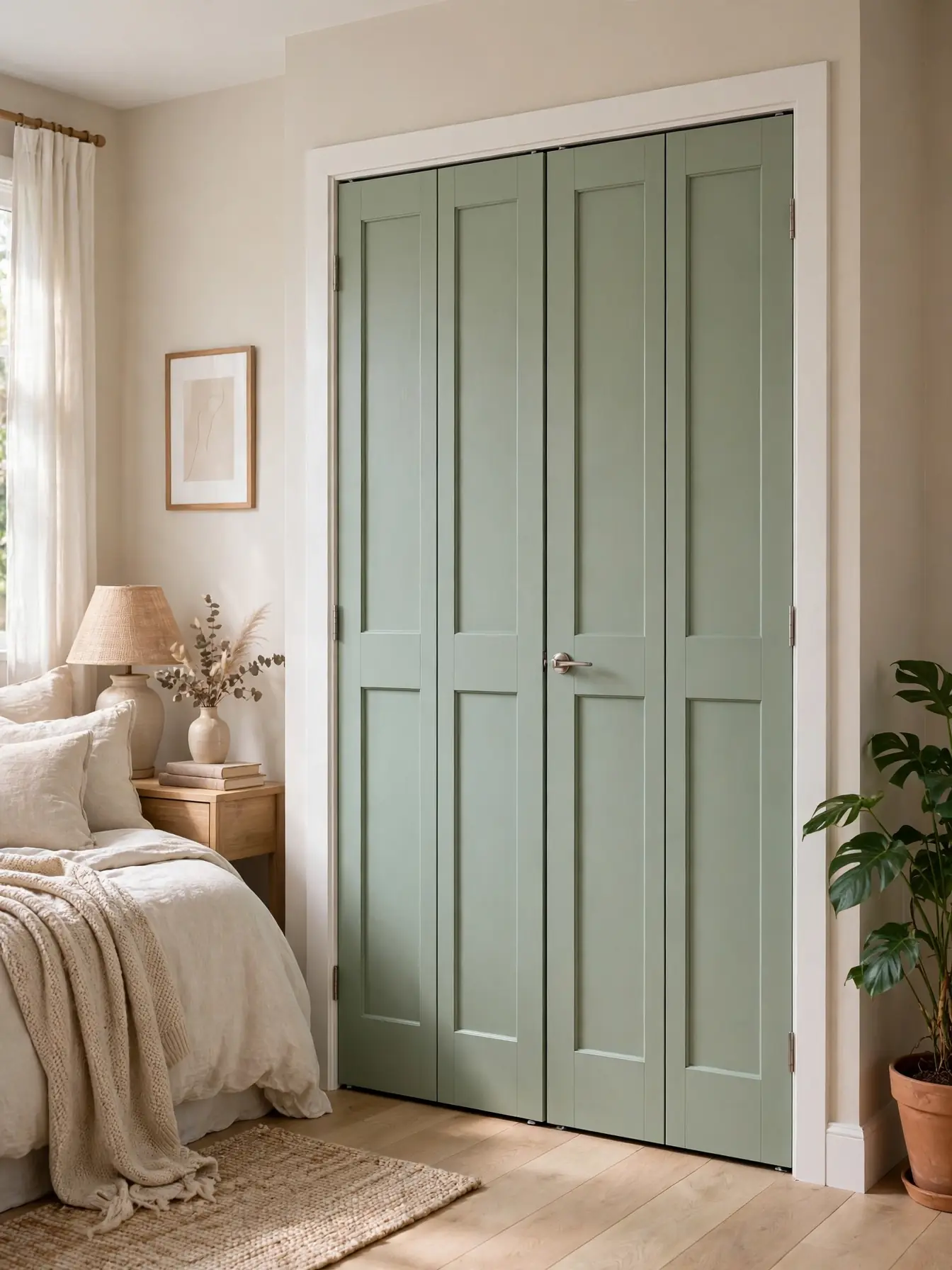
Paint the door panels a soft colour — sage green, dusty blue, or warm greige — and keep the frame and trim white. The contrast makes plain bifolds look deliberate instead of default, and it is an easy way to pull a bedroom accent colour onto the biggest surface in the room. Cost: usually $20–$35 as of 2026 for a sample-size colour plus the white you may already have.
6. Add Slim Trim to Flat Bifolds for a Panelled Look
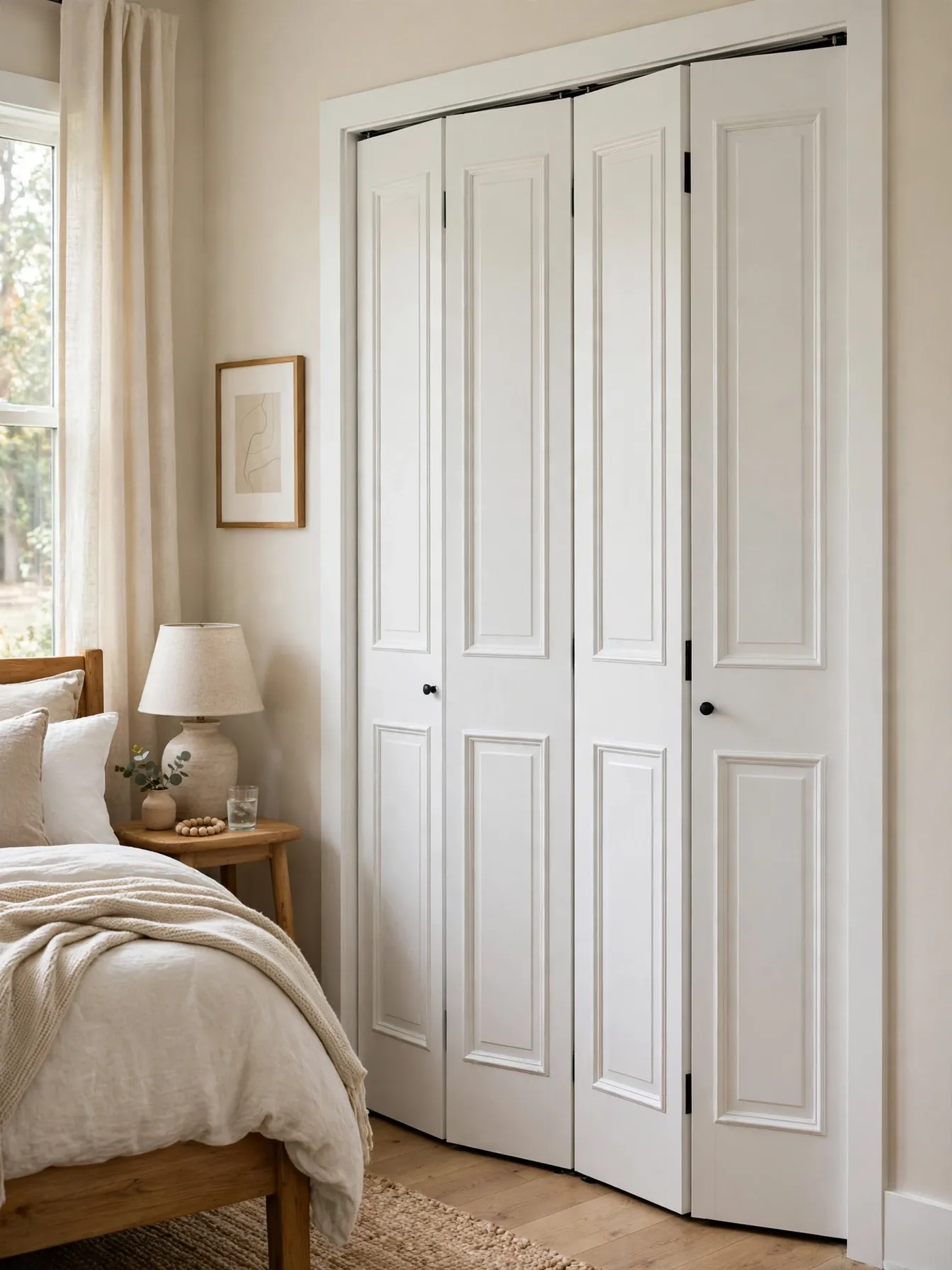
Flat, hollow-core bifolds look plain because they are plain — so give them shape. Glue slim wood trim or moulding strips onto each panel to form rectangles, fill the seams, then paint everything one colour. Keep the trim thin and light so the doors still fold freely, and check the clearance at the fold before the glue sets. Cost: typically $30–$60 per pair of doors as of 2026, including trim, adhesive, and paint.
Sliding and Mirrored Closet Doors
7. Paint Sliding Closet Doors Without Removing the Track
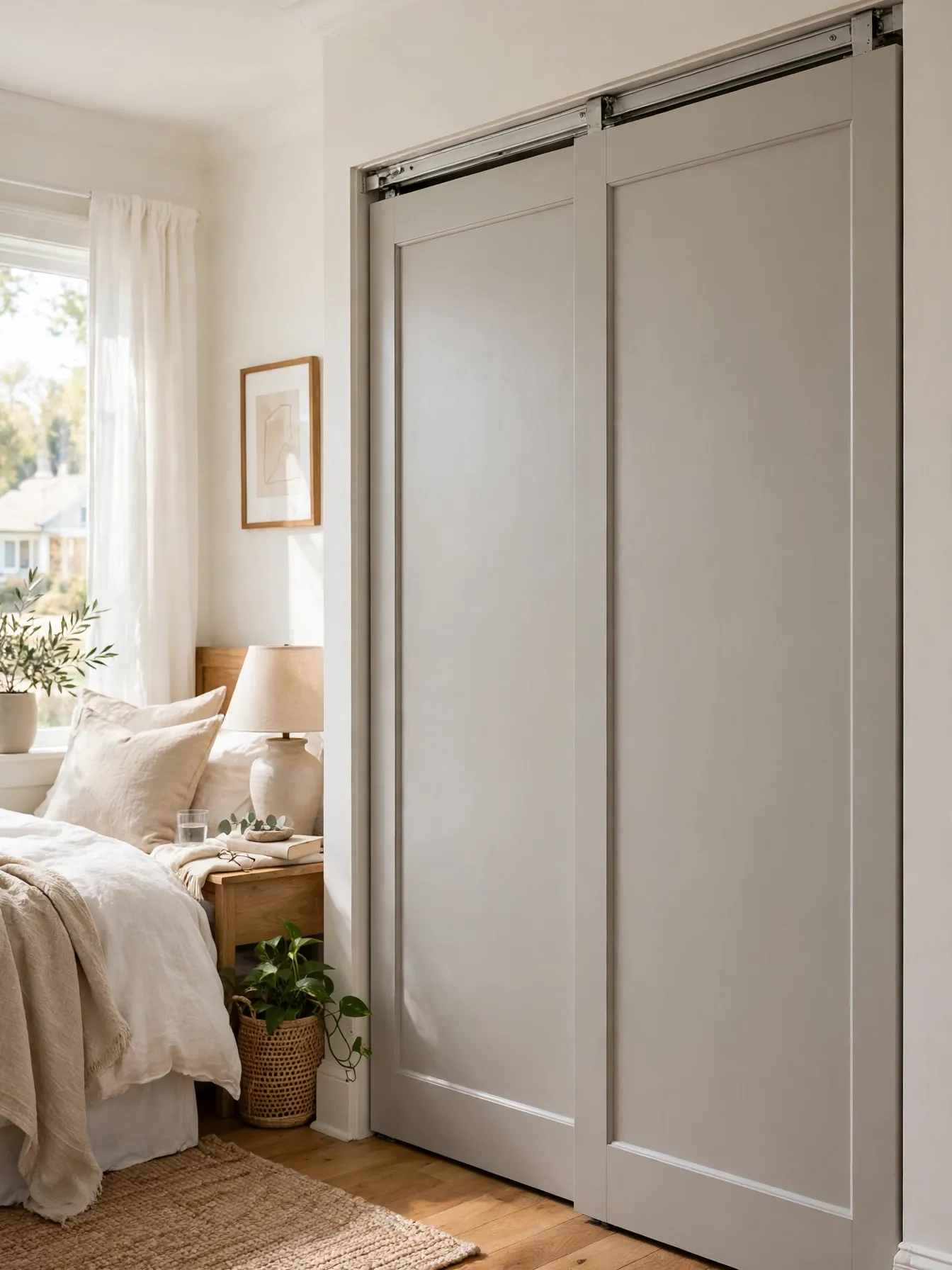
Sliding doors do not need to come off the wall. Clean and tape the track, slide one panel across so you can paint the exposed half, then slide it back and paint the rest. A small roller covers the flat panels quickly, and a brush handles the edges where the panels overlap. Leave the doors slightly open overnight so wet edges do not stick together. Cost: usually $15–$30 as of 2026 for paint and a roller.
8. Frame a Mirrored Sliding Door with Paint

Mirrored sliding doors can dominate a bedroom, but painting the frame changes the whole look for very little money. Mask the mirror carefully with painter's tape and paper, then paint just the frame — deep green, matte black, or navy all work well against a light wall. Cost: typically $10–$20 as of 2026, since a frame needs very little paint.
9. Soften Mirrored Doors with a Frosted Band
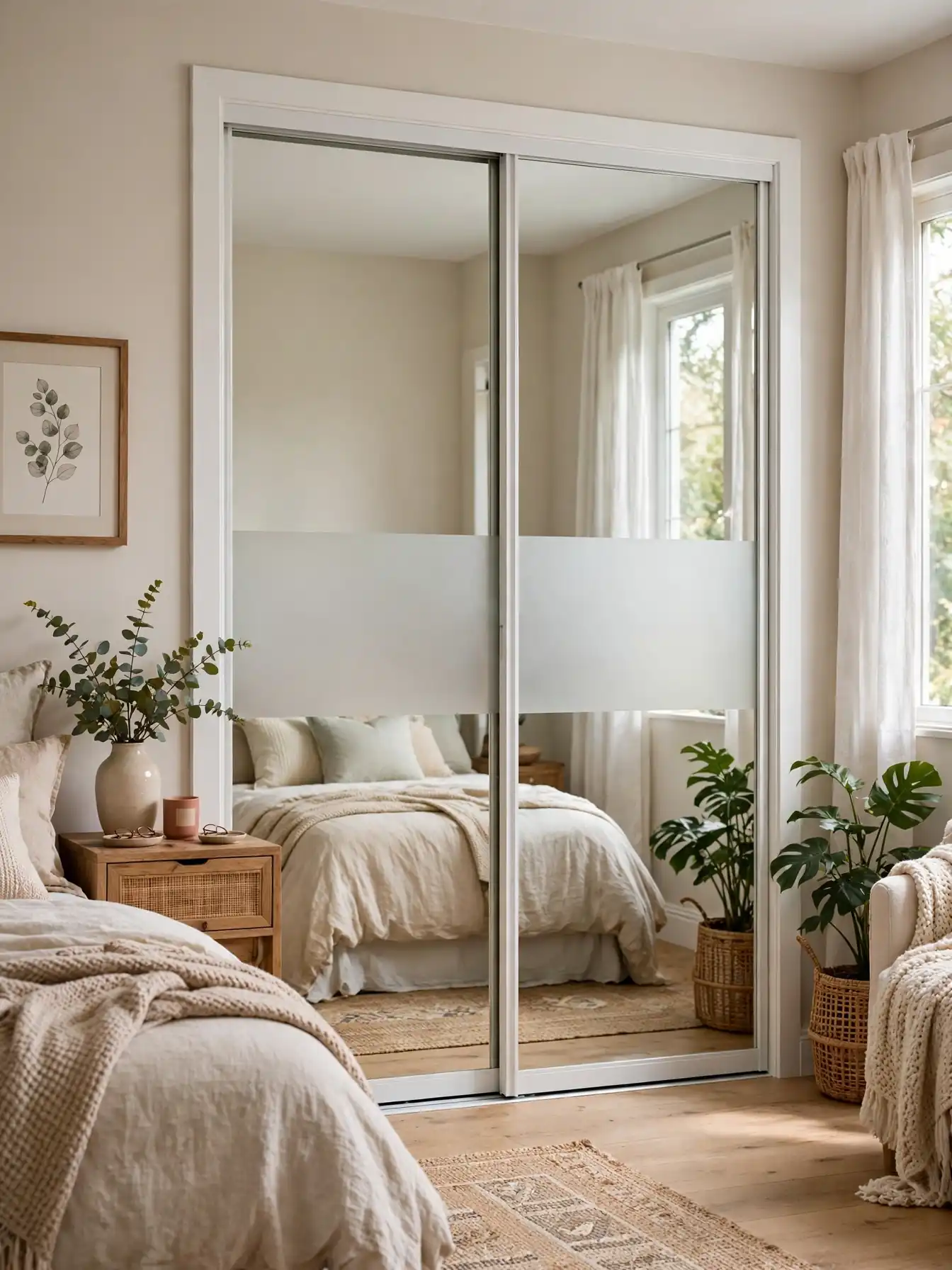
If full-length mirrors feel like too much, add a frosted band across the middle of each door using removable frosted window film — not paint, which is hard to remove from glass and easy to scratch. Measure the band, cut the film to size, and smooth it on with a little soapy water. Cost: usually $15–$25 as of 2026 for a roll of film.
Louvered Doors and Fresh Finishes
10. Paint Louvered Doors the Slow, Right Way

Louvered doors look wonderful painted and terrible rushed, because every slat has four edges that show missed spots. A brush works, but a paint sprayer — even a small handheld one — gets into the slats far more evenly and quickly. Thin coats matter here more than anywhere: thick paint pools between slats and sticks them together. Cost: usually $15–$30 as of 2026 for paint; a basic handheld sprayer typically runs $40–$70 if you do not already own one.
11. Go Bold on Louvered Doors in a Small Bedroom

Louvered doors are the one closet door type that can carry a bold colour without overwhelming a room, because the slats break the colour into stripes of light and shadow. Navy, deep green, or charcoal on the doors against white walls gives a small bedroom a focal point that costs almost nothing. Cost: usually $15–$25 as of 2026 for a quart of paint.
12. Add a Chalkboard Panel to One Closet Door

Paint one recessed panel of a closet door with chalkboard paint and you get a notes board, a kids' drawing spot, or a place to plan outfits for the week. Tape the panel edges neatly, apply two coats, and let it cure fully — usually a few days — before the first chalk goes on, or the surface will smudge. Cost: typically $10–$20 as of 2026 for a small can of chalkboard paint.
Colour, Hardware, and Renter-Safe Finishing Touches
13. Colour-Match the Doors to the Wall for a Built-In Look

Painting closet doors the exact same colour as the wall — same paint, same finish — makes them nearly disappear, and the room instantly feels bigger and calmer. This works best with warm neutrals like greige, soft white, or pale sage, and it is a good fix for a wall of sliding doors that feels too busy. Cost: often $0–$25 as of 2026.
14. Swap the Hardware and Watch the Doors Look New
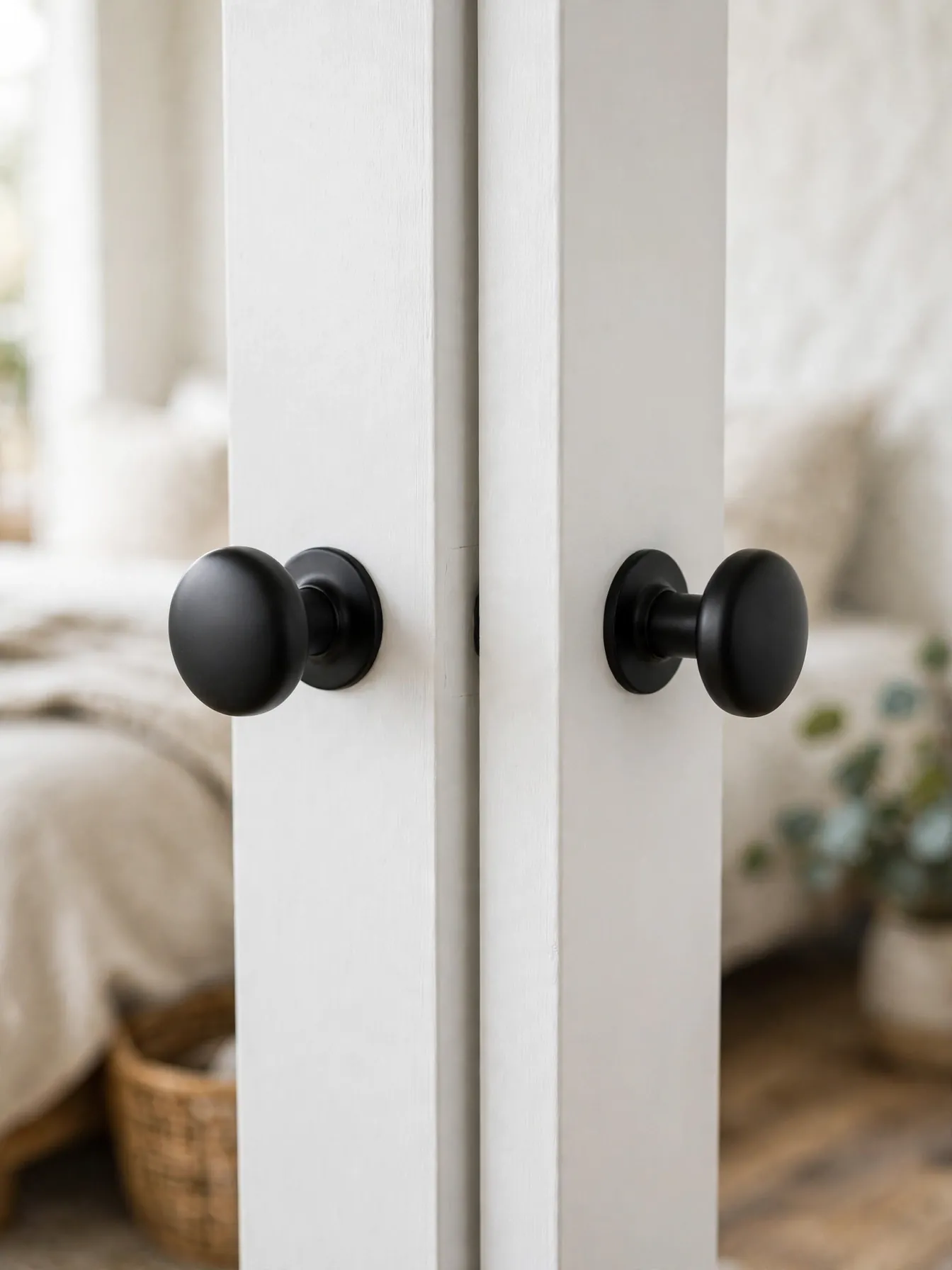
New knobs, pulls, or finger pulls can make freshly painted doors look finished — and they can rescue unpainted doors, too. Matte black knobs suit white and navy doors, brushed brass warms up sage and greige, and slim recessed pulls keep sliding doors sliding smoothly. Cost: typically $10–$30 as of 2026 for a set of knobs or pulls.
15. Go Renter-Safe: Peel-and-Stick Panels When Paint Is Not Allowed
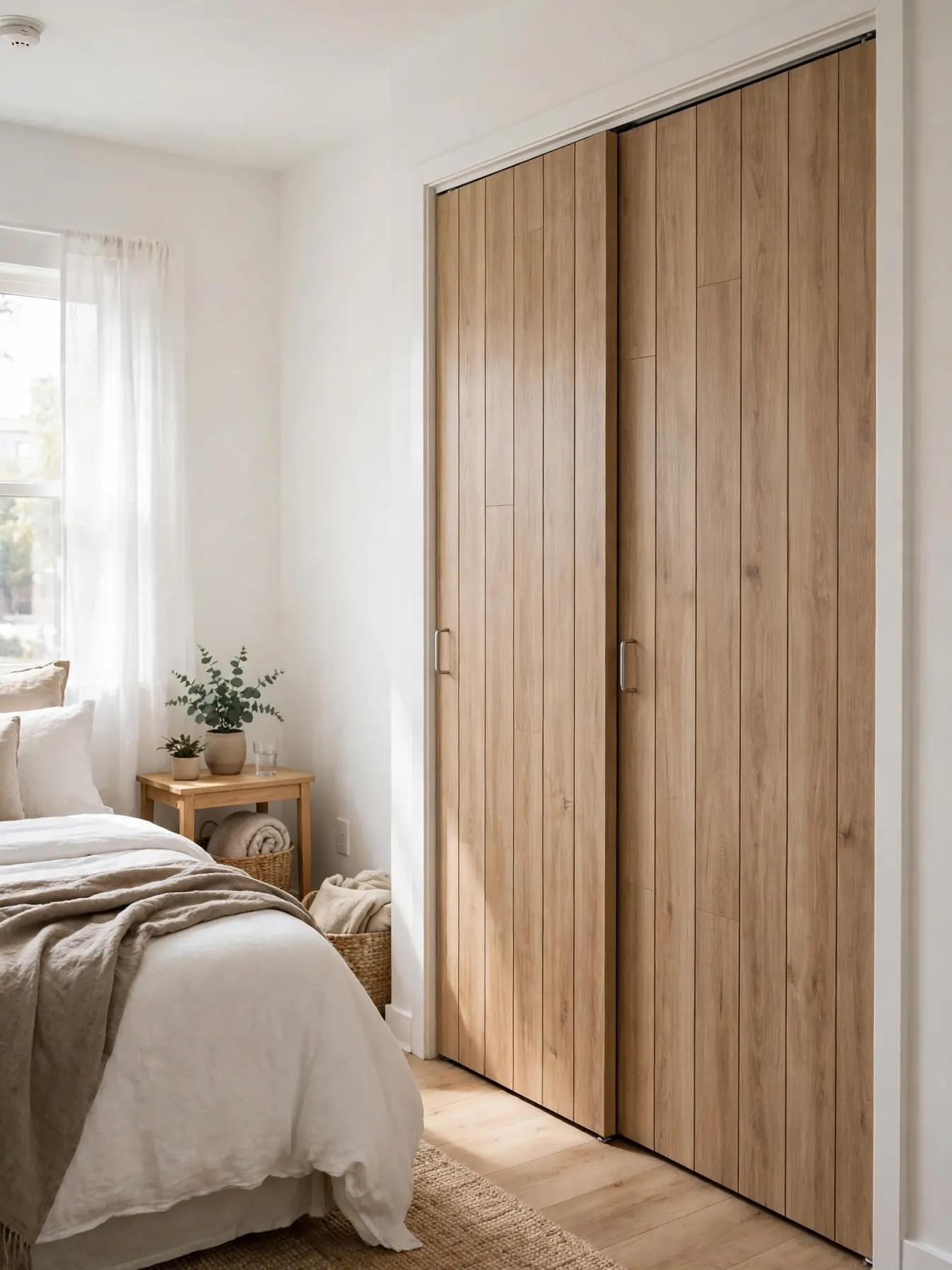
If your lease says no painting — or your landlord will not put permission in writing — do not paint the doors. Peel-and-stick wood-look panels, removable wallpaper, or vinyl wraps give closet doors a whole new surface without touching the paint underneath, and they come off when you move out. Cost: usually $25–$50 as of 2026 for enough material to cover a standard closet.
Frequently Asked Questions
Can you paint bifold closet doors without taking them down?
Yes, you can. Taking them down gives a smoother finish and is usually worth it for bifolds, since they lift off the track easily — but it is not required.
What kind of paint is best for closet doors?
A durable interior paint in satin or semi-gloss is usually the best choice, because closet doors get touched, bumped, and wiped down often. If you are choosing between sheens, our comparison of semi-gloss vs satin for interior doors explains the trade-offs in plain terms.
Do I need to prime closet doors before painting?
It depends on the door. Prime bare wood, stained or damaged spots, and doors with a glossy old finish so the new paint sticks. Doors that are already painted in good condition usually just need a good clean and a light sanding before the new coats go on.
Can I paint mirrored closet doors?
Paint the frame, not the mirror. Mask the glass carefully and paint only the frame and trim.
How do I paint louvered closet doors without brush marks?
Use thin coats, work slat by slat from the top down, and consider a small handheld sprayer, which reaches the slat edges far more evenly than a brush. Our guide to painting doors without streaks or brush marks covers the technique step by step.
Can renters paint their closet doors?
Only with the landlord's permission in writing first. Painting without permission can cost you part of your deposit, even if the new colour looks better. If permission is refused or unclear, use the peel-and-stick option in idea 15 — it gives you the makeover without touching the paint underneath.
Conclusion
Painting closet doors is a small project with an outsized payoff: one weekend, one can of paint, and the biggest surface in the bedroom looks like it belongs there. And if you rent, get permission in writing or go peel-and-stick. Either way, the doors you have are almost certainly good enough — they just needed a fresh coat.

Thiago Alexander is the Chief Editor at Nested Charm. With a deep passion for interior design and cozy living spaces, he leads the editorial team in crafting stories that make every house feel like a home.



2 Comments